
Buying a milk tank truck is an important investment for dairy farms, milk collection companies, food-processing plants, and dairy logistics operators. Unlike ordinary liquid tankers, a milk tank truck must meet higher requirements for food hygiene, sanitary construction, temperature protection, cleaning, and product safety.
Choosing the right vehicle therefore involves much more than comparing tank capacity and purchase price. Buyers need to evaluate the tank material, insulation, chassis, pumping system, sanitary fittings, cleaning requirements, payload, local regulations, and after-sales support.
This complete buyer’s guide explains the key factors to consider when purchasing a milk tank truck and how to select a configuration that matches your dairy transportation requirements.
What Is a Milk Tank Truck?
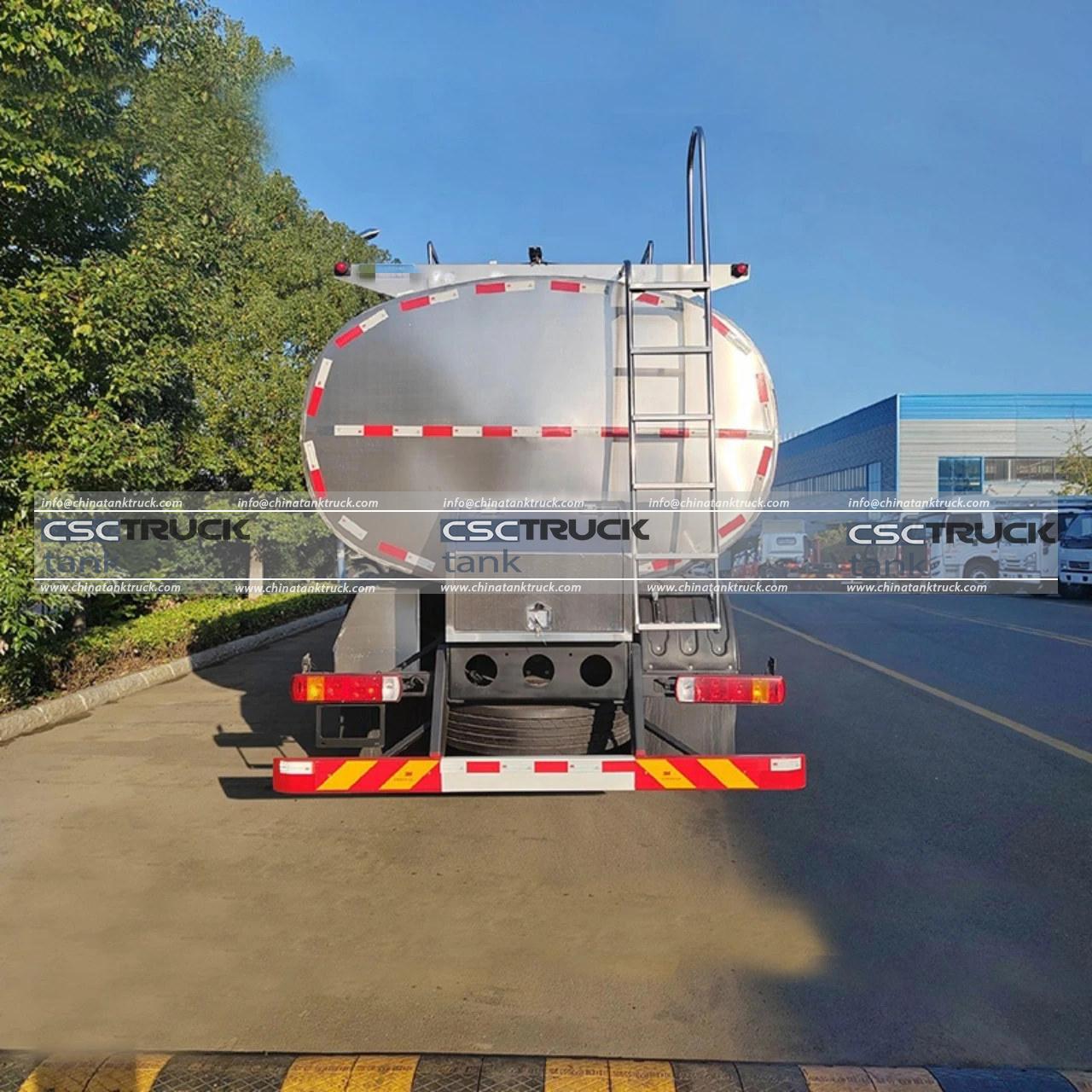
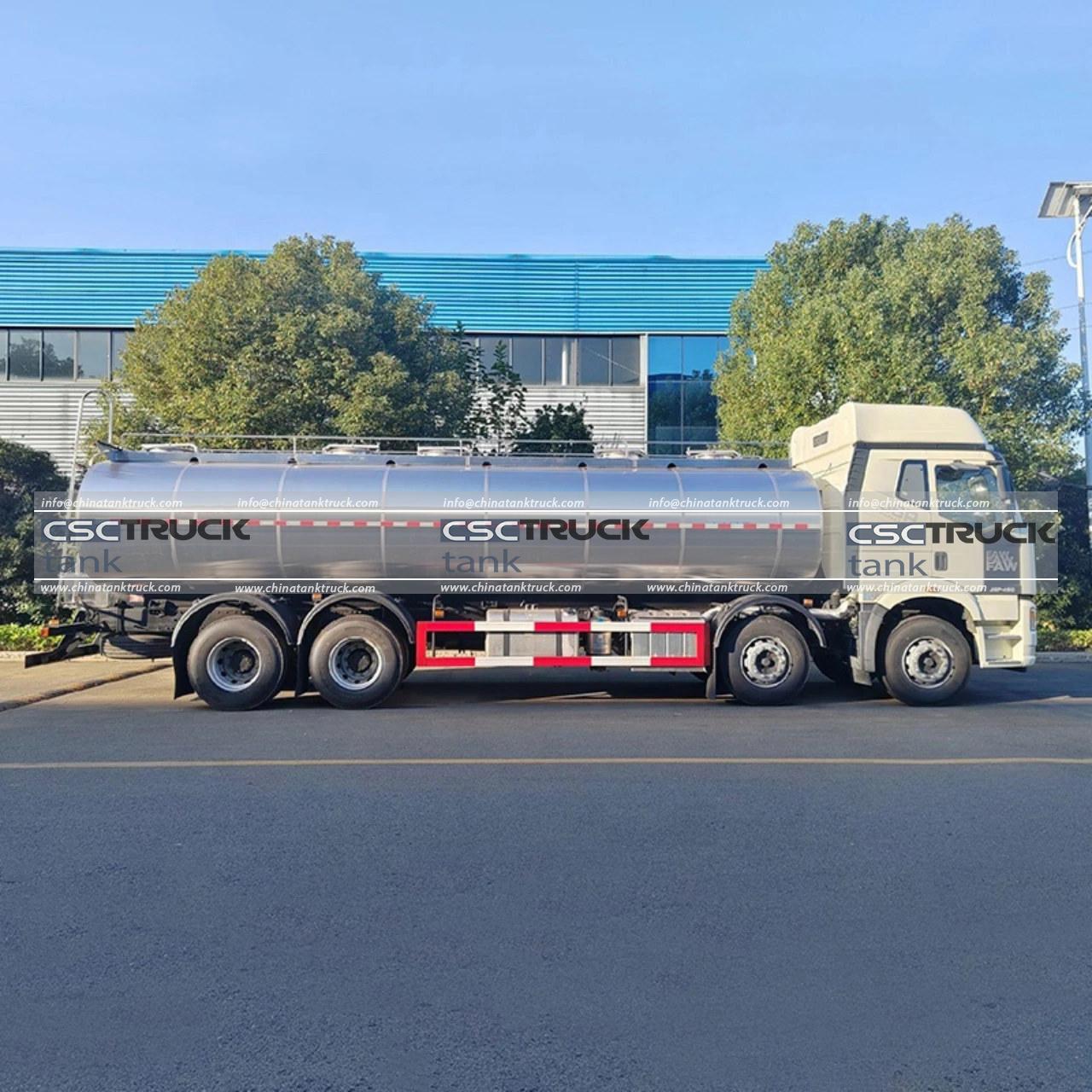
A milk tank truck, also called a milk tanker or bulk milk transport truck, is a specialized vehicle designed to collect and transport fresh milk from dairy farms and collection centers to processing plants.
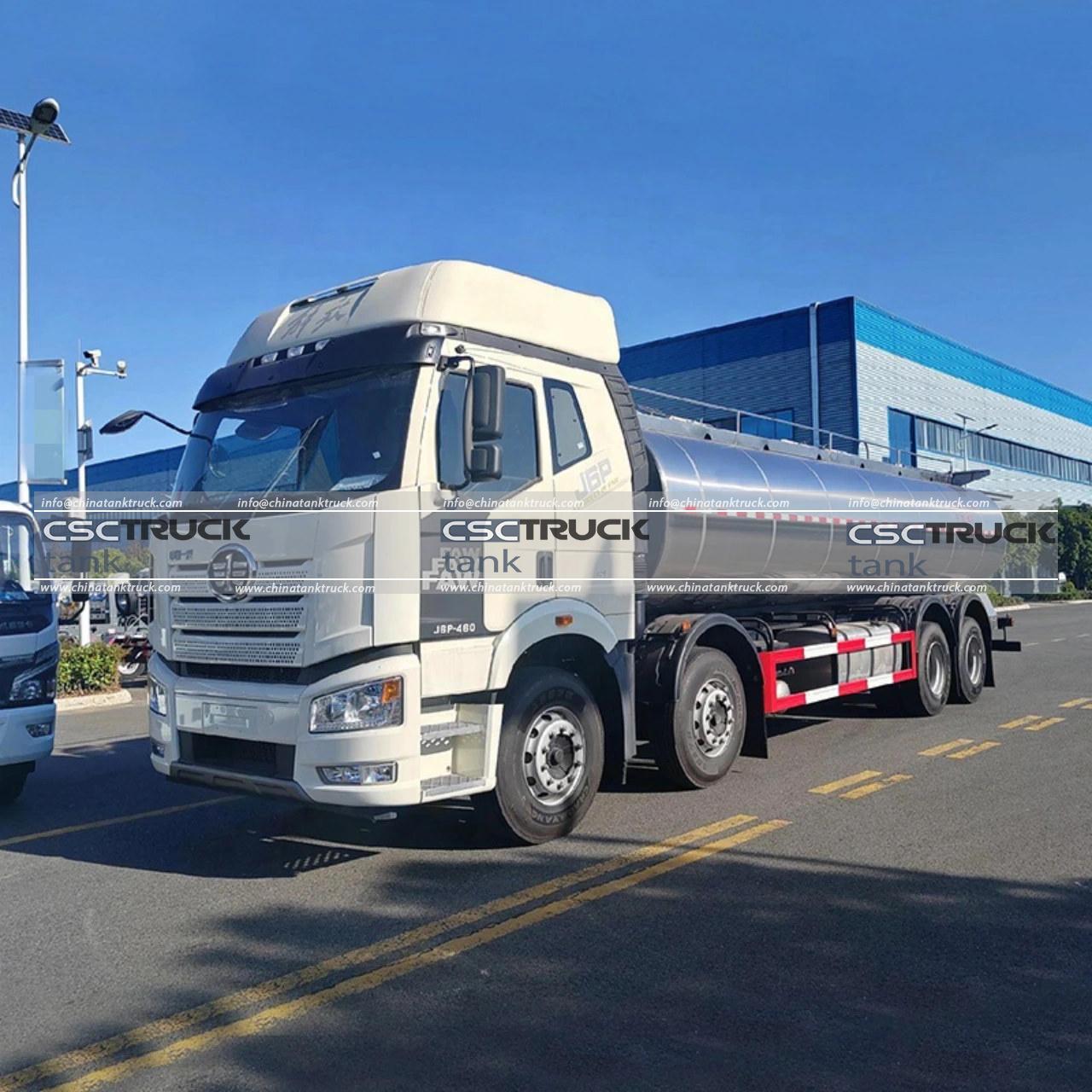
Milk is highly perishable, so transportation equipment must protect it against contamination and unnecessary temperature changes. A typical milk tanker uses a food-grade stainless steel tank, thermal insulation, sanitary pipelines and valves, and a milk transfer system.
Depending on the application, milk tank trucks can be configured in different capacities, from small vehicles for local farm collection to large tankers for regional or long-distance dairy transportation. CSCTRUCK China Tank Truck‘s milk tank truck range includes configurations such as 5,000-liter, 6,000-liter, 10,000-liter, and 25,000-liter models.
1. Determine Your Required Milk Tank Capacity
Capacity should be one of the first factors you consider when buying a milk tank truck.
The appropriate capacity depends on:
- Daily milk collection volume
- Number of farms or collection points
- Transportation distance
- Road conditions
- Loading and unloading frequency
- Local vehicle weight regulations
- Future business growth
For example, a small dairy operation collecting milk from farms on narrow rural roads may benefit from a compact tanker. A large dairy processor transporting milk from collection centers to a central processing facility may require a 20,000- or 25,000-liter truck.
However, bigger is not always better. Milk is relatively heavy, with a density of approximately 1.03 kg/L. Therefore, 20,000 liters of milk can weigh about 20.6 tonnes before adding the weight of the chassis, tank, equipment, fuel, and other components.
Always check the permitted gross vehicle weight and axle loads in your destination country before ordering.
2. Choose the Correct Tank Material
Tank material is one of the most important considerations because the milk directly contacts the internal tank surface.
Food-grade stainless steel is widely used for milk tank trucks because it offers corrosion resistance, durability, cleanability, and good compatibility with food applications.
CSCTRUCK China Tank Truck offers milk tanker configurations using stainless steel tanks, including a 25,000-liter 304 stainless steel milk tank truck.
304 vs. 316 Stainless Steel
304 stainless steel is commonly used for food and dairy applications because it provides a good balance between corrosion resistance, durability, and cost.
316 stainless steel provides higher corrosion resistance and may be considered for more demanding environments or specific customer requirements.
When requesting a quotation, specify the stainless steel grade rather than simply asking for a “stainless steel tank.”
3. Check the Tank Insulation
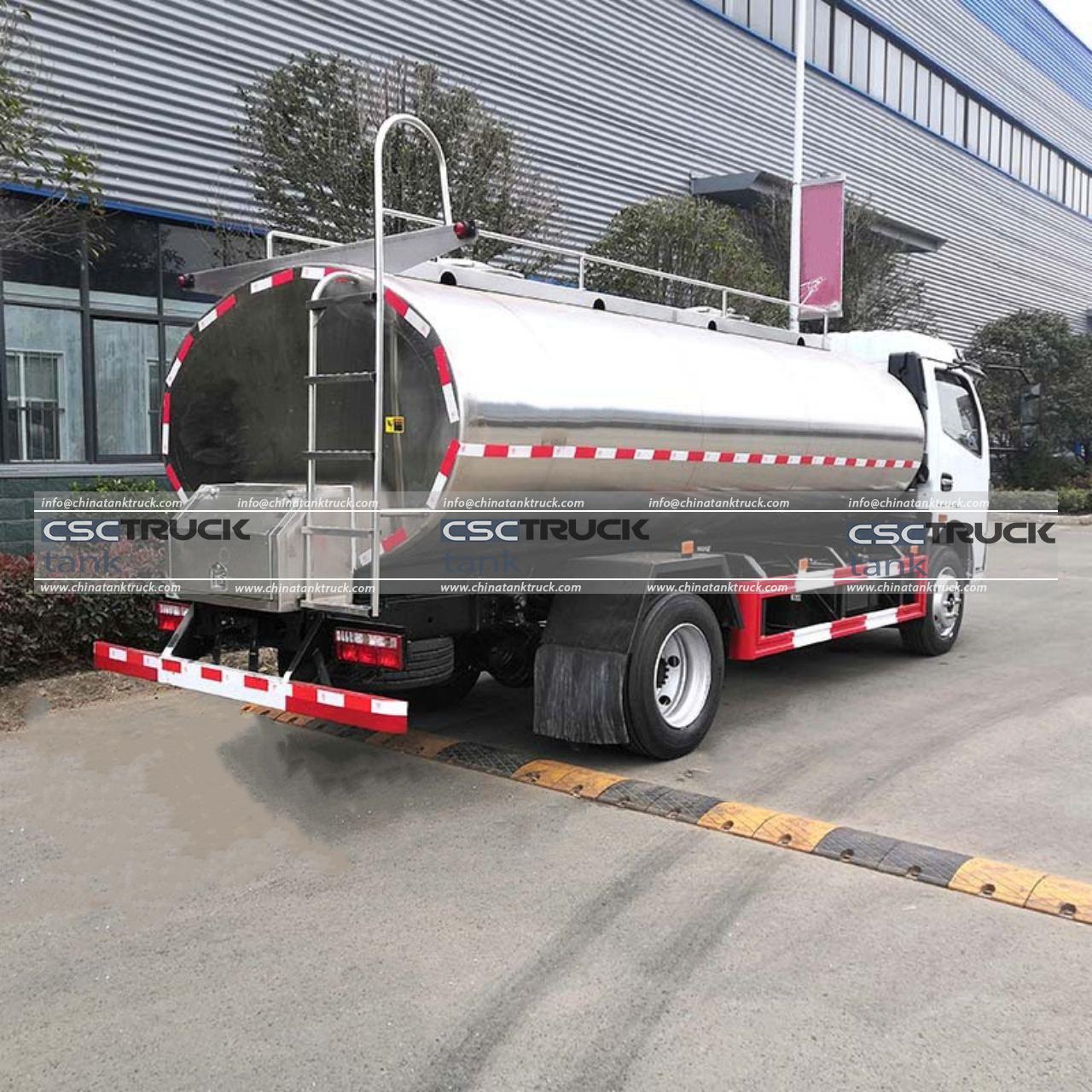
Milk transportation requires protection against temperature changes. A properly insulated tank reduces heat transfer between the milk and the outside environment.
The importance of insulation increases when:
- Transportation distances are long
- Ambient temperatures are high
- Milk collection takes several hours
- The vehicle operates in tropical or hot climates
- Temperature-control requirements are strict
It is important to distinguish insulation from active refrigeration. Insulation slows temperature changes, while refrigeration actively removes heat.
For example, Canadian dairy requirements specify that bulk milk transport vehicles must protect milk from contamination and control temperature during transportation. The National Dairy Code also specifies requirements for milk-contact surfaces and tank thermal performance.
Before buying, ask the manufacturer for details about the insulation material, thickness, tank structure, and expected thermal performance.
4. Evaluate the Sanitary Design
A milk tanker must be easy to clean and sanitize.
Pay attention to:
- Internal tank surface smoothness
- Welding quality
- Sanitary manholes
- Milk inlet and outlet design
- Sanitary valves
- Pipelines and fittings
- Pump configuration
- Drainage
- Cleaning system
Milk-contact surfaces should not have unnecessary cavities, rough areas, or open seams where milk residues can accumulate.
The Canadian National Dairy Code, for example, specifies that milk-contact surfaces should be corrosion-resistant, smooth, non-toxic, resistant to cleaning chemicals, and readily cleanable.
This illustrates why buyers should evaluate the complete sanitary design rather than focusing only on the stainless steel grade.
5. Consider the Milk Pump and Transfer System
The milk transfer system determines how efficiently the tanker can load and unload milk.
Depending on the application, the truck may be equipped with a sanitary milk pump, pipelines, valves, hoses, and other transfer components.
When comparing suppliers, ask:
- What type of pump is used?
- What is the pumping capacity?
- What materials are used for milk-contact components?
- How are the inlet and outlet connections configured?
- Can the pump handle the required loading and unloading conditions?
- Are spare parts readily available?
The transfer system should be designed specifically for hygienic milk handling rather than simply adapted from an ordinary liquid tanker.
6. Decide Whether You Need CIP
Cleaning is a critical part of milk tanker operation.
CIP, or Clean-in-Place, allows the internal tank and associated components to be cleaned without completely dismantling the system. Depending on the configuration, a CIP system can circulate cleaning solutions through the tank, pipelines, valves, and other milk-contact components.
When purchasing a tanker, determine whether your dairy operation requires:
- Manual cleaning
- Spray-ball cleaning
- Semi-automatic cleaning
- Full CIP cleaning
- Customized cleaning connections
The correct choice depends on your cleaning procedures, operating frequency, dairy plant equipment, and local hygiene requirements.
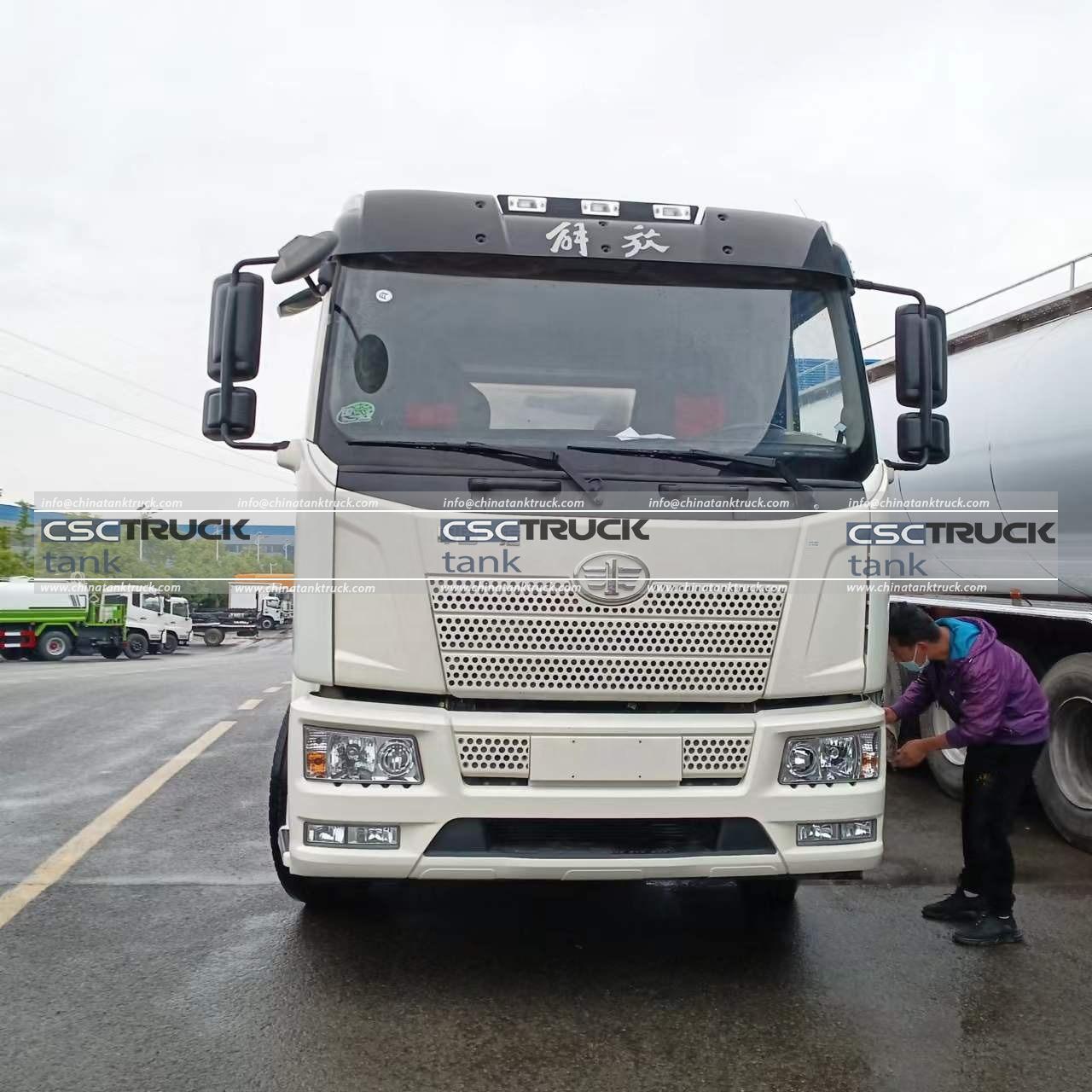
7. Select the Right Truck Chassis
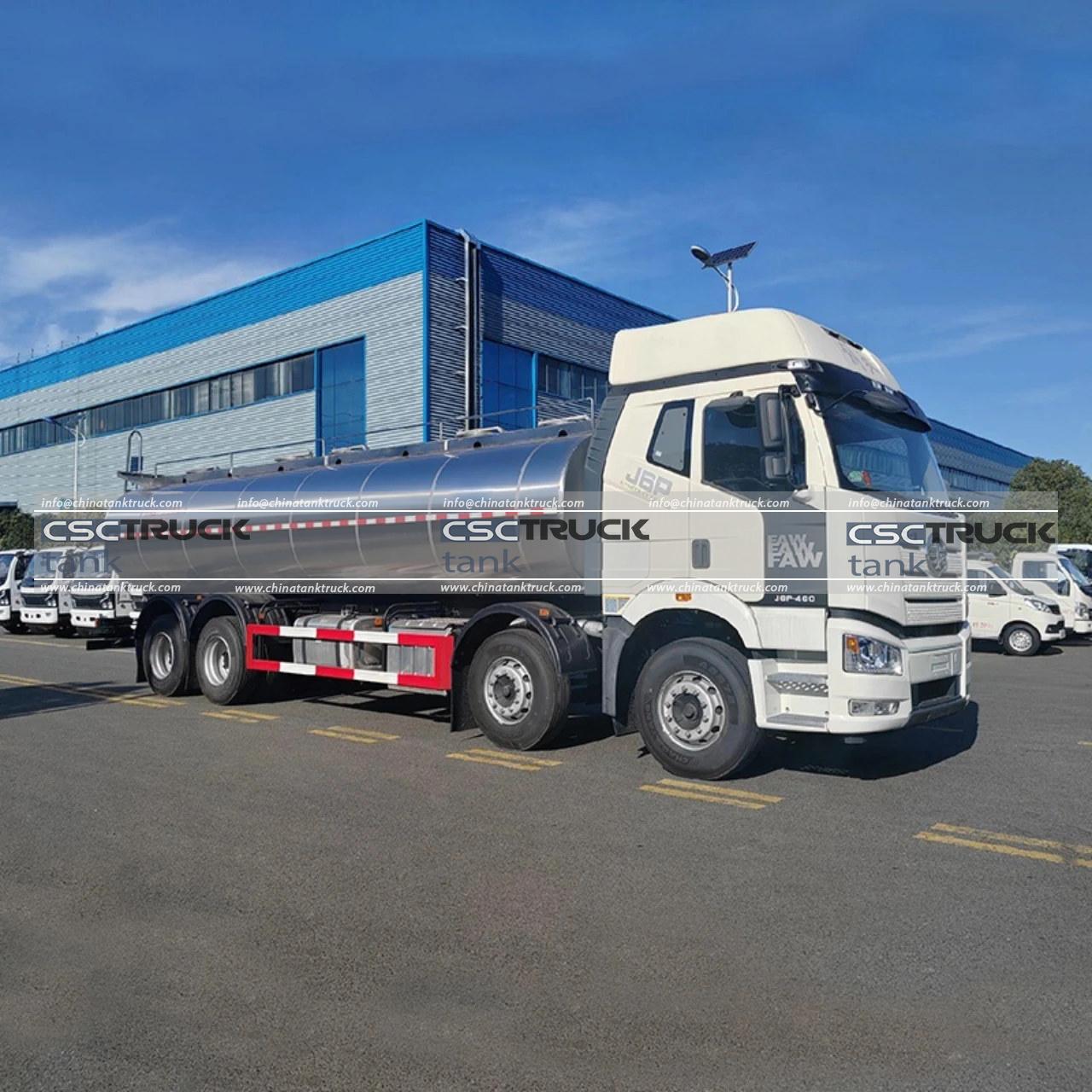
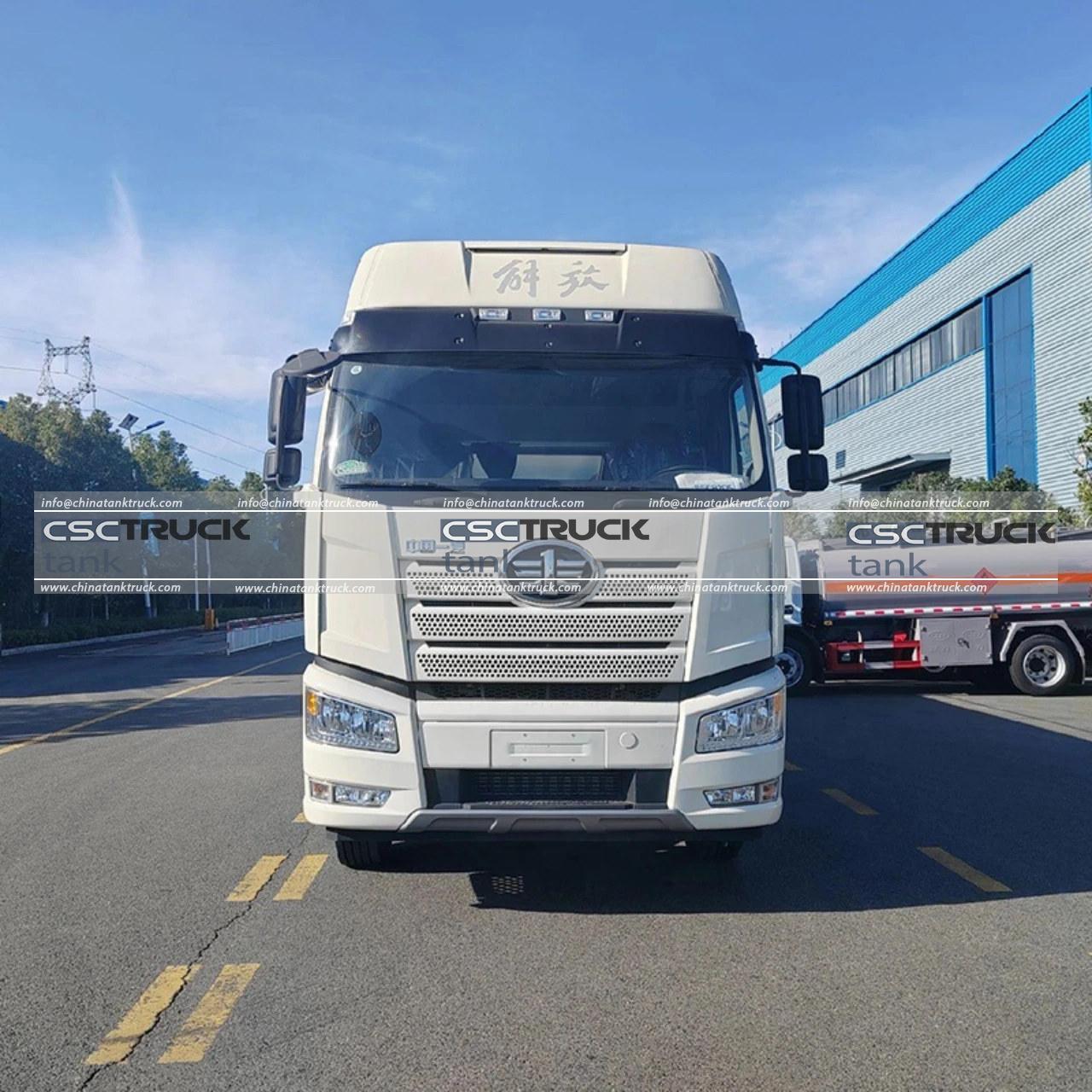
The tank is only one part of the vehicle. The chassis also needs to match your operating environment.
Consider:
- Payload capacity
- Number of axles
- Engine power
- Wheelbase
- Drive configuration
- Left- or right-hand drive
- Fuel consumption
- Local service availability
- Road conditions
For paved highways and long-distance transportation, a conventional heavy-duty chassis may be suitable. For farm collection in mountainous or poorly maintained areas, a 4×4 or other specialized configuration may be more appropriate.
The chassis should also have sufficient payload capacity to safely carry the filled tank while complying with local road regulations.
8. Consider Your Operating Environment
A milk tanker designed for one country may not be ideal for another.
Before placing an order, tell the manufacturer:
- Destination country
- Driving side
- Climate
- Road conditions
- Typical transportation distance
- Daily milk volume
- Required tank capacity
- Applicable emissions standards
- Local vehicle regulations
For example, a dairy operator in a hot climate may place greater emphasis on insulation, while a rural operator may prioritize four-wheel drive and ground clearance.
Customization can therefore be more valuable than simply purchasing the cheapest standard model.
9. Compare the Total Cost, Not Just the Purchase Price
The cheapest milk tank truck is not necessarily the most economical choice.
Your total cost of ownership may include:
- Initial vehicle price
- Shipping and import costs
- Fuel consumption
- Maintenance
- Cleaning
- Spare parts
- Pump maintenance
- Tires
- Driver and operating costs
- Downtime
A higher-quality sanitary system, durable chassis, or better insulation may increase the initial purchase price while reducing operating problems over the vehicle’s service life.
When comparing quotations, make sure you compare equivalent specifications.
10. Check the Manufacturer Before Ordering
Choosing the right manufacturer is just as important as choosing the truck.
Look for a supplier that can provide:
- Factory manufacturing capability
- Detailed technical specifications
- Tank material documentation
- Quality inspection
- Export documentation
- Customization
- Spare parts
- Technical support
- Shipping assistance
- After-sales service
Avoid comparing suppliers solely by their advertised price. 2 trucks with the same nominal capacity can have very different tank construction, chassis specifications, sanitary equipment, and manufacturing quality.
CSCTRUCK China Tank Truck: Milk Tank Truck Manufacturer
CSCTRUCK China Tank Truck is a Chinese manufacturer and exporter specializing in tank trucks, tank trailers, and specialized transportation vehicles. Its product range includes fuel tank trucks, water tankers, chemical tank trucks, LPG tankers, milk tank trucks, and other specialized vehicles.
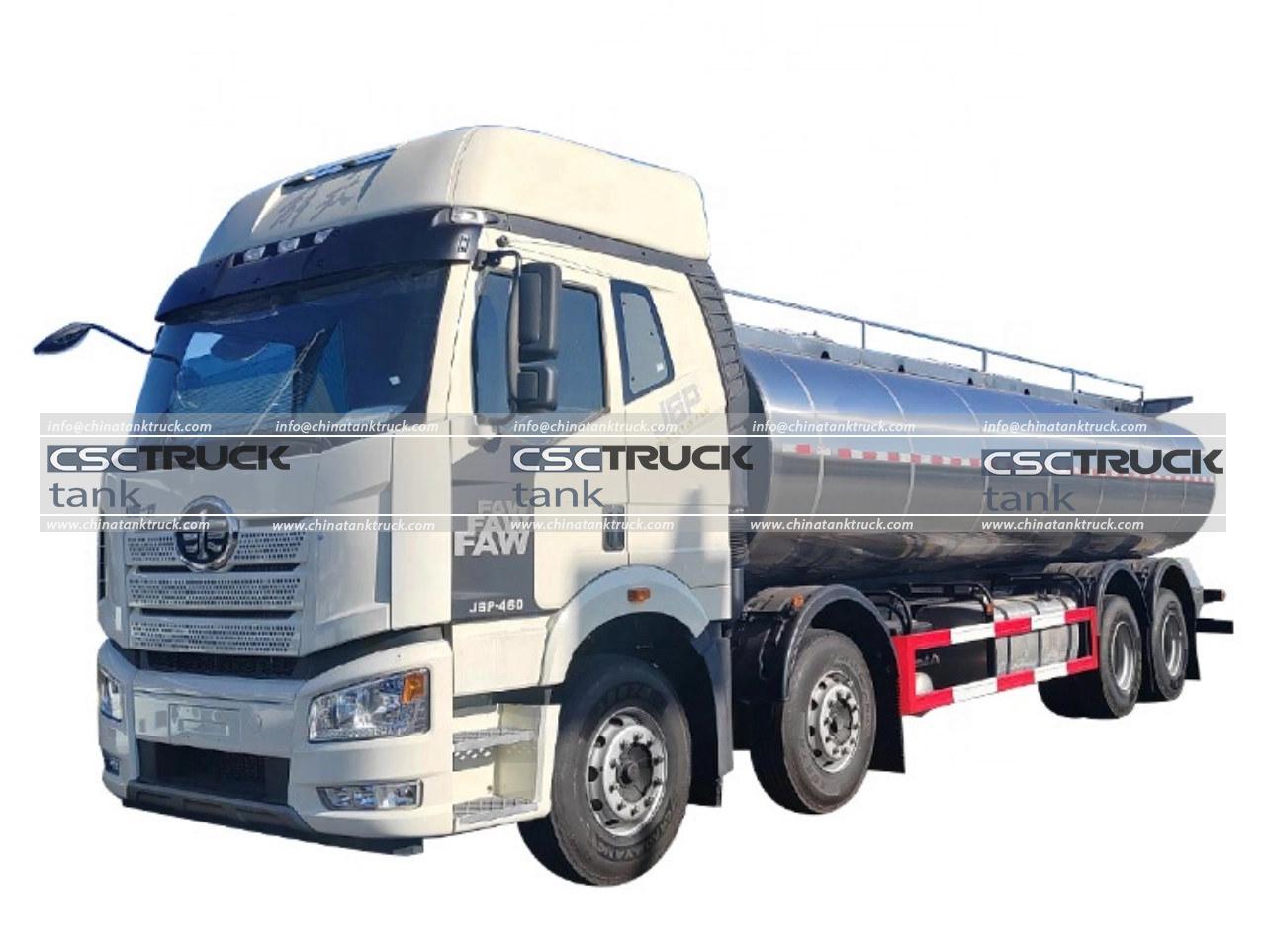
The company’s current milk tanker range includes different capacities and chassis configurations, such as 5,000-liter FOTON milk transportation trucks, 6,000-liter 4WD milk transport trucks, 10,000-liter ISUZU FVZ milk tank transport trucks, and 25,000-liter 304 stainless steel milk tank trucks.
According to CSCTRUCK China Tank Truck, its factory integrates R&D, manufacturing, quality control, and after-sales service, while its products are exported to more than 50 countries. The company also provides customization for tank capacity, materials, compartments, pumps, and chassis configurations.
For international buyers, this can be useful because dairy transportation conditions differ significantly between markets. Customers can discuss their required capacity, chassis, tank material, insulation, pumping system, driving configuration, and other specifications before production.
Milk Tank Truck Buying Checklist
Before placing an order, use this checklist:
Tank
- Required capacity
- Food-grade stainless steel
- 304 or 316 stainless steel
- Thermal insulation
- Internal surface and welding quality
Sanitary System
- Sanitary valves
- Milk pump
- Food-grade pipelines
- Hygienic manhole
- Cleaning/CIP system
- Easy drainage
Vehicle
- Suitable chassis
- Correct payload
- Axle configuration
- Engine and transmission
- LHD or RHD
- Local emissions and road requirements
Supplier
- Factory capability
- Quality inspection
- Export documents
- Spare parts
- Technical support
- Shipping arrangements
- Warranty and after-sales service
Conclusion
Buying a milk tank truck requires careful evaluation of capacity, tank material, insulation, sanitary construction, pumping equipment, cleaning systems, chassis, regulations, and total operating costs.
The most suitable tanker is not necessarily the largest or cheapest model. Instead, it should match your milk collection volume, transportation routes, road conditions, climate, legal requirements, and dairy-processing system.
For dairy farms, milk collection companies, processors, and international distributors, working directly with an experienced manufacturer can make it easier to customize the vehicle around actual operating requirements.
With different capacities, chassis options, stainless steel tank configurations, and customized equipment available, CSCTRUCK China Tank Truck provides milk transportation solutions for a wide range of dairy logistics applications.