
A milk tank truck is a specialized vehicle designed to collect and transport fresh milk from dairy farms, collection centers, and processing facilities. Unlike a conventional liquid tanker, a milk tanker requires food-grade stainless steel construction, thermal insulation, sanitary piping, hygienic valves, pumping equipment, and cleaning systems. These additional requirements make the price of a milk tank truck higher than that of many standard liquid transport trucks.
So, how much does a milk tank truck cost? The answer depends on its tank capacity, chassis brand, stainless steel grade, insulation, sanitary equipment, pumping system, driving configuration, emission standard, and destination market. In international markets, new milk tank trucks can range from tens of thousands of U.S. dollars to considerably more for large-capacity or highly customized configurations. For example, current marketplace listings include a 25,000-liter stainless-steel milk truck at around US$44,000–45,000, although actual quotations vary according to specifications and shipping conditions.
1. Typical Milk Tank Truck Price Range
There is no single standard price for a milk tanker because 2 trucks with the same tank volume can have significantly different configurations.
As a general purchasing reference:
| Milk Tank Truck Type | Typical Capacity | General Price Level |
|---|---|---|
| Mini milk truck | 2,000–5,000 L | Lower |
| Small milk tanker | 5,000–10,000 L | Moderate |
| Medium milk tanker | 10,000–20,000 L | Moderate to high |
| Large milk tanker | 20,000–30,000+ L | High |
| Milk tank semi-trailer | 25,000–40,000+ L | High to very high |
| Customized sanitary tanker | Varies | Depends on configuration |
These are general market categories rather than fixed quotations. A buyer should request a detailed quotation based on the complete vehicle specification rather than comparing prices only by tank volume.
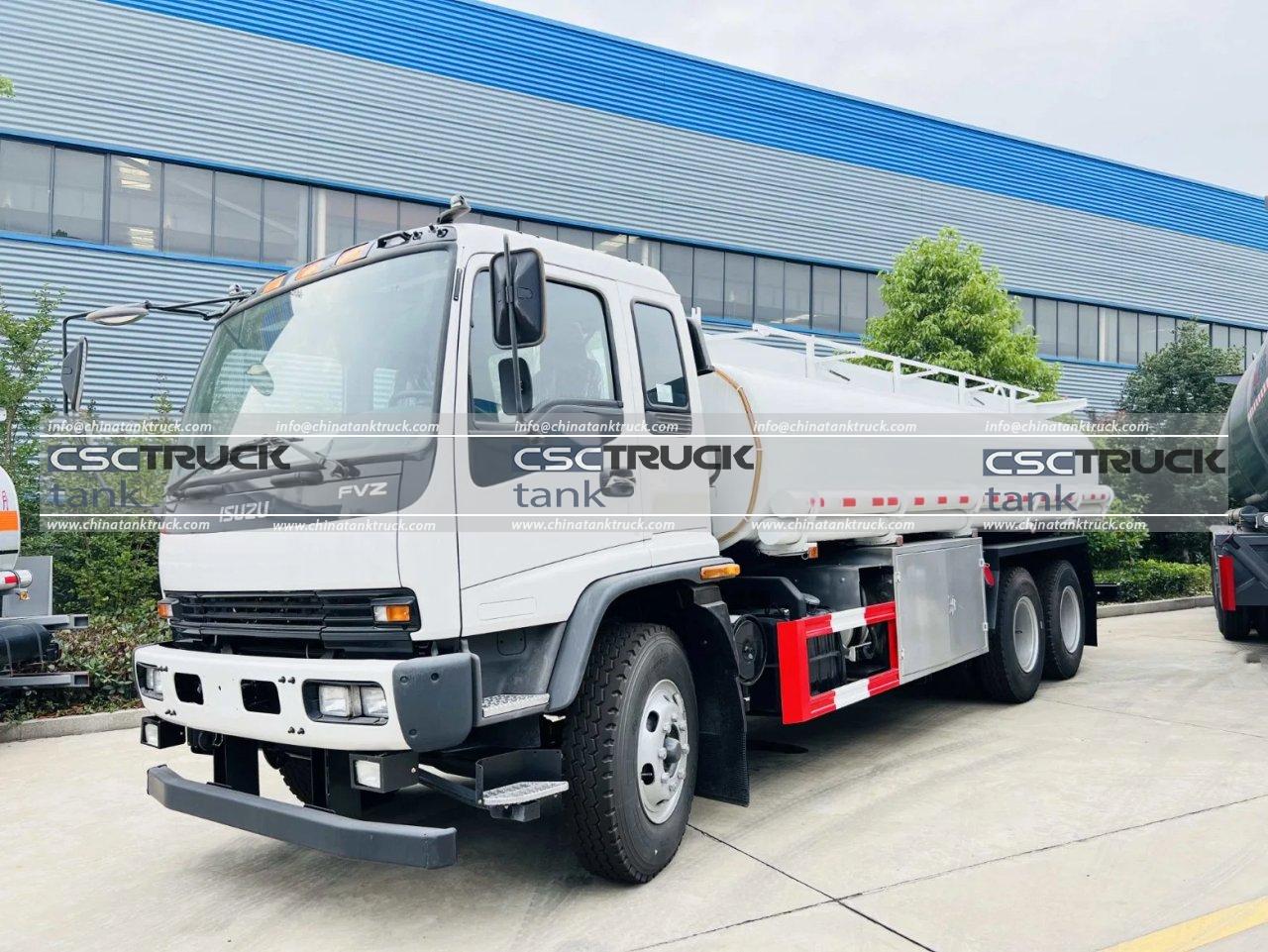
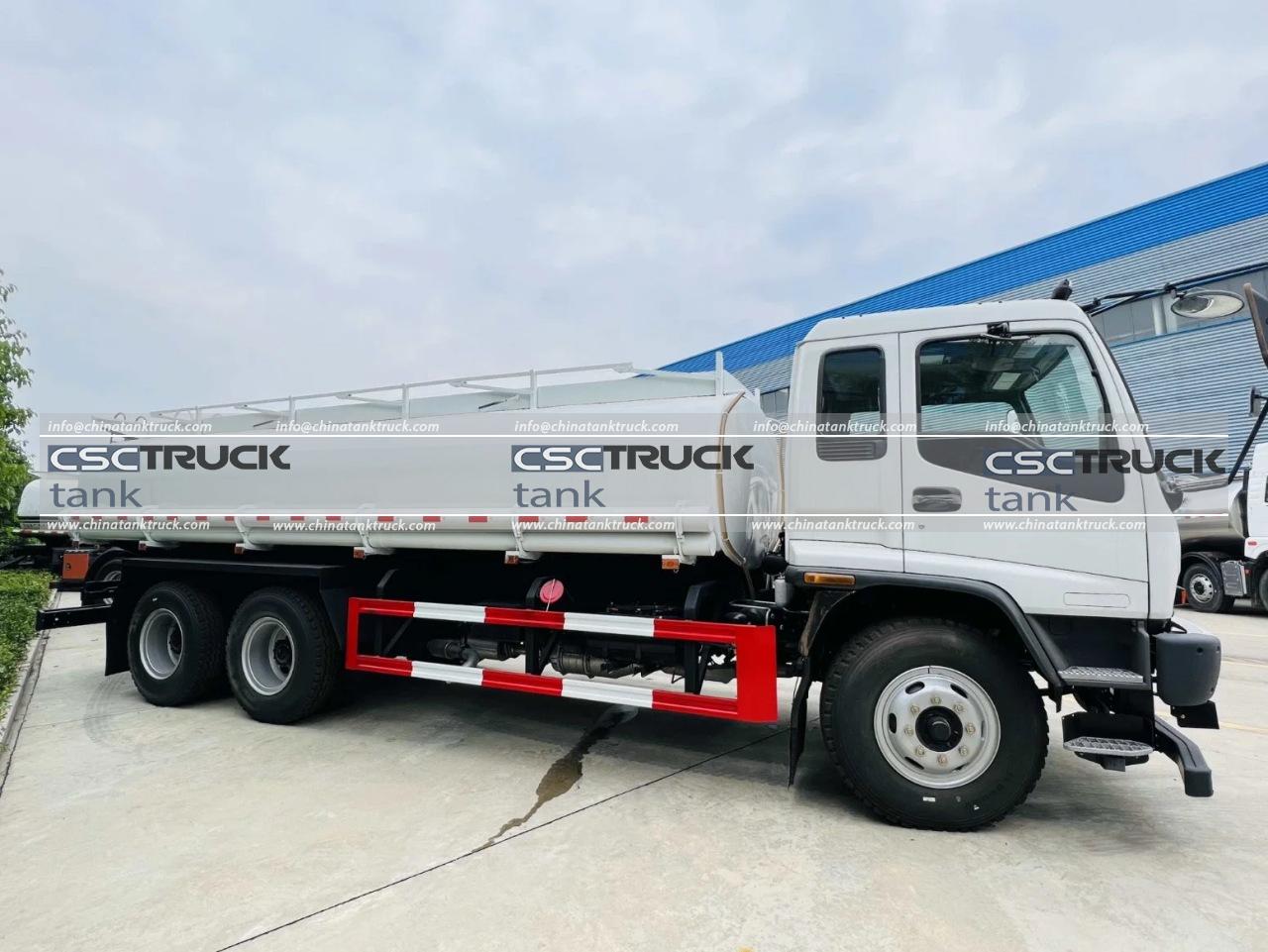
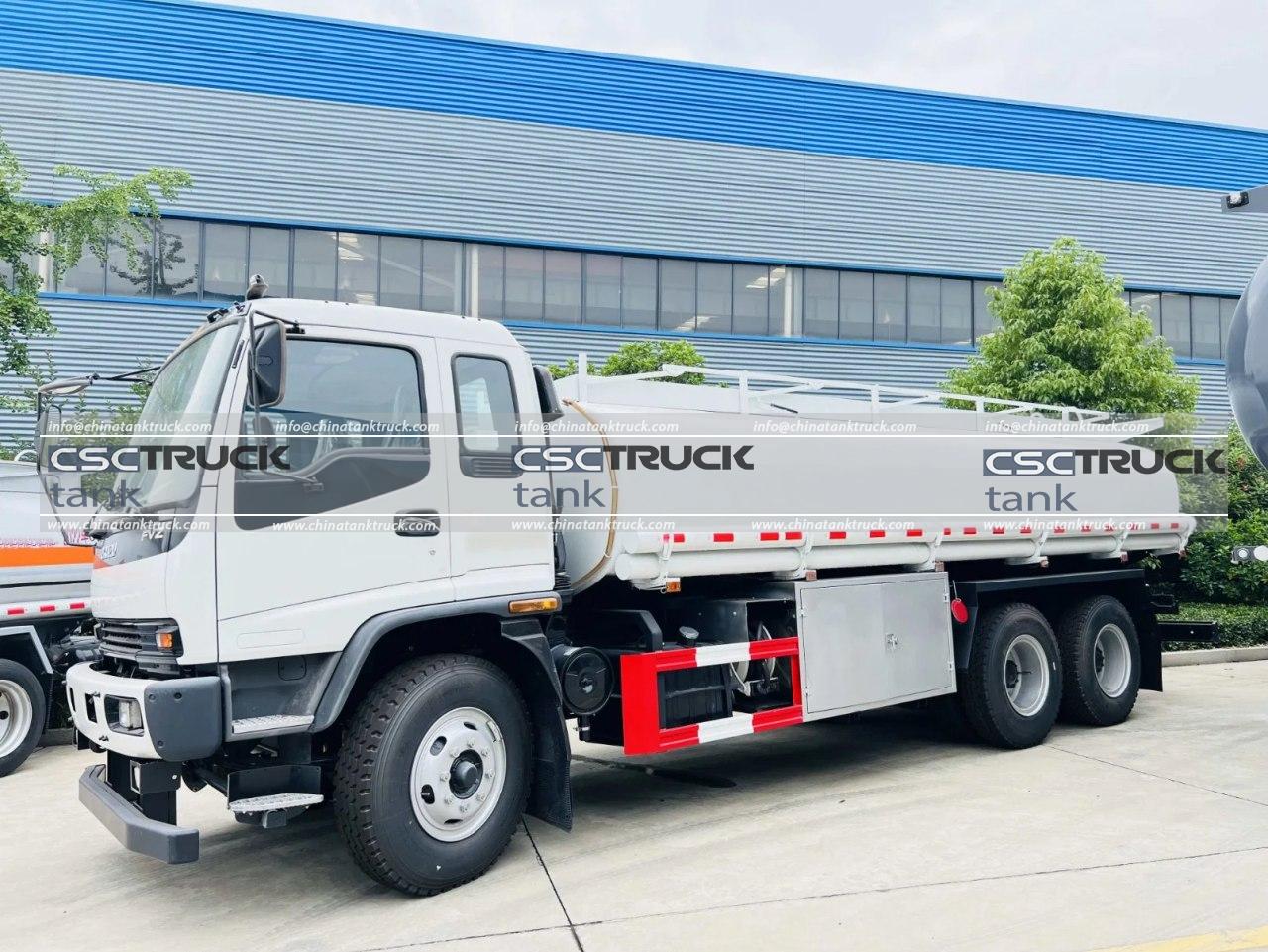
For example, CSCTRUCK China Tank Truck currently lists a 10,000-liter ISUZU FVZ milk tank truck with a 304 2B stainless-steel tank, while its 13,000-liter ISUZU milk tank truck uses food-grade 304-2B stainless steel, 80 mm polyurethane insulation, a three-compartment configuration, and an automatic cleaning system.
2. Tank Capacity Has a Major Impact on Price
Tank capacity is one of the first factors affecting the cost of a milk tanker.
A small 2,000- or 5,000-liter milk truck generally requires a smaller chassis, smaller tank, and less material. It may also be easier to operate on narrow rural roads.
A 10,000–20,000-liter tanker requires a heavier chassis and larger tank system. Larger trucks may also require more powerful engines, larger axles, stronger suspension systems, and additional sanitary equipment.
For long-distance dairy transportation, 20,000–30,000-liter vehicles or milk tank semi-trailers can provide greater transportation efficiency. However, the larger vehicle must comply with local gross vehicle weight and axle-load regulations. CSCTRUCK China Tank Truck‘s published guidance places common milk tanker capacities broadly between 3,000 and 30,000 liters, with larger specialized configurations also possible.
3. Chassis Brand and Configuration Affect the Cost
The chassis is another major component of the total price.
A milk tanker may be built on an ISUZU, HOWO, FOTON, FAW, SHACMAN, or another commercial truck chassis. Different chassis brands have different engine specifications, payload capacities, transmission systems, cabin configurations, emission standards, and local service availability.
For example, CSCTRUCK China Tank Truck‘s 13 CBM ISUZU milk tank truck uses a 190 HP ISUZU engine and a 4×2 configuration, while its HOWO 10 CBM sanitary milk tanker uses a 300 HP engine and a 4×2 chassis.
Therefore, two 10,000-liter milk tank trucks can have substantially different prices even when their tank capacities are similar.
4. Stainless Steel Material Is Important
The tank material directly influences both the purchase price and the suitability of the vehicle for dairy transportation.
Food-grade stainless steel is widely used because milk comes into direct contact with the tank’s internal surfaces. Stainless steel provides corrosion resistance, durability, and a smooth surface that can be cleaned effectively.
For example, CSCTRUCK China Tank Truck specifies 304 2B stainless steel for several of its milk tanker models. Its ISUZU FVZ 10,000-liter model uses a 304 2B stainless-steel milk tank, while the 13 CBM ISUZU model specifies food-grade 304-2B stainless steel with a 4 mm tank thickness.
Higher specifications, thicker material, different stainless-steel grades, or more sophisticated internal construction can increase the final price.
5. Insulation and Temperature-Control Systems
Milk is highly perishable, so temperature management is an important part of milk tanker design.
Most milk transportation systems rely on milk being properly cooled before transportation and use an insulated tank to limit temperature increases during the journey. Insulation thickness, material, construction, and optional temperature-control equipment can therefore influence the vehicle price.
For example, the CSCTRUCK China Tank Truck 13 CBM ISUZU milk tanker specifies 80 mm polyurethane foam insulation and states a temperature rise/fall of no more than 1°C over 24 hours under its specified conditions.
A buyer operating in a hot climate or transporting milk over long distances may need more demanding thermal-performance specifications than a buyer operating on short collection routes.
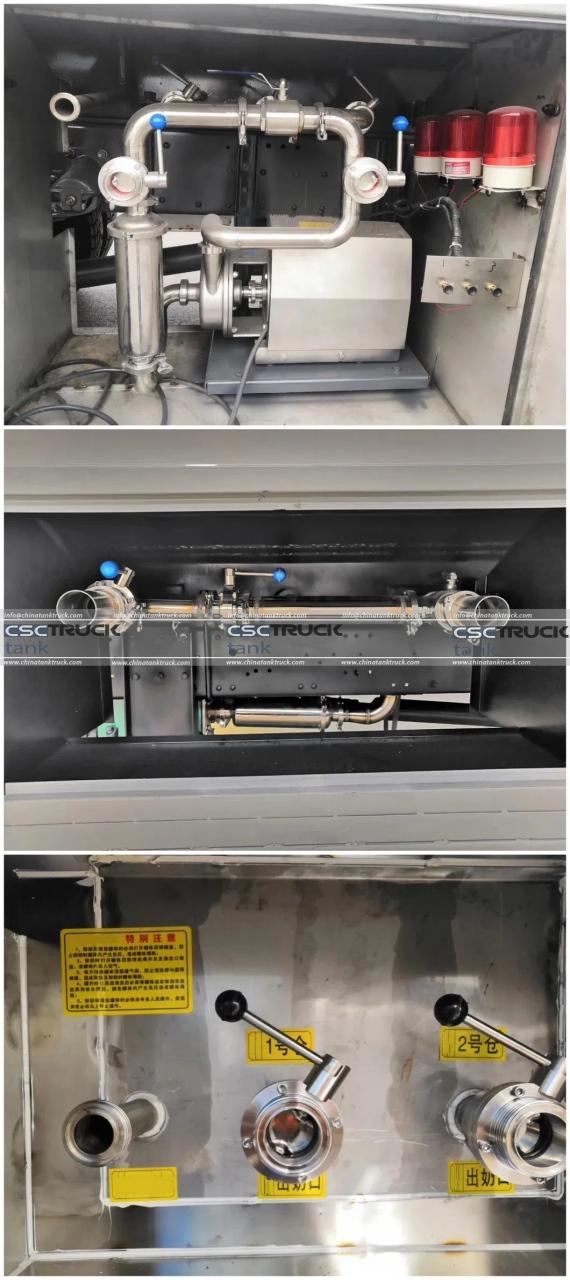
6. Sanitary Equipment Can Increase the Price
A milk tank truck is not simply a stainless-steel tank mounted on a truck chassis.
Sanitary components can include:
- Sanitary milk pump
- Food-grade pipelines
- Stainless-steel valves
- Hygienic manholes
- Milk inlet and outlet systems
- Sampling ports
- CIP cleaning system
- Temperature monitoring
- Multiple compartments
- Stainless-steel fittings and hoses
The more sophisticated the sanitary system, the higher the equipment cost.
For instance, CSCTRUCK China Tank Truck‘s 13,000-liter ISUZU model includes a PIC automatic cleaning system, with a rotating cleaning device designed to clean the tank interior.
7. Customization Changes the Final Quotation
International milk tanker buyers often need customized specifications rather than a standard truck.
Common customization requirements include:
- Tank capacity
- Tank material
- Insulation thickness
- Number of compartments
- Chassis brand
- Left- or right-hand drive
- Engine and emission standard
- Pump capacity
- CIP system
- Pipeline configuration
- Electrical system
- Tire specifications
- Refrigeration or temperature-control equipment
For example, a buyer in a country with strict emissions requirements may need a newer Euro-standard chassis, while another market may prioritize a particular chassis brand because spare parts are readily available locally.
Consequently, manufacturers generally provide the final price after confirming the buyer’s complete technical requirements.
8. Don’t Forget Shipping and Import Costs
The factory quotation is not necessarily the final landed cost.
When purchasing a milk tank truck internationally, buyers should also consider:
Truck price + shipping + insurance + customs duties + port charges + local taxes + registration + possible modifications = total acquisition cost
Shipping costs depend on the destination, shipping method, vehicle dimensions, and international freight conditions.
Import duties and taxes can also vary significantly between countries. Before placing an order, buyers should therefore calculate the total landed cost rather than comparing factory prices alone.
9. New vs. Used Milk Tank Truck Cost
Used milk tank trucks may have a lower initial purchase price, but the apparent saving should be evaluated carefully.
Important inspection points include:
- Tank corrosion or damage
- Stainless-steel condition
- Insulation performance
- Pump condition
- Valve and pipeline condition
- Cleaning system
- Chassis mileage
- Engine condition
- Transmission
- Brake system
- Previous cargo
- Maintenance history
A new milk tanker normally provides greater flexibility for customization and allows the buyer to specify the required chassis, tank material, insulation, and sanitary equipment from the beginning.
For businesses transporting food products, the condition and hygiene of the tank are particularly important.
10. About CSCTRUCK China Tank Truck
CSCTRUCK China Tank Truck is a Chinese manufacturer of tank trucks and specialized commercial vehicles. Founded in 2005 in Suizhou, Hubei, the company produces vehicles for liquid, gas, powder, and other specialized transportation applications. Its product range includes fuel tank trucks, water tankers, chemical tankers, milk tank trucks, and customized tank vehicles.
For milk transportation, CSCTRUCK China Tank Truck offers different capacities and chassis configurations. Its published milk tanker range includes small milk trucks as well as 10,000-liter, 13,000-liter, 20,000-liter and larger configurations.
The manufacturer also states that it supports customized solutions, OEM/ODM manufacturing, export services, and engineering support. This can be useful for international buyers who need a milk tanker adapted to their local road conditions, regulations, climate, and dairy transportation requirements.
Conclusion: How Much Should You Budget?
The cost of a milk tank truck depends on much more than its tank volume. Capacity, chassis, stainless-steel specification, insulation, sanitary equipment, pumping system, cleaning system, customization, and destination-country requirements can all substantially change the final price.
As a general reference, small milk trucks may cost tens of thousands of dollars, while larger 20,000–30,000-liter trucks and specialized milk tank trailers can cost considerably more. Current market listings demonstrate that a 25,000-liter stainless-steel milk truck, for example, may be advertised around US$44,000–45,000, but this should not be treated as a universal price.
The most reliable approach is to provide the manufacturer with your required capacity, chassis preference, driving side, destination country, tank material, insulation requirements, pumping system, and cleaning system and request a complete quotation.