
Pneumatic tank trucks are widely recognized for their ability to unload dry bulk materials quickly and efficiently using compressed air. They are commonly used to transport cement, fly ash, lime, flour, plastic pellets, and other powdered or granular products. However, many operators and fleet managers ask an important question: Can pneumatic tank trucks also load materials pneumatically?
The answer is YES—but with certain limitations. While most pneumatic tank trucks are specifically designed for pneumatic unloading, some can also be equipped or adapted for pneumatic loading depending on the material, loading facility, and truck configuration. Understanding how pneumatic loading works and when it is practical can help businesses improve efficiency while minimizing product loss and contamination.
As a leading manufacturer of dry bulk transport equipment, CSCTRUCK China Tank Truck designs and manufactures advanced pneumatic tank trucks for customers around the world. Founded in 2005, the company specializes in high-quality tank trucks for transporting liquids, gases, powders, and granular materials, offering customized solutions backed by modern manufacturing technology and comprehensive after-sales support.
Understanding Pneumatic Loading
Pneumatic loading uses air pressure or vacuum to transfer dry bulk materials from a storage facility into a tank truck without relying entirely on gravity.
Instead of pouring material into the tanker through an overhead loading hatch, the product is transported through pipelines using airflow. This closed transfer method significantly reduces dust emissions and helps protect sensitive materials from contamination.
There are two common pneumatic loading methods:
- Vacuum loading
- Pressure loading
Both methods rely on air movement rather than mechanical conveyors.

Vacuum Loading
Vacuum loading is the more common pneumatic loading method.
A vacuum pump creates negative pressure inside the receiving system, drawing material through hoses and pipelines into the tanker.
This method is often used for:
- Plastic pellets
- Flour
- Food ingredients
- Fine chemicals
- Pharmaceutical powders
- Lightweight industrial powders
Because the entire process occurs in a sealed system, dust generation is minimal.
Pressure Loading
Pressure loading uses compressed air to push materials from a storage silo into the truck.
Instead of sucking material into the tank, air pressure forces the product through pipelines until it enters the tanker.
Pressure loading is frequently used in facilities equipped with pneumatic conveying systems, especially for:
- Cement
- Fly ash
- Lime
- Mineral powder
- Silica flour
- Dry mortar
Are Standard Pneumatic Tank Trucks Designed for Pneumatic Loading?
Not always.
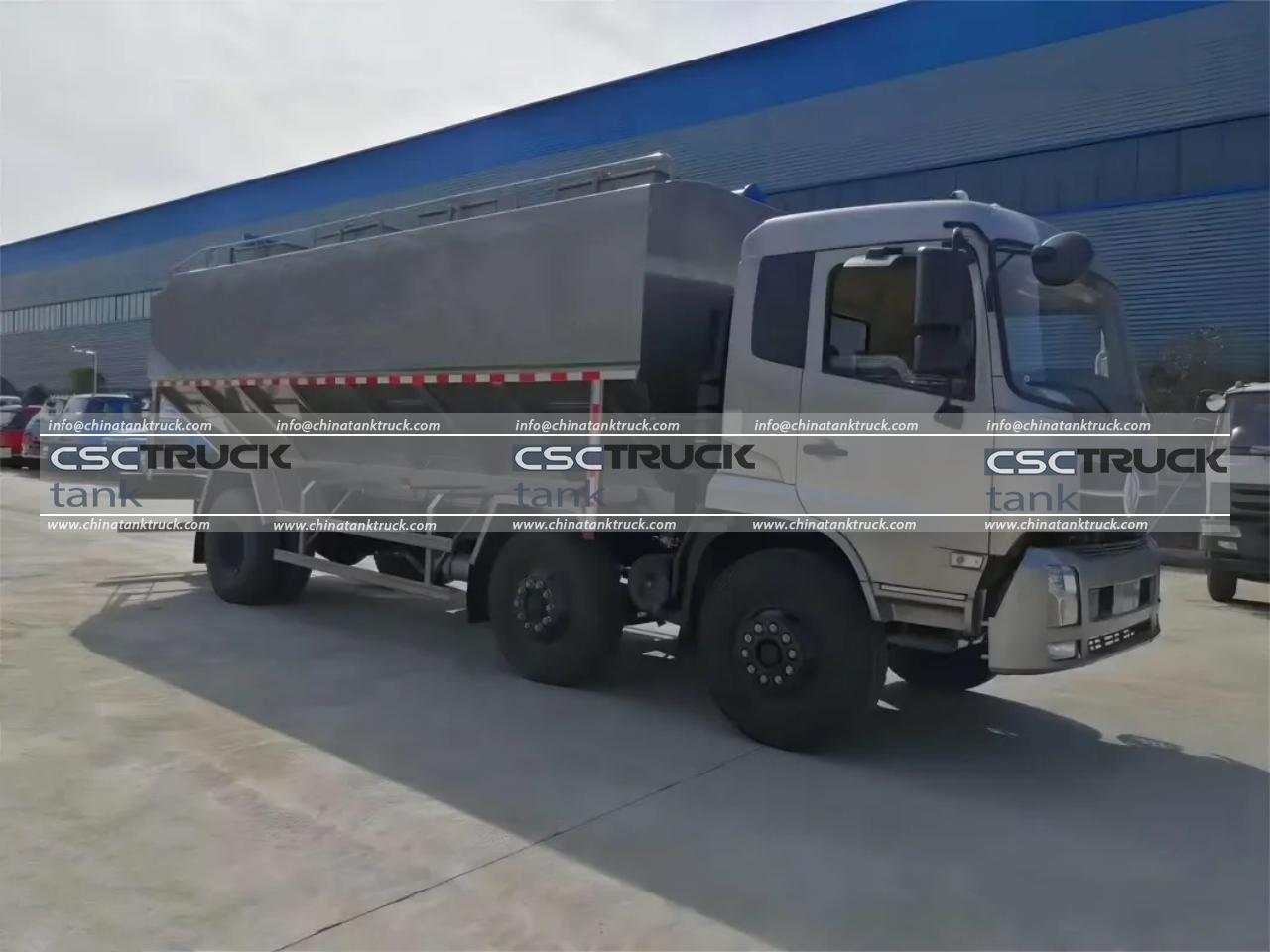
Most dry bulk pneumatic tank trucks are primarily engineered for pneumatic unloading, not loading.
Their onboard compressor, piping, fluidizing system, and discharge valves are optimized to push material out of the tank after transportation.
Loading generally occurs at a customer’s terminal or production plant using fixed equipment such as:
- Storage silos
- Pneumatic conveyors
- Industrial blowers
- Vacuum pumps
- Loading stations
The truck simply serves as the receiving vessel.
Therefore, the truck itself usually does not generate the airflow required for loading.
Can the Truck’s Compressor Be Used for Loading?
In most cases, no.
The onboard air compressor is specifically sized and configured to fluidize product and generate enough pressure for unloading.
Using it to load material would require:
- Different airflow direction
- Additional valves
- Specialized piping
- Vacuum capability
- Modified pressure controls
Since conventional compressors only produce positive pressure, they cannot create the vacuum necessary for most pneumatic loading systems.
Some specialized trucks may include reversible systems or auxiliary equipment, but these are relatively uncommon.

Materials Suitable for Pneumatic Loading
Not every dry bulk product can be loaded pneumatically.
Ideal materials include those with excellent flow characteristics.
Examples include:
- Portland cement
- Fly ash
- Limestone powder
- Calcium carbonate
- Alumina
- Silica flour
- Bentonite
- Plastic resin pellets
- PVC powder
- Food-grade flour
- Sugar powder
- Starch
Materials that are sticky, wet, or highly abrasive may require different handling systems.
Advantages of Pneumatic Loading
1. Reduced Dust Emissions
Traditional gravity loading can release significant amounts of airborne dust.
Pneumatic loading keeps material enclosed throughout the transfer process, helping facilities comply with environmental regulations while improving workplace cleanliness.
2. Less Product Contamination
Since the product remains inside sealed pipelines, exposure to moisture, insects, debris, and foreign materials is minimized.
This is especially important for food-grade and pharmaceutical applications.
3. Improved Worker Safety
Operators no longer need to climb onto tanker tops as frequently.
Reducing work at height lowers accident risks while simplifying loading procedures.
4. Higher Automation
Many pneumatic loading systems operate automatically using programmable controls.
Automation offers:
- Consistent loading rates
- Accurate weighing
- Lower labor requirements
- Better process control
5. Better Material Recovery
Because material is conveyed through enclosed pipelines, product loss is greatly reduced compared to open loading methods.
This improves overall efficiency and lowers operating costs.

Challenges of Pneumatic Loading
Despite its advantages, pneumatic loading also has some drawbacks.
Equipment Cost
Loading systems require:
- Industrial blowers
- Vacuum pumps
- Air filters
- Pipeline networks
- Storage silos
- Control systems
These installations can represent a significant investment.
Energy Consumption
Compressors and vacuum pumps consume electricity throughout the loading process.
Facilities must ensure adequate power capacity.
Material Wear
Highly abrasive powders can gradually wear:
- Pipes
- Valves
- Elbows
- Filters
Regular maintenance is essential.
Material Characteristics
Very dense, sticky, or moist products may bridge inside pipelines or flow poorly, making pneumatic loading less efficient.
When Is Pneumatic Loading Most Practical?
Pneumatic loading is particularly valuable when:
- Dust control is a priority.
- Materials are sensitive to contamination.
- A fully enclosed transfer is required.
- High-volume loading occurs daily.
- Automated bulk handling systems are already installed.
Industries benefiting from pneumatic loading include:
- Cement manufacturing
- Food processing
- Chemical production
- Plastics manufacturing
- Mining
- Construction materials
- Pharmaceutical production

The Role of Tank Design
A pneumatic tank truck intended to receive pneumatically loaded material must still have an appropriate internal design.
Important features include:
- Smooth interior surfaces
- Proper tank geometry
- Adequate venting
- Strong pressure-resistant construction
- Efficient fluidizing pads
- Reliable manholes and valves
These design features ensure that the material can later be unloaded efficiently using compressed air.
Manufacturers like CSCTRUCK China Tank Truck offer a wide range of dry bulk tankers with optimized tank structures, durable materials, and customizable configurations for industries transporting cement, flour, plastic pellets, fly ash, lime, and other bulk powders. Their products are manufactured under strict quality-control standards and supplied to customers across more than 190 countries.
Conclusion
So, can pneumatic tank trucks load materials pneumatically? The answer is YES, provided that the loading facility has the necessary pneumatic conveying equipment and the truck is compatible with the system. However, it’s important to understand that most standard pneumatic tank trucks are primarily designed for pneumatic unloading rather than generating their own pneumatic loading capability.
For industries handling large volumes of dry bulk powders, pneumatic loading offers cleaner operations, reduced contamination, enhanced worker safety, and improved automation. Combined with the efficient unloading performance of modern pneumatic tank trucks, it creates a highly effective solution for transporting dry bulk materials from production facilities to construction sites, factories, and processing plants.
As industrial automation continues to advance, pneumatic loading and unloading systems will remain an essential part of efficient, environmentally friendly bulk material transportation.
