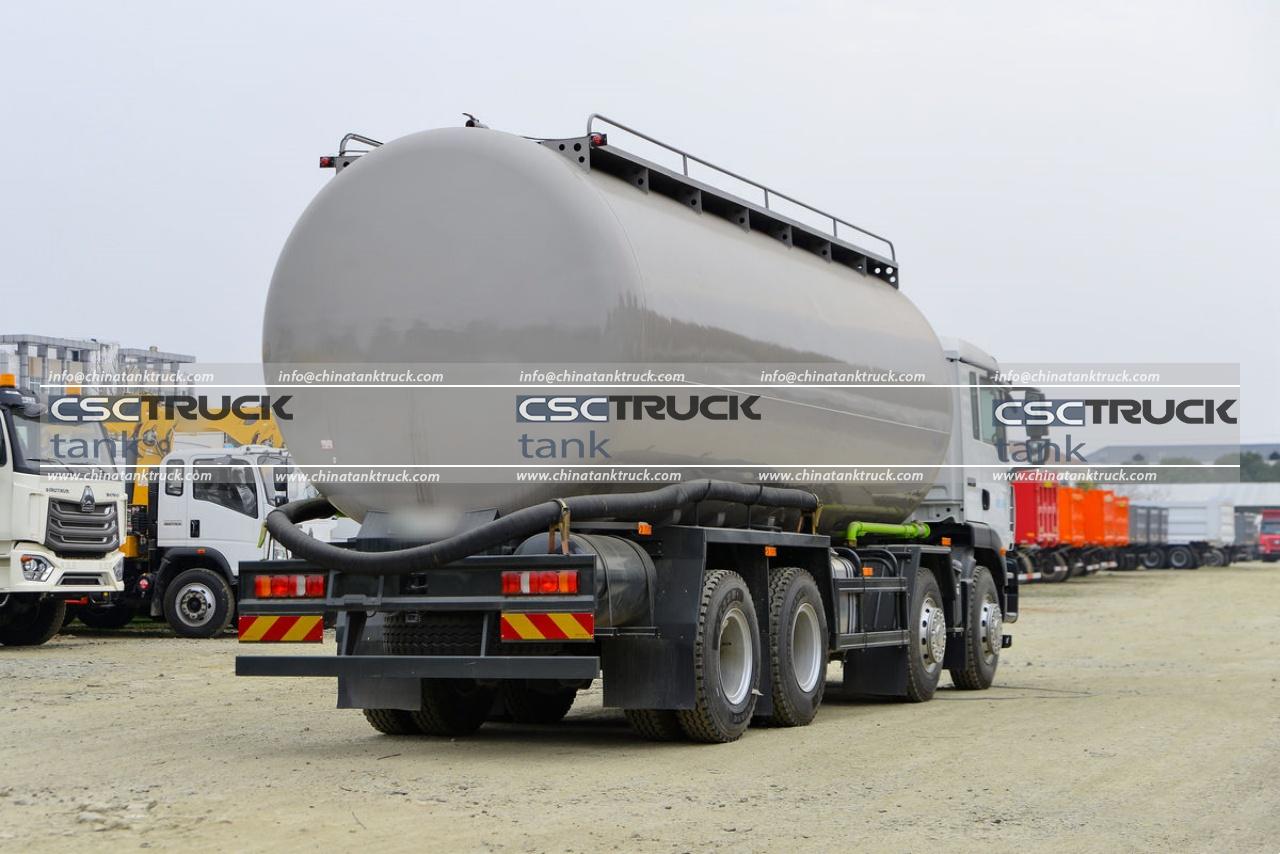

Pneumatic tank trucks are among the most efficient vehicles for transporting dry bulk materials such as cement, fly ash, lime, flour, plastic pellets, and other powdered or granular products. Unlike tipper trucks or conventional bulk carriers, pneumatic tank trucks utilize compressed air to unload cargo quickly and efficiently through pipelines. One of the most frequently asked questions by fleet operators and buyers is: Does a pneumatic tank truck have its own onboard air compressor?
The short answer is YES—most pneumatic tank trucks are equipped with their own onboard air compressor or blower system. This integrated equipment enables the truck to unload independently without relying on external compressed air in most operating conditions. However, there are exceptions depending on the vehicle configuration and customer requirements.
Introduction to CSCTRUCK China Tank Truck
CSCTRUCK China Tank Truck is a leading Chinese manufacturer specializing in tank trucks, tank trailers, and other specialized commercial vehicles. Since its establishment, the company has developed a comprehensive range of transportation solutions for liquid, gas, and dry bulk cargoes. Its pneumatic tank trucks are widely used in the construction, mining, chemical, agriculture, and food industries due to their durability, efficient unloading systems, and customizable configurations.
CSCTRUCK China Tank Truck offers pneumatic tank trucks and trailers with advanced features, including:
- High-strength carbon steel, stainless steel, or aluminum alloy tanks
- Efficient onboard air compressor or blower systems
- Fluidizing beds (aeration pads)
- Multiple safety valves and pressure gauges
- Heavy-duty discharge piping
- PTO-driven or auxiliary-engine-powered compressors
- Custom tank capacities for various industries
These features allow operators to transport and unload dry bulk materials safely, efficiently, and with minimal product loss.

Why Does a Pneumatic Tank Truck Need an Air Compressor?
Unlike liquid tankers that unload by gravity or pumps, pneumatic tank trucks transport dry materials that cannot flow easily on their own.
Materials such as:
- Cement
- Fly ash
- Lime powder
- Silica
- Flour
- Starch
- Plastic resin pellets
- Powdered chemicals
tend to compact during transportation. Simply opening a valve would not allow these products to exit the tank efficiently.
Instead, compressed air performs two critical functions:
- Pressurizes the tank
- Fluidizes the material
Once fluidized, the dry bulk behaves almost like a liquid and can be pushed through discharge pipes into storage silos.
Without compressed air, pneumatic unloading would not be possible.
Do All Pneumatic Tank Trucks Have Their Own Compressor?
In Most Cases, Yes
The majority of modern pneumatic tank trucks come equipped with an onboard air compressor.
This provides several advantages:
- Independent unloading anywhere
- No dependence on customer equipment
- Faster unloading
- Greater operational flexibility
- Better productivity
Drivers can simply connect the discharge hose to the receiving silo, start the compressor, and begin unloading.
Some Units Use External Compressors
Certain fleet operators or industrial plants already have high-capacity stationary compressors.
In these cases, the truck may be built without its own compressor to:
- Reduce purchase cost
- Lower vehicle weight
- Increase payload
- Simplify maintenance
These trucks connect directly to the customer’s compressed-air supply during unloading.

Types of Air Compressors Used
Different pneumatic tank trucks use different compressor systems depending on the cargo and unloading requirements.
1. PTO-Driven Air Compressors
This is the most common design.
The compressor receives power from the truck engine through the Power Take-Off (PTO).
Advantages include:
- Lower fuel consumption
- Fewer components
- Reliable operation
- Easy maintenance
Since the truck engine powers the compressor, no separate engine is required.
2. Auxiliary Diesel Engine Compressors
Some heavy-duty tankers use an independent diesel engine to drive the compressor.
Advantages include:
- The compressor operates without using the truck engine
- Suitable for long unloading operations
- Reduces wear on the truck engine
This system is often found on large-capacity trailers.
3. Electric Compressors
Electric compressors are less common but may be used:
- Inside factories
- At food processing facilities
- For environmentally sensitive operations
They require an external electrical power source.
How the Compressor Works During Unloading
The unloading process follows several simple steps.
Step 1: Connect the Discharge Hose
The operator connects the truck to the storage silo using flexible discharge piping.
Step 2: Start the Compressor
The onboard compressor begins generating compressed air.
Step 3: Pressurize the Tank
Air enters the sealed tank, increasing internal pressure.
Pressure is carefully controlled using:
- Pressure gauges
- Relief valves
- Control valves
Step 4: Fluidize the Material
Compressed air flows through aeration pads located beneath each cone-shaped hopper.
This separates the powder particles and allows them to flow smoothly.
Step 5: Material Discharge
The pressure difference pushes the fluidized material through the discharge pipeline into the storage silo.
Most pneumatic tank trucks unload continuously until the tank is empty.

Typical Compressor Performance
Performance varies according to compressor size and truck capacity.
Typical specifications include:
- Working pressure: 0.15–0.25 MPa (1.5–2.5 bar)
- Maximum pressure: 0.3 MPa
- Airflow: 8–12 m³/min
- Unloading rate: 1–2 tons per minute
Larger trailers may use higher-capacity compressors for faster unloading.
Advantages of an Onboard Air Compressor
Having an integrated compressor provides many operational benefits.
Greater Flexibility
Drivers can unload at nearly any location without depending on external equipment.
Faster Operations
No waiting for plant compressors improves turnaround times.
Cleaner Unloading
The closed pneumatic system minimizes:
- Dust emissions
- Material loss
- Moisture contamination
Improved Safety
Unlike dump trailers, pneumatic tank trucks remain level during unloading.
This reduces:
- Tipping hazards
- Stability risks
- Ground pressure issues
Better Productivity
Independent unloading allows operators to complete more deliveries each day.

Maintenance Requirements
Since the air compressor is one of the hardest-working components on the truck, regular maintenance is essential.
Routine maintenance includes:
- Checking compressor oil
- Replacing air filters
- Inspecting drive belts
- Monitoring pressure gauges
- Checking safety valves
- Inspecting hoses for leaks
- Cleaning air intake filters
Proper maintenance improves reliability and extends compressor life.
Signs of Compressor Problems
Operators should watch for symptoms such as:
- Slow unloading
- Reduced airflow
- Excessive compressor noise
- Oil leakage
- Overheating
- Pressure is failing to build
- Increased unloading time
Early diagnosis prevents costly repairs and downtime.

Choosing the Right Compressor
When purchasing a pneumatic tank truck, buyers should consider:
- Type of bulk material
- Required unloading speed
- Tank capacity
- Available power source
- Maintenance requirements
- Operating environment
- Fuel efficiency
Manufacturers such as CSCTRUCK China Tank Truck can customize compressor configurations to match specific operational needs, whether the application involves cement transport, food-grade powders, plastic pellets, or chemical products.
Conclusion
So, does a pneumatic tank truck have its own air compressor? In most cases, the answer is YES. An onboard air compressor is one of the defining features of a pneumatic tank truck, enabling it to generate the compressed air needed to pressurize the tank, fluidize dry bulk materials, and unload cargo efficiently without relying on external equipment. While some specialized operations may use stationary compressors instead, self-contained compressor systems remain the preferred choice for most fleets because they offer greater flexibility, faster unloading, and improved operational efficiency.
Manufacturers such as CSCTRUCK China Tank Truck continue to equip their pneumatic tank trucks with advanced compressor systems, robust tank construction, and reliable pneumatic conveying technology. These integrated solutions help businesses transport and unload dry bulk materials safely, quickly, and cost-effectively across a wide range of industries.