
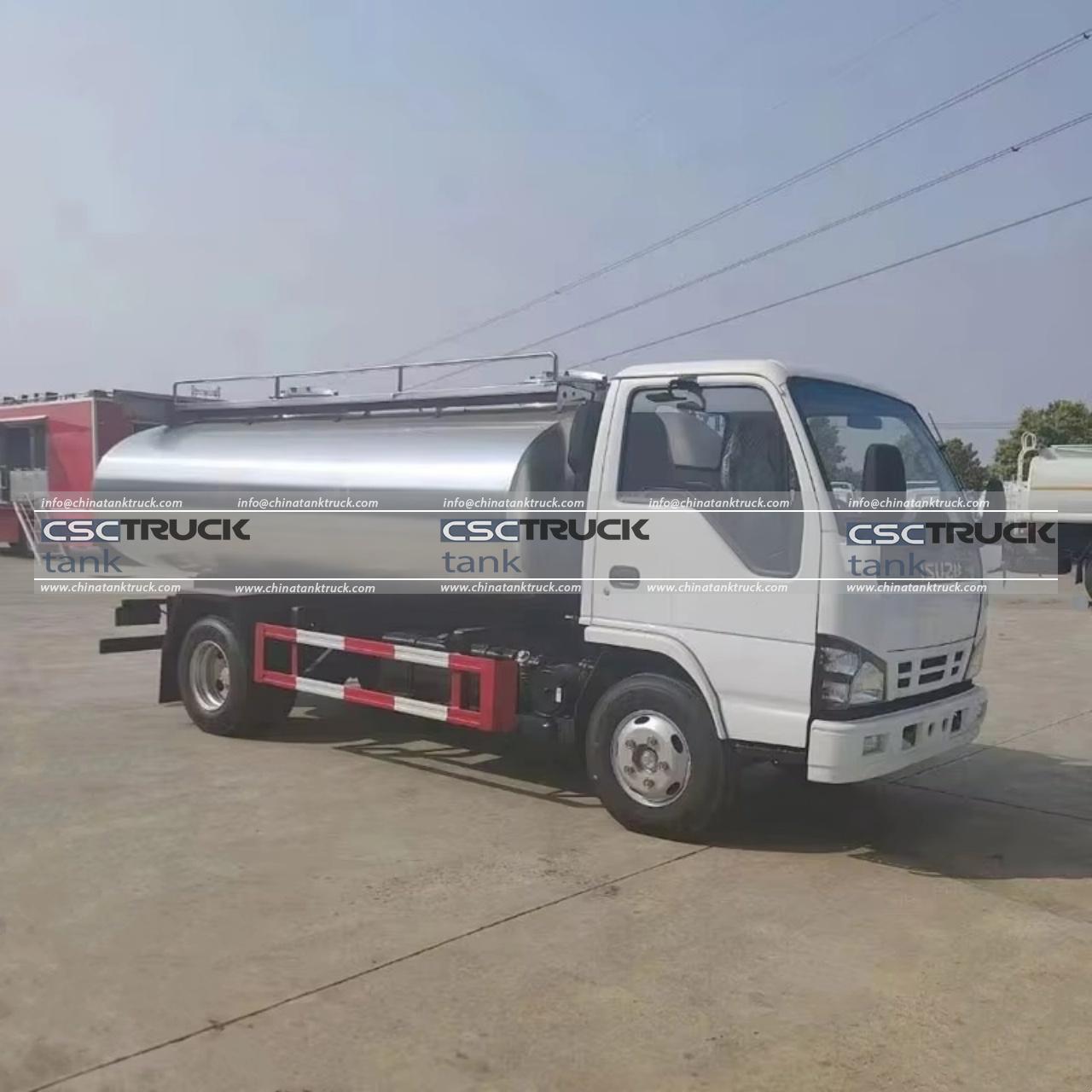
Milk tank trucks are essential for transporting raw milk safely from dairy farms and collection centers to processing plants. Because milk contains proteins, fats, lactose, minerals, and other nutrients, any residue left inside the tanker can support microbial growth, create odors, affect milk quality, and increase the risk of cross-contamination. Proper cleaning is therefore a critical part of milk transportation.
Modern milk tank trucks commonly use CIP (Clean-in-Place) systems to clean the tank interior, valves, pipelines, pumps, hoses, and other milk-contact components. A proper cleaning process normally combines water, detergents, mechanical action, controlled temperature, sufficient contact time, and sanitization.
Why Is It Important to Clean a Milk Tank Truck?
Cleaning a milk tanker is not simply about making the tank look clean. Milk residues can remain on tank walls, valves, outlets, hoses, and pipelines even after the tanker has been emptied.
If these residues are not removed, they may:
- Encourage bacterial growth
- Cause unpleasant odors or off-flavors
- Reduce milk shelf life
- Create cross-contamination between loads
- Promote biofilm formation
- Increase mineral or milkstone deposits
- Make subsequent cleaning more difficult
For this reason, dairy operators should follow a documented cleaning and sanitation procedure appropriate for their equipment and local food-safety requirements. Cleaning should also cover all milk-contact components rather than only the main tank.
Step 1: Completely Unload the Milk
The first step is to completely discharge the milk from the tanker.
After delivery, operators should make sure that:
- The main tank is completely emptied.
- Milk transfer pipelines are drained.
- Pumps and valves are emptied.
- Hoses are disconnected and drained where appropriate.
- No significant milk residue remains in fittings or low points.
Removing milk promptly is important because dried milk residue is more difficult to remove than fresh residue.
Before starting the cleaning cycle, operators should also check the tank, valves, hoses, gaskets, and other components for visible damage or abnormal contamination.
Step 2: Pre-Rinse the Tank
After unloading, the tanker is normally pre-rinsed with clean water.
The purpose of this stage is to remove loose milk residues before detergent is introduced. A suitable warm-water rinse can help remove milk fat and protein without unnecessarily fixing protein onto the stainless-steel surface.
Water temperature should be controlled according to the tanker manufacturer’s validated cleaning procedure and the dairy facility’s sanitation program. Excessive heat during the initial rinse can cause some milk proteins to adhere more strongly to surfaces.
The rinse should reach the entire product-contact area, including the tank walls, outlet, valves, pipelines, and other components.
Step 3: Wash With an Alkaline Detergent
The main cleaning stage normally uses an alkaline detergent solution.
Alkaline cleaners are effective for removing organic residues such as:
- Milk fat
- Proteins
- Organic films
- Remaining milk deposits
In a CIP system, the cleaning solution is circulated through the tank and associated milk-contact equipment. Spray balls or rotary cleaning heads distribute the solution across the internal surfaces.
Effective CIP depends on 4 important factors:
- Time – the solution must remain in contact with surfaces for sufficient time.
- Temperature – the cleaning solution needs to operate within the specified temperature range.
- Chemical concentration – detergent strength must be appropriate for the cleaning task.
- Mechanical action – circulation and spray force help remove deposits from surfaces.
These factors work together. Increasing only one factor does not necessarily compensate for inadequate performance in another.
Step 4: Rinse Away the Detergent
After the alkaline cleaning stage, the detergent solution should be drained and the tanker thoroughly rinsed with clean water.
The intermediate rinse removes:
- Remaining detergent
- Loosened milk residues
- Suspended contaminants
- Cleaning chemicals
Operators should pay particular attention to valves, pipelines, pump components, hoses, and other areas where cleaning solution could remain trapped.
The rinse should continue according to the facility’s validated cleaning procedure until the required conditions for the next stage are achieved.
Step 5: Perform Acid Cleaning When Required
Milk transportation equipment may also develop mineral deposits, commonly known as milkstone or scale. These deposits can contain calcium and other minerals.
An acid cleaning stage may therefore be included periodically or when required by the cleaning program.
Acid cleaners can help remove mineral deposits that alkaline detergents are not designed to eliminate effectively. Maintaining clean, smooth stainless-steel surfaces also helps reduce locations where residues and microorganisms can accumulate.
The frequency and chemical concentration of acid cleaning should be determined by the dairy facility’s sanitation program, water quality, tanker operating conditions, and chemical supplier instructions.
Step 6: Carry Out a Final Rinse
After detergent and, where applicable, acid cleaning, the tank and milk-contact components should receive a final rinse.
The objective is to remove remaining chemical residues before sanitization or the next stage of the validated process.
The final rinse should cover the complete milk-contact system rather than only the tank body. Special attention should be given to:
- Milk outlet valves
- Transfer pipes
- Pumps
- Hoses
- Spray devices
- Tank outlets
- Gaskets and fittings
After rinsing, the tanker should be properly drained to prevent standing water from remaining inside.
Step 7: Sanitize the Milk Tank Truck
Cleaning and sanitization are not exactly the same thing.
Cleaning removes milk residues, dirt, fats, proteins, and mineral deposits, while sanitization is intended to reduce microorganisms to an acceptable level.
Depending on the dairy facility’s validated procedure, sanitization may use an approved chemical sanitizer or controlled hot-water treatment. The exact sanitizer, concentration, temperature, and contact time should follow applicable requirements and the chemical manufacturer’s instructions.
The sanitizer must reach all relevant milk-contact surfaces, including the tank, valves, hoses, pipelines, pumps, and cleaning equipment.
Step 8: Drain, Dry, and Inspect the Tank
After sanitization, the tanker should be completely drained.
Standing water should be avoided because residual moisture can contribute to microbial growth or recontamination. Depending on the facility’s procedure, controlled drying or filtered-air drying may also be used.
Operators should then inspect:
- Tank interior surfaces
- Welds and seams
- Gaskets and seals
- Valves and fittings
- Hoses
- Pumps
- Spray balls or rotary cleaning heads
- Drainage points
Some operations may additionally use ATP testing, microbiological testing, or other verification methods to confirm that the cleaning process is working effectively.

How Does CIP Make Milk Tank Cleaning Easier?
A CIP system allows milk tank trucks to clean internal surfaces without requiring workers to enter the tank or manually scrub every part.
A typical system can include:
- Cleaning solution tanks
- Water supply and return lines
- Pumps
- Chemical dosing equipment
- Spray balls or rotary cleaning heads
- Temperature monitoring
- Flow-control equipment
- Valves
- Automated controls
CIP improves cleaning consistency because the same sequence can be repeated under controlled conditions. It can also reduce manual labor and improve operator safety.
How Tank Design Affects Cleaning Performance
The cleaning process starts with good tanker design.
A hygienically designed milk tank truck should generally incorporate food-grade stainless steel, smooth internal surfaces, sanitary welds, effective drainage, appropriate tank geometry, and easily cleanable valves and fittings. Stainless steel is widely used for milk tankers because it offers corrosion resistance, durability, hygiene, and good cleanability.
CIP compatibility should also be considered when purchasing a milk tanker. Spray devices need appropriate coverage, while pipelines and fittings should minimize dead zones where milk can accumulate.

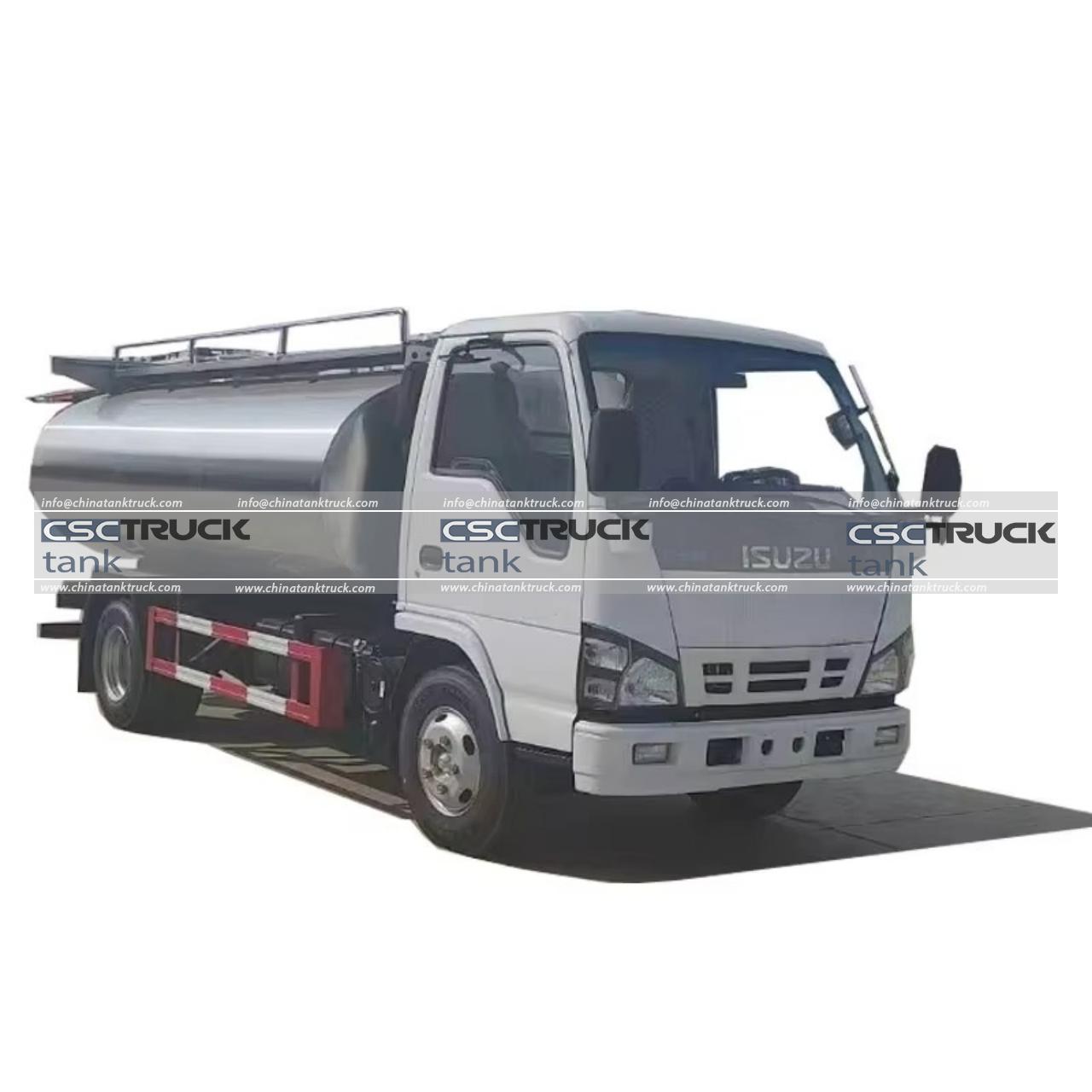
CSCTRUCK China Tank Truck Milk Tank Trucks
CSCTRUCK China Tank Truck specializes in the manufacturing and supply of tank trucks for different liquid transportation applications, including milk tank trucks.
The company provides milk tanker configurations using food-grade stainless-steel tanks and can customize tank capacity, chassis, insulation, pumping equipment, and cleaning systems according to the customer’s operating requirements. CSCTRUCK China Tank Truck‘s published milk tanker information also describes configurations using 304 stainless steel and automatic cleaning equipment.
For dairy businesses purchasing a milk tank truck, cleaning capability should be considered alongside capacity, chassis selection, insulation, pump configuration, and transportation range. A tanker that is easy to clean and properly designed for CIP can help operators maintain consistent hygiene throughout repeated transportation cycles.
Conclusion
Properly cleaning a milk tank truck requires more than simply rinsing the tank with water. A complete cleaning program generally includes milk unloading, pre-rinsing, alkaline washing, intermediate rinsing, periodic acid cleaning when required, final rinsing, sanitization, drainage, drying, and inspection.
CIP technology makes this process more consistent by circulating cleaning solutions through the tank and milk-contact equipment. However, the effectiveness of CIP depends on appropriate time, temperature, chemical concentration, and mechanical action.
For dairy operators, choosing a milk tank truck with food-grade stainless steel, sanitary fittings, effective drainage, and a suitable CIP system is an important part of maintaining hygienic milk transportation. CSCTRUCK China Tank Truck can provide customized milk tank truck solutions for dairy transportation operations worldwide.
