
Pneumatic tank trucks play a vital role in transporting dry bulk materials such as cement, fly ash, lime powder, flour, plastic pellets, animal feed, and chemical powders. Their enclosed design and air-assisted unloading system make them one of the most efficient solutions for moving powdered and granular materials over long distances.
One of the most common questions buyers ask is: How many tons can a pneumatic tank truck carry? The answer depends on several factors, including tank volume, material density, chassis configuration, legal weight limits, and the truck’s own empty weight.
Manufacturers such as CSCTRUCK China Tank Truck specialize in designing pneumatic bulk tanker trucks with different capacities to meet regional transportation regulations and industrial applications. Founded in 2005, the company manufactures a wide range of specialized tank trucks for transporting liquids, gases, and dry bulk materials. Its pneumatic tank trucks are available in multiple sizes and can be customized according to customer requirements, including tank material, axle configuration, compressor system, and discharge equipment.
Typical Carrying Capacity
Most pneumatic tank trucks carry between 10 and 35 tons of dry bulk cargo.
The exact payload depends on:
- Tank volume (m³)
- Density of the transported material
- Gross Vehicle Weight (GVW)
- Chassis configuration
- National highway regulations
Below is a general guideline.
| Tank Volume | Typical Payload |
|---|---|
| 15–20 m³ | 10–15 tons |
| 20–30 m³ | 15–22 tons |
| 30–35 m³ | 20–28 tons |
| 35–45 m³ | 25–35 tons |
| Semi-trailer 50–70 m³ | 30–45 tons (where regulations permit) |
The tank may physically hold more material, but legal road weight limits often determine the maximum allowable payload.

Tank Volume Does Not Equal Tons
Many people mistakenly assume that a larger tank automatically carries more tons.
In reality, tons depend on material density, not just tank size.
For example, a 38 m³ pneumatic tank filled with cement carries much more weight than the same tank filled with plastic pellets.
Approximate bulk densities include:
| Material | Bulk Density |
|---|---|
| Cement | 1.2–1.5 t/m³ |
| Fly Ash | 0.8–1.1 t/m³ |
| Lime Powder | 0.7–1.1 t/m³ |
| Flour | 0.5–0.7 t/m³ |
| Plastic Pellets | 0.5–0.65 t/m³ |
| Animal Feed | 0.4–0.75 t/m³ |
| Carbon Black | 0.3–0.5 t/m³ |
This explains why the same truck may carry:
- 30 tons of cement
- 20 tons of flour
- 16 tons of plastic pellets
even though the tank volume remains unchanged.
Chassis Configuration Matters
The number of axles greatly affects payload capacity.
4×2 Chassis
Typical payload:
- 10–15 tons
Applications:
- Urban delivery
- Food powders
- Short-distance transport
6×4 Chassis
Typical payload:
- 18–25 tons
Applications:
- Cement
- Fly ash
- Lime powder
- Industrial minerals
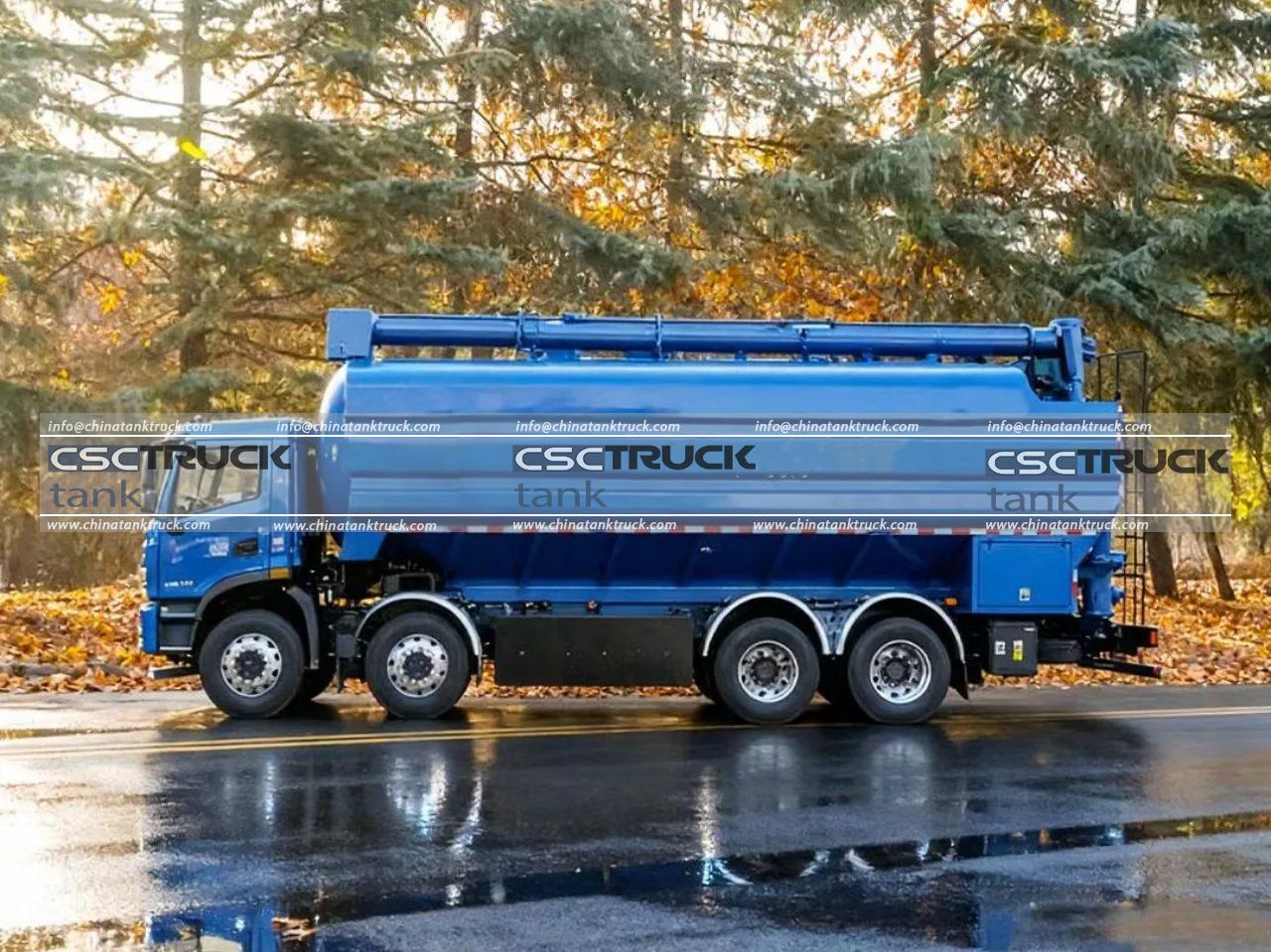
8×4 Chassis
Typical payload:
- 25–35 tons
Applications:
- Large-scale construction projects
- Bulk cement transportation
- Long-distance logistics
More axles distribute weight better, allowing higher legal payloads while improving stability.
Material Density Determines Payload
Consider a 35 m³ tank.
Transporting Cement
Density:
1.4 t/m³
Theoretical cargo weight:
35 × 1.4 = 49 tons
However, road regulations generally prevent loading this much.
The truck may legally carry only around 25–30 tons.
Transporting Flour
Density:
0.6 t/m³
Cargo weight:
35 × 0.6 = 21 tons
In this case, the tank becomes full before reaching the vehicle’s legal weight limit.
Thus, lighter materials are often volume-limited, while heavier materials are weight-limited.
Gross Vehicle Weight Restrictions
Every country sets maximum legal road weights.
Examples include:
- 30 tons
- 40 tons
- 44 tons
- 49 tons
Suppose a pneumatic tank truck weighs:
- Empty truck: 14 tons
- Legal GVW: 40 tons
Maximum legal payload:
40 − 14 = 26 tons
Even if the tank could physically hold 35 tons of material, the truck cannot legally transport that amount on public roads.
Fleet operators therefore choose tank sizes that balance volume with legal payload limits.
Example: 38 m³ Pneumatic Tank Truck
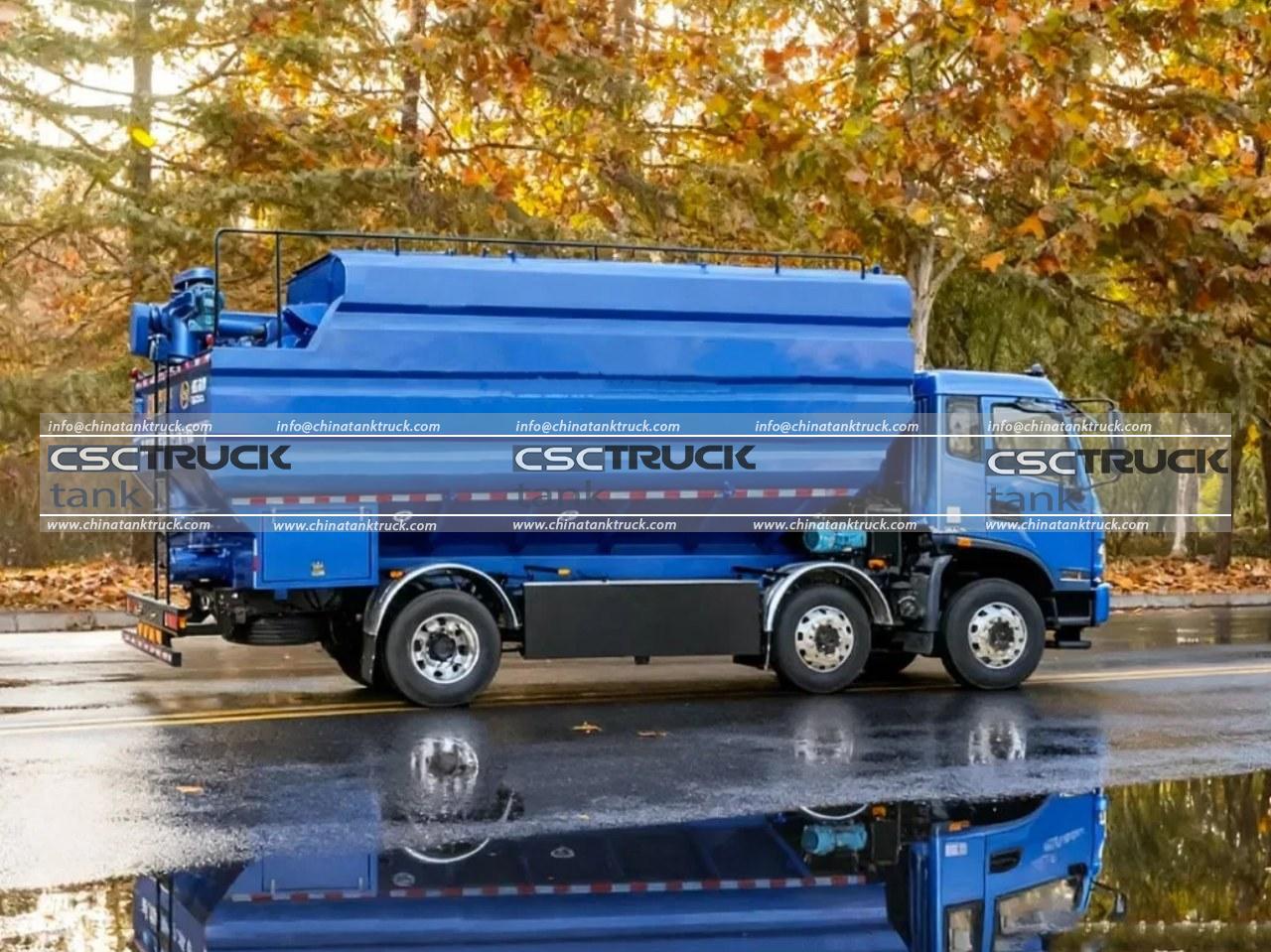
A typical 38 m³ pneumatic bulk tanker provides a good illustration.
One common configuration includes:
- Tank volume: approximately 38 m³
- Gross Vehicle Weight: 30,000 kg
- Empty weight: about 15,300 kg
- Rated payload: approximately 11,800 kg
Actual payload varies depending on chassis selection, regional regulations, and tank configuration.
Larger chassis with higher legal GVW can carry significantly heavier loads using tanks of similar volume.
Semi-Trailer Pneumatic Bulk Tankers
Semi-trailer pneumatic tankers offer much higher capacities.
Typical specifications include:
- Volume: 45–70 m³
- Payload: 30–45 tons
- Three or four axles
- Tractor-powered air compressor or independent compressor
These vehicles are commonly used by:
- Cement manufacturers
- Ready-mix concrete plants
- Power stations
- Chemical factories
- Grain processing facilities
They provide lower transportation costs per ton compared to rigid trucks.

Factors Affecting Actual Payload
Several operational factors influence how many tons a pneumatic tank truck can safely transport.
Product Moisture
Wet powders weigh more than dry materials.
Moisture increases density and may reduce allowable loading volume.
Tank Design
Different tank structures affect empty weight.
Examples include:
- Carbon steel tanks
- Aluminum alloy tanks
- Stainless steel tanks
Lighter tank materials allow greater payload while staying within legal GVW limits.
Road Conditions
Mountain roads and steep grades may require lower operating weights for safety.
Compressor System
The onboard air compressor, piping, and discharge equipment also contribute to vehicle weight.
Although relatively small compared with the cargo, these components reduce the available payload slightly.
Choosing the Right Capacity
Selecting the proper truck involves balancing:
- Material density
- Annual transport volume
- Route distance
- Road regulations
- Fuel economy
- Loading frequency
For example:
A flour distributor may prioritize larger tank volume because flour is lightweight.
A cement supplier may focus on legal payload rather than maximum tank size because cement is much denser.
Experienced manufacturers can recommend the most suitable configuration based on operational requirements rather than simply offering the largest available tank.
Why Proper Payload Matters
Operating within the correct payload range provides several benefits:
- Improved fuel efficiency
- Reduced tire wear
- Lower suspension maintenance
- Better braking performance
- Longer chassis life
- Compliance with transportation regulations
- Reduced risk of fines and overloading penalties
Overloaded pneumatic tank trucks also place greater stress on the tank, compressor system, and unloading pipeline, potentially increasing maintenance costs over time.
Conclusion
A pneumatic tank truck typically carries between 10 and 35 tons, while larger pneumatic bulk semi-trailers can transport 30 to 45 tons, depending on local weight regulations. The actual payload is determined not only by tank volume but also by material density, chassis configuration, legal gross vehicle weight, and the truck’s own empty weight.
When selecting a pneumatic tank truck, buyers should evaluate both the volume of the tank and the density of the intended cargo to achieve the best balance between capacity, efficiency, and legal compliance.
Manufacturers like CSCTRUCK China Tank Truck offer a broad range of customizable pneumatic bulk tankers, from compact rigid trucks to high-capacity semi-trailers, allowing operators to choose solutions tailored to cement, fly ash, lime powder, food products, plastics, chemicals, and other dry bulk materials. Their focus on quality manufacturing, customization, and global support makes them a reliable partner for businesses seeking efficient and durable pneumatic transport equipment.