
CSCTRUCK China Tank Truck is a well-established Chinese manufacturer specializing in the design and production of pressure vessels and special-purpose vehicles, including LPG tank trucks, fuel tankers, chemical transport trucks, and other industrial logistics solutions. With decades of engineering development and a strong international export network, the company focuses on safety, durability, and customized transport systems for global energy and chemical logistics industries.
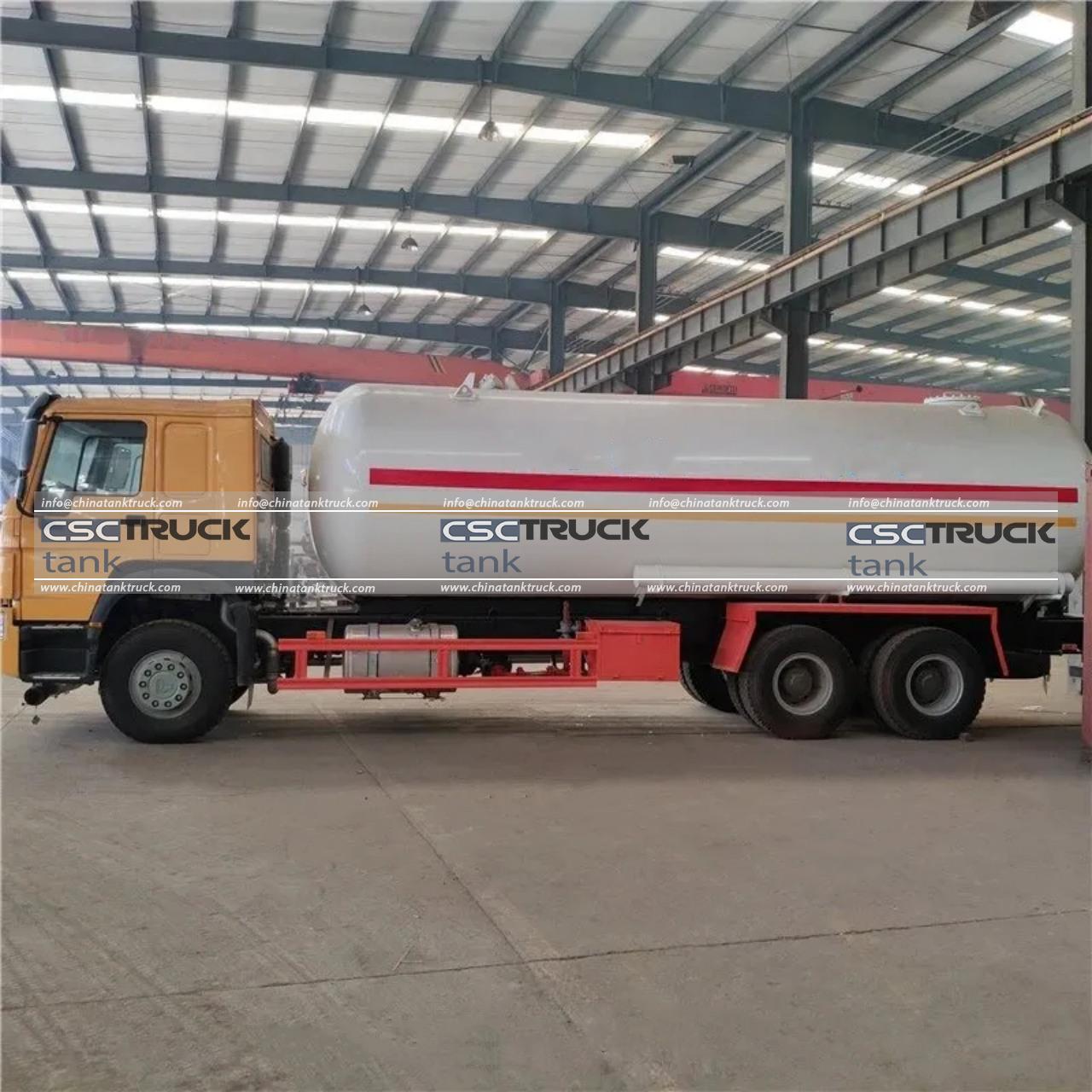
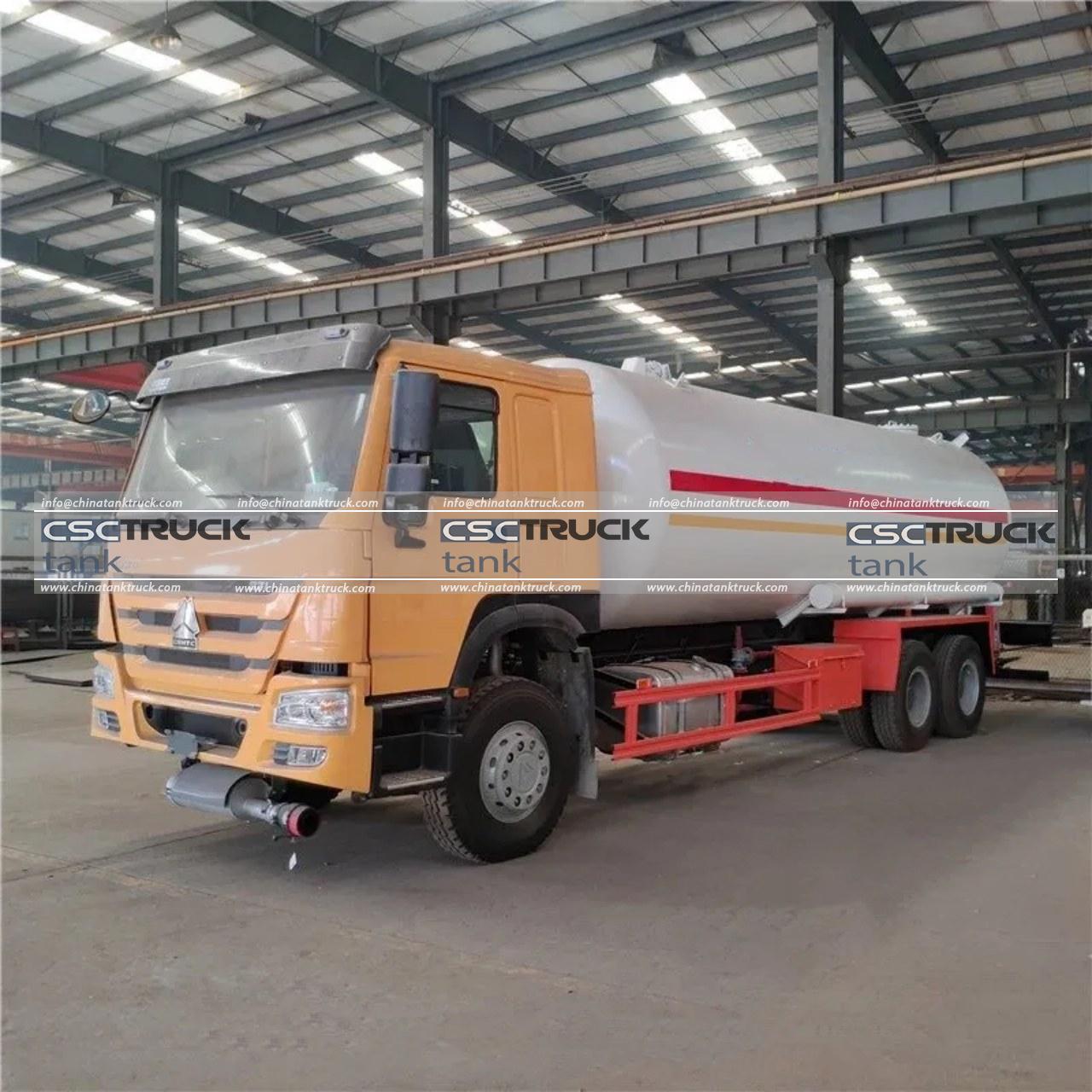
Among its key product lines, propane (LPG) tank trucks represent one of the most technically demanding categories, requiring high-pressure resistance, precise safety systems, and advanced insulation technologies. The reinforced cylindrical propane tank truck is a next-generation solution designed to meet these challenges.
1. Reinforced Cylindrical Tank Structure Design
The core of the propane tank truck is its reinforced cylindrical pressure vessel, engineered to withstand high internal gas pressure and long-distance transport stress.
The cylindrical shape is chosen for its:
- Even stress distribution under pressure
- High resistance to deformation
- Structural efficiency for large-volume gas storage
Typically, the tank body is constructed using high-strength carbon steel such as Q345R or similar pressure-vessel-grade materials. This steel provides:
- High tensile strength
- Excellent weldability
- Strong fatigue resistance under repeated loading cycles
Reinforcement rings are often added around the shell to improve rigidity and reduce vibration stress during transport. The tank ends are usually elliptical, which further enhances pressure resistance and safety performance.
2. Multi-Layer Safety Valve Protection System
One of the most critical features of this propane tank truck is its multi-layer safety valve system, designed to ensure controlled operation under all working conditions.
A typical configuration includes:
2.1 Primary Safety Valve
The first protection layer automatically releases excess internal pressure when it exceeds the safe operating threshold, preventing structural rupture.
2.2 Emergency Shut-Off Valve
Installed at key pipeline junctions, this valve immediately blocks gas flow during accidents, leakage, or abnormal pressure spikes.
2.3 Pressure Relief Valve System
This secondary system works alongside the primary valve to provide redundant protection, ensuring no single-point failure can lead to catastrophic release.
2.4 Thermal Protection Valve
Since propane is sensitive to temperature changes, thermal valves help manage pressure increases caused by environmental heat exposure.
2.5 Manual Emergency Control Valve
Operators can manually shut down the system during loading, unloading, or emergency inspection scenarios.
Together, these layers create a redundant safety architecture, significantly reducing operational risk during transport and transfer operations.
3. Insulated System for Thermal Stability
Propane transport requires stable internal temperature conditions to maintain pressure balance and prevent gas expansion hazards. The insulated system of this tank truck plays a key role in operational safety.
3.1 Thermal Insulation Layer
The tank is often wrapped with advanced insulation materials such as polyurethane foam or composite thermal barriers. This reduces heat transfer from external environments.
3.2 Sun-Reflective Outer Coating
A reflective coating on the tank surface minimizes solar heat absorption during daytime transport, particularly in hot climates.
3.3 Temperature Monitoring System
Integrated thermometers and sensors continuously track internal and external temperatures, providing real-time data to operators.
3.4 Pressure-Temperature Coordination System
Because LPG pressure rises with temperature, the system automatically balances internal conditions using safety valves and insulation performance control.
This insulation design ensures propane remains in a stable liquid-gas equilibrium state, improving both safety and transport efficiency.
4. Integrated Monitoring and Control Technology
Modern propane tank trucks are no longer purely mechanical systems. They integrate intelligent monitoring technologies that enhance safety and operational accuracy.
Key features include:
- Digital pressure gauges
- Liquid level indicators
- Remote monitoring modules (optional)
- Leak detection sensors
- Flow control meters for controlled discharge
These systems allow operators to monitor tank conditions in real time, reducing human error and improving response speed during abnormal conditions.
5. Structural and Operational Safety Enhancements
Beyond valves and insulation, the reinforced cylindrical propane tank truck includes multiple structural safety enhancements:
Anti-Corrosion Treatment
Internal and external tank surfaces are treated with anti-corrosion coatings to prevent chemical degradation over time.
Anti-Static Grounding System
A grounding mechanism prevents static electricity buildup during loading and unloading operations, reducing ignition risks.
Shock-Absorption Chassis Integration
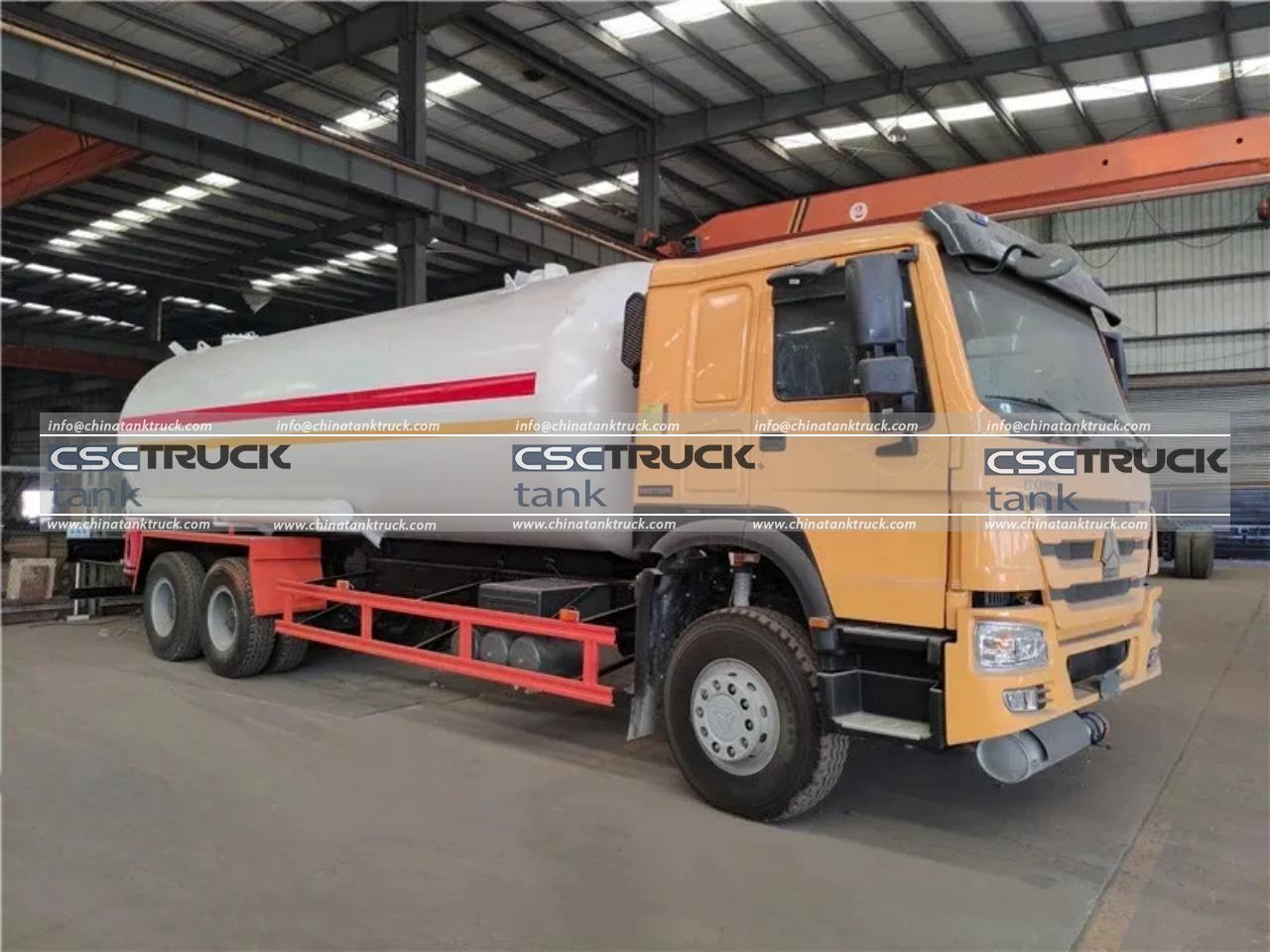
The tank is mounted on a reinforced truck chassis with suspension systems designed to minimize vibration stress during transport.
Explosion-Resistant Design Standards
All components comply with international pressure vessel and hazardous material transport standards, ensuring operational safety under extreme conditions.
6. Operational Applications
This type of propane tank truck is widely used in:
- Industrial LPG distribution networks
- Residential propane supply systems
- Gas cylinder refilling stations
- Commercial energy logistics
- Remote area fuel delivery
Its combination of reinforced structure and advanced safety systems makes it suitable for both urban and rural environments, as well as long-distance cross-regional transport.
7. Efficiency and Economic Advantages
The reinforced cylindrical propane tank truck is designed not only for safety but also for operational efficiency:
- High payload capacity reduces transport frequency
- A stable pressure system minimizes gas loss
- Insulated tank reduces energy waste
- Durable structure lowers maintenance costs
For logistics companies, this translates into lower long-term operating costs and higher delivery reliability.
Conclusion
The reinforced cylindrical propane tank truck featuring multi-layer safety valves and an insulated system represents a modern evolution in LPG transportation technology. By combining structural engineering strength, redundant safety mechanisms, and advanced thermal control, it ensures safe and efficient propane delivery across diverse industrial applications.
With manufacturers like CSCTRUCK China Tank Truck continuously advancing pressure vessel technology and safety systems, the global LPG logistics industry is moving toward higher standards of reliability, efficiency, and environmental safety.