

| Specification | Detail |
|---|---|
| Length | 11.75 m |
| Width | 2.55 m |
| Height | 3.52 m |
| Engine | Dachai 325-horsepower EURO VI diesel engine |
| Maximum Output | 239 kW |
| Fuel Consumption | 38.16 L/100 km |
| Engine Note | Dachai is the most commonly used engine for FAW heavy-duty trucks, known for its strong power and fuel efficiency. |

This aluminum fuel tanker truck features a high-roof, double-bunk sleeper cab, with an air-suspension driver’s seat as standard. The dual-bunk design and extra-large cabin space ensure exceptional comfort.
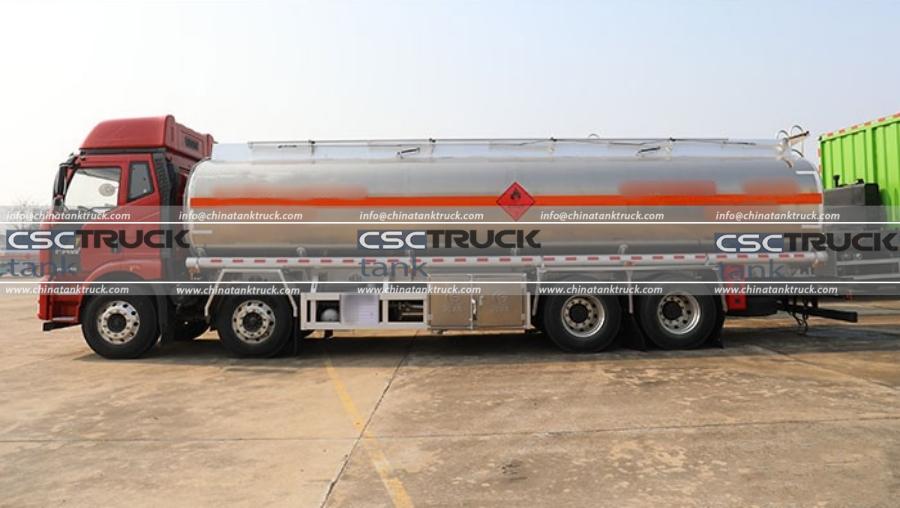
For a fuel tanker truck, chassis load capacity is also crucial. This model adopts a dual front-axle 5-ton disc brake structure, a 10-ton dual rear axle, and rear air suspension. Compared to leaf-spring suspension, air suspension offers better driving stability.

The fuel tanker truck is engineered with a strong emphasis on lightweight construction, incorporating advanced materials and design elements to enhance both payload capacity and overall operational efficiency. Central to this approach is the use of an aluminum-alloy tank body, which not only offers excellent resistance to corrosion but also significantly reduces the truck’s curb weight compared to traditional steel tanks. This is complemented by a 350-liter aluminum fuel tank, which ensures ample fuel storage for long-haul operations while keeping weight to a minimum.
Further contributing to the weight reduction are the aluminum air storage tank, aluminum wheel guards, and aluminum discharge boxes. These components replace heavier steel counterparts, collectively trimming down the vehicle’s overall mass. By systematically using lightweight materials in key areas without compromising strength or durability, the truck achieves a remarkable rated payload capacity of up to 20.8 tons. This increased payload directly translates to greater transport efficiency, as more fuel can be delivered per trip, reducing the number of journeys required and optimizing fuel consumption for the operator.

From a superstructure standpoint, the truck’s layout is thoughtfully designed for safety, convenience, and streamlined operations. The discharge boxes are strategically integrated within the protective side guards on both the left and right sides of the vehicle. This placement not only shields the components from external impacts but also ensures they are easily accessible for operation and maintenance.
On the right-hand side, the discharge box is a compact yet highly functional control hub. It houses a bottom-loading system, which allows for safe and efficient refueling from ground level, minimizing the risks associated with top loading. Adjacent to this is an overfill prevention probe socket—an essential safety feature that works in conjunction with tanker filling systems to prevent fuel spillage and environmental contamination. Also located here is the emergency shut-off device, which can instantly halt fuel flow in the event of an accident or operational hazard. To further enhance safety, the right-side discharge box is equipped with a static grounding cable reel, ensuring the tanker remains electrically grounded during fuel transfer operations, thereby preventing static discharge that could ignite flammable vapors. Completing this setup is the oil-gas recovery valve, a critical component for reducing emissions and ensuring compliance with environmental regulations.
On the left-hand side, the discharge box serves a more direct fuel-handling role, containing the pump inlet and outlet connections. These ports are designed for quick coupling and uncoupling, allowing the operator to efficiently load or unload fuel depending on delivery requirements.
The top of the tank is equally well-appointed, featuring robust manhole covers that provide access for inspection, cleaning, and maintenance. Surrounding these are safety railings, which create a secure working environment for personnel required to operate or inspect the tank from above. Additional fittings and equipment mounted on the top are configured to ensure both operational efficiency and adherence to stringent safety standards.
In combination, these lightweight materials and well-organized superstructure components make this fuel tanker truck a high-capacity, efficient, and safe solution for bulk fuel transport. Its design reflects a careful balance between payload maximization, operator safety, and long-term durability.