

Aluminum Dry Bulk Semi Tanker Trailer, the Era of Lightweight!
● Basic Structure

Let’s start by discussing the structure of the dry bulk tanker truck. The feed inlets of powder tankers are generally located at the top of the tank. At the same time, discharge requires pressurizing the tank with an air compressor to “blow out” the powder material inside. Therefore, depending on the type of material being transported, the shape of a powder tanker’s tank can vary significantly. For example, the cement tankers commonly used for well cementing usually adopt the structure shown in the figure above.

At the front of the trailer, pipelines are connected to an external air compressor. The compressed air is divided into multiple flows through the pipelines and injected into the tank to facilitate unloading.
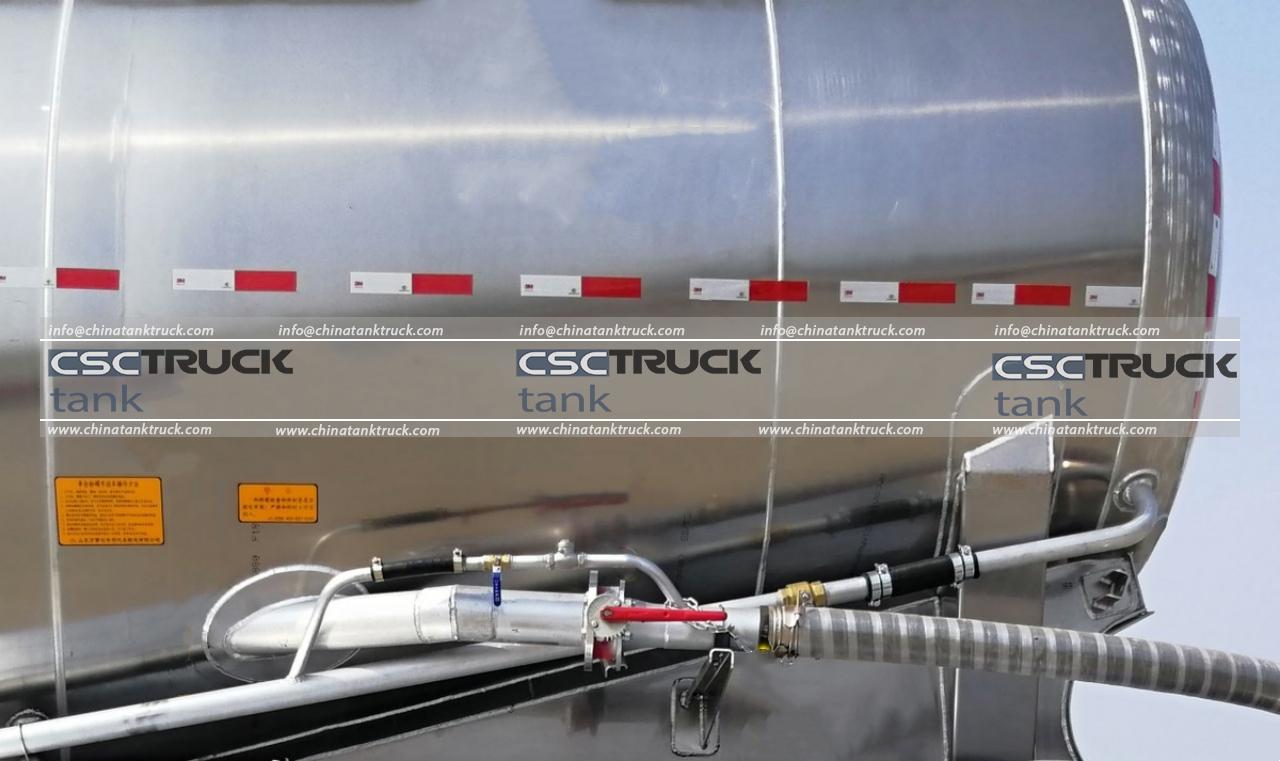
The discharge outlet is located at the rear of the tank. Both the intake and discharge pipelines have only a short rigid section directly connected to the tank. These are then connected via flexible hoses to external piping, making it easier to service or repair.
● Lightweight, Low Residue Rate – Carry Over 1 Ton More
It’s well known that aluminum alloy offers the advantage of low self-weight. According to the staff, the lightest aluminum alloy tankers can weigh as little as 4.88 tons, which is 1.2–1.6 tons lighter than comparable steel tanks. In terms of overall lifecycle use, aluminum powder tankers represent the ultimate evolution of the powder tanker.

On the other hand, aluminum tanks have a smoother surface compared to steel tanks, resulting in significantly lower material residue after unloading. Typically, about 150 kg of powder remains in a steel tank after unloading, while only around 80 kg is left in an aluminum tank. This means the steel tank effectively carries an additional 70 kg of dead weight.
Due to this, especially under today’s strict vehicle overloading regulations, aluminum tankers can transport over 1 ton more cargo than steel tankers, resulting in significantly higher freight income. As a result, aluminum tankers have been steadily gaining market share in recent years.
● No Need for Paint – More Environmentally Friendly
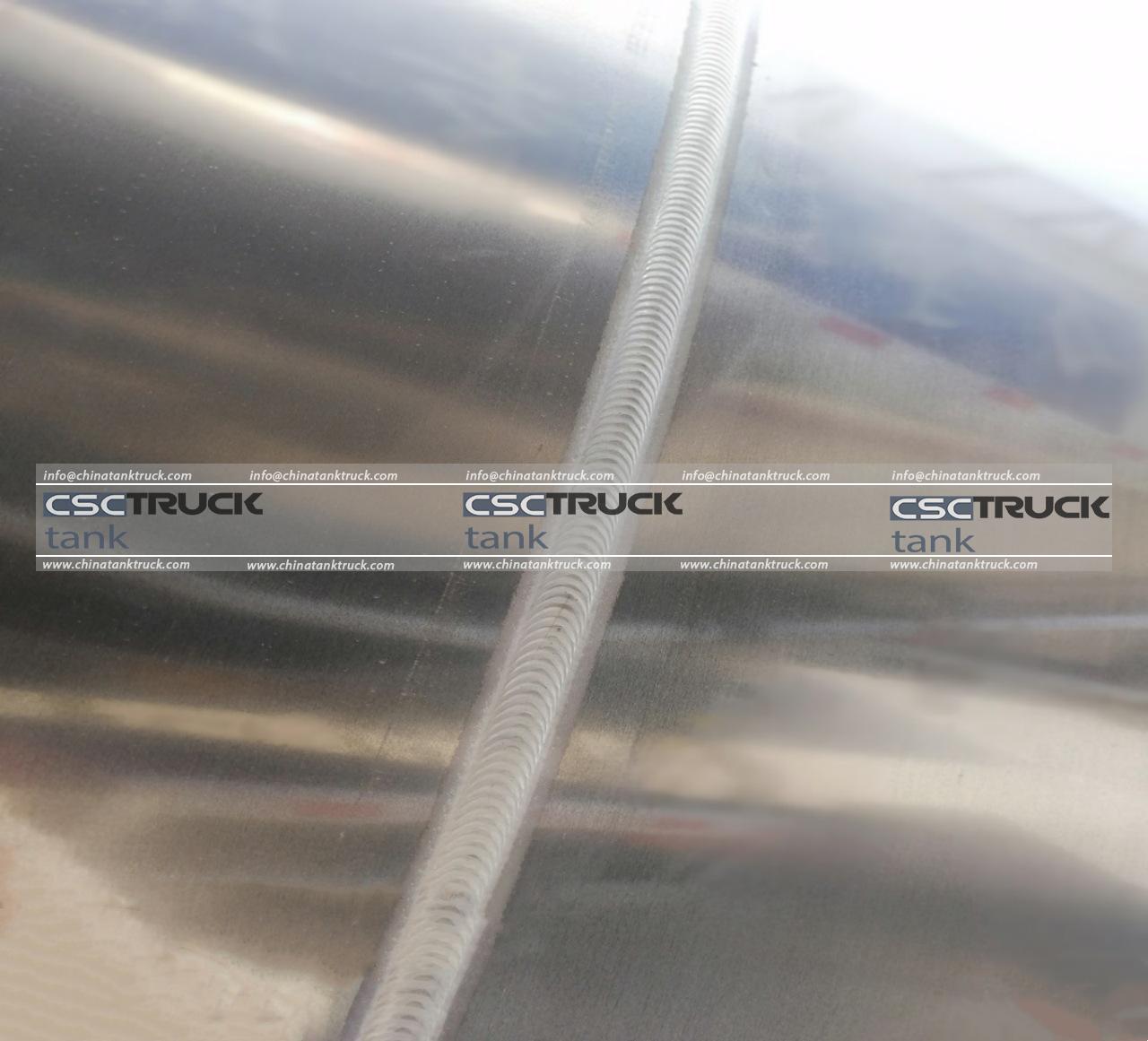
Since aluminum alloy is resistant to rust and corrosion and has a naturally attractive appearance, aluminum dry bulk tankers and trailers don’t require painting like steel tankers do. Given today’s increasingly strict environmental regulations, eliminating the painting process removes one more restriction from the manufacturing process. Furthermore, aluminum alloy has a high recycling value—over 10 times that of ordinary carbon steel.
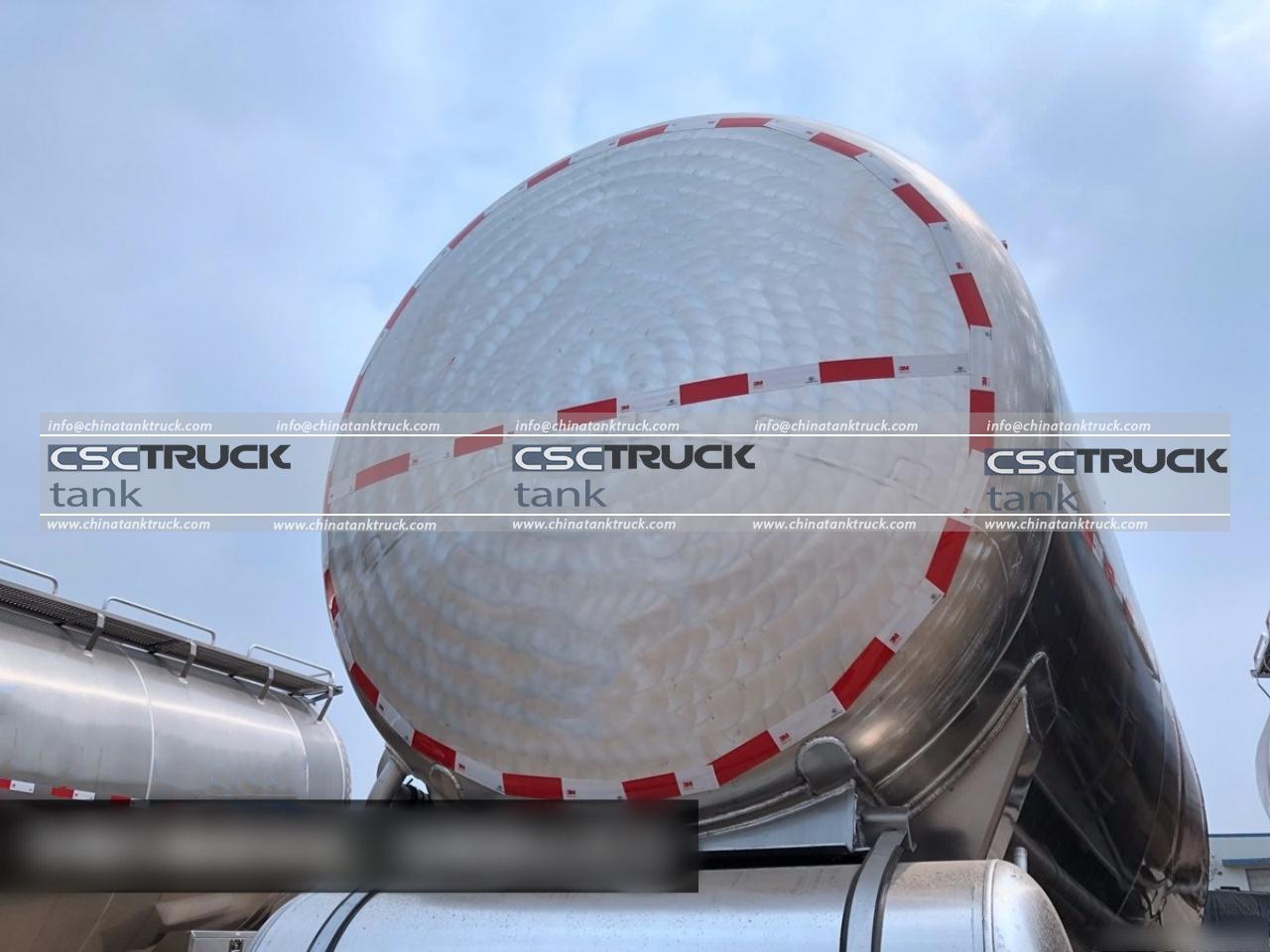
Additionally, because the surface of aluminum alloy is highly reflective, anti-glare treatment is usually applied to the rear of the vehicle. There are generally 2 approaches: Simple painting or a more intricate anti-glare finishing process, such as the patterned surface shown in the picture above.

● Specialized Assembly Process
It’s well understood that components made of the same material can be welded together, whereas components of different materials cannot. Therefore, the assembly process for aluminum alloy tanker trailers differs from that of steel tanker trailers.
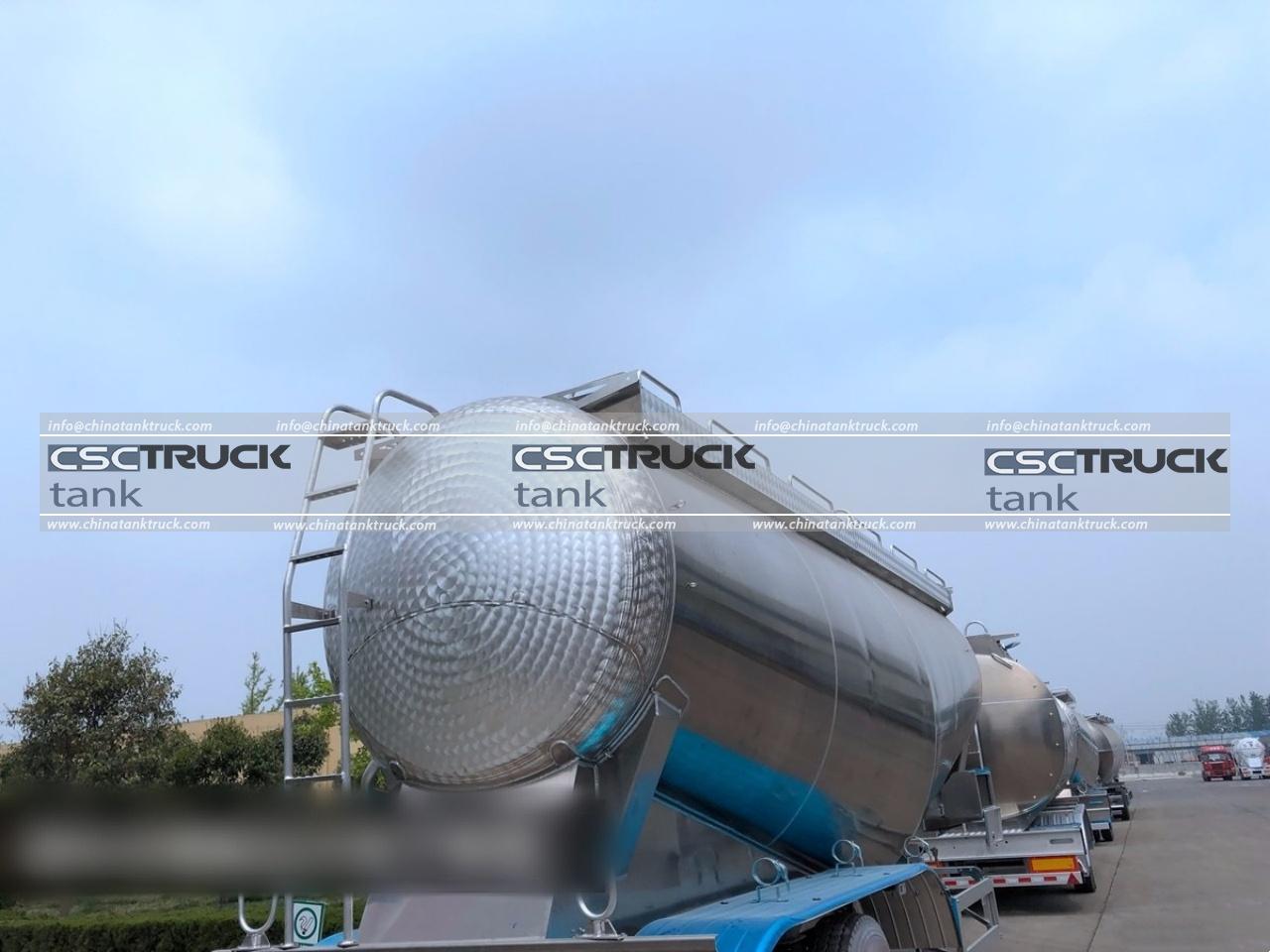
For example, certain non-removable accessories may be directly integrated into the vehicle body. On this model, the water tank for the brake spray system is mounted directly on the roof, and on some models, the toolbox is discreetly hidden underneath the rear of the tank.

However, some parts of the vehicle still cannot be made from aluminum alloy—for example, the axles and kingpins. For these components, staff use riveting instead of bolting. Compared to bolts, this method of connection is stronger and more reliable.