
Introduction: CSCTRUCK China Tank Truck
Modern bulk logistics increasingly rely on specialized vehicles designed for efficient, clean, and safe material handling. One notable manufacturer in this field is CSCTRUCK China Tank Truck, a China-based producer of tank trucks and dry bulk transport equipment. The company develops a wide range of vehicles, including pneumatic tank trucks for cement, fly ash, grain, and plastic resins. Their designs emphasize pressure-assisted unloading systems, corrosion-resistant tank bodies, and high-efficiency air compressors for industrial-scale material transport.
Among their product applications, plastic pellet transport is one of the most common and technically suitable uses of pneumatic tank trucks.
Understanding Plastic Pellets as a Bulk Material
Plastic pellets—also known as resin pellets or nurdles—are small granular materials used as feedstock for manufacturing plastics. They are typically made of polyethylene (PE), polypropylene (PP), or polystyrene (PS), and usually range from 1–5 mm in size.
Key characteristics of plastic pellets include:
- Low moisture absorption
- Uniform particle size
- Moderate bulk density (typically 30–60 lb/ft³ depending on resin type)
- Excellent flowability compared with powders
These properties make them highly compatible with pneumatic conveying systems.
What Is a Pneumatic Tank Truck?
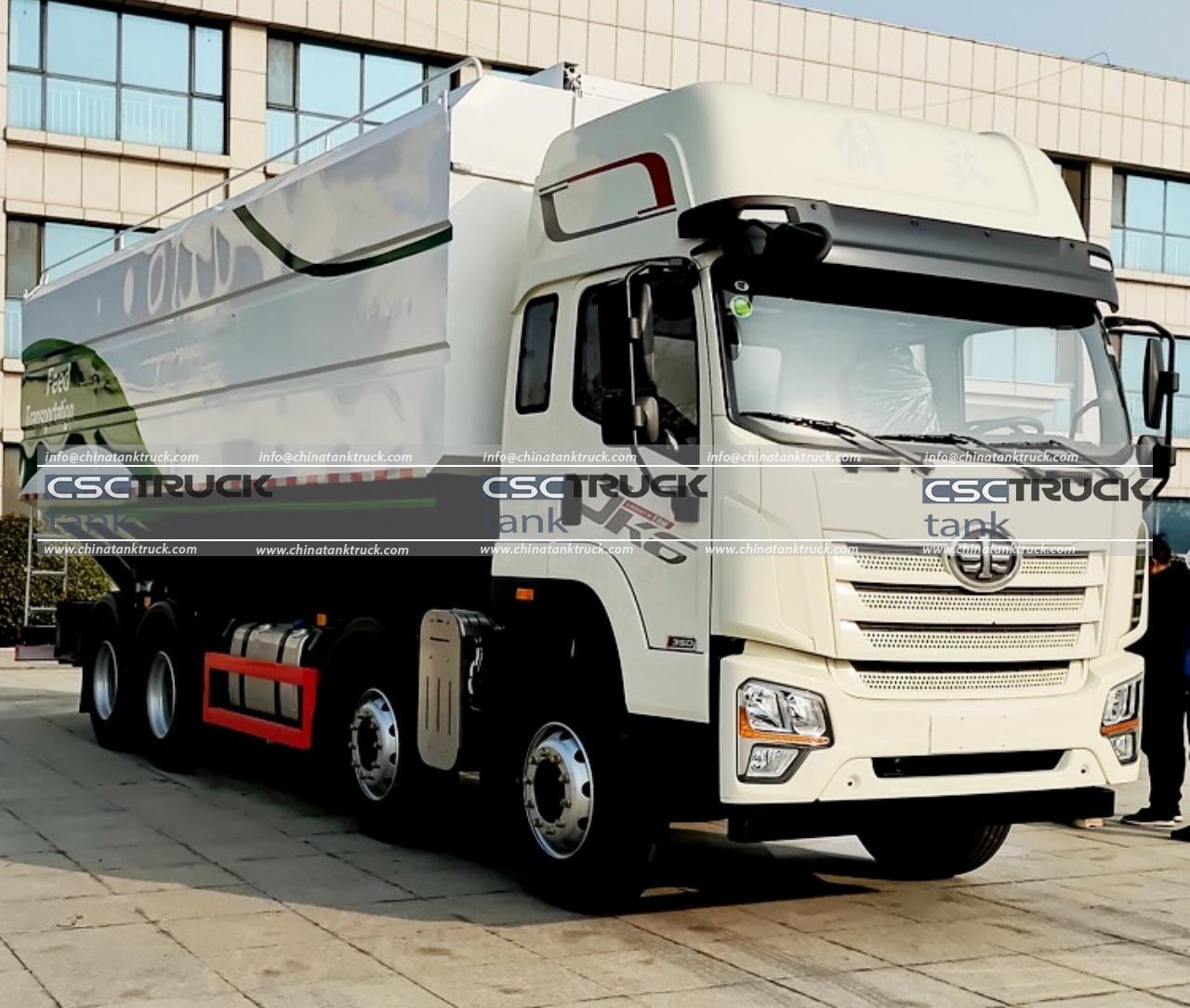
A pneumatic tank truck (also called a dry bulk tanker) is a vehicle that transports powdered or granular materials in a sealed tank and unloads them using compressed air.
The system typically includes:
- A sealed pressure tank
- A truck-mounted compressor or blower
- Fluidizing pads or aeration systems
- Discharge piping and hoses
- Silica or silo connection system
During unloading, compressed air is injected into the tank to fluidize the material, allowing it to flow like a liquid and be pushed through pipelines to storage silos.
These systems are widely used for cement, flour, fly ash, and plastic pellets.
Can Pneumatic Tank Trucks Transport Plastic Pellets?
Short Answer: Yes — and it is one of the most common uses.
Plastic pellets are actually one of the best-suited materials for pneumatic tank truck transport due to their:
- Free-flowing granular structure
- Low cohesion
- Low dust generation
- High resistance to degradation
Industry references confirm that pneumatic systems routinely transport plastic pellets and resins in both dilute-phase and dense-phase conveying systems.

Why Plastic Pellets Work Well in Pneumatic Tank Trucks
1. Excellent Flowability
Plastic pellets behave similarly to small beads. Unlike fine powders that may clog or bridge, pellets move smoothly when air is introduced. This makes unloading stable and predictable.
Dense-phase pneumatic systems can move pellets in “plug flow,” reducing turbulence and mechanical stress.
2. Low Risk of Contamination
Because pneumatic tank trucks are fully sealed systems, pellets are protected from:
- Moisture
- Dust
- Dirt
- External contamination
This is especially important for high-purity resin applications used in food packaging, medical devices, or automotive manufacturing.
3. Compatibility With Pneumatic Conveying Physics
Pneumatic conveying systems are specifically designed to transport:
- Powders
- Granules
- Pellets
Typical particle sizes below 20 mm can be reliably transported in air streams.
Plastic pellets usually fall well within this range, making them ideal candidates.
4. Efficient Long-Distance Unloading
Pneumatic tank trucks can discharge materials over long distances using air pressure.
Typical unloading ranges include:
- 20–50 meters (standard operation)
- 50–120 meters (industrial setups)
- Over 150 meters (special configurations)
Plastic pellets, being lightweight and uniform, often achieve better-than-average conveying distances.
Transport Process of Plastic Pellets in a Pneumatic Tank Truck
Step 1: Loading
Plastic pellets are loaded into compartments of the tank, usually through gravity filling or vacuum loading systems.
Step 2: Sealing
The tank is sealed to prevent leakage and contamination.
Step 3: Pressurization
A compressor generates airflow (often 10–18 m³/min in industrial trucks), pressurizing the tank.
Step 4: Fluidization
Air is injected into the hopper base to fluidize pellets, making them behave like a flowing fluid.
Step 5: Discharge
Pellets are pushed through pipelines to storage silos at the destination facility.

Advantages of Using Pneumatic Tank Trucks for Plastic Pellets
1. High Efficiency
Large volumes (often 20–40 tons per load) can be transported efficiently.
2. Clean Operation
No open handling reduces contamination and product loss.
3. Reduced Mechanical Damage
Compared to mechanical conveyors, pneumatic systems minimize crushing or deformation of pellets.
4. Flexible Delivery
Material can be discharged directly into silos, even at elevated or distant locations.
Limitations and Engineering Considerations
While highly suitable, plastic pellet transport still requires proper system design.
1. Air Velocity Control
Too high air velocity may cause:
- Pellet abrasion (“angel hair”)
- Pipe wear
- Static charge buildup
2. Static Electricity
Plastic materials can generate static charges during conveying, requiring grounding systems.
3. Dense vs Dilute Phase Selection
- Dilute phase: high-speed transport, more wear risk
- Dense phase: low-speed, gentler handling, preferred for premium resins
Modern systems often favor dense-phase conveying for high-value plastics.
4. Moisture and Contamination Risks
Although pellets are not hygroscopic like powders, moisture contamination must still be avoided to maintain processing quality.

Industry Applications
Pneumatic tank trucks transporting plastic pellets support several industries:
- Injection molding plants
- Film and packaging production
- Automotive component manufacturing
- Consumer goods production
- Recycling and reprocessing facilities
Pellets are often shipped from petrochemical plants or ports directly to manufacturing sites.
Conclusion
Yes—Pneumatic tank trucks are not only capable of transporting plastic pellets, but they are also one of the most efficient and widely used solutions for doing so. Their sealed structure, compressed-air unloading system, and compatibility with granular materials make them ideal for resin logistics.
With manufacturers like CSCTRUCK China Tank Truck producing advanced dry bulk transport vehicles, the industry continues to improve efficiency, safety, and environmental protection in plastic pellet logistics.
As global demand for plastics and recycling materials increases, pneumatic tank trucks will remain a core technology in the supply chain of modern polymer manufacturing.
