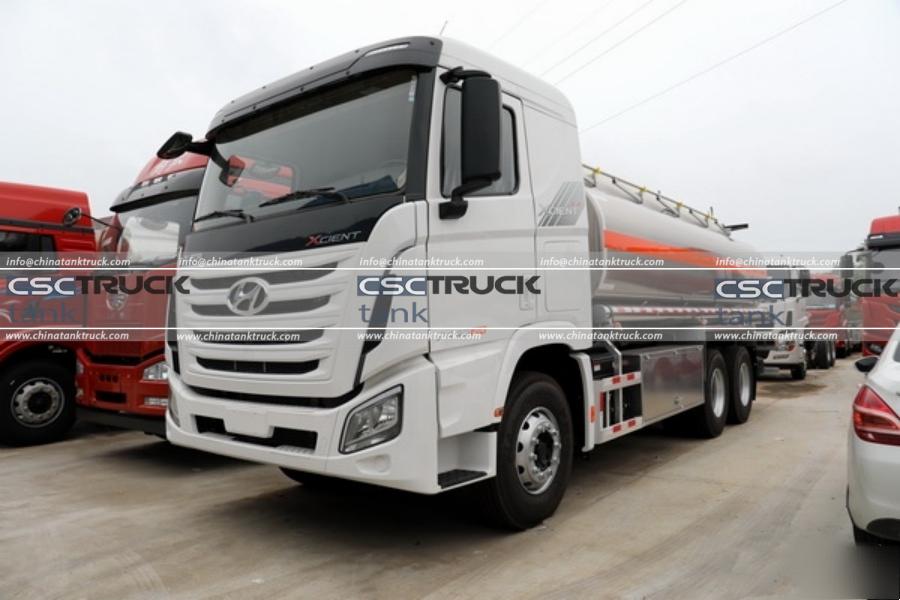
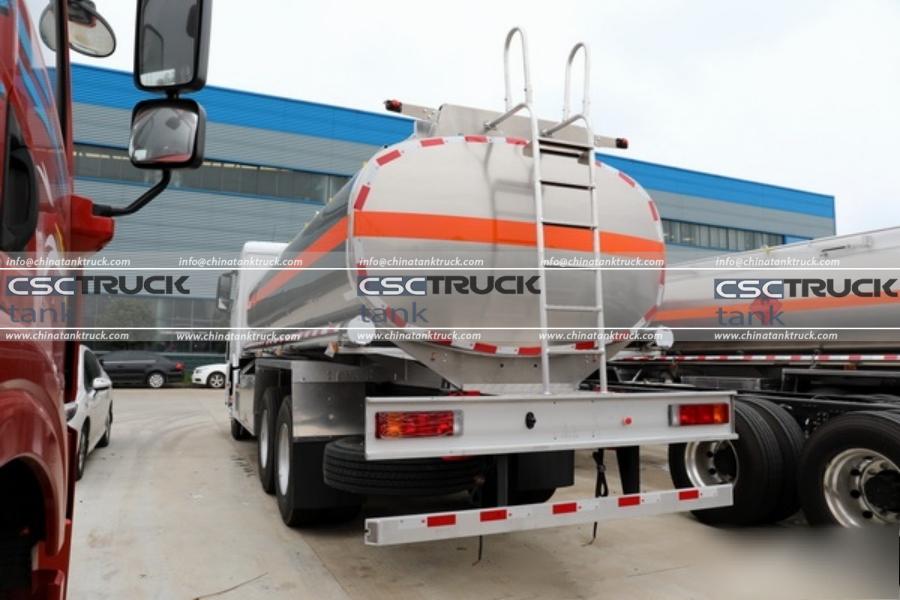
We all know that oil tank trucks belong to hazardous goods transport vehicles and are divided into refueling trucks and oil transport trucks. In their manufacturing, the safety requirements are very high. The transported medium is generally petroleum products, such as diesel, gasoline, and kerosene, which are flammable and volatile substances. Therefore, the design of the loading and unloading pipelines of oil tank trucks has very strict requirements.
From a professional perspective, oil filling for tank trucks is mainly divided into top loading and bottom loading. Top loading refers to filling oil from the top of the tank body. The biggest drawback of this method is that oil vapor is released into the air, causing both pollution and waste, and it is also unsafe. The other method, bottom loading, involves filling the tank through the bottom unloading valve, emergency shut-off valve (also called bottom valve), etc., in a closed manner. In this way, the generated oil vapor can be returned to the oil depot through a vapor recovery device, making it much safer.
At present, there are mainly 2 types of pipeline configurations for oil tank trucks: 1 equipped with an on-board refueling pump and the other without. To effectively prevent fuel leakage, a straight-through ball valve or a 3-way ball valve is usually used. Most oil tank trucks now adopt the 3-way ball valve. When connected to both the bottom valve and the pump, it enables the oil inside the tank to be pumped out by the on-board fuel pump. When connected to both the unloading valve and the pump, it allows external oil products to be pumped into the tank body through the on-board pump.