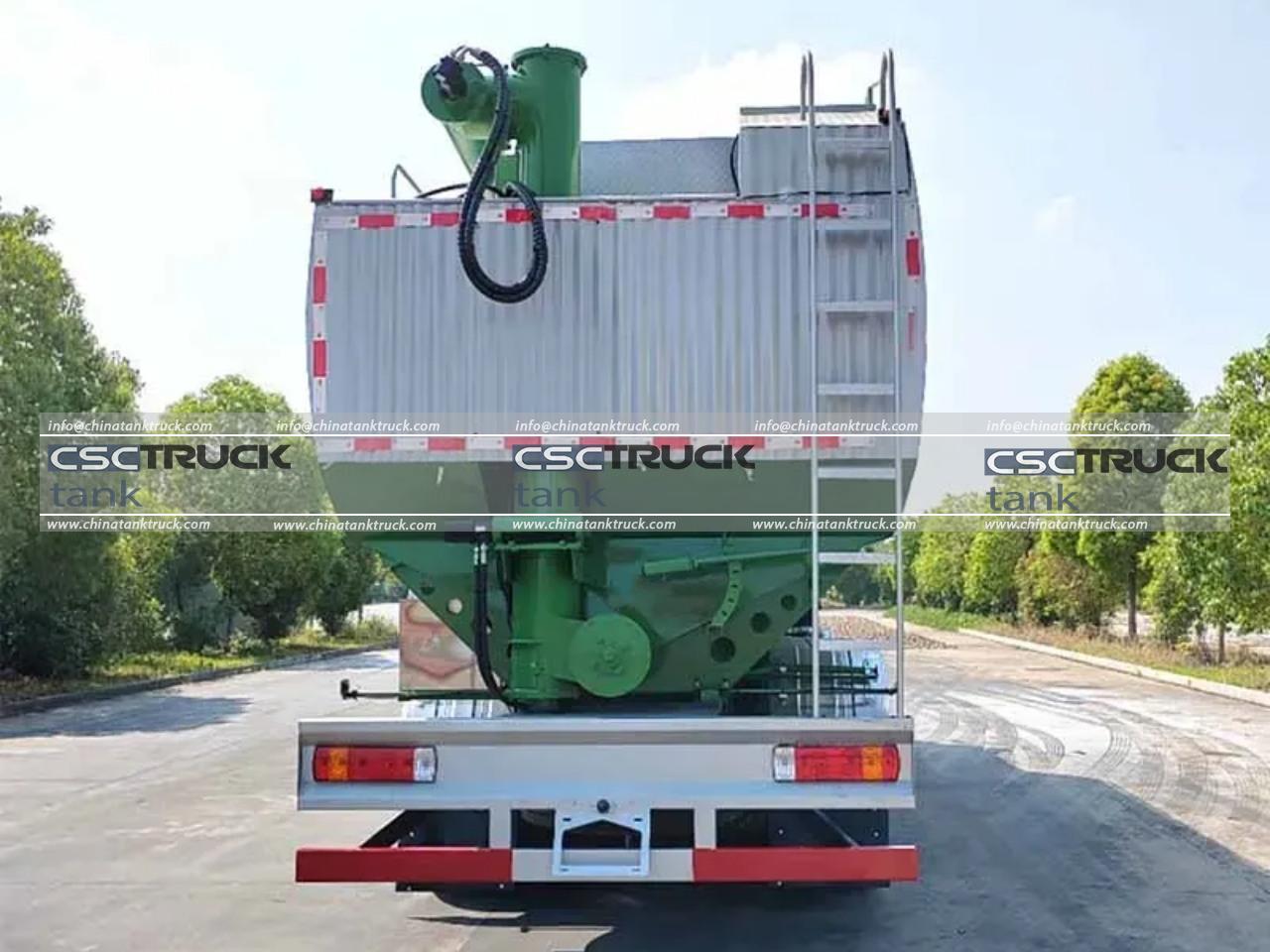
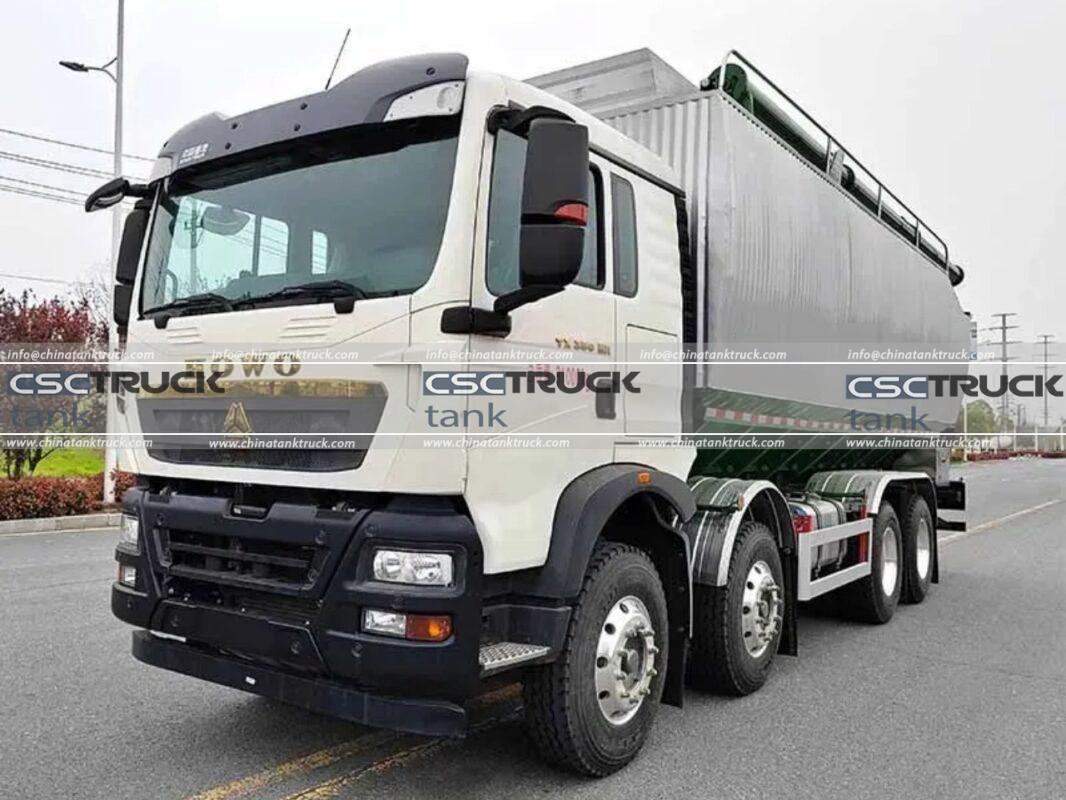
A pneumatic tank truck is a specialized vehicle designed to transport and discharge dry bulk materials such as cement, fly ash, lime powder, flour, plastic pellets, and other powdered or granular products. Unlike conventional dump trucks or bulk carriers, pneumatic tank trucks use compressed air to fluidize and convey materials through pipelines, allowing cargo to be unloaded directly into silos or storage systems. This enclosed unloading process can improve efficiency, reduce material loss, and help control dust during transportation.
Choosing the right pneumatic tank truck is an important investment for construction companies, bulk-material logistics providers, agricultural businesses, food processors, chemical manufacturers, and other industrial operators. The best vehicle is not necessarily the largest or cheapest model. Buyers should evaluate the overall combination of tank capacity, payload, chassis, compressor, discharge system, safety, regulatory compliance, and long-term operating costs.
CSCTRUCK China Tank Truck is a Chinese manufacturer and exporter specializing in tank trucks and trailers for different transportation applications. Its product range includes pneumatic tank trucks, dry bulk tankers, fuel tankers, water tankers, chemical tank trucks, LPG tankers, and other specialized vehicles. The company offers customized configurations for tank capacity, materials, chassis brands, and equipment to meet customer requirements.
Before purchasing a pneumatic tank truck, consider the following 10 key factors.
1. Determine the Material You Need to Transport
The first consideration should always be the cargo.
Different dry bulk materials have different densities, flow characteristics, moisture sensitivities, and discharge requirements. Cement, fly ash, flour, lime, silica, feed, plastic pellets, and powdered chemicals may require different tank and pneumatic-system configurations.
For example, a truck designed primarily for cement transportation may not be the best choice for food-grade powders. If you intend to transport several different materials, discuss cross-contamination, cleaning, and material compatibility with the manufacturer before ordering.
Clearly identifying the transported material allows the manufacturer to recommend the appropriate tank structure, aeration system, valves, piping, and compressor.
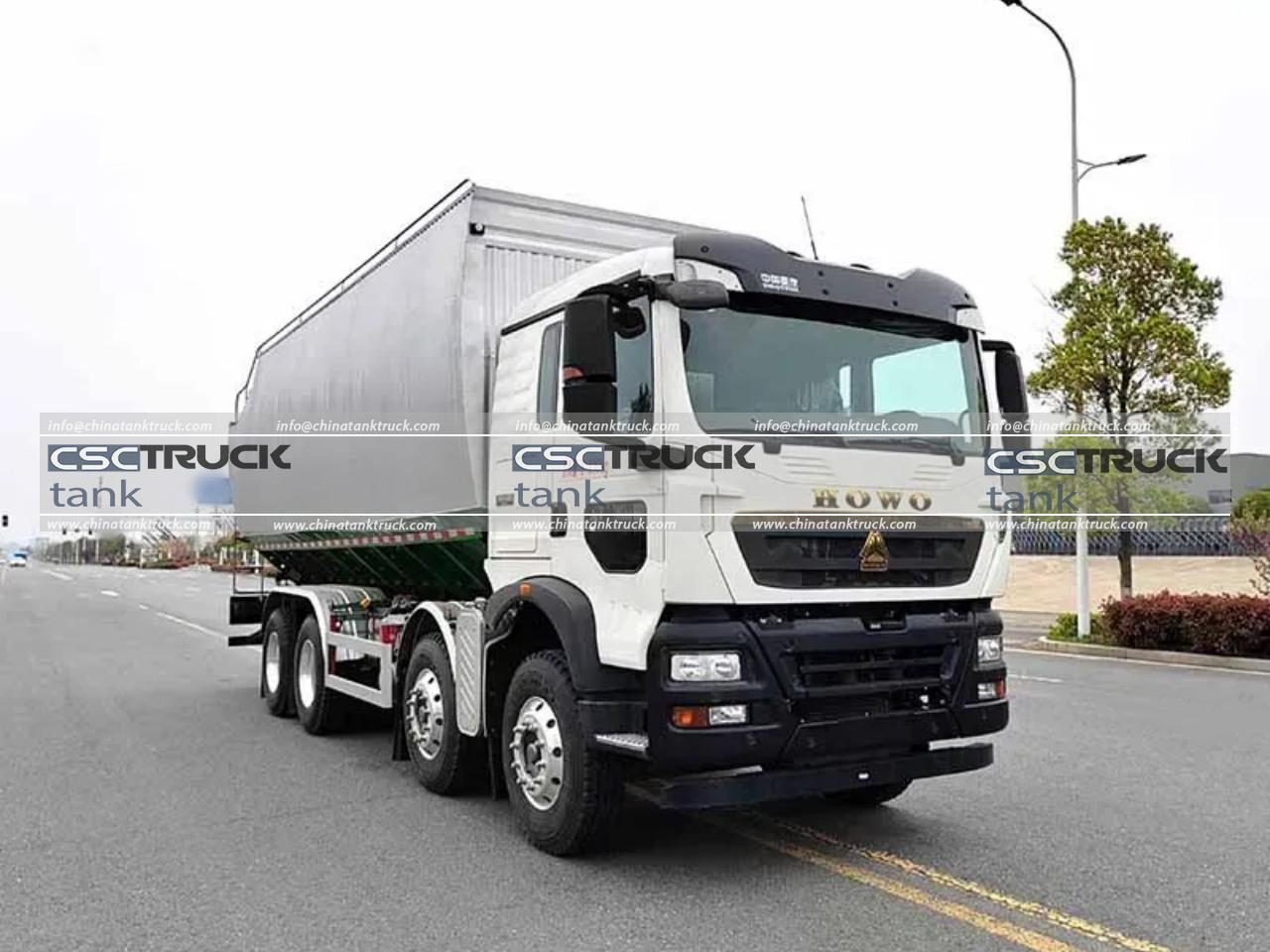
2. Choose the Right Tank Capacity
Tank volume directly affects transportation efficiency and operating cost.
Pneumatic tank trucks are available in various capacities, with CSCTRUCK China Tank Truck offering configurations ranging from smaller truck-mounted units to large-capacity pneumatic tankers and semi-trailers. Its current product range includes models such as 22 CBM, 30 CBM, 33 CBM, 40 CBM, 45 CBM, 46 CBM, and larger pneumatic tanker configurations.
However, a larger tank is not automatically better. The maximum practical capacity depends on cargo density, legal gross vehicle weight, axle configuration, road conditions, and the receiving facility.
Calculate your typical load volume and material weight before selecting the tank size.
3. Check Payload and Weight Distribution
Tank volume and payload are 2 different specifications.
A large tank may have considerable volume but cannot necessarily carry the maximum possible tonnage because of chassis limitations and local road-weight regulations. Pneumatic bulk tank trucks can commonly operate within payload ranges influenced by tank size, material density, truck configuration, and legal weight restrictions.
Check:
- Gross vehicle weight
- Rated payload
- Tank tare weight
- Number of axles
- Axle-load distribution
- Local road restrictions
Proper weight distribution is especially important for heavy bulk materials such as cement and minerals.
4. Evaluate the Air Compressor
The air compressor is one of the most important components of a pneumatic tank truck because compressed air powers the unloading process.
A compressor that is too small may result in slow discharge, incomplete unloading, or unstable operation. A properly matched compressor should provide sufficient airflow and pressure for the material, tank volume, discharge distance, and receiving silo.
PTO-driven compressors are widely used because the truck engine can provide power through the Power Take-Off system. This approach provides a practical and efficient way to operate the pneumatic unloading system.
When comparing trucks, ask the manufacturer about compressor model, airflow, working pressure, PTO configuration, cooling, maintenance requirements, and expected service life.
5. Examine the Discharge System
The discharge system determines how efficiently material moves from the tank to the receiving silo.
Important components can include discharge pipes, valves, aeration pads, pressure-control devices, and material outlets. Pipe diameter also matters because it influences conveying speed, pressure loss, and compatibility with the customer’s existing receiving equipment.
Before ordering, confirm:
- Discharge pipe diameter
- Discharge outlet configuration
- Maximum conveying distance
- Required unloading height
- Receiving silo connection
- Expected unloading time
A truck with a high-capacity tank but an unsuitable discharge system may not deliver the productivity you expect.
6. Consider Tank Material and Construction Quality
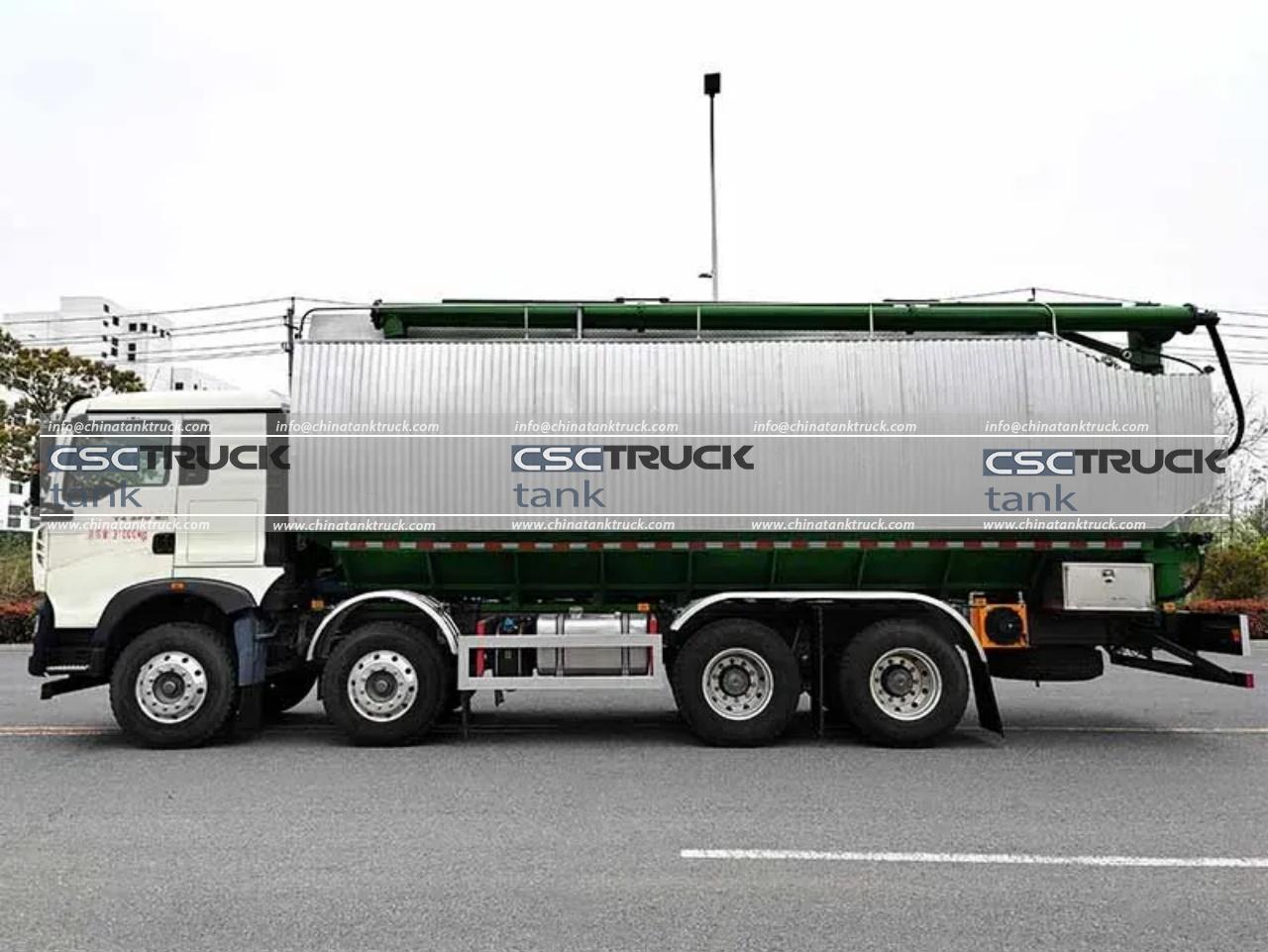
The tank must withstand repeated loading, unloading, vibration, pressure cycles, and exposure to the transported material.
Carbon steel is commonly selected for heavy-duty industrial applications because of its strength and durability. Other materials may be appropriate when corrosion resistance, weight reduction, hygiene, or specific cargo requirements are important.
Pay attention not only to material grade but also to welding quality, tank thickness, reinforcement structure, internal design, surface treatment, and pressure-test procedures.
CSCTRUCK China Tank Truck states that its tank trucks undergo quality inspections including pressure tests, welding checks, leak tests, and surface treatment before delivery.
7. Match the Chassis to Your Operating Environment
The chassis determines much of the truck’s driving performance, reliability, and serviceability.
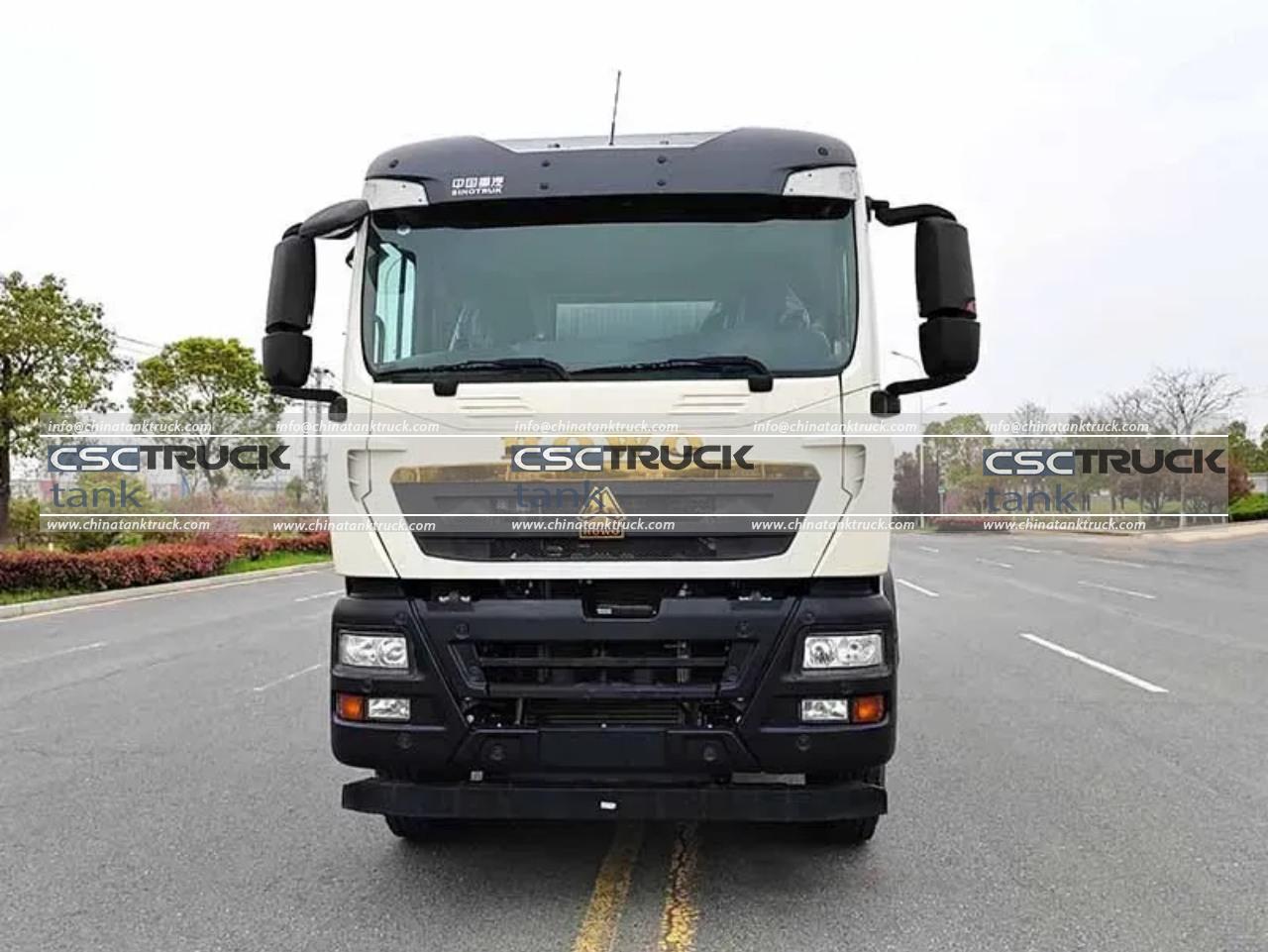
Consider the required engine power, transmission, wheel configuration, suspension, wheelbase, ground clearance, and braking system. A 4×2 truck may be suitable for relatively straightforward road transportation, while heavier operations may require 6×4, 8×4, or other configurations.
Also consider the availability of spare parts and maintenance technicians in your country. A technically excellent truck can become expensive to operate if critical chassis components are difficult to source.
8. Verify Safety and Regulatory Compliance
Pneumatic tank trucks operate with pressurized air, so safety must be a major purchasing criterion.
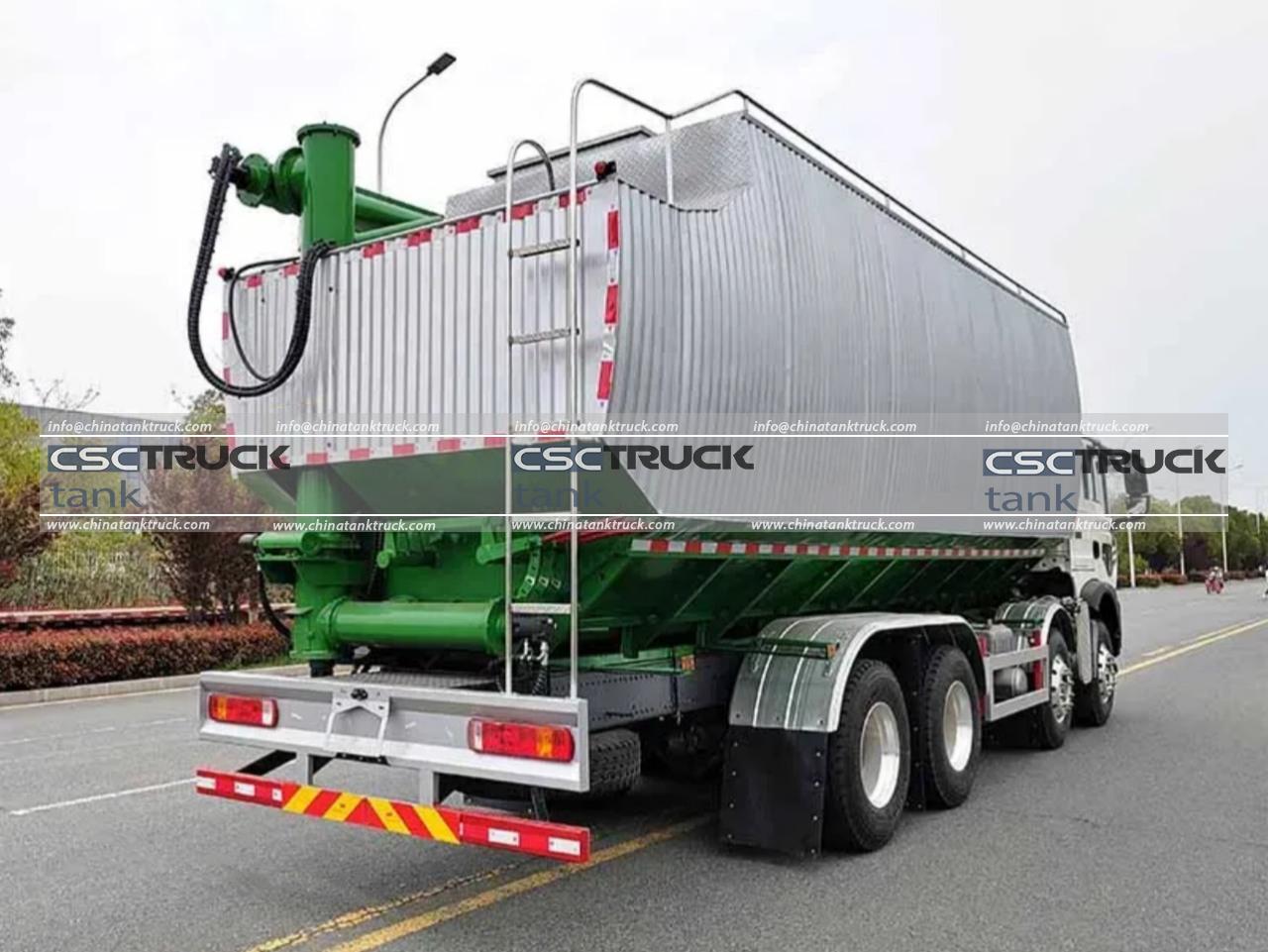
The truck should include suitable pressure-control and protection systems, reliable valves, gauges, emergency controls, and properly designed tank components. Buyers should also verify whether the vehicle complies with the applicable vehicle, pressure-vessel, road-transport, and occupational-safety regulations in the destination country.
Do not assume that a vehicle certified for one market automatically meets another country’s requirements. Confirm the necessary documentation and certifications before placing an order.
9. Calculate Total Cost of Ownership
Purchase price is only one part of the investment.
A lower-priced pneumatic tank truck may become more expensive over its service life if it consumes more fuel, requires frequent repairs, unloads slowly, or has difficult-to-source spare parts.
Evaluate:
- Initial purchase price
- Fuel consumption
- Compressor efficiency
- Maintenance costs
- Spare-parts availability
- Tire and brake costs
- Expected service life
- Unloading productivity
- Resale value
A slightly higher initial investment can be worthwhile if it provides better reliability and lower operating costs over many years.
10. Evaluate Manufacturer Support and Customization
Finally, choose a manufacturer that can provide more than a vehicle.
International buyers should evaluate engineering support, spare parts, technical documentation, warranty terms, export experience, shipping assistance, and after-sales service.
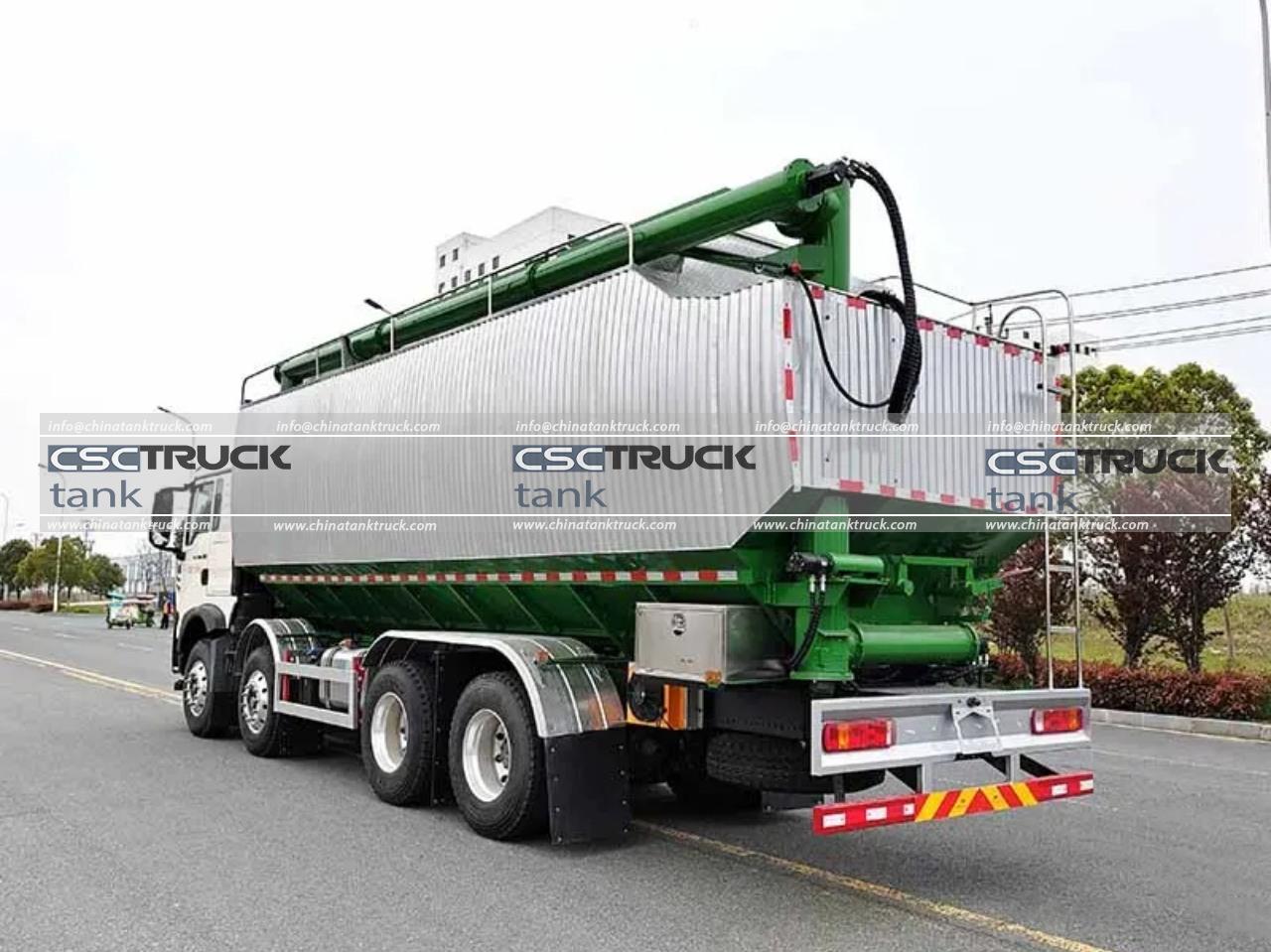
CSCTRUCK China Tank Truck provides customized tank capacity, tank materials, compartments, pumps, and chassis configurations, and its website states that the company supports international export documentation and technical assistance.
Customization can be particularly valuable when your operating conditions, local regulations, cargo type, or unloading system differ from standard configurations.
Conclusion
Buying a pneumatic tank truck is a long-term business decision rather than simply a vehicle purchase. The right model should match your cargo, required capacity, payload, compressor performance, discharge system, chassis, safety requirements, and operating environment.
By carefully evaluating these 10 factors, buyers can reduce the risk of purchasing an unsuitable truck and improve transportation efficiency over the vehicle’s service life.
For businesses looking for customized dry bulk transportation equipment, CSCTRUCK China Tank Truck provides pneumatic tank trucks and other specialized tanker solutions for international markets. Its product range includes multiple pneumatic truck and trailer configurations, while its manufacturing capabilities allow buyers to specify tank capacity, chassis, materials, and pneumatic equipment according to project requirements.
Visit CSCTRUCK China Tank Truck to explore pneumatic tank truck solutions and contact the manufacturer for a customized quotation.