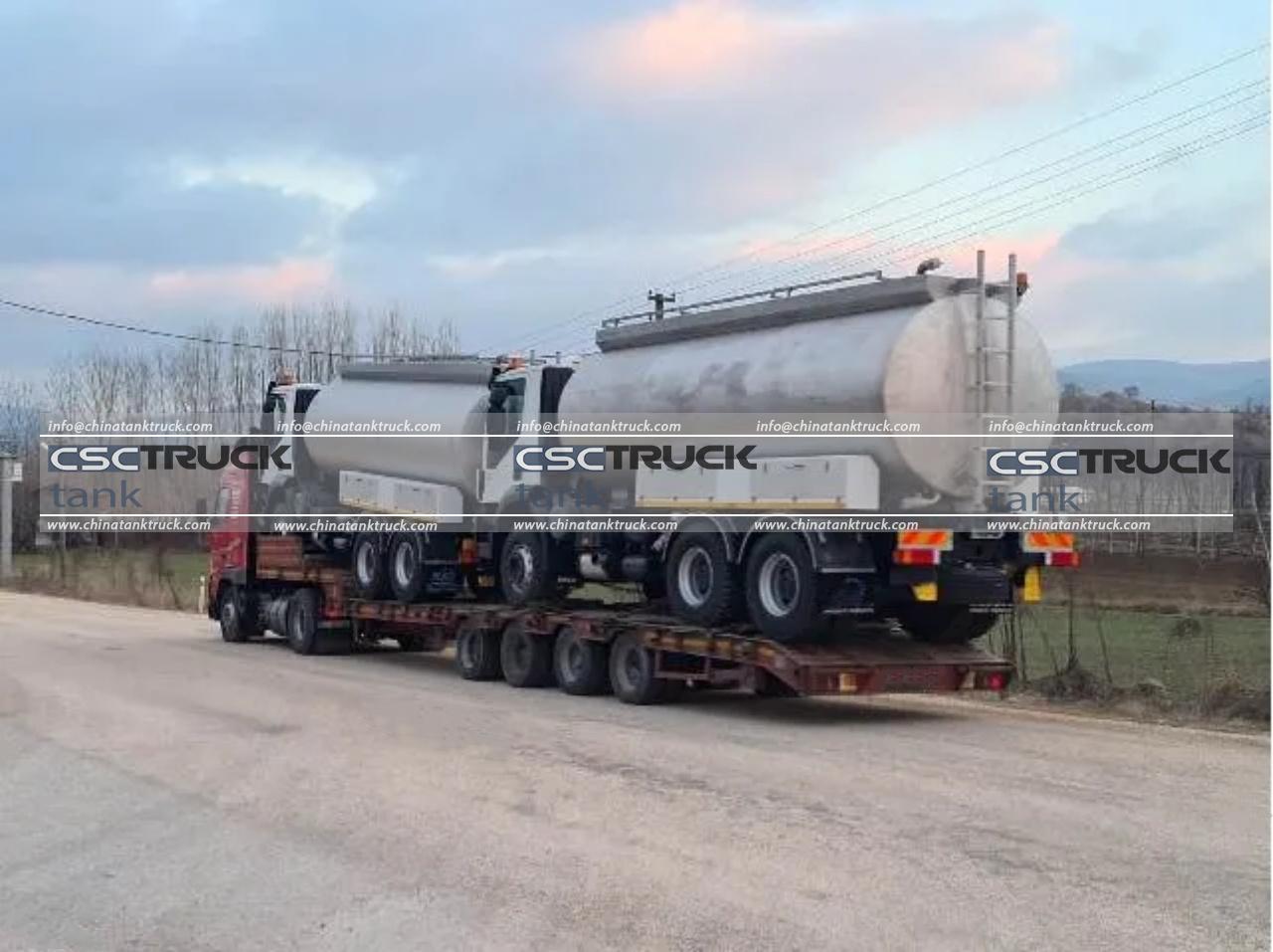

Stainless steel tank trucks have long been regarded as the gold standard in liquid transport, particularly where hygiene, corrosion resistance, and durability are of utmost importance. Used extensively in the food, pharmaceutical, and chemical industries, these vehicles ensure that sensitive or high-purity liquids are delivered safely and efficiently. Based on user insights and field experience, this article explores how stainless steel tank trucks are designed, maintained, and improved for sanitary and long-lasting transport operations.
1. Why Users Prefer Stainless Steel for Tank Construction
End users consistently highlight stainless steel’s unmatched corrosion resistance as the primary reason for choosing it over aluminum or carbon steel. Grades such as 304 and 316L stainless steel are particularly popular due to their ability to resist oxidation and chemical attack even under harsh transport conditions.
Drivers and fleet managers report that stainless steel tanks maintain their surface integrity far longer than other materials, reducing maintenance costs over time. This is especially crucial for transporting food-grade liquids like milk, juice, edible oils, or pharmaceutical solutions, where any corrosion or contamination could compromise product quality.
Additionally, stainless steel’s non-porous surface ensures that no residue or odor remains after cleaning. This makes it ideal for multi-purpose transport fleets where tanks must switch between different cargoes while maintaining full sanitary compliance.

2. Sanitary Design for Food and Pharmaceutical Transport
One of the strongest pieces of feedback from users in the food and medical industries concerns the importance of hygienic design. Modern stainless steel tank trucks are built with smooth, polished interiors (often with a mirror finish of 0.4 µm Ra or better) to prevent microbial growth and make cleaning faster and more effective.
Users emphasize that CIP (Clean-in-Place) and SIP (Steam-in-Place) systems have become indispensable features. These automated cleaning systems reduce downtime, minimize manual labor, and ensure that cleaning meets international food safety standards such as HACCP, FDA, and GMP requirements.
Truck operators who transport milk or juice note that gentle loading and unloading systems—such as low-shear pumps and controlled discharge valves—are vital to prevent foaming or spoilage. Furthermore, stainless steel’s inert properties ensure that it does not react with acidic or alkaline substances, maintaining the purity and taste of products during transport.
3. Structural Durability and Long-Term Value
Users in the chemical and industrial sectors emphasize longevity and structural resilience as key benefits of stainless steel tank trucks. While the initial cost of stainless steel is higher than that of aluminum or carbon steel, operators point out that the total lifecycle cost is lower due to fewer repairs, longer service intervals, and higher resale value.
Field experience shows that stainless steel tanks can last over 15–20 years with proper maintenance. Their high tensile strength allows them to withstand internal pressures and external impacts during rough transport conditions. Moreover, weld integrity is critical—manufacturers increasingly use automatic TIG welding and ultrasonic inspection to guarantee leak-free seams and joints.
Drivers and maintenance engineers also appreciate the resistance to pitting and stress corrosion cracking, particularly when transporting aggressive chemicals or saline solutions. Users suggest that adopting 316L or duplex stainless steels for specific applications could further extend the service life under extreme conditions.

4. User Feedback on Weight and Efficiency
While stainless steel provides strength and sanitation, users also point out its weight disadvantage compared to aluminum tanks. A stainless steel tank truck can weigh up to 20–30% more, which slightly reduces payload capacity and fuel efficiency.
However, recent innovations address this concern. Manufacturers are introducing lightweight stainless steel alloys, optimized tank geometries, and finite element analysis (FEA) for structural optimization. Operators confirm that such improvements have reduced tank weight without compromising durability.
Fleet owners further report that the low maintenance frequency and high durability of stainless steel tanks compensate for any additional fuel cost, especially in long-haul or high-volume operations.
5. Corrosion Resistance in Chemical and Industrial Transport
Stainless steel tank trucks are essential for chemical logistics, where cargoes often include acids, solvents, and reactive compounds. Users transporting products such as ethanol, caustic soda, or detergents praise stainless steel’s ability to resist chemical attack and prevent contamination.
To enhance protection, some operators recommend using internal linings or passivation treatments that form a chromium oxide layer on the tank’s surface. This process significantly enhances corrosion resistance and extends service intervals.
Moreover, users handling hazardous chemicals emphasize the importance of pressure relief systems, anti-static grounding, and double-sealed manholes to ensure both safety and environmental protection. Stainless steel’s ability to retain structural strength under thermal stress makes it safer for carrying heated or temperature-sensitive cargoes as well.

6. Maintenance and Cleaning Best Practices
Users universally agree that regular and thorough cleaning is essential to maintain sanitary and mechanical performance. Stainless steel’s smooth interior surface makes it easy to clean, but neglect or improper cleaning agents can still lead to discoloration or localized corrosion.
Experienced operators recommend the use of non-chlorinated cleaning agents and warm water rinsing, followed by drying to prevent water spots or bacterial growth. Many fleets have transitioned to automated CIP systems that monitor temperature, chemical concentration, and contact time for consistent cleaning results.
From a maintenance perspective, users stress periodic visual and ultrasonic inspections to detect micro-cracks, weld fatigue, or valve wear. Timely repairs not only prevent leaks but also preserve the tank’s long-term integrity and compliance with transport safety standards.
7. Technological Improvements and User Expectations
Feedback from logistics managers highlights growing expectations for digital monitoring and smart tank features. Stainless steel tank trucks are now being equipped with temperature sensors, pressure transmitters, GPS tracking, and volume monitoring systems. These allow real-time data collection and help prevent contamination, spillage, or product degradation during transport.
Users in the pharmaceutical and chemical sectors also advocate for integrated thermal insulation and heating systems. Such systems—often using steam coils or electric heating jackets—ensure product stability in cold or fluctuating climates.
Moreover, many users suggest that standardizing fittings and couplings across fleets would simplify cleaning and improve interoperability between different loading stations.

8. Sustainability and Recycling Value
Sustainability is another strong user concern. Stainless steel’s 100% recyclability gives it a distinct environmental advantage over other materials. Users appreciate that old tanks can be repurposed or recycled without losing their material properties.
Additionally, long service life means fewer replacements, less manufacturing waste, and reduced environmental footprint. Many operators highlight that adopting stainless steel aligns with corporate sustainability goals while ensuring superior transport hygiene and performance.
9. Conclusion: The Ideal Choice for Clean, Safe, and Durable Transport
User insights clearly demonstrate that stainless steel tank trucks remain the benchmark for sanitary and long-lasting transport across multiple industries. Their superior corrosion resistance, hygienic design, and structural reliability make them indispensable for food, pharmaceutical, and chemical logistics.
Although they may come with higher upfront costs and slightly heavier weight, users agree that the long-term benefits—durability, safety, cleanliness, and resale value—far outweigh the disadvantages. With continuous innovations in lightweight alloys, smart monitoring, and eco-friendly design, stainless steel tank trucks are well-positioned to meet the evolving demands of global transport logistics.
In essence, the voices from the field confirm one thing: For operators who prioritize purity, safety, and reliability, stainless steel tank trucks remain the trusted choice for modern, efficient, and sustainable liquid transport.