

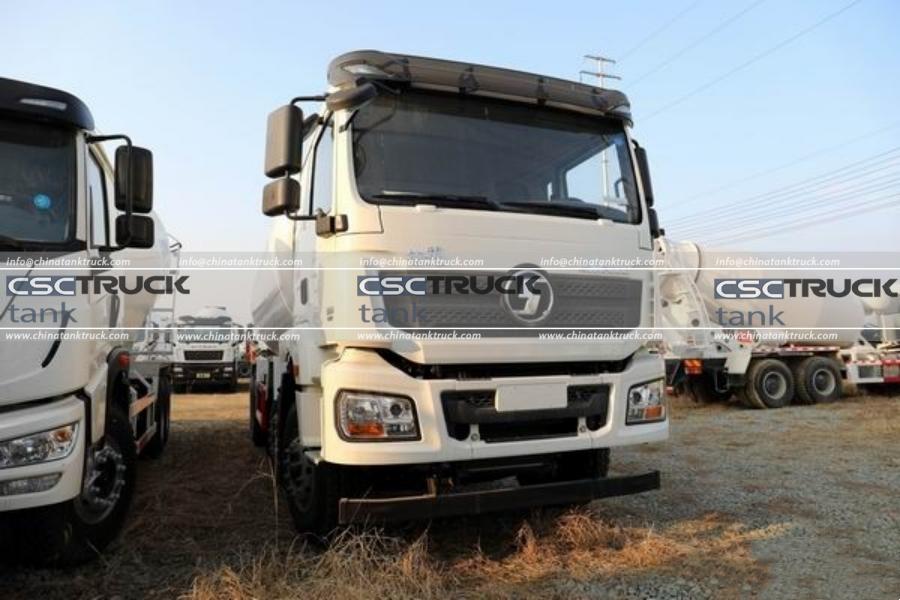
The dry bulk tank truck is primarily used to transport bulk materials such as cement, lime powder, and mineral powder. These are generally granular materials with particle diameters greater than 0.1 mm, so the vehicle is also known as a bulk cement truck. It belongs to a category of special-purpose vehicles, and because it differs from conventional trucks, its operation also varies significantly. Incorrect operation can lead to hazardous accidents. Therefore, here is a basic guide to the operation of a bulk cement truck:
- Before loading, be sure to open the pressure relief valve and check the pressure gauge. Only when the pressure inside the tank drops to 0 can the tank be opened.
- After loading, clean off any debris on the tank cover and then seal it tightly. Close the discharge butterfly valve, the top pressure relief valve, and the secondary air ball valve.
- Before unloading, open the intake valves for the front and rear compartments, then start the air compressor to pump air into the tank. Adjust the compressor’s speed to reach the rated RPM.
- Monitor the pressure gauge closely. When the pressure reaches 0.15–0.18 MPa, open the secondary air ball valve to clear the material pipelines of the storage compartments. Close the valve after clearing is complete.
- When the pressure reaches 0.2 MPa, open the discharge butterfly valve to start unloading. Once the pressure drops to about 0.04 MPa and no longer decreases, unloading is complete. At this point, stop the unloading process.
- During unloading, always monitor the pressure gauge. If the discharge height is relatively high or the horizontal distance is long, the pressure will rise slowly after opening the butterfly valve. If it exceeds 0.2 MPa, the safety valve will release excess air. At this point, you should partially open the secondary air ball valve to inject air directly into the discharge pipe. This helps to dilute the material density in the pipe, making it easier to transport while maintaining the 0.2 MPa discharge pressure.
- Adjust the opening degree of the secondary air ball valve to achieve optimal discharge results. If the valve is fully open but the pressure continues to rise, this indicates a pipe blockage. In this case, close the discharge butterfly valve and use the secondary air valve to clear the blockage. Neither the tank nor the pipes should be overloaded, as this can easily cause danger.
- Never open the tank cover during unloading, as it may lead to safety accidents.
- During unloading, the discharge butterfly valve must be either fully open or fully closed. Do not leave it partially open or not fully sealed to avoid damaging the valve. Also, never close the intake valve while the air compressor is operating.
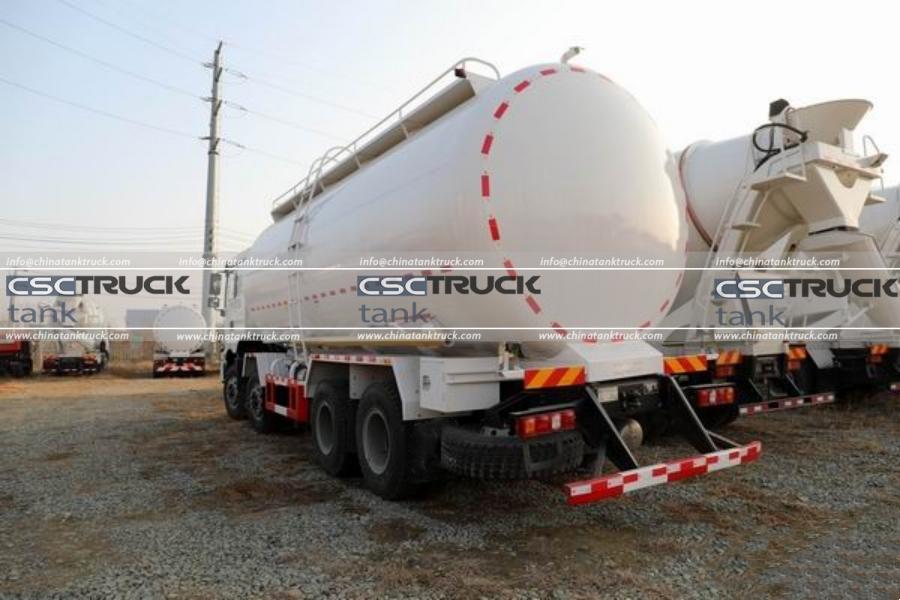
Accidents caused by improper operation of dry bulk tank trucks occur frequently. We remind everyone to always follow the correct operational procedures and put safety first!