
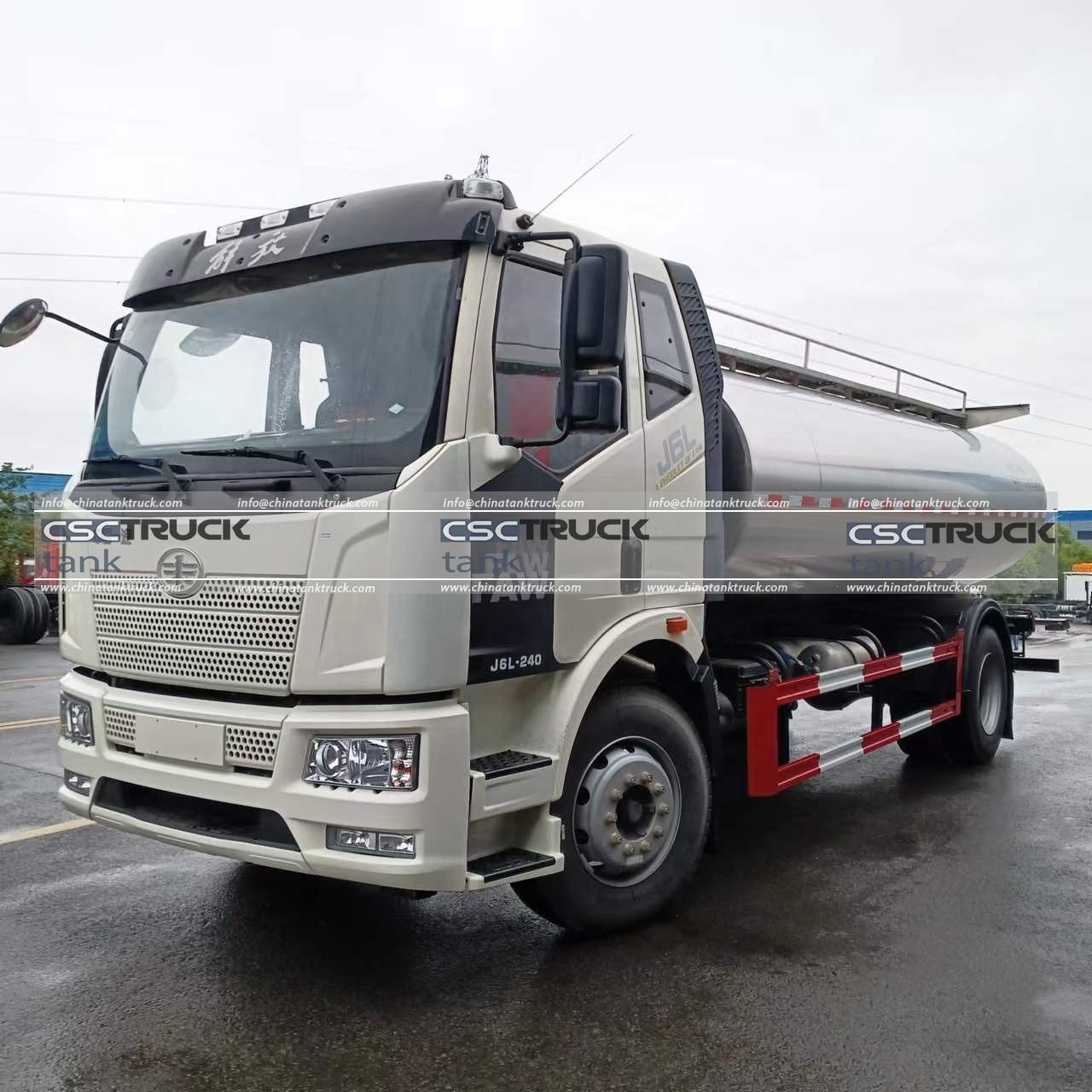
Ensuring milk travels from farm to processor without compromise is more than logistics — it’s a public-health mission. Milk tank trucks are the backbone of dairy supply chains, and their design, operation, and maintenance directly affect product quality, shelf life, and consumer safety. This article gathers practical user insights and actionable recommendations to help fleet operators, drivers, plant managers, and dairy farmers improve the hygiene, efficiency, and reliability of milk transport.
Build hygiene into the design
The foundation of hygienic transport begins at the design stage. Milk tanks should be constructed from food-grade materials — typically electropolished 304 or 316 stainless steel — with smooth, crevice-free welds and interior finishes that resist biofilm formation. Sloped or dished bottoms and internal baffles must be designed to minimize dead zones where milk can pool and bacteria can grow. Manways, hatches, and fittings should be positioned and sized for easy access during cleaning and inspection, while gaskets and seals must be food-grade and readily replaceable. When ordering or retrofitting tanks, prioritize rounded corners, sanitary tri-clamp fittings, and polished interiors (0.4 µm Ra or better) to make cleaning effective and repeatable.

Standardize cleaning — CIP and documentation
Users repeatedly report that inconsistent cleaning practices are a major source of contamination. Closed-loop Clean-In-Place (CIP) systems bring repeatability and control. A good protocol includes pre-rinse, caustic wash, intermediate rinse, acid wash (if needed), and a final sterile rinse. Record cycle parameters (temperature, concentration, flow, and time) for every CIP run. Digital loggers that attach to pumps and valves are inexpensive insurance — they create auditable records and alert operators when cycles fall short. For mobile tankers, ensure plenty of water capacity and that onboard heating can reach recommended temperatures (often 60–85°C for caustic washes, depending on chemistry). Where full CIP isn’t possible on the farm, make sure trucks arrive with an immediately available, validated method for cleaning on-site.
Temperature control and thermal hygiene
Milk is perishable and temperature-sensitive. The ability to maintain recommended temperatures (commonly ≤4°C for chilled milk) from pickup through delivery is critical. Insulated tanks should be evaluated for real-world thermal performance — not just lab R-values — and operators should install reliable temperature sensors that log throughout the haul. Placing sensors at critical points inside the tank (top, middle, bottom) helps detect stratification. When interrupting a route (delays, traffic, unforeseen stops), proactive steps — such as running auxiliary refrigeration or expediting delivery — can prevent costly spoilage. Drivers must be trained to check and record temperatures at loading and unloading.

Loading and unloading hygiene
Cross-contamination often happens during transfer. Use sanitary loading arms or hoses that are dedicated to milk only; color-code and label equipment to prevent accidental use with non-food products. All hoses should be drained, capped, and stored in clean compartments. Employ positive sealing couplers and ensure vents have sanitary filters to prevent airborne contamination. When unloading at the plant, make sure receiving lines are flushed and inspected before connecting. Quick visual checks of seals, gaskets, and hose ends before each transfer are inexpensive habits that prevent major problems.
Preventing and managing biofilm and residues
Biofilms form quickly and resist surface cleaning. Regular inspections using ATP testing, swabs, or microbial sampling can catch issues before they escalate. If persistent residues appear, use specialized enzymatic or surfactant cleansers as recommended by chemists and always follow with validation testing. Replace worn interior components — gaskets, valves, spray balls — on a preventative schedule rather than waiting for failure. Users find that a short downtime for part replacement is cheaper than lost loads or product recalls.

Maintenance, inspection, and traceability
A robust preventive-maintenance and inspection schedule is non-negotiable. Daily driver checklists (visual tank interior checks via manway when safe, gasket condition, valve operation, external cleanliness) paired with weekly and monthly inspections (calibration of temperature sensors, function-test of CIP spray balls, ultrasonic thickness checks on tank walls) create resilience. Keep digital records tied to load IDs — traceability is vital if contamination is discovered downstream. Barcodes or RFID tags on tanks, fittings, and hoses speed documentation and reduce human error.
Driver training and culture
Equipment is only as good as the people who use it. Training programs should cover GMPs (Good Manufacturing Practices), basic microbiology concepts (why temperature and cleanliness matter), correct CIP procedures, and emergency responses for spills or contamination. Create a “safety and hygiene moment” in daily pre-trip briefings — small, repeatable reminders produce measurable improvement. Encourage drivers to report near-misses and small problems; a culture that rewards reporting is far more effective than one that punishes mistakes.
Operational efficiencies that support hygiene
Route planning, loading order, and consolidation all influence product integrity. Plan routes to minimize time-on-road for the most perishable loads and avoid mixing products with different hygienic risk levels on a single run. Optimize loading order so that the cleanest product is loaded last and unloaded first. Use telematics and live ETA updates to reduce idle time and allow receiving plants to prepare for unloading quickly and cleanly.
Emergency preparedness and contamination response
Have clear, practiced procedures for suspected contamination: Immediate segregation of the load, hold-and-quarantine steps, notification trees, and sampling plans. Maintain a spare tank or contingency plan for rapid substitution to avoid pressure on drivers to deliver questionable loads. Designate a rapid-response cleaning and validation team at the plant to handle suspicious loads without shutting down essential operations.

Sustainability and continuous improvement
Hygiene and sustainability can go hand-in-hand. Water- and chemical-saving CIP systems reduce environmental impact and operating costs, but never at the expense of cleanliness — validate any water-reduction program thoroughly. Consider lifecycle planning for tanks and parts, and recycle or refurbish components when safe and economical. Use data from digital logs to run continuous improvement cycles: identify frequent failure points and invest in engineering or procedural fixes.
Conclusion
Hygienic dairy transportation is a systems problem — equipment, people, procedures, and data must all align. Practical improvements range from robust tank design and standardized CIP protocols to driver training and digital traceability. Operators who invest in preventive maintenance, validated cleaning, and a culture of vigilance not only protect public health but also gain long-term benefits: Fewer rejects, higher customer trust, and lower lifecycle costs. Milk is a product of trust; every link in the transport chain must earn it.
