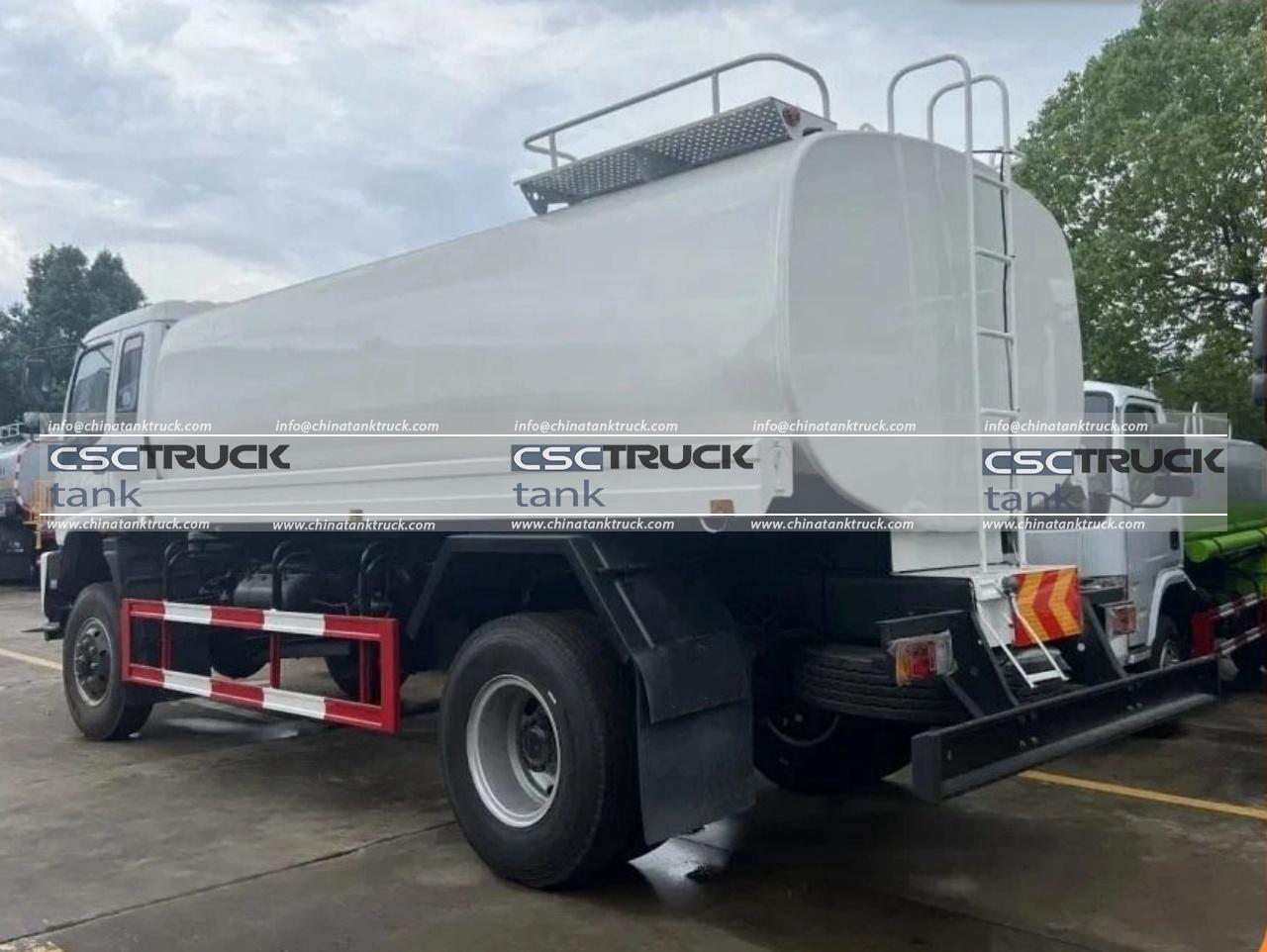

Milk transportation requires more than simply moving a liquid from 1 location to another. Fresh milk is highly perishable and must be protected from contamination, excessive temperature changes, and poor handling throughout the transportation process. This is why dairy businesses use specialized milk tank trucks equipped with food-grade stainless steel tanks, insulation, sanitary pipelines, and cleaning systems.
Among the commercial vehicle platforms available for dairy transportation, ISUZU milk tank trucks are used for applications ranging from farm milk collection to transportation between dairy facilities. CSCTRUCK China Tank Truck offers several ISUZU-based milk tanker configurations, including 13 CBM, 15 CBM, and 10,000-liter models, allowing customers to select a vehicle according to capacity, road conditions, and operating requirements.
What Is an ISUZU Milk Tank Truck?
An ISUZU milk tank truck is a specialized dairy vehicle built on an ISUZU commercial truck chassis and fitted with an insulated, food-grade stainless steel tank.
The vehicle is designed to collect and transport raw milk from dairy farms, collection centers, or local storage facilities to milk processing plants and other destinations. Unlike a conventional liquid tanker, a milk tanker must pay particular attention to hygiene, sanitary construction, temperature protection, and ease of cleaning.
A typical milk transportation process includes:
Milk collection → Hygienic loading → Insulated transportation → Sanitary unloading → Tank cleaning and sanitation
The tank, valves, pipelines, manholes, and other milk-contact components therefore need to be designed for food transportation applications.
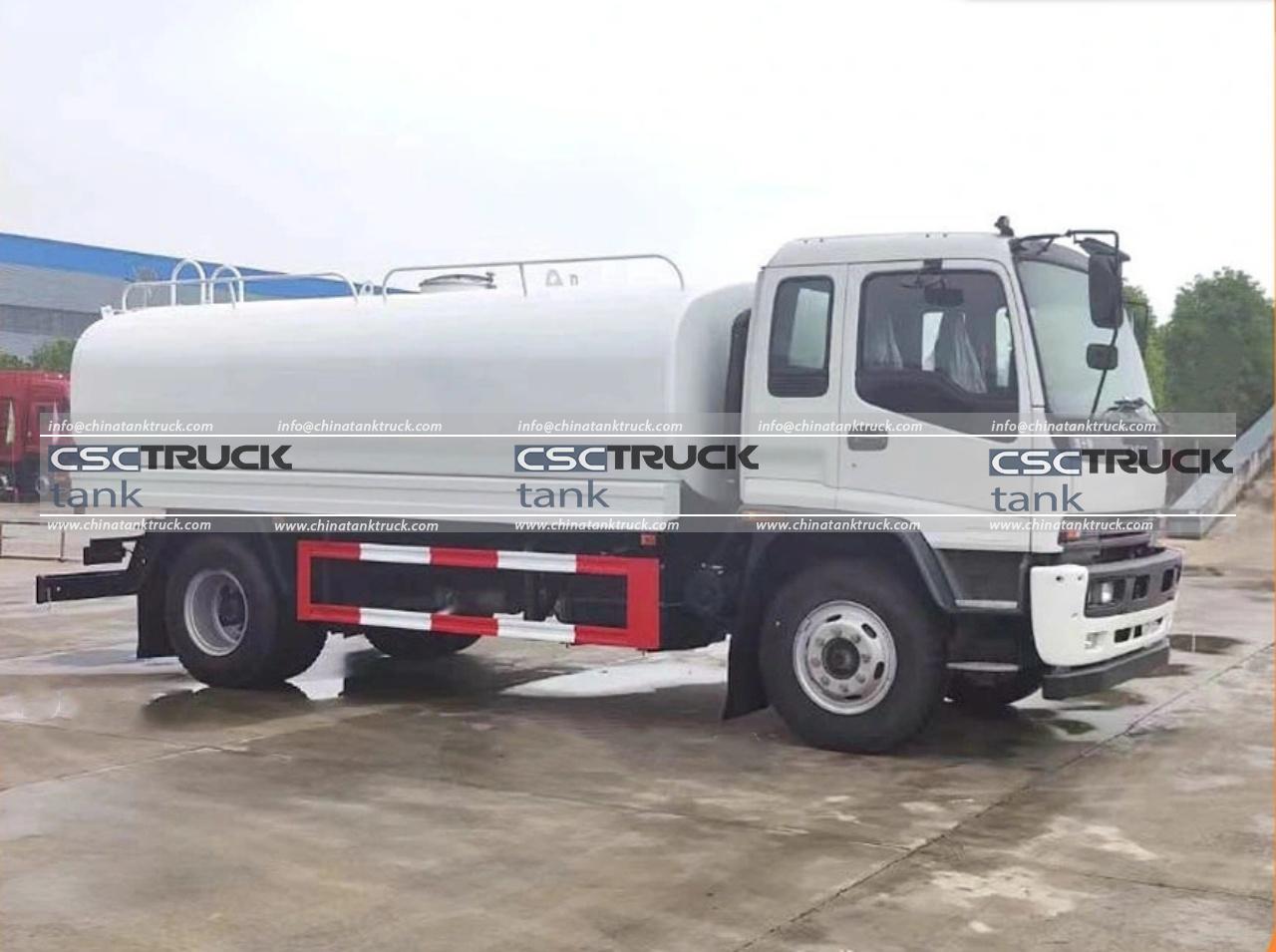
ISUZU Milk Tank Truck Capacity
Capacity is one of the most important specifications when selecting a milk tanker. The appropriate tank volume depends on daily milk collection, transportation distance, road conditions, loading frequency, and local vehicle weight regulations.
CSCTRUCK China Tank Truck currently lists several ISUZU milk tank truck configurations.
1. ISUZU 13 CBM Milk Tank Truck
The ISUZU 13 CBM model has a 13,000-liter milk tank and uses an ISUZU 4×2 chassis. Its listed dimensions are approximately 8,900 × 2,500 × 3,150 mm, with a 190 HP ISUZU engine and Euro 6 emissions configuration. The tank is made from food-grade 304-2B stainless steel, with an 80 mm polyurethane insulation layer.
This capacity is suitable for medium-volume milk collection and transportation where a balance between payload and maneuverability is important.
2. ISUZU 15 CBM Milk Transport Truck
The 15 CBM model provides approximately 15,000 liters of tank capacity. It is based on an ISUZU chassis with a 4×2 drive configuration and uses a 205 HP 4HK1-TC50 engine. The tank is manufactured from 304 stainless steel and is designed specifically for milk transportation.
This configuration can be considered for dairy operators that need additional transportation capacity while retaining a relatively conventional rigid-truck configuration.
3. ISUZU FVZ 10,000-Liter Milk Tank Truck
CSCTRUCK China Tank Truck also offers an ISUZU FVZ 10,000-liter milk tank transport truck. The model uses a 6×4 chassis, a 180 HP Cummins engine, and a 10,000-liter 304 2B stainless steel tank. The listed overall dimensions are approximately 8,400 × 2,460 × 3,100 mm.
The 6×4 configuration provides additional traction compared with a typical 4×2 truck, making this type of configuration useful where road and operating conditions require additional drivetrain capability.
Key Features of an ISUZU Milk Tank Truck
1. Food-Grade Stainless Steel Tank
The tank is the most important component in a milk tanker because its internal surface comes directly into contact with the milk.
CSCTRUCK China Tank Truck‘s ISUZU milk tank configurations use food-grade stainless steel, including 304 and 304-2B stainless steel. Stainless steel provides corrosion resistance, durability, and a smooth surface that can be cleaned effectively.
For dairy applications, buyers should confirm the exact stainless steel grade, thickness, surface finish, and welding quality before placing an order.
2. Thermal Insulation
Temperature protection is another essential feature. Milk transportation tanks are generally insulated to reduce the rate of temperature change during transportation.
For example, the ISUZU 13 CBM model uses an 80 mm polyurethane foam insulation layer, with the listed temperature rise or fall during 24 hours limited to no more than 1°C under the specified conditions. The ISUZU FVZ model similarly uses an 80 mm polyurethane insulation layer.
The actual temperature-control requirements should always be determined according to the milk product, loading temperature, transportation distance, ambient conditions, and applicable local regulations.
3. Hygienic Internal Design
A milk tank needs to minimize areas where milk residue can accumulate. Smooth internal surfaces, sanitary fittings, suitable welding, and appropriate tank geometry make cleaning easier and help reduce contamination risks.
The ISUZU 13 CBM model, for example, uses an elliptical horizontal tank design that can be configured with anti-wave plates or separate compartments according to customer requirements.
4. Automatic Cleaning System
Cleaning is an essential part of milk transportation because residual milk can support bacterial growth and contaminate subsequent loads.
The ISUZU 13 CBM and ISUZU FVZ models listed by CSCTRUCK China Tank Truck feature automatic cleaning systems. The FVZ model uses a rotating cleaning device designed to provide 360-degree coverage inside the tank, while the pipelines and valves are also made from stainless steel.
A buyer should evaluate the complete cleaning process, including cleaning heads, pipelines, drainage, detergents, water requirements, and sanitation procedures.
5. Sanitary Valves and Pipelines
Milk-contact components should be suitable for food applications. This includes valves, outlets, pipelines, fittings, and loading or unloading connections.
The ISUZU FVZ 10,000-liter model specifies stainless steel valves and pipelines, helping create a sanitary milk transfer system.
6. Flexible Chassis Configurations
Another advantage of an ISUZU milk tanker is the availability of different chassis configurations.
A 4×2 truck can be appropriate for conventional road transportation and urban or regional milk collection, while a 6×4 configuration can provide greater traction and load-carrying capability for particular operating conditions.
The final choice should consider payload, axle limits, terrain, road quality, transportation distance, and local regulations rather than selecting a chassis based only on engine power.
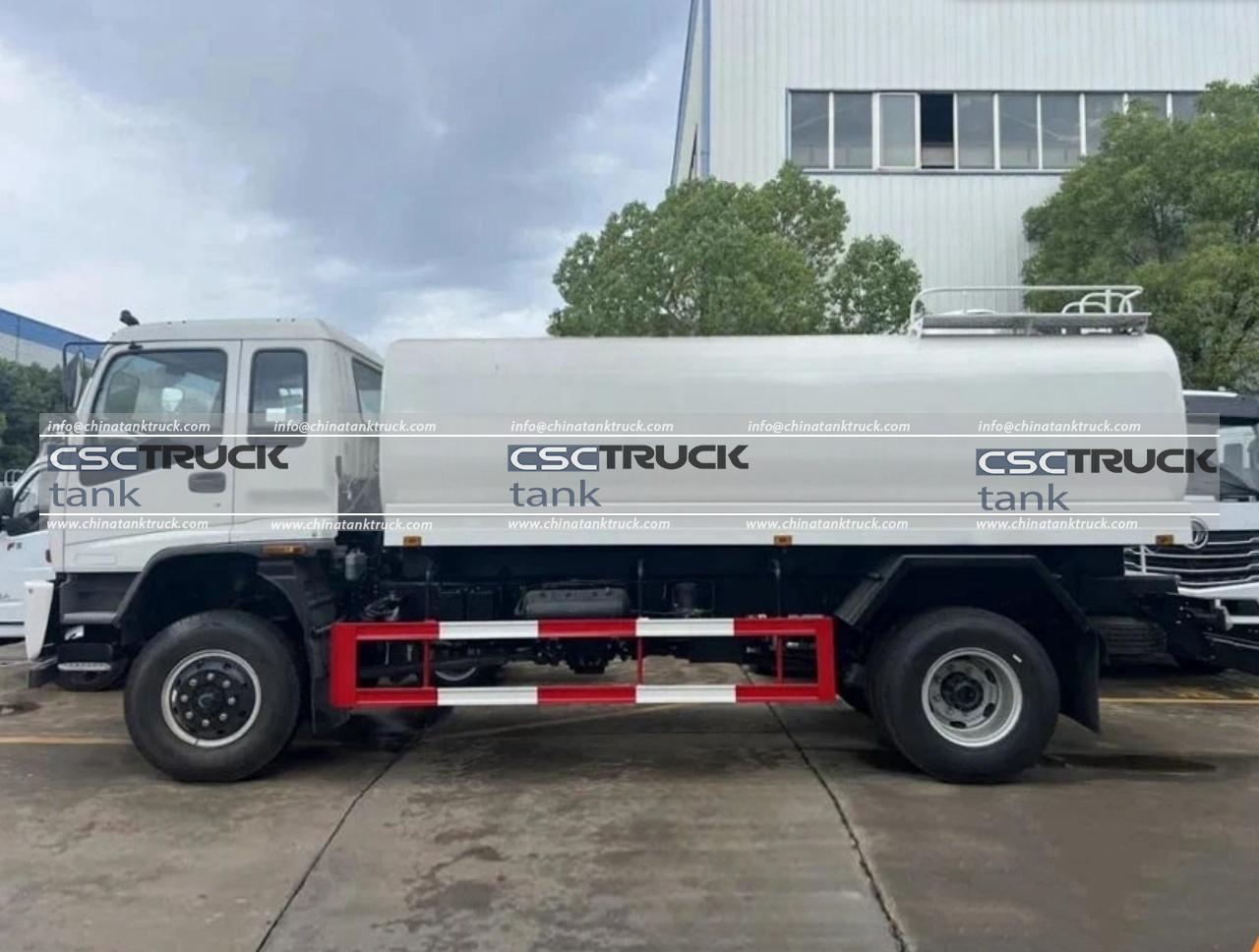
Applications of ISUZU Milk Tank Trucks
ISUZU milk tank trucks can serve multiple stages of the dairy supply chain.
Dairy Farm Milk Collection
Milk tankers can travel between farms and collection centers to gather fresh milk. A suitable capacity allows operators to collect milk from multiple locations during a transportation cycle.
Milk Collection Centers
Collection centers can use tank trucks to transfer accumulated milk to larger processing facilities. In this application, tank capacity, pumping equipment, insulation, and sanitary unloading systems are particularly important.
Dairy Processing Plants
Milk processors require reliable transportation between collection points, processing facilities, storage locations, and distribution centers. Medium- and large-capacity milk tank trucks can reduce the number of transportation cycles required.
Regional Dairy Logistics
For longer-distance transportation, an insulated tanker can help protect milk from excessive temperature changes while providing a more efficient bulk transportation solution than small containers.
Why Choose CSCTRUCK China Tank Truck?
CSCTRUCK China Tank Truck is a Chinese manufacturer and exporter specializing in tank trucks and specialized vehicles. Its product range includes fuel tank trucks, water tankers, chemical tank trucks, LPG tankers, milk tank trucks, and other customized tank transportation equipment.
For milk transportation, CSCTRUCK China Tank Truck offers different capacities and chassis configurations, including ISUZU-based models. The company also provides customization options for factors such as tank capacity, materials, compartments, chassis configuration, and sanitary equipment.
For international buyers, this type of customization can be important because dairy transportation conditions vary by country. Road infrastructure, climate, transportation distance, vehicle regulations, and dairy-processing systems can all influence the appropriate tanker configuration.
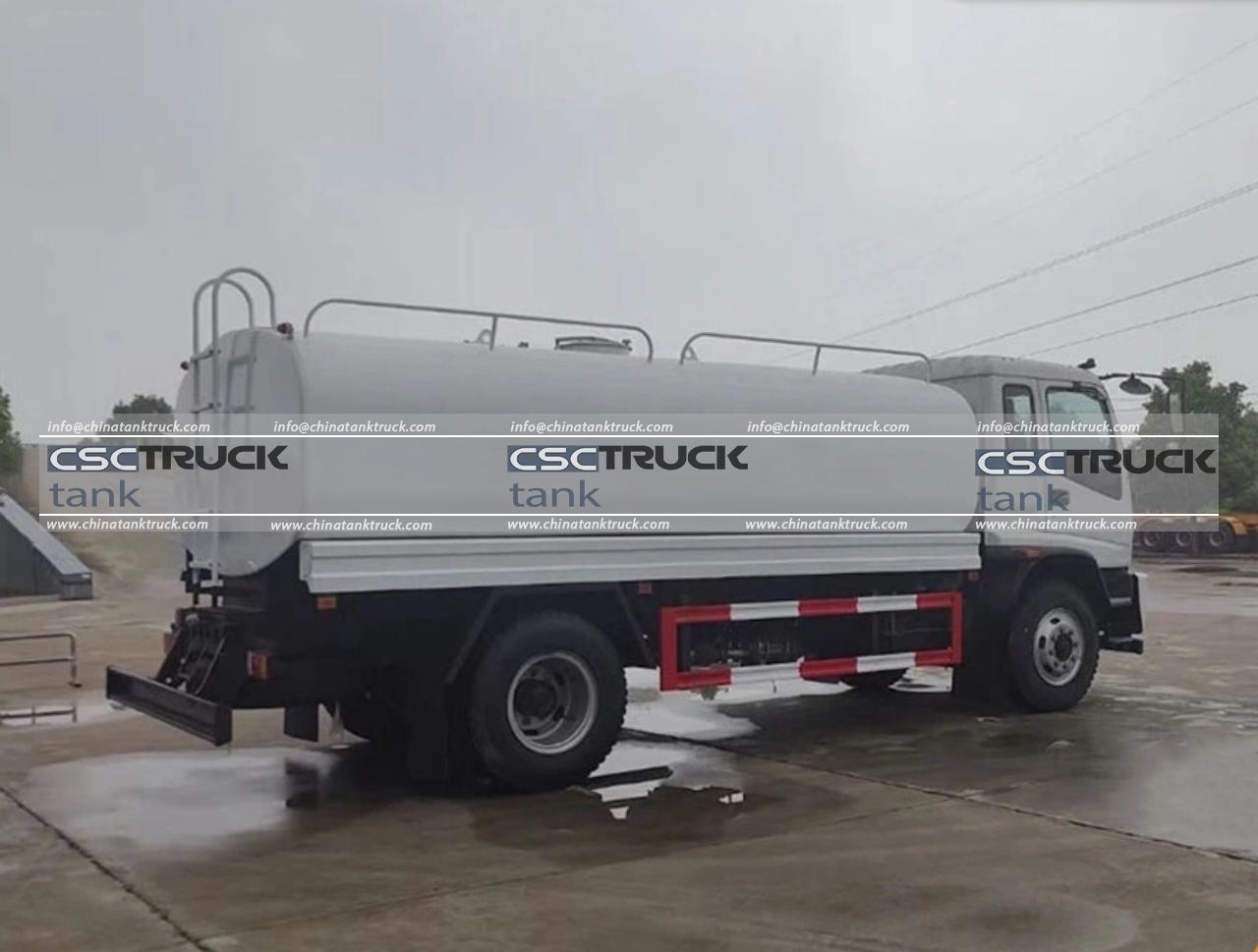
Conclusion
An ISUZU milk tank truck combines a commercial truck chassis with a specialized sanitary and insulated milk tank designed for bulk dairy transportation. Capacity options such as 10,000 liters, 13 CBM, and 15 CBM provide different solutions for farm collection, regional transportation, and dairy processing logistics.
When choosing an ISUZU milk tanker, buyers should look beyond tank volume. Important factors include food-grade stainless steel, tank insulation, sanitary pipelines and valves, cleaning systems, chassis configuration, payload, road conditions, and local regulations.
With multiple ISUZU milk tanker configurations and customization options, CSCTRUCK China Tank Truck can provide dairy vehicles for different milk collection and logistics requirements.