

Milk is one of the most sensitive food products transported by road. Because raw milk contains nutrients that support rapid bacterial growth, transportation must protect it from excessive temperature increases, contamination, and unsuitable contact materials. A properly designed milk tank truck is therefore much more than a liquid-carrying vehicle—it is an essential part of the dairy cold chain and food safety system.
For dairy farms, milk collection centers, processors, and logistics companies, 3 factors are especially important when selecting a milk tanker: temperature control, hygienic design, and food-grade construction materials. These requirements work together to preserve milk quality from collection to delivery.
1. Why Food Safety Matters in Milk Transportation
Fresh milk can deteriorate quickly when exposed to heat, dirty equipment, or prolonged transportation delays. Contamination can occur through the tank interior, hoses, pumps, valves, manholes, sampling equipment, or improper cleaning.
A milk tank truck must therefore prevent:
- Bacterial growth caused by temperature increases
- Cross-contamination between different milk loads
- Residue accumulation inside the tank
- Chemical contamination from unsuitable materials
- Foreign particles, dust, and environmental pollutants
- Quality deterioration caused by poor handling
In Canada, for example, bulk milk transport vehicles must be designed to keep milk temperature below 6°C until delivery, and milk-contact surfaces must be corrosion-resistant, smooth, non-toxic, readily cleanable, and unaffected by milk.

2. Temperature Requirements for Milk Tank Trucks
Temperature control is one of the most important food safety considerations in dairy transportation. Milk should normally be cooled at the farm or collection facility before loading. A milk tanker is generally designed to maintain the existing low temperature, rather than rapidly cool warm milk.
Depending on local regulations and dairy operating procedures, chilled milk is commonly maintained at approximately 2–4°C. The exact permitted temperature depends on the country, milk type, and processing requirements.
A safe temperature-control system includes:
Pre-Cooling Before Loading
Milk should be cooled in a farm bulk tank, plate cooler, or refrigeration system before entering the vehicle. Loading warm milk into an insulated tanker can increase the risk of bacterial multiplication and may affect the temperature of the entire load.
Double-Wall Insulation
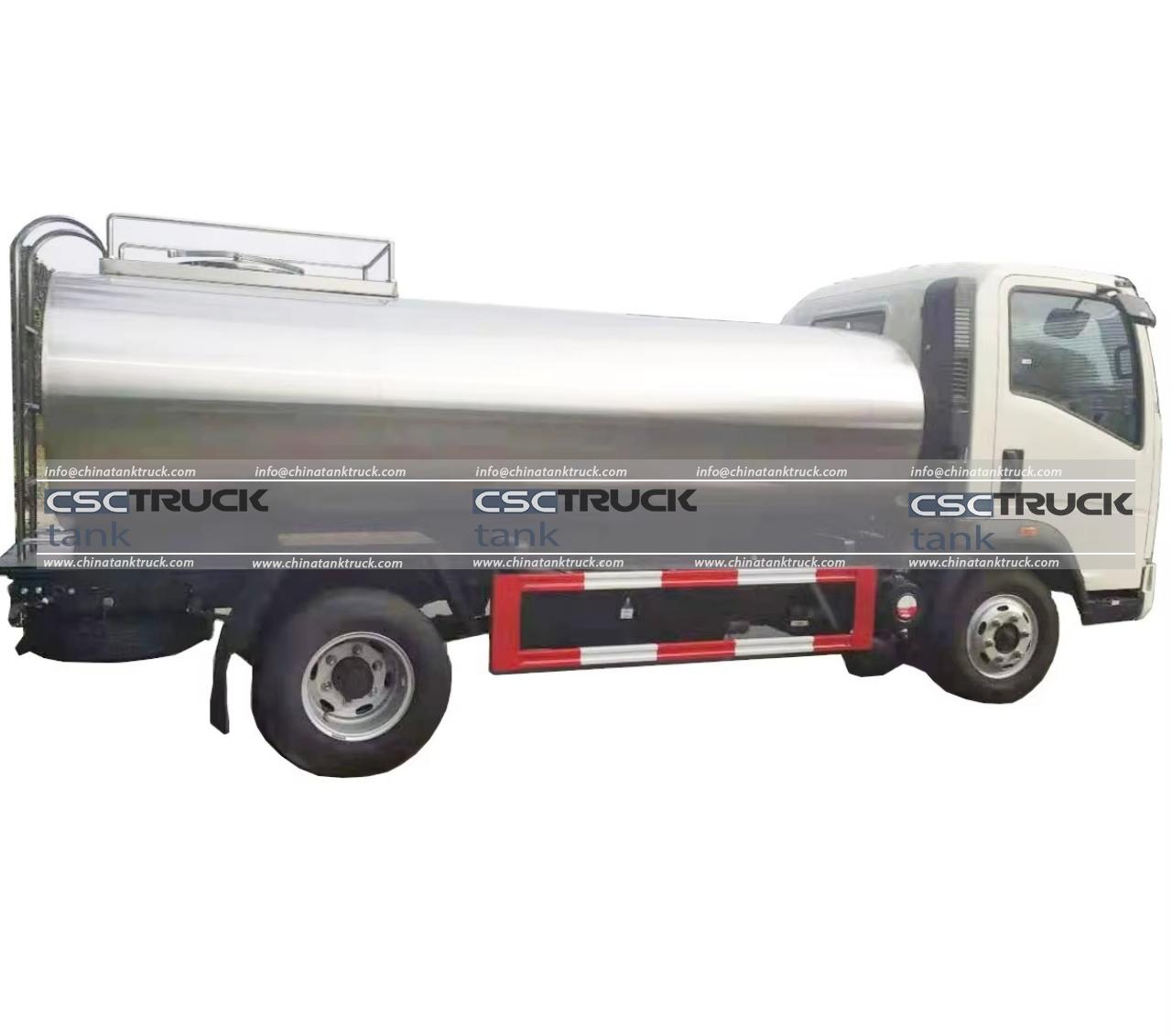
Milk tank trucks generally use a double-wall tank structure with thermal insulation between the inner and outer shells. Polyurethane foam is a commonly used insulation material because it reduces heat transfer and helps maintain milk temperature during transportation.
Temperature Monitoring
Temperature sensors and recording devices allow operators to check milk conditions during loading, transit, and unloading. Temperature records can help identify delays, insulation problems, or cold-chain failures.
Route and Delivery Management
Even a well-insulated tanker cannot compensate for excessively long delays. Efficient route planning, quick loading and unloading, and minimizing unnecessary stops are important parts of food safety management.
Canadian guidance specifies that a bulk milk transport tank should be constructed so that milk temperature does not increase by more than 2°C over 24 hours under the applicable conditions.
3. Hygiene Requirements for Milk Tankers
Milk tank truck hygiene begins with the tank design but continues throughout daily operation. Every surface that contacts milk must be easy to clean and resistant to contamination.
Important hygienic design features include:
- Smooth internal tank surfaces
- Crevice-free and properly finished welds
- Sanitary valves and fittings
- Food-grade gaskets
- Properly sealed manholes
- Sloped or drainable tank bottoms
- Hygienic milk hoses and transfer pipes
- Protected storage for pumps and accessories
- Effective cleaning and sanitizing systems
The tank should not contain cavities, open seams, rough surfaces, or areas where milk residue can remain after unloading. Residual milk can become a breeding environment for microorganisms and create cross-contamination risks for the next load.
The Canadian National Dairy Code also requires milk tanks and accessories to be washed and sanitized at least once per day when in use, using procedures that prevent milk contamination.
4. CIP Cleaning and Sanitization
Many modern milk tank trucks use CIP (Clean-in-Place) systems. CIP allows the internal tank surfaces, spray balls, pipelines, and associated components to be cleaned without completely dismantling the equipment.
A typical cleaning process may include:
- Initial rinsing to remove milk residues
- Alkaline or detergent cleaning
- Intermediate rinsing
- Acid cleaning when required
- Final rinsing
- Sanitization before the next use
The cleaning temperature, chemical concentration, circulation time, and water quality should follow the dairy operator’s validated cleaning procedure.
Spray balls or rotating cleaning devices must be correctly positioned so that water and cleaning solutions reach the entire internal surface. Insufficient spray coverage can leave hidden residues inside the tank.
A hygienic milk tanker should also be designed for complete drainage. Any remaining water, detergent, or milk residue can compromise the next load.
5. Food-Grade Stainless Steel Material Requirements
The tank material is fundamental to food safety. Milk-contact surfaces should be made from materials that are:
- Corrosion-resistant
- Non-toxic
- Non-porous and smooth
- Resistant to cleaning chemicals
- Chemically stable when exposed to milk
- Durable under repeated washing
- Easy to inspect and sanitize
Food-grade stainless steel, particularly 304 or 316/316L stainless steel, is widely used in milk tank trucks.
304 Stainless Steel
304 stainless steel is a common choice for dairy tank construction because it provides:
- Good corrosion resistance
- High mechanical strength
- Smooth hygienic surfaces
- Good resistance to normal dairy cleaning chemicals
- A balance between performance and cost
It is suitable for many standard milk collection and transportation applications.
316 or 316L Stainless Steel
316L stainless steel offers enhanced corrosion resistance, particularly in environments involving more aggressive cleaning chemicals or demanding sanitary conditions. It may be selected for specialized applications where improved chemical resistance and long-term durability are required.
The appropriate grade should be selected according to the milk product, cleaning chemicals, operating environment, and applicable food-contact standards.

6. Why Carbon Steel Is Generally Unsuitable
Ordinary carbon steel is strong and economical, but it is not normally appropriate for direct milk contact. It is more vulnerable to rust and corrosion, especially when exposed to moisture, milk residues, detergents, and sanitizers.
Corrosion can create rough surfaces where bacteria and residues accumulate. It may also introduce unwanted particles or affect milk quality.
For this reason, carbon steel may be used for structural components or external chassis parts, but the milk-contact tank, piping, valves, and fittings should use approved food-grade materials.
7. Sanitary Accessories and Transfer Equipment
Food safety does not depend only on the main tank body. Every component that touches milk must meet appropriate sanitary requirements.
These components include:
- Milk inlet and outlet pipes
- Transfer hoses
- Milk pumps
- Sampling equipment
- Valves and connectors
- Manhole covers
- Breathers and vents
- Spray balls
- Gaskets and seals
For example, food-grade rubber or elastomer gaskets should be resistant to milk, detergents, sanitizers, and repeated temperature changes. Hoses should be stored in protected compartments to prevent contact with dirt, chemicals, or the ground.
The National Dairy Code identifies milk-contact surfaces as including the tank interior, spray balls, piping, fittings, pumps, hoses, manhole covers, and gaskets—not just the stainless steel tank itself.
8. Tank Design Features That Improve Food Safety
A properly engineered milk tank truck may include several additional features that support hygienic transportation:
Insulated Tank Body
Reduces temperature gain during transportation and helps preserve the cold chain.
Smooth Internal Finish
Minimizes bacterial attachment and makes cleaning more effective.
Rounded Corners and Sanitary Welds
Reduce residue accumulation in difficult-to-clean areas.
Multiple Compartments
Allow different milk batches to be transported separately when required.
Complete Drainage
Prevents residual milk, water, and cleaning chemicals from remaining inside the tank.
Secure Manhole and Protected Fittings
Reduces the risk of dust, insects, rainwater, and other contaminants entering the milk.
Temperature Recording
Provides traceability and helps operators verify cold-chain performance.
9. CSCTRUCK China Tank Truck: Milk Tanker Solutions
CSCTRUCK China Tank Truck is a Chinese manufacturer and exporter of specialized tank trucks, including milk tank trucks, water tankers, fuel tankers, chemical tankers, and other liquid vehicles.
Through its official website, CSCTRUCK China Tank Truck, the company provides milk tanker solutions for dairy farms, milk collection centers, food-processing companies, logistics operators, and international distributors.
CSCTRUCK China Tank Truck milk tank trucks can be configured with:
- Food-grade stainless steel tanks
- Insulated double-wall construction
- 304 or other suitable stainless steel options
- CIP cleaning systems
- Sanitary milk transfer equipment
- Temperature-control configurations
- Different tank capacities and chassis brands
- Customized fittings and operating layouts
For example, a large-capacity CSCTRUCK China Tank Truck milk tanker configuration may use a food-grade 304 stainless steel tank, polyurethane insulation, multiple compartments, and an automatic cleaning system. These features demonstrate how material selection, thermal protection, and hygiene engineering must operate together in a professional dairy transport vehicle.

Conclusion
Milk tank truck food safety depends on more than keeping milk inside a sealed container. A reliable dairy tanker must maintain the correct temperature, prevent contamination, support thorough cleaning, and use safe, durable food-contact materials.
The most important requirements include pre-cooled milk, effective insulation, temperature monitoring, food-grade stainless steel, sanitary fittings, CIP cleaning, complete drainage, and strict operating procedures.
When selecting a milk tank truck, dairy businesses should evaluate not only tank capacity and chassis specifications, but also the tank material, insulation performance, cleaning system, sanitary design, and compliance with local dairy regulations. A well-designed milk tanker helps protect milk quality, reduce spoilage risks, and maintain food safety throughout the entire transportation process.