
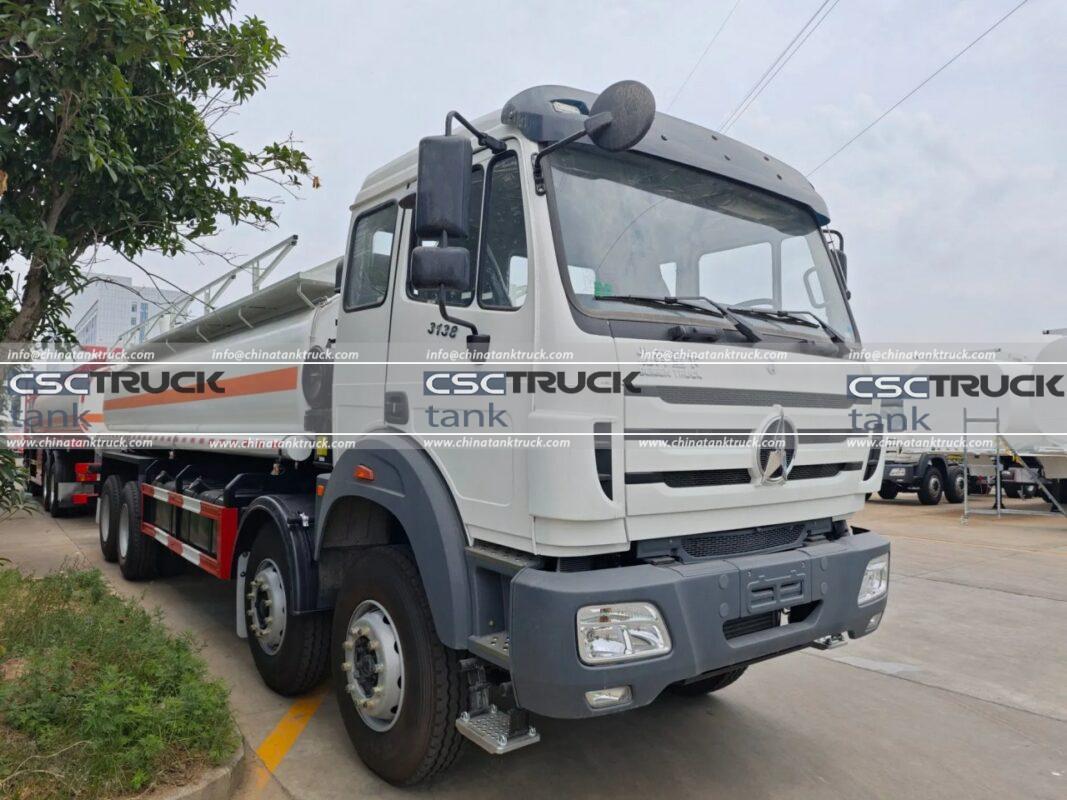
Operating a fuel tanker truck requires not only driving skill but also a deep awareness of vehicle maintenance and safety. Because fuel tankers are large, heavy, and carry flammable cargo, every detail of operation—from starting to stopping, from parking to maneuvering—directly impacts safety and efficiency. Tires, in particular, are essential components that demand careful attention, as they bear the full weight of the fuel tanker truck and directly influence its stability. The following guidelines outline practical methods to reduce tire wear, prevent damage, and maintain safe driving conditions while operating a fuel tanker.
To begin with, drivers should exercise caution when starting the vehicle. Accelerating too quickly can cause the tires to drag against the ground, which accelerates tread wear and shortens tire life. A smooth, gradual start allows the tires to grip properly without unnecessary friction. This not only prolongs the durability of the tires but also ensures greater control of the vehicle during the initial moments of movement.

Driving downhill presents another challenge that requires careful attention. The speed of the tanker must be adjusted to suit the steepness and length of the slope, as well as the surface condition of the road. By controlling speed early, the driver can minimize reliance on emergency braking, which not only reduces tire wear but also prevents overheating of the braking system. Effective downhill driving involves anticipating the terrain, maintaining a steady pace, and using engine braking when possible.
When approaching a curve or making a turn, the driver must adjust speed based on the radius of the curve and the road conditions. Inertia and centrifugal force act strongly on a loaded fuel tanker, and excessive speed during a turn can lead to dangerous rollovers. By slowing down appropriately before entering the curve, the driver not only reduces the risk of accidents but also lessens the strain placed on the tires and suspension.

Uneven or bumpy roads pose additional risks to both the tires and the vehicle’s structural components. Drivers should always attempt to steer toward flatter sections of the road to reduce the impact between the tires and the ground. Persistent shocks and jolts can weaken tire walls, damage the rims, and loosen vehicle parts over time. Careful route selection and reduced speed on poor road surfaces are essential to preserving both tire integrity and vehicle performance.
In situations where the fuel tanker truck must navigate intersections, narrow roads, railway crossings, or areas with heavy traffic, the driver should remain extra vigilant. Reducing speed, scanning for pedestrians and other vehicles, and preparing to brake smoothly are key habits. Avoiding sudden or frequent braking not only ensures safety but also prevents unnecessary tire wear. Smooth, anticipatory driving habits help extend the life of both the tires and the braking system.

Special attention is required when passing through construction zones. These areas often contain loose gravel, sharp objects, or uneven surfaces that can puncture or cut tires. By slowing down and proceeding cautiously, drivers can minimize the risk of damage, blowouts, or accidents caused by sudden tire failure. The same principle applies to muddy or soft terrain: Choosing firm, non-slippery ground prevents the tires from sinking, spinning, or overheating due to friction. Excessive spinning can cause deep scratches or even permanent tire damage.
Finally, proper parking practices play a role in tire care. Fuel tankers should never be parked beneath high-voltage power lines, as this creates additional hazards. Drivers should always select flat, stable ground that is free of oil, debris, or sharp stones. Oil and fuel stains can degrade rubber, while stones pressing against the tires can create weak points that eventually lead to failure. A clean, even parking surface ensures that the tanker remains stable and that the tires are not subject to hidden stress.

In conclusion, maintaining the tires of a fuel tanker truck is not just a matter of reducing costs—it is a fundamental aspect of road safety. By practicing smooth starts, controlling downhill speeds, slowing appropriately on turns, avoiding poor road surfaces, driving cautiously in special areas, and parking responsibly, drivers can significantly extend tire life and reduce risks. Each of these practices, though seemingly small, collectively ensures that the tanker operates reliably while protecting both the vehicle and its valuable cargo.
