
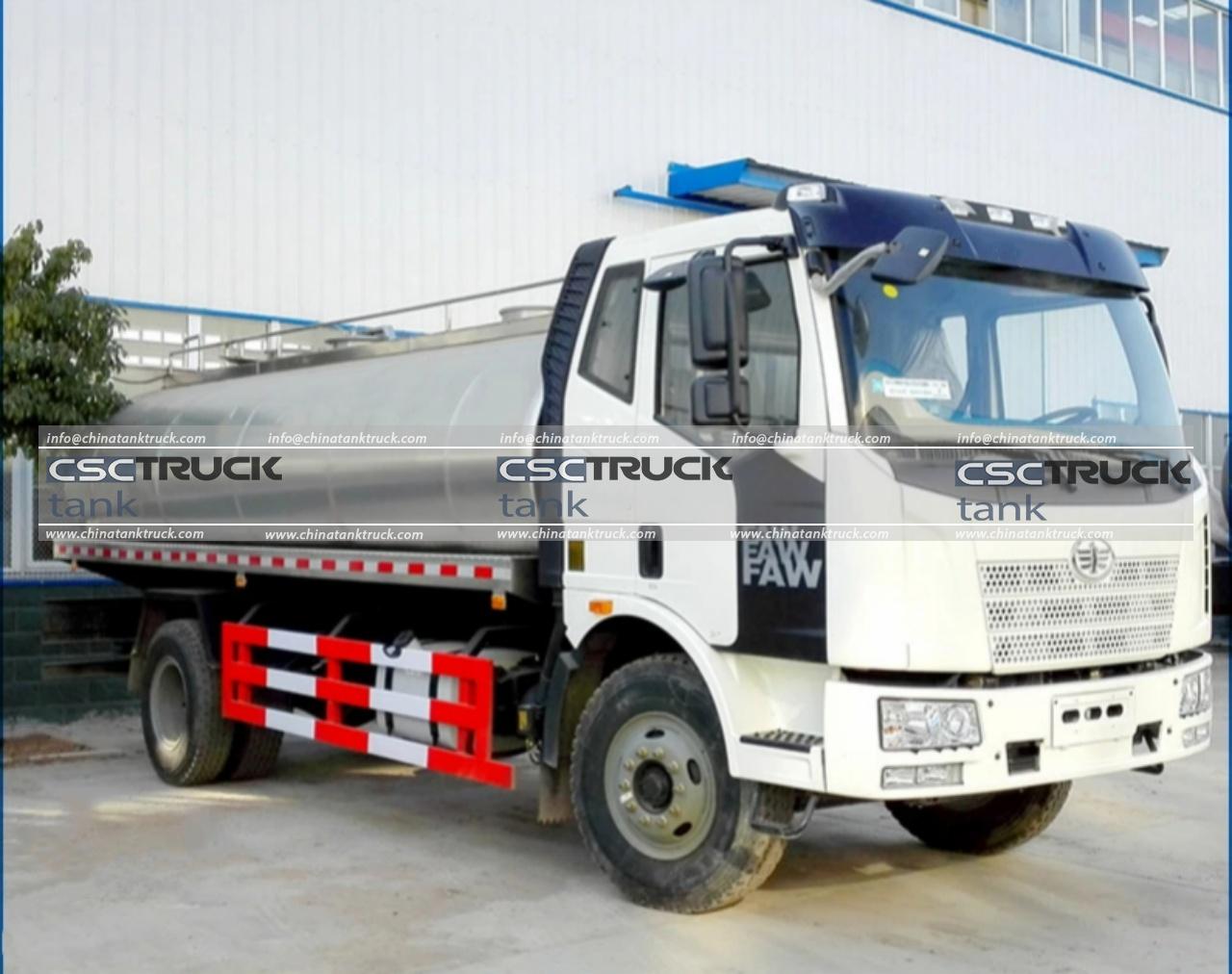
Milk tank trucks play a vital role in transporting raw milk from dairy farms and collection centers to processing plants. Because milk is highly perishable and sensitive to contamination, the cleanliness of the tanker is just as important as its insulation, capacity, and transportation performance. A properly cleaned and sanitized milk tank truck helps prevent bacterial growth, cross-contamination, unpleasant odors, and product spoilage.
Modern dairy tankers are generally cleaned using a systematic process called CIP (Clean-in-Place). This method combines water, detergents, heat, mechanical action, and sanitizing agents to clean the tank’s interior and milk-contact components without requiring complete disassembly.
For dairy businesses looking for reliable transportation equipment, CSCTRUCK China Tank Truck supplies specialized milk tank trucks designed for hygienic dairy transportation. As a professional Chinese special-purpose vehicle manufacturer, CSCTRUCK China Tank Truck focuses on food-grade tank construction, practical tanker configurations, and customized solutions for different dairy logistics requirements.
Why Is Cleaning a Milk Tank Truck So Important?
Milk contains proteins, fats, lactose, minerals, and other nutrients that can leave residues on the tank’s internal surfaces. If these residues are not removed promptly, they can support the growth of microorganisms and create biofilms that are difficult to eliminate.
Poor tanker hygiene may result in:
- Bacterial contamination of fresh milk
- Unpleasant odors and off-flavors
- Reduced milk shelf life
- Cross-contamination between different loads
- Damage to the reputation of the dairy company
- Failure to meet food safety regulations
For this reason, milk tank trucks must be cleaned according to a documented sanitation procedure after unloading and before being used for another load. Canadian dairy guidance, for example, requires bulk milk truck tanks and accessories to be washed and sanitized at least once per day when in use.
Step 1: Completely Unload the Milk
Cleaning begins immediately after the milk has been delivered and unloaded at the dairy processing plant or collection facility.
Operators must ensure that:
- All milk has been discharged from the tank
- Transfer hoses are disconnected
- Pumps and valves are drained
- No milk remains in pipelines or fittings
- The tanker is isolated from the milk receiving system
This step prevents cleaning chemicals from accidentally entering the milk supply system. Any remaining milk should be removed before water or detergent is introduced.
Step 2: Pre-Rinse with Lukewarm Water
The first actual cleaning stage is the pre-rinse. Lukewarm water is circulated or sprayed through the tank to remove loose milk residues, fats, and proteins.
Water that is too hot at this stage may cause milk proteins to coagulate and stick more firmly to the stainless-steel surface. Therefore, the initial rinse generally uses moderately warm water rather than extremely hot water.
The pre-rinse removes the majority of loose organic material and reduces the workload for the detergent-cleaning stage. It also helps prevent milk residues from drying onto the tank walls.
Step 3: Alkaline Detergent Cleaning
After the pre-rinse, an alkaline cleaning solution is circulated through the tank using a CIP system.
Alkaline detergents are effective at breaking down:
- Milk fat
- Protein deposits
- Organic films
- Remaining milk residues
The cleaning solution is heated to improve its cleaning performance and circulated through spray balls, rotary spray heads, or internal cleaning nozzles. These devices distribute the solution across the tank’s internal surfaces.
The cleaning effectiveness depends on four major factors, often referred to as the basic principles of CIP:
- Time – sufficient circulation duration
- Temperature – appropriate solution temperature
- Chemical concentration – correct detergent strength
- Mechanical action – adequate spray pressure and turbulence
Control all four properly to achieve consistent results.

Step 4: Intermediate Water Rinse
After the alkaline wash, drain the detergent solution and rinse the tank with clean water.
This intermediate rinse removes:
- Remaining alkaline detergent
- Loosened milk residues
- Suspended organic material
- Chemical residues from the previous stage
This stage is essential because leftover alkaline detergent may affect the taste, safety, or chemical quality of the next milk load.
Step 5: Acid Cleaning to Remove Milkstone
Many milk tanker cleaning programs include an acid-cleaning stage, although its frequency may depend on the water quality and operating conditions.
Over time, minerals such as calcium and magnesium can accumulate on the tank surface and form deposits commonly known as milkstone. These deposits may create rough areas where bacteria can attach.
Acid detergents, often based on food-industry-approved acidic formulations, help remove:
- Mineral scale
- Calcium deposits
- Milkstone
- Inorganic residues
Removing these deposits keeps the stainless-steel surface smooth and easier to sanitize. It also helps maintain the long-term hygienic condition of the tank.
Step 6: Final Rinse with Potable Water
After acid cleaning, the tanker is rinsed thoroughly with clean potable water.
The purpose is to eliminate any remaining:
- Acid
- Detergent
- Dissolved mineral deposits
- Cleaning chemicals
The final rinse must be carefully controlled to ensure that no chemical residue remains inside the tank, valves, hoses, or milk transfer lines.

Step 7: Sanitization
Cleaning removes visible dirt and organic residues, but cleaning alone does not necessarily eliminate all microorganisms. Therefore, the tanker must undergo a separate sanitization stage.
Common sanitization methods include:
Hot-Water Sanitization
Hot water is circulated through the tank and milk-contact components at a controlled temperature for a specified period. The heat helps reduce microbial contamination.
Chemical Sanitization
Approved food-industry sanitizers, such as peracetic acid or other suitable sanitizing solutions, may be used depending on the dairy plant’s procedures and local regulations.
The sanitizer must reach all milk-contact surfaces, including:
- Tank walls
- Spray balls
- Outlet valves
- Pumps
- Hoses
- Manway covers
- Transfer pipelines
The exact chemical concentration, contact time, and temperature should always follow the dairy facility’s validated sanitation program and chemical supplier instructions.
Step 8: Drainage, Drying, and Inspection
After sanitization, the tank should be fully drained. Remaining moisture can create an environment favorable to microbial growth, so proper drainage and drying are important.
Operators may then inspect:
- Tank interior surfaces
- Welds and seams
- Gaskets and seals
- Valves and fittings
- Hoses and pumps
- Spray nozzles
- Manway covers
Some dairy facilities also use ATP testing, microbiological swabs, or other verification methods to confirm cleaning effectiveness.
How Does CIP Work in a Milk Tank Truck?
A modern CIP system allows the tanker to be cleaned without workers entering the tank or manually scrubbing every surface.
A typical CIP system may include:
- Cleaning solution tanks
- Water supply and return pipelines
- Centrifugal pumps
- Chemical dosing pumps
- Spray balls or rotary cleaning heads
- Temperature monitoring equipment
- Flow-control valves
- Return filters
- Programmable control systems
The cleaning solution is pumped through the tank and returned to the cleaning station in a controlled circulation loop. This makes the process more consistent, reduces labor requirements, and improves operator safety.
Canadian dairy guidance identifies spray balls, proper cleaning records, temperature monitoring, and chemical concentration control as important parts of an effective tanker CIP system.

Why Tank Design Affects Cleaning Performance
The design of the milk tank truck has a direct impact on how effectively it can be cleaned.
A hygienically designed tanker should feature:
- Food-grade stainless-steel construction
- Smooth and polished internal surfaces
- Rounded corners and sanitary welds
- Properly sloped tank drainage
- Minimal dead zones
- Easy-to-clean valves and fittings
- Correctly positioned spray balls
- Food-grade gaskets and hoses
- Insulated tank walls
A poorly designed tank may contain hidden areas where milk residue accumulates, and cleaning solutions cannot reach effectively.
Conclusion
Milk tank trucks are cleaned and sanitized through a carefully controlled sequence of unloading, pre-rinsing, alkaline washing, intermediate rinsing, acid cleaning, final rinsing, sanitization, drainage, and inspection. The most widely used method is CIP, which provides reliable and repeatable cleaning of the tank interior and milk-transfer equipment.
For dairy operators, choosing a tanker with hygienic stainless-steel construction, effective drainage, sanitary fittings, and CIP compatibility is essential. CSCTRUCK China Tank Truck can provide customized milk tank truck solutions designed to support safe, efficient, and hygienic milk transportation for dairy businesses worldwide.
