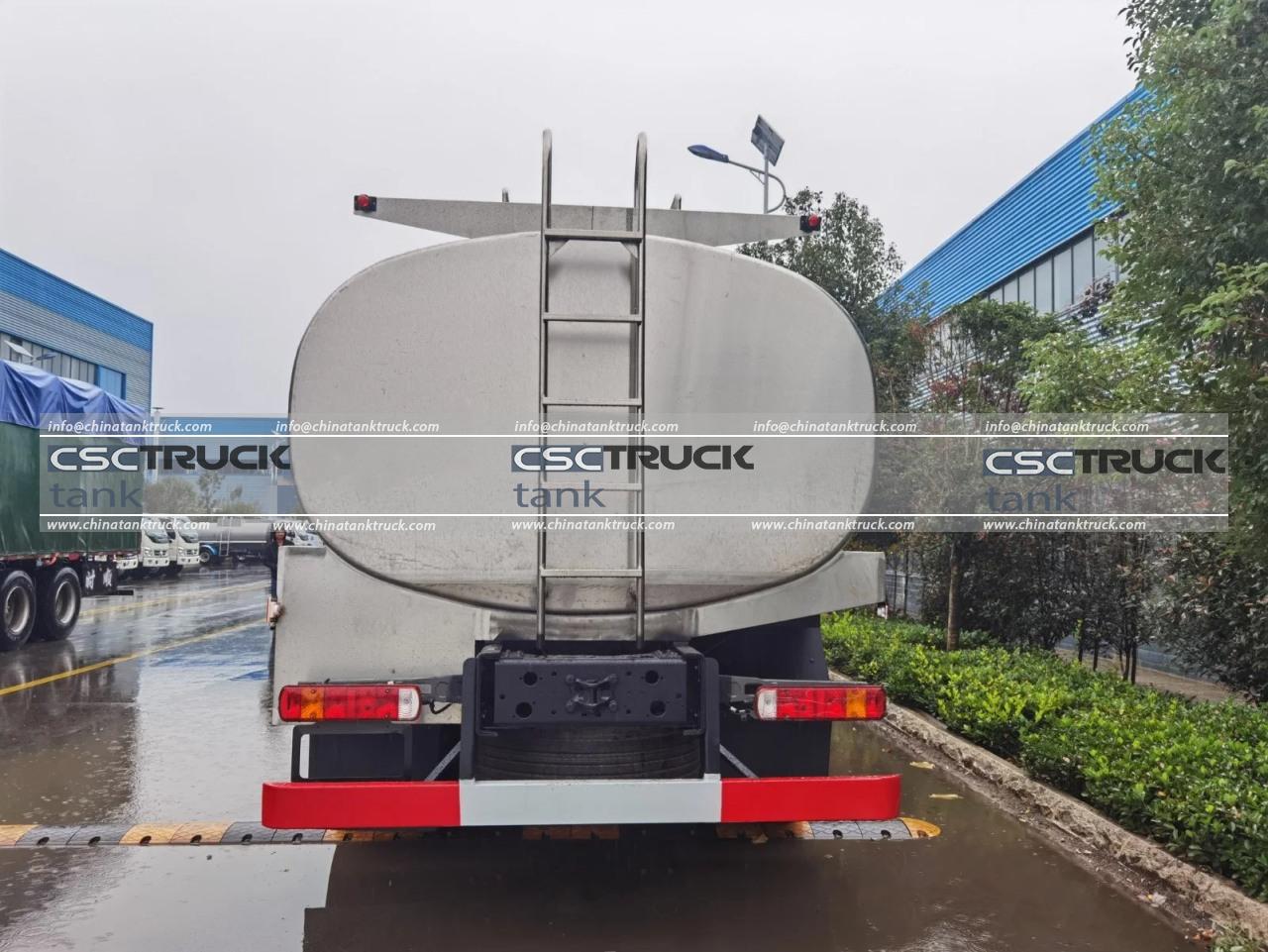

Choosing the right milk tank truck is important for dairy farms, milk collection companies, food processors, and logistics operators. The chassis affects payload, fuel consumption, driving performance, maintenance, and suitability for different transportation routes. Among Chinese commercial vehicle brands, FAW and HOWO are 2 commonly considered options for milk transportation.
This article compares FAW and HOWO milk tank trucks in terms of capacity, chassis configuration, power, drive type, tank construction, applications, and operating requirements.
About CSCTRUCK China Tank Truck
CSCTRUCK China Tank Truck is a Chinese manufacturer and exporter specializing in tank trucks and specialized commercial vehicles. Its product range includes milk tank trucks, fuel tank trucks, water tankers, chemical tank trucks, LPG vehicles, pneumatic tankers, and other liquid or bulk transportation equipment.
CSCTRUCK China Tank Truck provides customized tank capacity, tank materials, compartments, pumps, insulation systems, and chassis brands, including FAW and HOWO. The company also provides export documentation, international shipping assistance, technical support, and after-sales service for overseas customers.
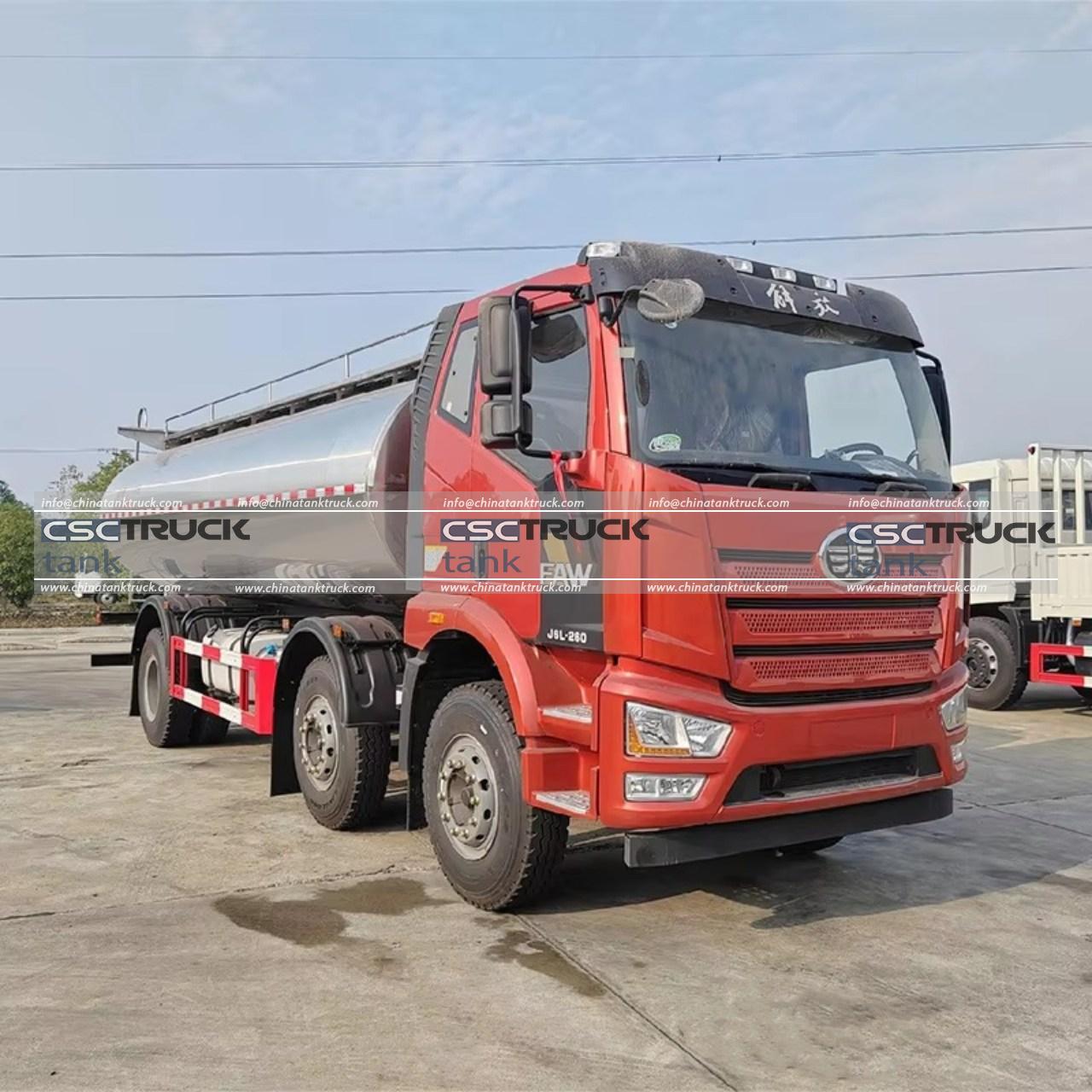
FAW vs. HOWO Milk Tank Truck at a Glance
FAW and HOWO milk tank trucks can both be configured for food-grade dairy transportation, but their chassis layouts and typical operating characteristics can be different.
For example, a FAW 20,000-liter milk delivery tanker listed by CSCTRUCK China Tank Truck uses a 6×2 chassis, a 20 CBM tank, a 195 kW engine, and a SUS304-2B food-grade stainless steel tank. Its overall dimensions are approximately 10,000 × 2,550 × 3,360 mm.
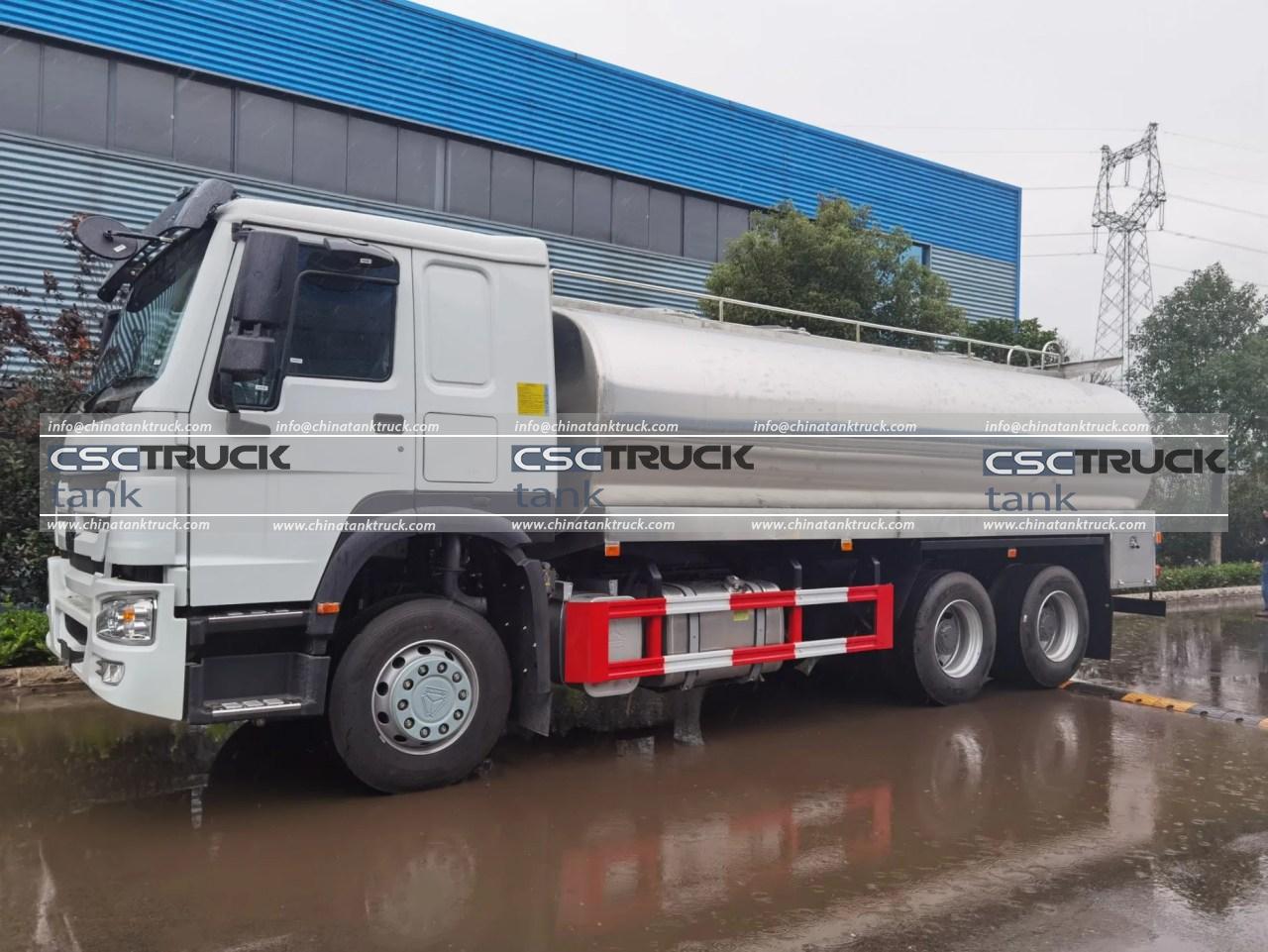
A HOWO 10-wheeler milk truck listed by CSCTRUCK China Tank Truck uses a 6×4 chassis and a 16 CBM tank. It is equipped with a 371 HP SINOTRUK WD615.47 engine and a 4 mm 304-2B food-grade stainless steel tank.
| Parameter | FAW Milk Tank Truck | HOWO Milk Tank Truck |
|---|---|---|
| Example tank capacity | 20 CBM | 16 CBM |
| Drive type | 6×2 | 6×4 |
| Tank material | SUS304-2B food grade | 304-2B food-grade stainless steel |
| Example engine output | 195 kW | 371 HP |
| Example dimensions | 10,000 × 2,550 × 3,360 mm | 9,500 × 2,500 × 3,210 mm |
| Typical focus | Medium/long-distance milk delivery | Heavy-duty milk transportation |
| Insulation | Polyurethane + insulation cotton | 80 mm polyurethane foam |
| Cleaning | Automatic CIP | CIP cleaning system |
These are representative CSCTRUCK China Tank Truck configurations rather than universal specifications for every FAW or HOWO milk tanker. Actual specifications can be customized according to the destination market and customer requirements.
1. Chassis and Drive Configuration
One of the clearest differences is the chassis configuration.
The example FAW milk tanker uses a 6×2 layout, meaning 2 rear axles share the driving load while the vehicle has a non-driven front axle and rear axle arrangement. This configuration can be suitable for highway transportation where road conditions are generally good.
The HOWO example uses a 6×4 configuration, with 2 driven rear axles. This provides additional traction and can be useful when the milk truck regularly operates on rough roads, construction-area roads, rural routes, or routes with steep gradients.
Therefore, the choice between FAW and HOWO should consider road conditions rather than simply the brand.
2. Milk Tank Capacity
Capacity is another important difference.
The CSCTRUCK China Tank Truck FAW example has a 20 CBM milk tank, allowing it to transport approximately 20,000 liters of milk under the specified configuration. The HOWO example has a 16 CBM tank.
A larger tank can reduce the number of trips required when transporting large quantities of milk between farms, collection centers, and processing plants. However, higher capacity also means greater vehicle size and loaded weight.
For smaller collection routes, a 10,000- or 16,000-liter configuration may provide sufficient capacity. For centralized dairy collection and longer routes, a 20,000-liter or larger tanker may be more appropriate.
3. Engine Power and Heavy-Duty Performance
The example HOWO milk truck has a 371 HP engine, providing substantial power for a 6×4 heavy-duty configuration. Its specifications also include a 10-speed gearbox.
The FAW 20,000-liter tanker listed by CSCTRUCK China Tank Truck uses a 195 kW engine and a 9-speed manual transmission.
Engine power should not be considered independently. A buyer should evaluate the complete powertrain, including engine torque, transmission, axle configuration, GVW, payload, road conditions, and fuel consumption.
For heavily loaded operations or challenging terrain, a higher-power 6×4 chassis may offer advantages. For highway-oriented milk transportation, a 6×2 configuration can provide a different balance between payload, maneuverability, and operating cost.

4. Tank Material and Food Safety
Regardless of whether the chassis is FAW or HOWO, the milk tank itself is one of the most important components.
CSCTRUCK China Tank Truck‘s FAW example uses SUS304-2B food-grade stainless steel, while its HOWO example uses 304-2B food-grade stainless steel.
Stainless steel is widely used for milk tank construction because it provides a hygienic internal surface and good corrosion resistance. The exact grade, thickness, welding quality, internal finish, insulation, valves, pipes, and cleaning system should all be considered when purchasing a milk tanker.
The tank should also be designed to minimize contamination risks and facilitate effective cleaning.
5. Insulation and Temperature Control
Milk transportation requires protection against temperature changes during transportation.
The FAW 20,000-liter milk tanker listed by CSCTRUCK China Tank Truck uses 70 mm polyurethane spray foam combined with 10 mm rubber and plastic insulation cotton. The stated heat-retention performance is designed to keep temperature variation within 2°C over 24 hours under the specified test conditions.
The HOWO 16 CBM tanker uses an 80 mm polyurethane insulation layer with an external stainless steel plate. CSCTRUCK China Tank Truck specifies a thermal insulation performance in which the medium temperature rise or fall is no more than 1°C over 24 hours under its stated conditions.
Actual temperature performance depends on ambient temperature, initial milk temperature, loading conditions, tank design, and transportation time, so buyers should request detailed test conditions when comparing suppliers.

6. CIP Cleaning System
Milk tank hygiene is another major consideration.
The FAW configuration includes an automatic CIP cleaning system, with cleaning balls provided for individual compartments to support 360-degree cleaning.
The HOWO configuration also specifies a CIP cleaning system.
CIP, or Clean-in-Place, allows the internal tank and associated piping to be cleaned without completely dismantling the system. For dairy operations with frequent loading and unloading cycles, an effective CIP system can improve hygiene management and reduce cleaning labor.
7. Which Milk Tank Truck Is Suitable for Your Business?
There is no single configuration that fits every dairy transportation operation.
A FAW milk tank truck may be considered when the priority is a relatively high tank capacity combined with a 6×2 chassis for highway and conventional road transportation. The 20 CBM configuration is particularly relevant to operators moving substantial volumes of milk between collection points and processing facilities.
A HOWO milk tank truck may be considered when greater traction and heavy-duty chassis performance are important. The 6×4 configuration and higher engine output of the example model can be useful for demanding routes and heavy-load applications.
However, buyers should compare the complete vehicle specification rather than choosing based only on the chassis brand.
Conclusion
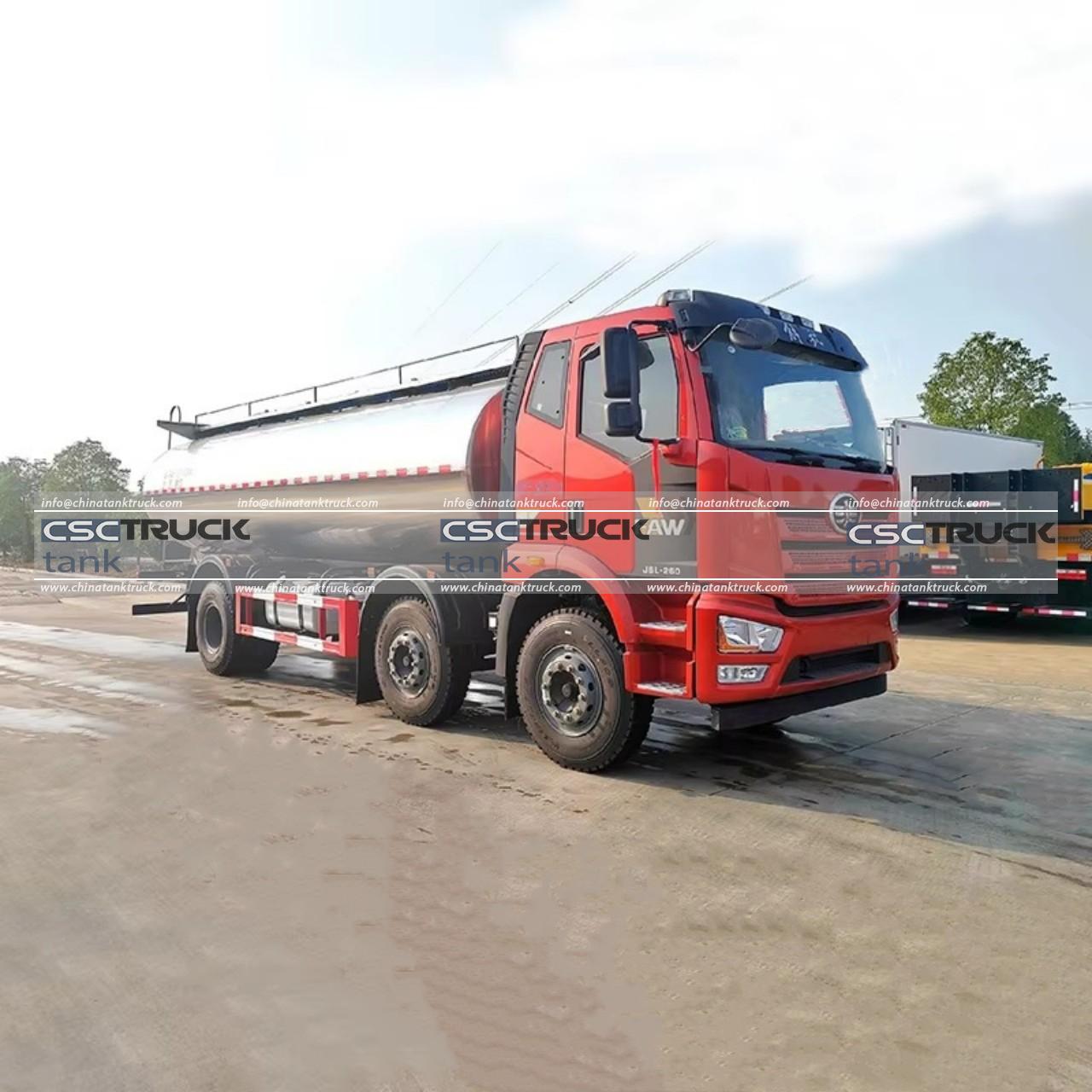
The key differences between FAW and HOWO milk tank trucks are mainly found in chassis configuration, drive type, engine power, tank capacity, and intended operating conditions. The CSCTRUCK China Tank Truck examples illustrate this clearly: the FAW model is a 20 CBM 6×2 milk tanker, while the HOWO model is a 16 CBM 6×4 tanker with a 371 HP engine.
For dairy companies purchasing a milk tanker, important factors include road conditions, required capacity, daily mileage, payload, tank material, insulation, CIP cleaning, local regulations, spare parts availability, and total operating cost.
CSCTRUCK China Tank Truck can customize milk tank trucks with different capacities, materials, chassis brands, compartments, and equipment according to customer requirements. For an accurate quotation, buyers should provide the desired tank capacity, chassis configuration, destination country, and application conditions.