
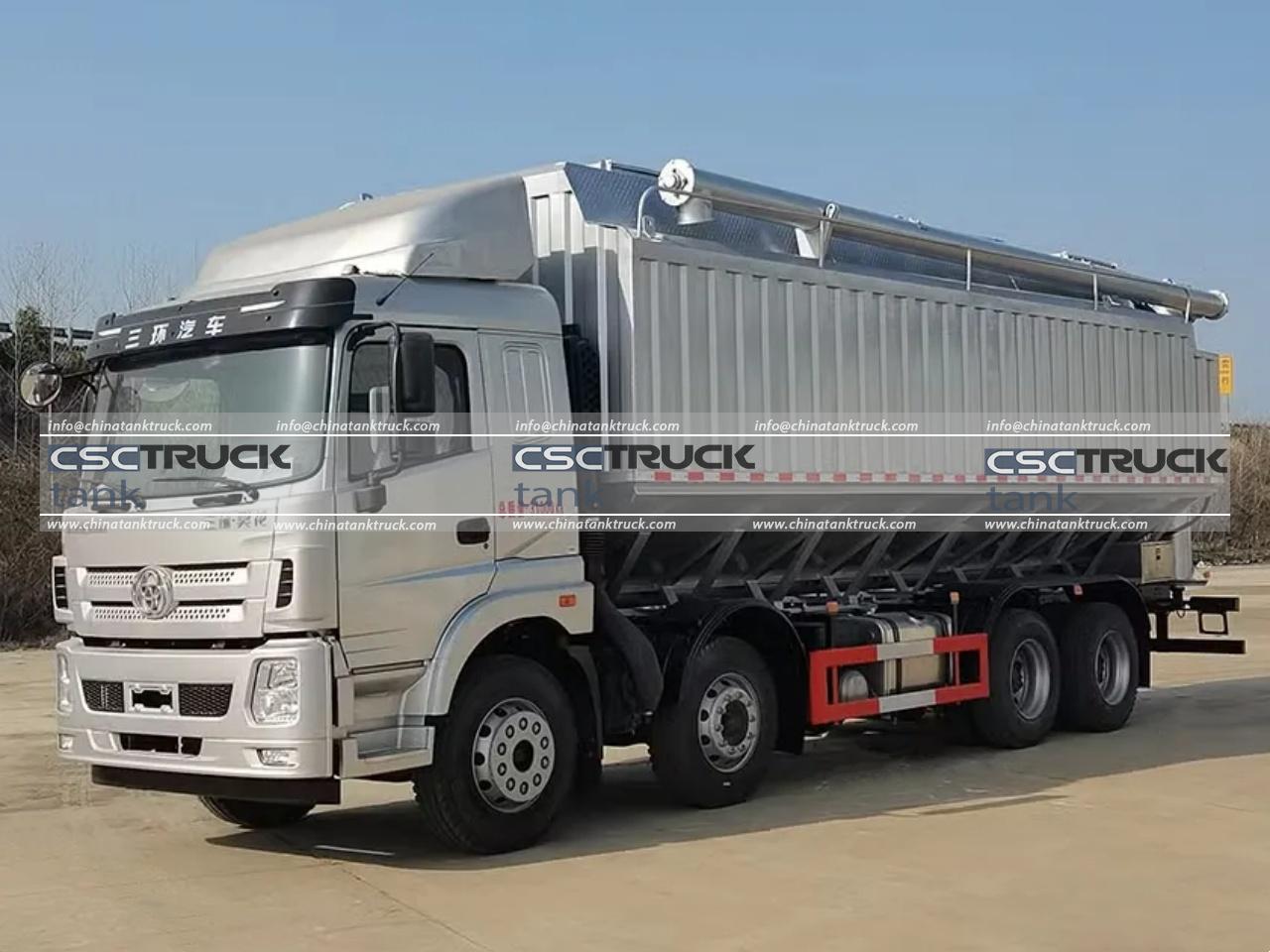
Pneumatic tank trucks play a vital role in transporting and unloading dry bulk materials such as cement, fly ash, lime, flour, plastic pellets, and other powdered or granular products. Their unloading efficiency depends heavily on a reliable source of compressed air. One of the most common questions among fleet operators and buyers is: Can the PTO drive the pneumatic tank truck air compressor? The simple answer is YES. In fact, the Power Take-Off (PTO) is the most widely used method for powering air compressors on pneumatic tank trucks because it provides dependable, fuel-efficient, and cost-effective operation.
Leading manufacturers such as CSCTRUCK China Tank Truck design pneumatic bulk carriers with PTO-driven compressor systems that maximize unloading performance while reducing operating costs. Founded in 2005, CSCTRUCK China Tank Truck specializes in manufacturing high-quality tank trucks for transporting liquids, gases, and dry bulk materials. The company offers customized pneumatic tank trucks with advanced engineering, strict quality control, and worldwide export capabilities to meet the demands of construction, chemical, food, and industrial transportation sectors.
Understanding the PTO System
A Power Take-Off (PTO) is a mechanical device that transfers engine power from the truck’s transmission to auxiliary equipment. Instead of installing a separate engine to operate accessories, the PTO allows the truck’s existing diesel engine to provide the necessary mechanical power.
In pneumatic tank trucks, the PTO commonly powers:
- Air compressors
- Hydraulic pumps
- Vacuum pumps
- Winches
- Other auxiliary equipment
The PTO engages through the transmission, allowing rotational energy from the engine to drive the air compressor via a driveshaft or coupling.
Why Use a PTO to Drive the Air Compressor?
Using the truck’s PTO offers several advantages over installing an independent engine.
1. Lower Equipment Cost
A PTO-driven compressor eliminates the need for:
- Separate diesel engine
- Additional fuel system
- Independent cooling system
- Extra maintenance components
This significantly lowers the initial purchase cost.
2. Reduced Maintenance
One engine is easier to maintain than two.
Fleet operators only need routine servicing for:
- Truck engine
- PTO gearbox
- Compressor
This reduces maintenance expenses over the truck’s lifetime.
3. Better Fuel Efficiency
Since the truck’s main engine powers both driving and unloading, fuel consumption is generally lower than operating an additional engine solely for the compressor.
4. Less Weight
Without an auxiliary engine, the vehicle weighs less.
Lower curb weight means:
- Higher payload
- Better fuel economy
- Increased transport efficiency
5. Simplified Operation
The driver simply:
- Park the truck.
- Engages the PTO.
- Starts compressor operation.
- Begins unloading.
No second engine needs to be started or monitored.
How Does a PTO Drive the Compressor?
The power transmission process is straightforward.
Step 1: Truck Stops at the Unloading Site
The driver positions the truck near the storage silo.
Step 2: PTO Engagement
The PTO is engaged using:
- Electric switch
- Air-operated control
- Hydraulic control
Depending on the truck configuration.
Step 3: Engine Power Transfer
The transmission transfers rotational power through the PTO output shaft.
Step 4: Compressor Rotation
The PTO drives:
- Direct shaft coupling
- Driveshaft
- Belt drive (less common)
The compressor begins producing compressed air.
Step 5: Air Generation
The compressor delivers high-volume compressed air into the tank.
Step 6: Material Fluidization
Compressed air enters the fluidizing pads inside the tank.
The powdered cargo becomes aerated, behaving almost like a liquid.
Step 7: Material Discharge
Pressure pushes the material through the discharge piping into the receiving silo.

What Types of Compressors Are PTO Driven?
Several compressor designs work well with PTO systems.
Rotary Screw Compressors
These are the most common today.
Advantages include:
- Continuous airflow
- Quiet operation
- High efficiency
- Long service life
- Smooth unloading
Ideal for:
- Cement
- Fly ash
- Lime
- Mineral powder
Rotary Lobe Blowers
Often used for:
- Plastic pellets
- Food powders
- Grain products
Benefits include:
- Oil-free air
- Reliable operation
- Lower maintenance
Sliding Vane Compressors
These provide:
- Moderate pressure
- High airflow
- Compact installation
Suitable for many dry bulk applications.
PTO Power Requirements
The compressor must receive enough horsepower to maintain the unloading pressure.
Typical compressor power requirements include:
| Tank Capacity | Compressor Power |
|---|---|
| 20–30 CBM | 40–60 HP |
| 35–45 CBM | 60–90 HP |
| 50–60 CBM | 90–120 HP |
Modern diesel truck engines easily provide sufficient PTO power for these applications.
PTO Speed Considerations
Proper compressor performance depends on correct PTO speed.
If PTO speed is:
Too low
- Low airflow
- Slow unloading
- Reduced pressure
Too high
- Compressor overheating
- Increased wear
- Excessive fuel consumption
Manufacturers carefully match:
- Engine RPM
- PTO ratio
- Compressor operating speed
to achieve optimal efficiency.
Advantages During Unloading
PTO-driven systems offer several operational benefits.
Faster Setup
The driver only engages the PTO and begins unloading.
Reliable Air Supply
Modern compressors maintain stable airflow throughout the unloading cycle.
Lower Operating Costs
No auxiliary engine means:
- Lower fuel use
- Less maintenance
- Fewer spare parts
Longer Equipment Life
Properly matched PTO systems reduce compressor stress and improve durability.
Are There Any Limitations?
Although PTO systems are excellent for most applications, they do have some considerations.
Engine Must Be Running
The compressor only operates while the truck engine is running.
Engine Idle Management
Operators must maintain appropriate engine RPM during unloading.
Modern trucks often include idle-speed controls to stabilize PTO performance.
PTO Compatibility
Not every transmission supports every PTO.
The following components must be compatible:
- Transmission
- PTO gearbox
- Compressor
- Driveshaft
Professional installation ensures reliable operation.
When Is an Auxiliary Engine Preferred?
Some specialized applications still use separate diesel engines.
Examples include:
- Extremely high airflow requirements
- Continuous stationary operation
- Older truck chassis without PTO capability
- Specialized industrial unloading systems
However, for most commercial pneumatic tank trucks, PTO-driven compressors remain the preferred solution.
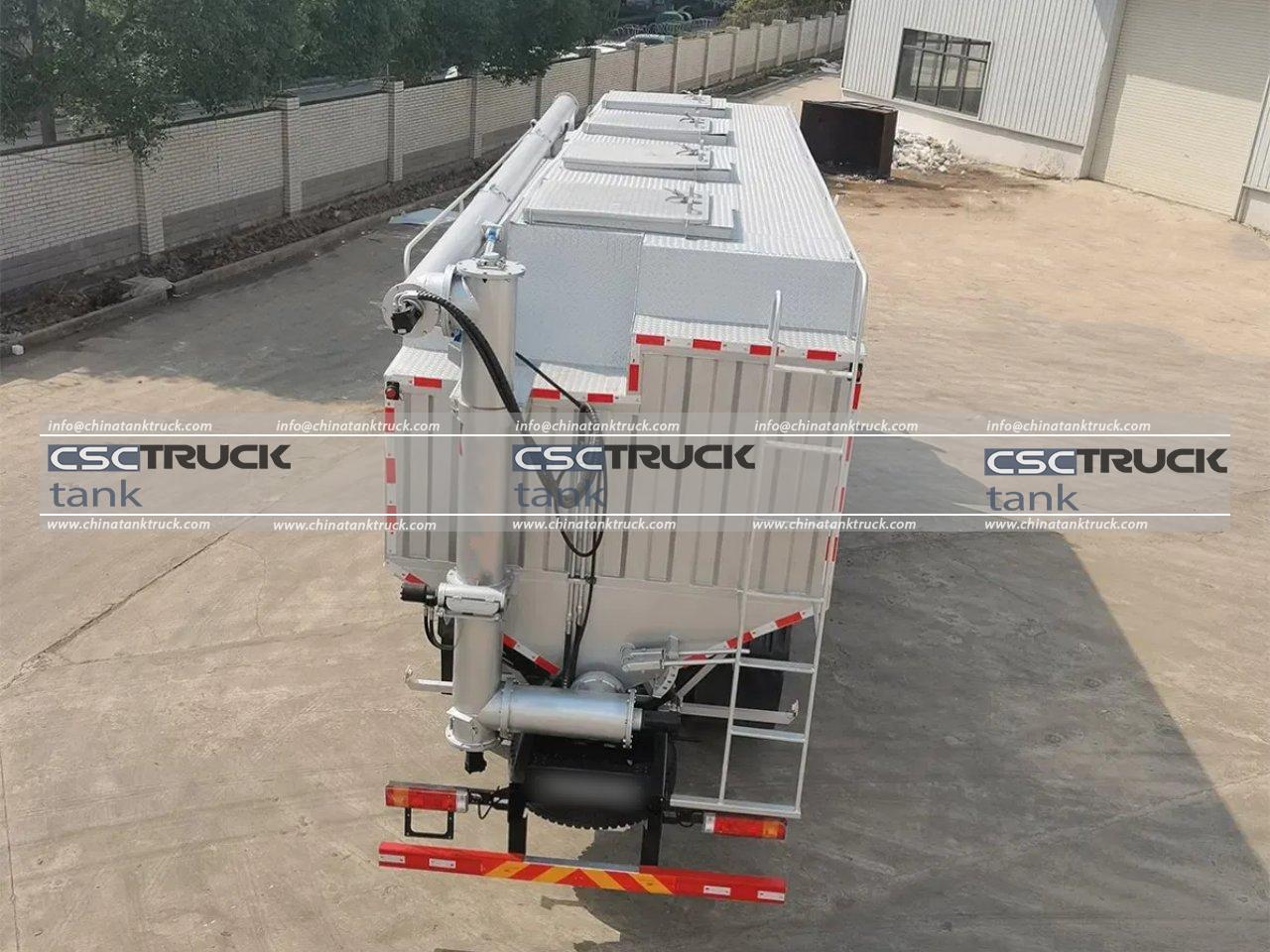
How CSCTRUCK China Tank Truck Designs PTO-Driven Pneumatic Tank Trucks
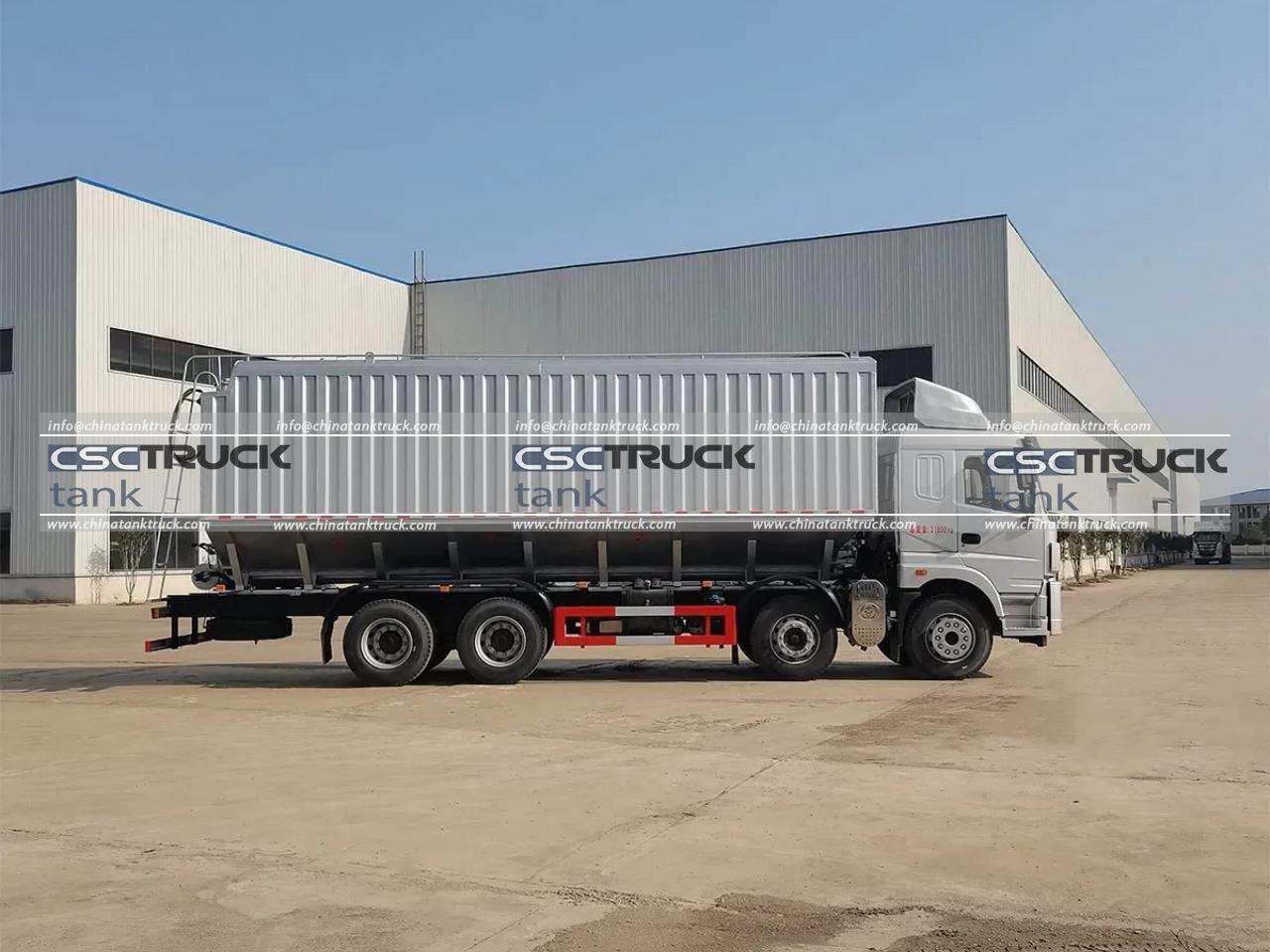
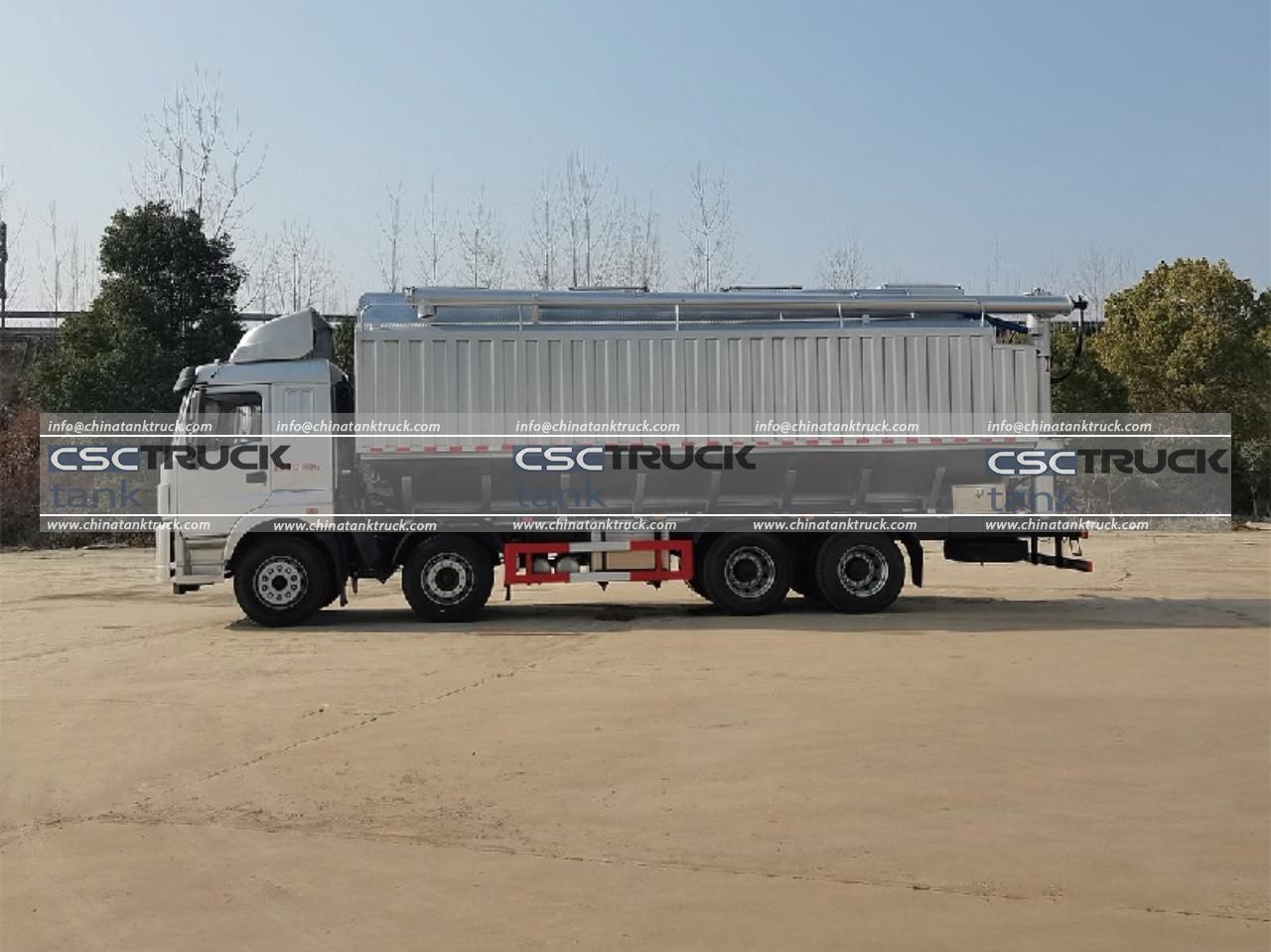
CSCTRUCK China Tank Truck offers pneumatic bulk carriers engineered with efficient PTO-driven compressor systems. Each vehicle is designed to balance engine output, PTO ratio, compressor capacity, and tank configuration for dependable unloading performance. Depending on customer requirements, trucks can be equipped with high-performance rotary screw compressors or other suitable compressor types, along with optimized piping and fluidizing systems to ensure rapid material discharge while minimizing fuel consumption and maintenance needs. The company’s emphasis on engineering quality, customization, and global customer support has made its pneumatic tank trucks a trusted choice in construction, cement, mining, food processing, and chemical industries worldwide.
Conclusion
Yes, the PTO can absolutely drive the air compressor on a pneumatic tank truck, and it is the preferred solution for most modern dry bulk transport vehicles. By using the truck’s existing engine to power the compressor, PTO systems eliminate the need for a separate engine, reducing equipment costs, maintenance, fuel consumption, and overall vehicle weight.
When properly matched with the truck’s engine and compressor, a PTO-driven system delivers the airflow and pressure required for efficient unloading of materials such as cement, fly ash, lime, plastic pellets, and other dry bulk products. For fleet operators seeking reliable performance, lower operating costs, and simplified maintenance, a PTO-powered compressor remains the most practical and widely adopted choice for pneumatic tank truck operations.
