
As urban development accelerates, the number of infrastructure projects reflects the progress of a city. Where there are construction sites, there must be construction vehicles. Take bulk cement trucks, for example—large concrete batching plants require hundreds to thousands of tons of cement every day. How is such a massive amount of cement transported from the cement plant to the mixing station? That’s where bulk cement trucks come into play.

▎History of Bulk Cement Tankers
1. Gravity Discharge Dump Trucks
Early bulk cement tankers were modified from regular dump trucks by adding a sealed cargo box cover. During unloading, the truck bed would be lifted, allowing the cement powder to fall out via gravity.
This unloading method worked similarly to how dump trucks handle sand or gravel. However, it caused heavy dust dispersion and created a large drop zone for the cement. With the advent of newer tanker technologies, this method has been phased out.

2. Mechanical Discharge Tankers
Introduced in the early 1950s, these vehicles used onboard screw conveyors to unload cement. By adjusting the height of the conveyor, the powder could be delivered to various elevations.
This effectively reduced dust emissions. However, the mechanical parts suffered from wear due to prolonged contact with abrasive cement particles.
3. Pneumatic Discharge Tankers
First appearing in the early 1960s, this method is simpler and has remained in use to this day. These tankers can carry up to 100 tons. The cargo container is cylindrical, mounted either horizontally or vertically on the chassis, and is made of welded steel or aluminum alloy. The tank has 2 or more feed ports at the top for efficient loading.
An onboard air compressor disperses the cement powder using pressurized air and pushes it through the discharge outlet into storage silos. This method is fast, causes minimal dust, and allows for unloading even in rainy weather, making it highly convenient.
▎Mainstream Cement Tanker Models
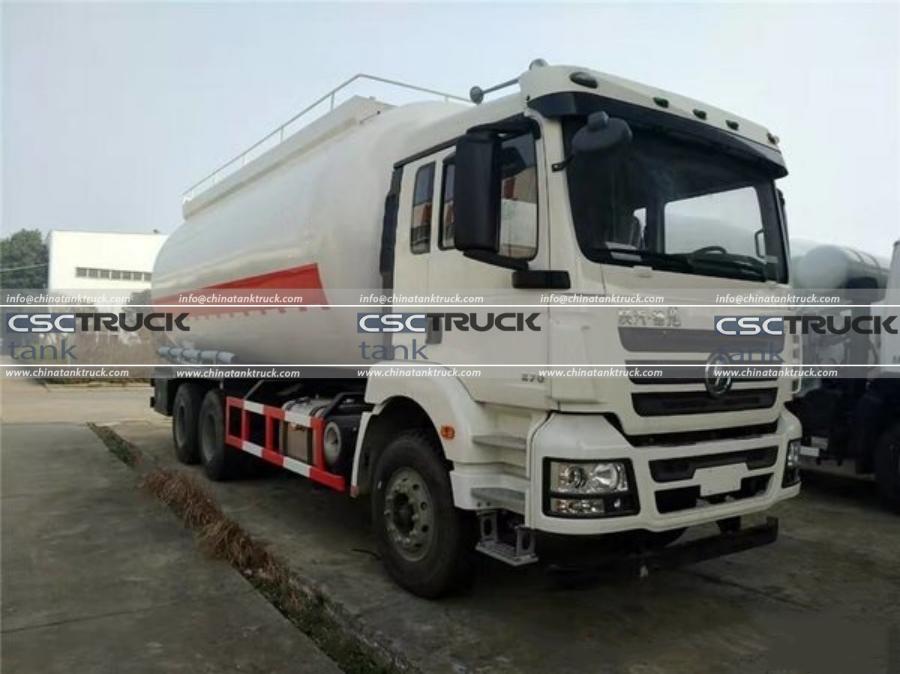
1. Shacman Auto Delong
| Item | Specification |
|---|---|
| Model | Delong New M3000 Dry Bulk Tanker |
| Chassis | M3000 (8×4) |
| Engine | Weichai 300 hp (220 kW) |
| Transmission | Fast 9-speed gearbox |
| Rear Axle | 16-ton dual-stage with 4.625 axle ratio |
| Vehicle Dimensions (L×W×H) | 10.2 × 2.55 × 3.95 meters |
| Gross Vehicle Weight | 31 tons |
| Rated Load | 15.4 tons |
| Tank Capacity | ~40 m³ |
| Tank Manufacturer | Shaanxi Heavy Duty Truck |
| Notable Feature | Rugged chassis ideal for mountainous transport |
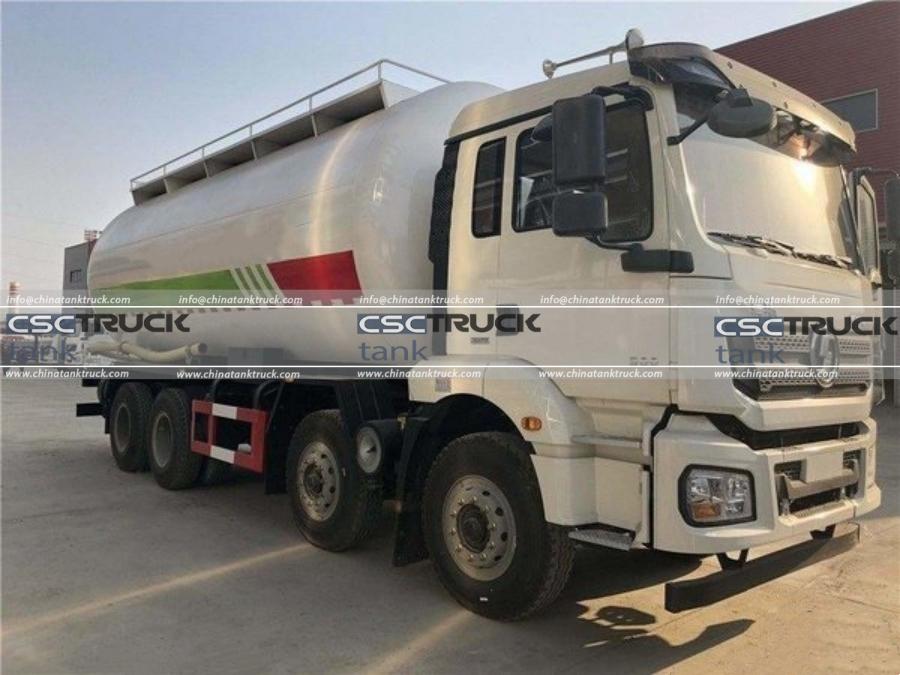
2. Hualing Star
| Item | Specification |
|---|---|
| Chassis | CAMC Star 8×4 |
| Engine | Hanma 310 hp (228 kW) |
| Transmission | 8-speed Hanma gearbox |
| Rear Axles | HL460 dual axles, 4.875 axle ratio |
| Vehicle Dimensions | 9.6 m (L) × 2.55 m (W) × 3.96 m (H) |
| Gross Vehicle Weight | 31 tons |
| Rated Load | 16.8 tons |
| Tank Capacity | Approximately 28 m³ |
| Tank Material | Hualing tank |
| Suitable Materials | Dry-mix mortar, cement, and fly ash |
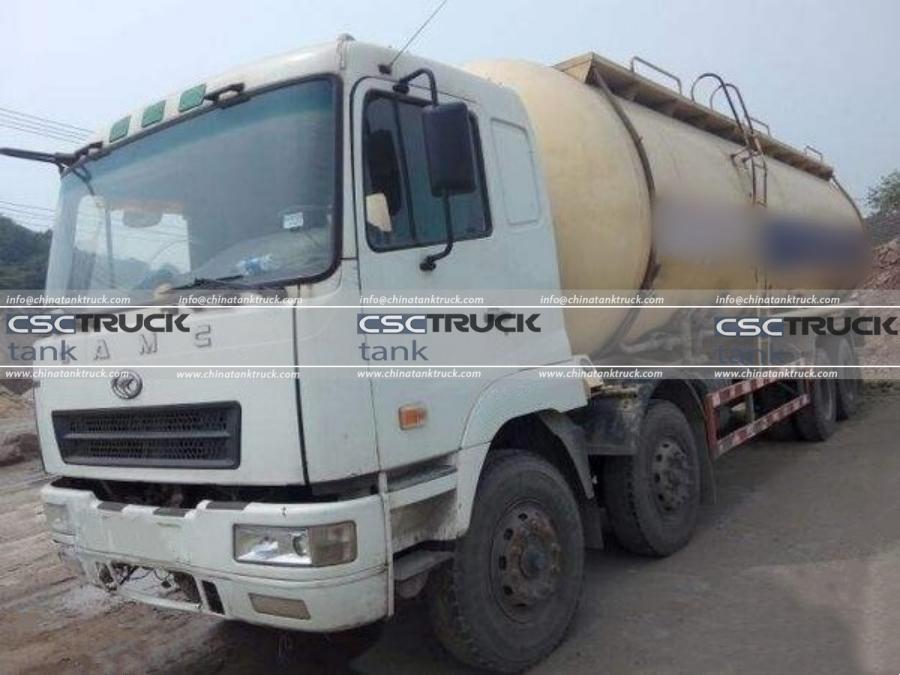
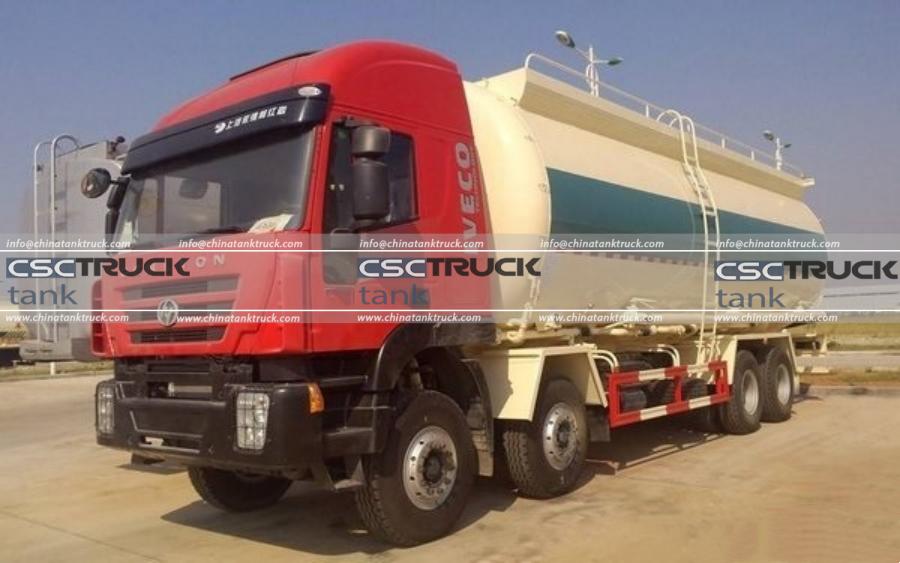
3. Hongyan Genlyon
| Specification | Details |
|---|---|
| Model | SAIC Hongyan Genlyon C100 |
| Application | Bulk Material Transport |
| Engine | Sofim 390 hp (287 kW) |
| Transmission | Fast 12-speed gearbox |
| Rear Axle Load Capacity | 16 tons |
| Vehicle Dimensions (L×W×H) | 11.99 × 2.525 × 3.95 meters |
| Gross Vehicle Weight | 31 tons |
| Rated Load Capacity | 13.87 tons |
| Tank Volume | 36.4 m³ |
| Tank Manufacturer | SAIC Hongyan |
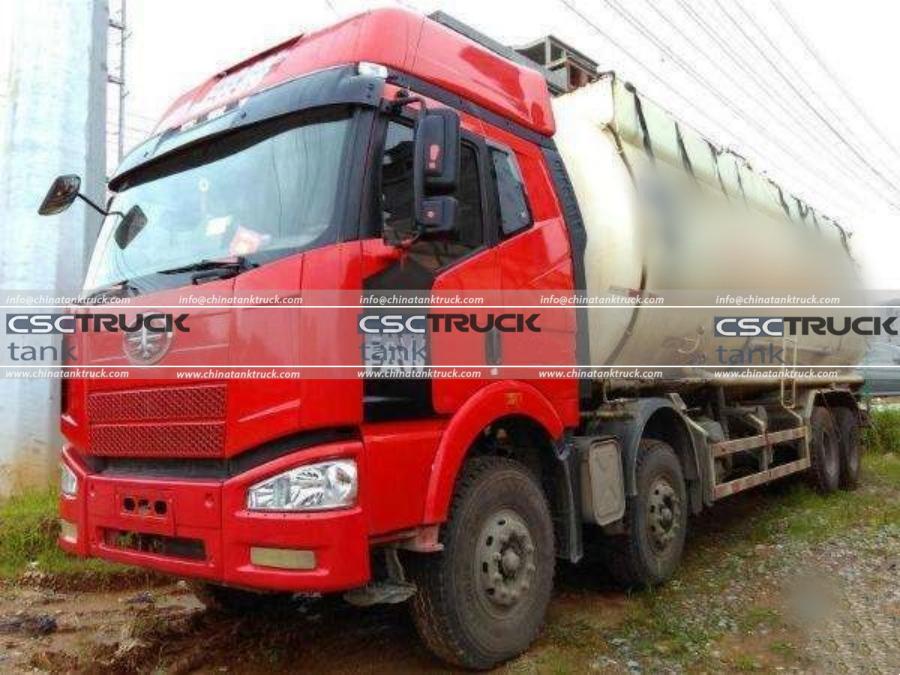
4. FAW Jiefang
| Specification | Details |
|---|---|
| Model Series | FAW J6P |
| Chassis | J6P 8×4 |
| Engine | Xichai 460 hp (342 kW) |
| Transmission | FAW 12-speed |
| Rear Axles | Steel-cast wheel reduction |
| Axle Ratio | 5.263 |
| Vehicle Dimensions (L×W×H) | 11.99 × 2.55 × 3.99 meters |
| Gross Weight | 31 tons |
| Rated Load | 12.81 tons |
| Tank Body | CIMC Lingyu |
| Tank Capacity | 37 m³ |
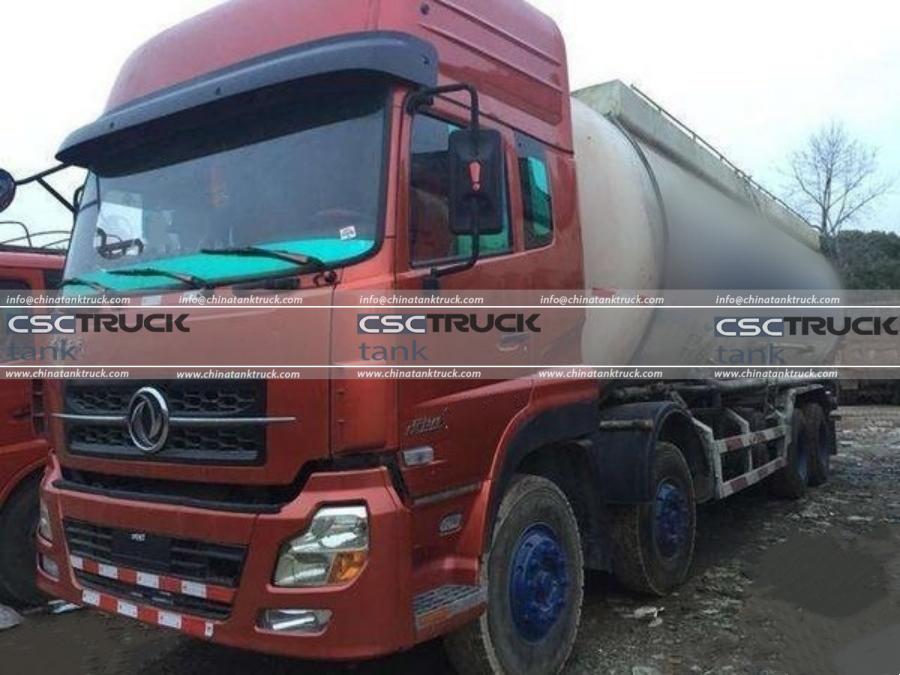
5. Dongfeng Tianlong
| Specification | Details |
|---|---|
| Brand / Model | Dongfeng Tianlong |
| Chassis Configuration | 8×4 |
| Engine | Dongfeng DCI 385 hp (283 kW) |
| Transmission | Fast 12-speed gearbox |
| Vehicle Dimensions (L×W×H) | 12 × 2.55 × 3.99 meters |
| Gross Weight | 31 tons |
| Rated Load | 13.5 tons |
| Tank Capacity | 35.5 m³ |
| Tank Manufacturer | Dongfeng Commercial Vehicles |
▎Versatility and Application Scenarios
Bulk cement trucks are not limited to transporting cement powder—they can also efficiently handle materials like fly ash, lime powder, and mineral powder. Tank interiors can be designed based on specific material properties to ensure efficient discharge and flow.
These vehicles are suitable for a variety of road conditions, including highways, mountain roads, and dirt roads.
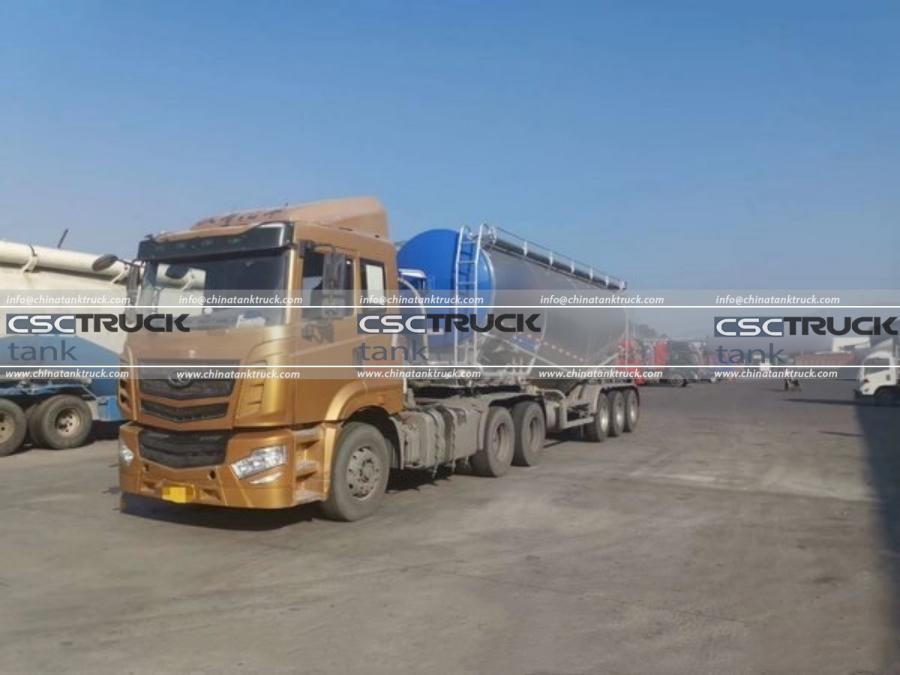
Currently, 8×4 drive dry bulk tank trucks are mostly used for medium-to-short-range intercity or rural transport. Due to limited construction site space and access conditions, semi-trailers often cannot enter, making single rigid trucks the preferred option. However, for long-haul bulk cement transportation where load capacity and regulations come into play, semi-trailer tankers are becoming the dominant choice.