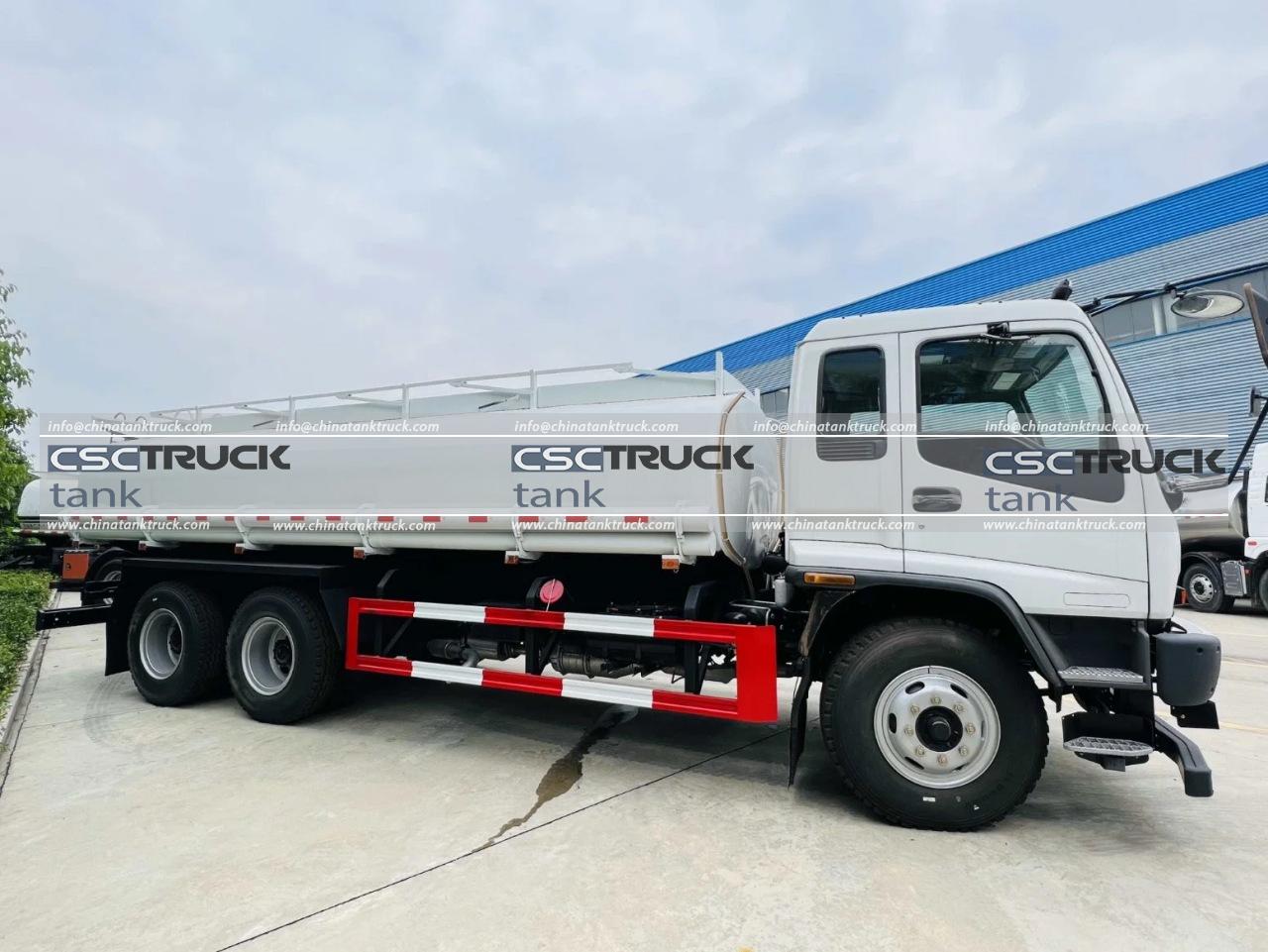

Milk transportation requires more than simply moving liquid from one location to another. A milk tank truck must provide sufficient capacity, food-grade hygiene, reliable temperature protection, safe operation, and dependable performance over repeated routes. Among the many truck chassis available for dairy transportation, HOWO and ISUZU are 2 popular options.
So, when comparing a HOWO vs. ISUZU milk tank truck, which one is better? The answer depends on factors such as transportation distance, required capacity, road conditions, payload, emissions requirements, operating costs, and local service support. Instead of choosing a brand based only on reputation, buyers should evaluate the complete truck configuration.
About CSCTRUCK China Tank Truck
CSCTRUCK China Tank Truck is a Chinese manufacturer and supplier of specialized tank trucks, offering milk tank trucks, fuel tankers, water tankers, chemical tankers, LPG/LNG tank trucks, pneumatic tankers, and other customized vehicles.
CSCTRUCK China Tank Truck can build milk tank trucks on different commercial chassis, including HOWO, ISUZU, FOTON, FAW, and SHACMAN, allowing customers to select a chassis according to their application, budget, road conditions, and local requirements. Its milk tanker configurations can include food-grade stainless-steel tanks, insulation layers, cleaning systems, multiple compartments, and customized capacities.
This chassis flexibility is particularly useful when comparing HOWO and ISUZU because the tank body and dairy-specific equipment can be customized independently of the chassis brand.
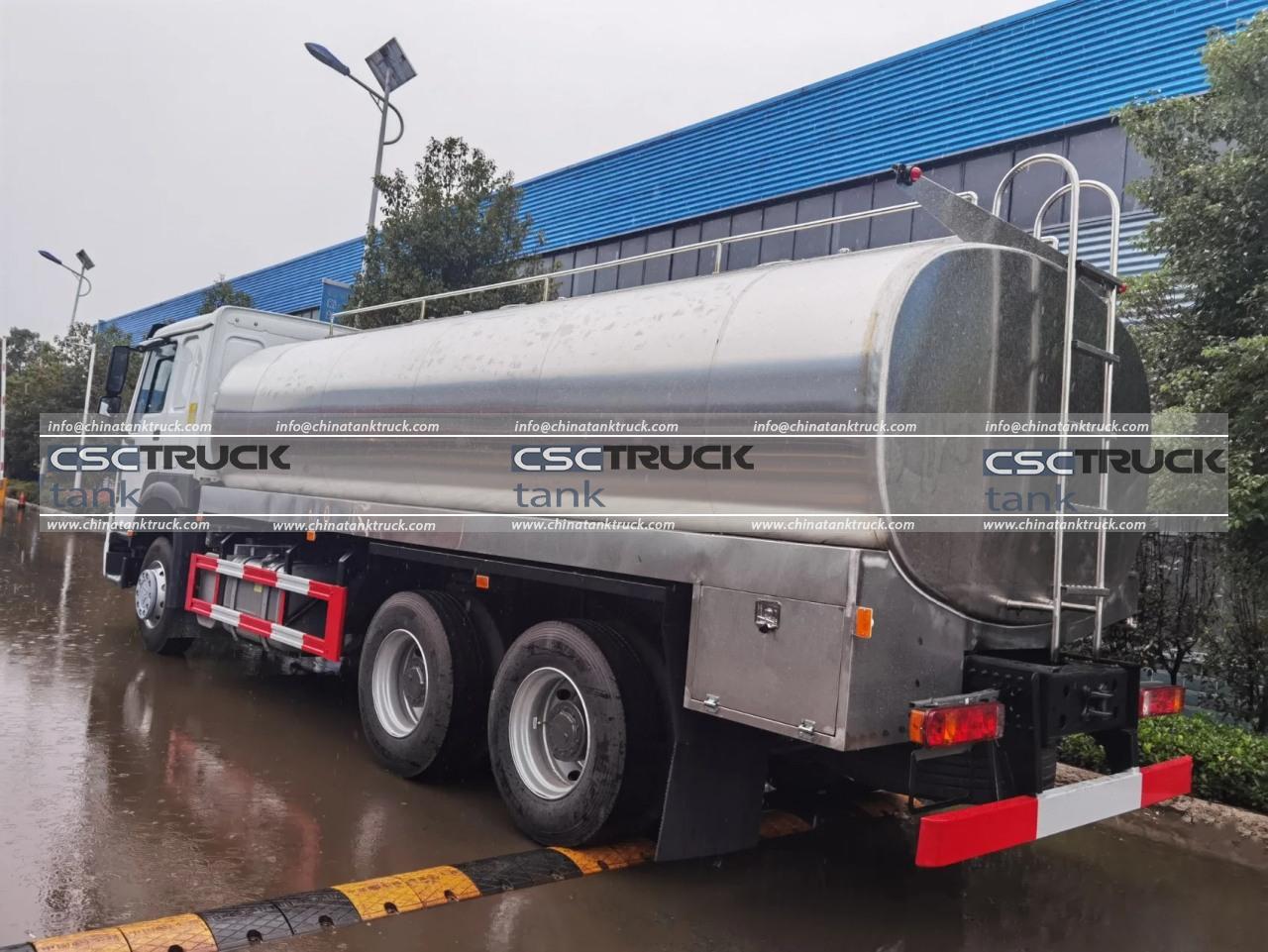
HOWO Milk Tank Truck
HOWO is commonly selected for medium- and heavy-duty transportation applications where high payload capacity and strong chassis performance are important.
For example, CSCTRUCK China Tank Truck‘s HOWO 10-wheelers dairy transport truck uses a 6×4 chassis and a 16 CBM milk tanker. The listed configuration has a 25,000 kg payload, a 371 HP SINOTRUK WD615.47 engine, and a 4 mm 304-2B food-grade stainless-steel tank. The tank also uses an 80 mm polyurethane insulation layer and an external stainless-steel plate, with the specified thermal insulation performance designed to limit temperature change during transportation.
CSCTRUCK China Tank Truck also offers smaller HOWO configurations. Its 10 CBM sanitary milk tank truck, for example, uses a 4×2 chassis, 300 HP engine, and 304 stainless-steel tank.
Advantages of HOWO
1. Strong heavy-duty capability
HOWO configurations are suitable for customers transporting relatively large quantities of milk or operating on longer-distance routes where payload and chassis strength are important.
2. Multiple capacity options
HOWO milk tank trucks can be configured for different applications, from approximately 10 CBM units to much larger vehicles. CSCTRUCK China Tank Truck lists a 30 CBM HOWO milk delivery truck with an 8×4 chassis and 400 HP engine for high-volume transportation.
3. Suitable for demanding road conditions
A 6×4 or 8×4 configuration can provide greater load-carrying capability and traction than a smaller 4×2 truck, making heavy-duty HOWO models suitable for rural collection routes, intercity transportation, and high-volume dairy logistics.
4. Good configuration flexibility
Buyers can specify tank capacity, stainless-steel material, insulation, cleaning equipment, chassis configuration, and other components according to their operating requirements.
ISUZU Milk Tank Truck
ISUZU is another widely used chassis option for milk transportation, particularly where maneuverability, fuel efficiency, compact dimensions, and reliable commercial-vehicle operation are priorities.
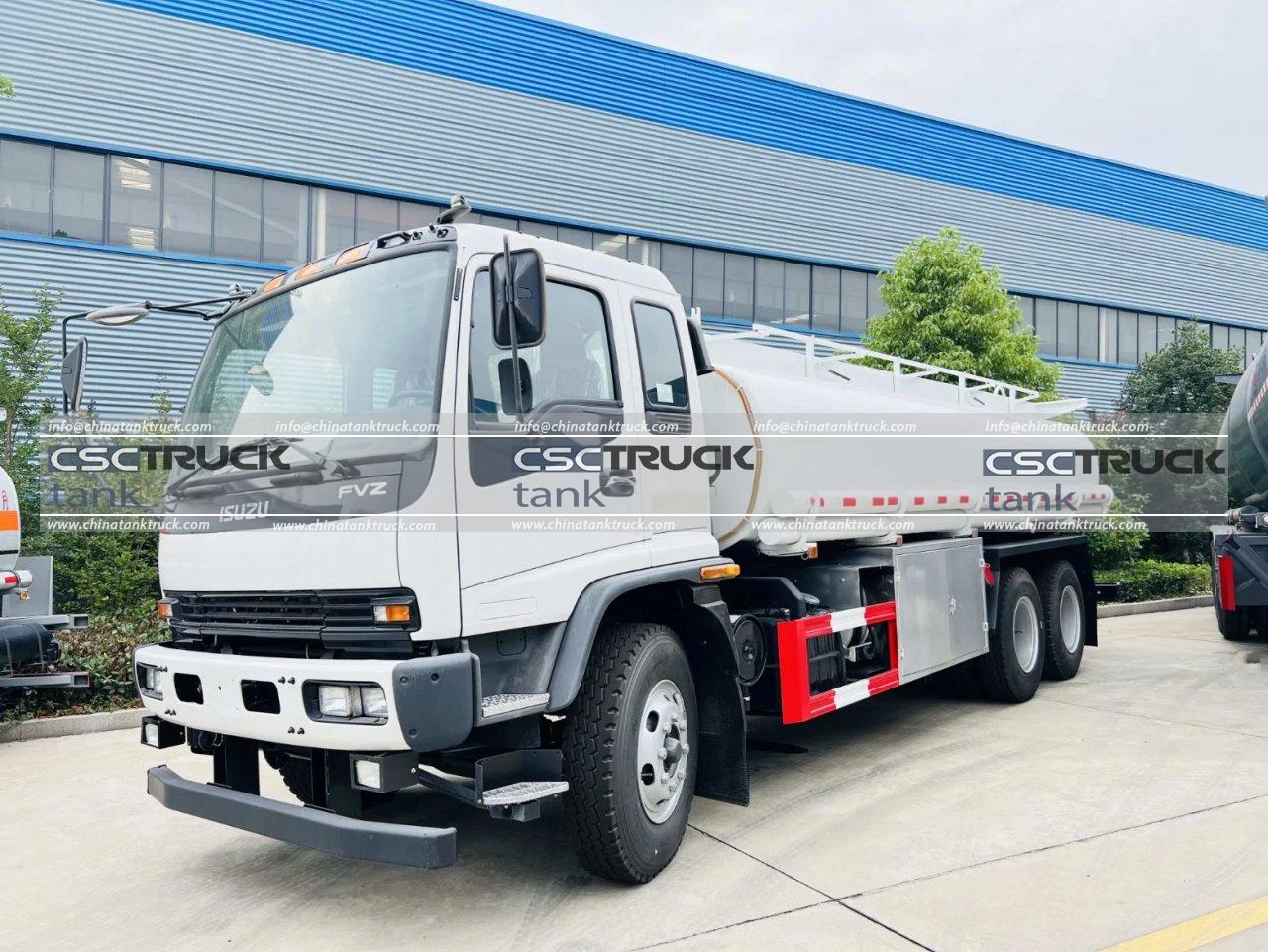
CSCTRUCK China Tank Truck offers several ISUZU milk tank truck configurations. For example, its ISUZU FVZ 10,000-liter milk tank transport truck uses a 6×4 chassis, 180 HP engine, 304 2B stainless-steel tank, and can be configured to meet Euro III, Euro IV, or Euro V emission standards.
Another CSCTRUCK China Tank Truck model is the ISUZU 15 CBM milk transport truck, which uses a 4×2 configuration, 205 HP 4HK1-TC50 engine, Euro 5 emissions specification, and a 304 stainless-steel milk tank.
For buyers seeking a more modern emissions configuration, CSCTRUCK China Tank Truck also lists a 13 CBM ISUZU milk tank truck with a 190 HP engine, Euro 6 emission standard, 304-2B food-grade stainless steel, 80 mm polyurethane insulation, and a PIC automatic cleaning system.
Advantages of ISUZU
1. Suitable for urban and regional distribution
Smaller ISUZU configurations can be easier to operate on urban roads, narrow streets, and routes with frequent stops.
2. Good balance between capacity and maneuverability
A 4×2 ISUZU chassis can provide a practical combination of cargo capacity, vehicle dimensions, and road maneuverability for regional milk collection and distribution.
3. Multiple emission configurations
Depending on the selected model and market, ISUZU milk trucks can be configured with different emission standards. This is important when exporting to countries with specific environmental regulations.
4. Flexible medium-capacity applications
ISUZU is not limited to small milk trucks. The available CSCTRUCK China Tank Truck configurations range from approximately 10,000 liters to 15 CBM and beyond, while larger chassis can also be specified for particular applications.
HOWO vs. ISUZU Milk Tank Truck Comparison
| Item | HOWO Milk Tank Truck | ISUZU Milk Tank Truck |
|---|---|---|
| Typical application | Heavy-duty and high-volume transport | Regional, urban, and medium-distance transport |
| Drive configurations | 4×2, 6×4, 8×4 available depending on model | 4×2 and 6×4 available depending on model |
| Capacity range | Small to very large | Small to medium/large |
| Payload focus | Strong heavy-load capability | Balanced capacity and maneuverability |
| Road conditions | Suitable for demanding and heavy-duty routes | Particularly practical for paved and regional routes |
| Engine options | Various heavy-duty engine configurations | Various medium/heavy commercial engines |
| Emission options | Depends on chassis/model | Depends on chassis/model |
| Tank material | 304/304-2B stainless steel options | 304/304-2B stainless steel options |
| Insulation | Available | Available |
| Cleaning system | Available depending on specification | Available depending on specification |
| Customization | High | High |
The table illustrates an important point: There is no universal winner between HOWO and ISUZU. The appropriate chassis depends on the specific operating environment.
HOWO or ISUZU: Which Should You Choose?
For large dairy farms, milk collection centers, long-distance transportation, and high-volume logistics, a HOWO milk tank truck may be appropriate when higher payload and heavy-duty chassis capability are important.
For urban milk distribution, regional collection, shorter routes, and applications where maneuverability is important, an ISUZU milk tank truck can be a practical choice.
However, the chassis is only one part of the vehicle. Buyers should also pay close attention to the milk tank configuration.
A food-grade stainless-steel tank is essential because milk directly contacts the tank’s internal surfaces. CSCTRUCK China Tank Truck specifies 304 or 304-2B stainless steel on several of its milk tankers. Insulation is also important because maintaining a stable temperature helps protect milk quality during transportation.
The cleaning system should also be considered. For example, CSCTRUCK China Tank Truck‘s 13 CBM ISUZU model uses a PIC automatic cleaning system with a 360-degree rotating cleaning device. Such equipment can help improve cleaning efficiency and support hygienic dairy transportation.
Final Considerations
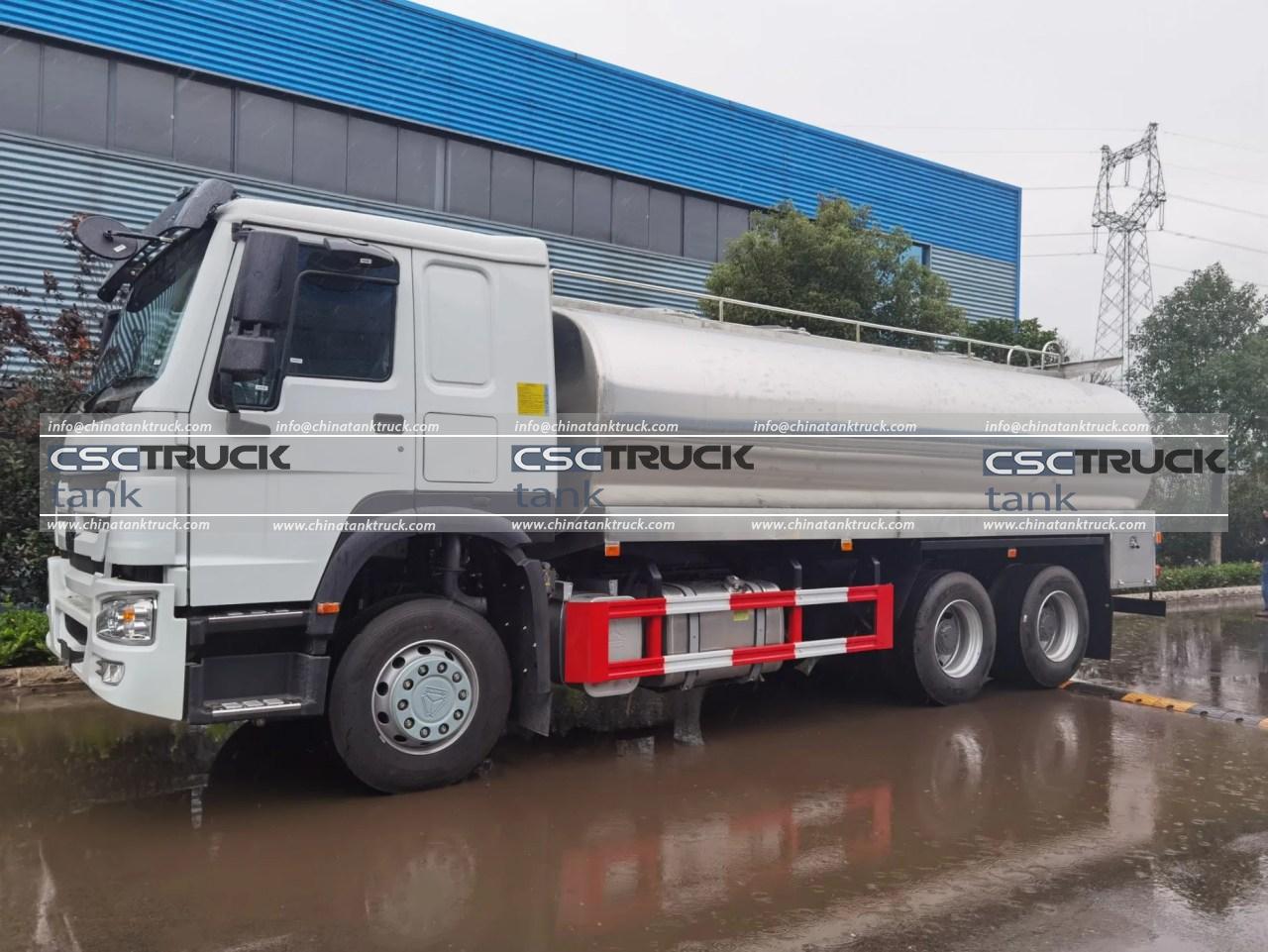
When choosing between a HOWO vs. ISUZU milk tank truck, buyers should evaluate the complete vehicle rather than focusing only on the chassis logo. Consider tank capacity, payload, drive configuration, engine power, emission standard, stainless-steel grade, insulation thickness, cleaning system, road conditions, local spare-parts availability, and after-sales service.
HOWO configurations are particularly relevant to heavy-duty and high-volume milk transportation, while ISUZU configurations can be attractive for regional and urban dairy logistics where maneuverability and a balanced vehicle configuration are important.
CSCTRUCK China Tank Truck can provide both HOWO and ISUZU milk tank trucks with customized tank capacities, food-grade stainless-steel tanks, insulation, cleaning systems, and chassis configurations. By matching the truck specification to the actual dairy transportation route and operating conditions, buyers can select a milk tanker that meets both operational and food-safety requirements.