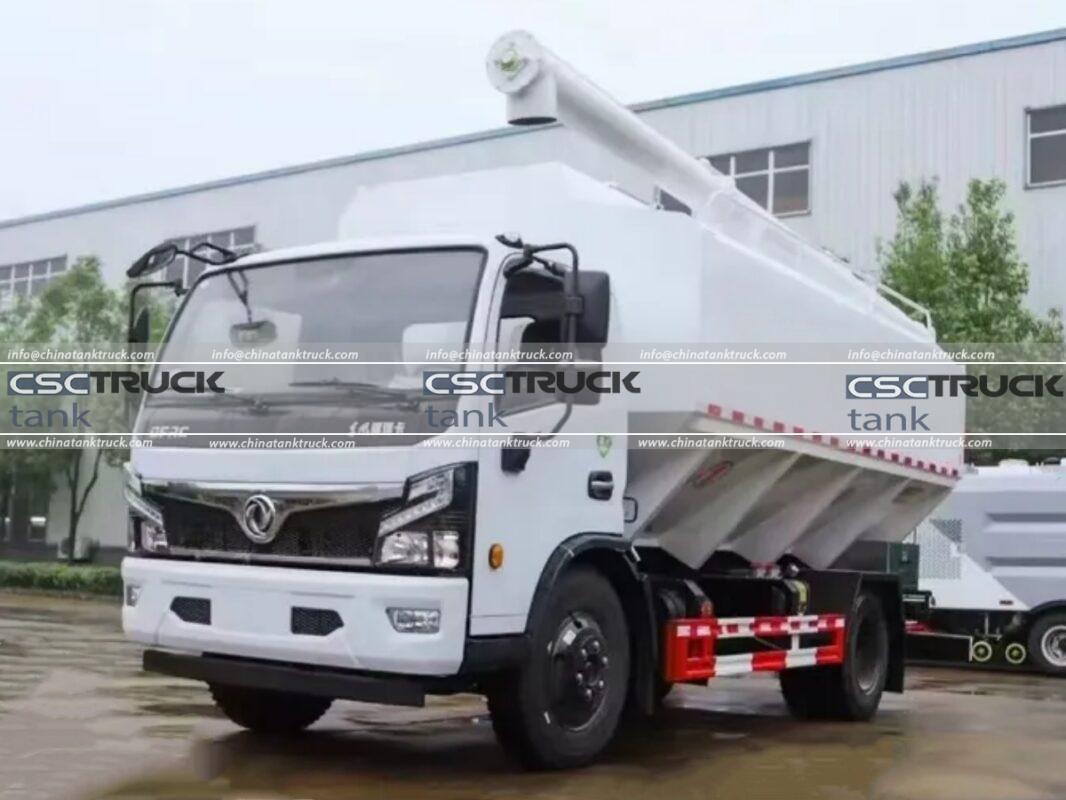
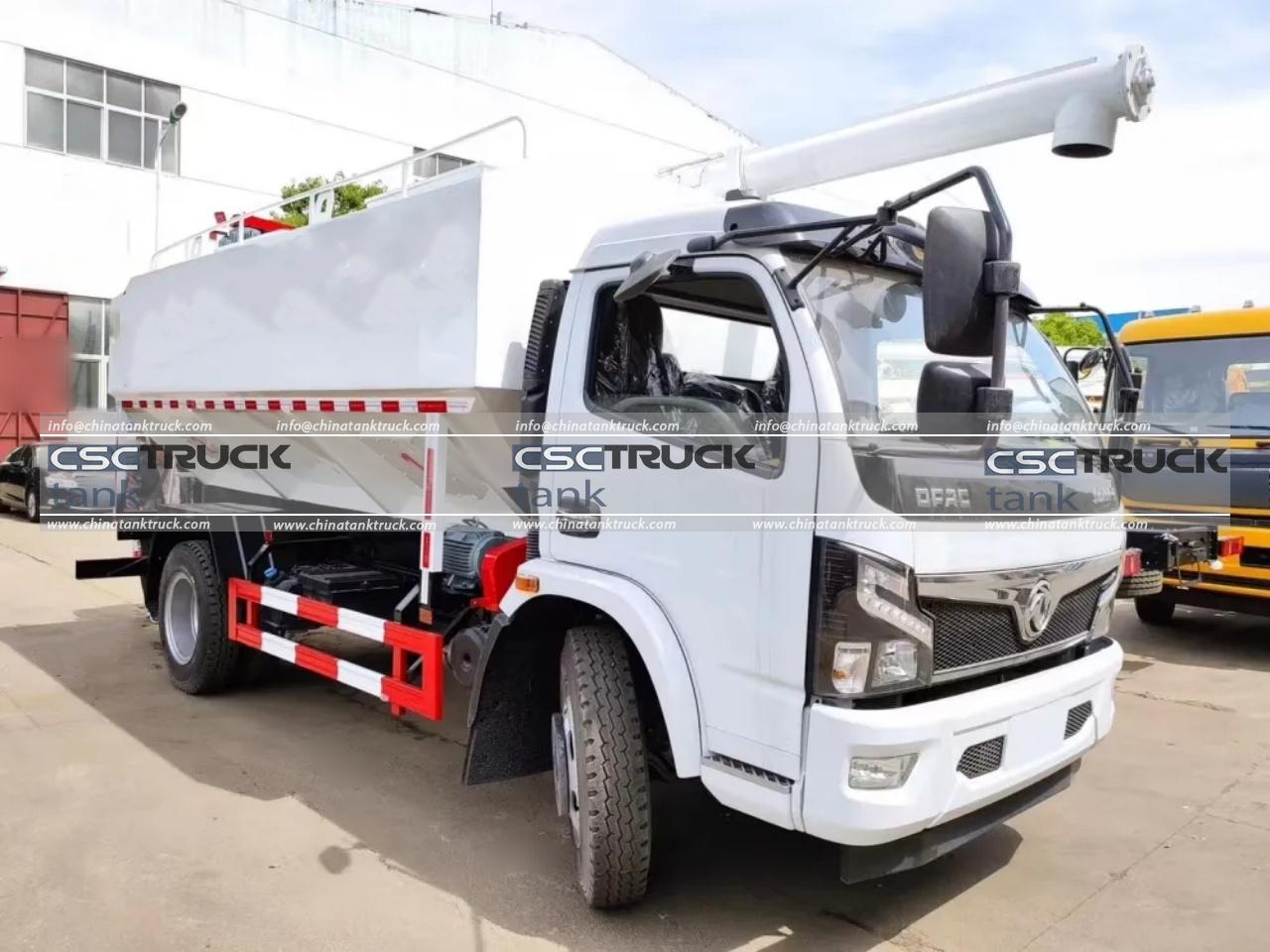
Pneumatic bulk transport trucks are essential for moving dry, powdered, and granular materials efficiently between factories, construction sites, warehouses, farms, and storage facilities. Also called pneumatic tank trucks, dry bulk tankers, powder tankers, or bulk transport trucks, these specialized vehicles use compressed air to discharge materials through pipelines directly into silos or other receiving systems. They are widely used for transporting cement, fly ash, lime powder, flour, plastic pellets, feed, and other dry bulk products.
Choosing the right truck requires more than simply comparing tank capacity and purchase price. Material characteristics, payload requirements, unloading performance, chassis configuration, operating conditions, safety requirements, and long-term maintenance costs all influence whether a vehicle will perform efficiently.
CSCTRUCK China Tank Truck specializes in tank trucks and trailers for different transportation applications. Its product range includes pneumatic bulk trucks and trailers in various capacities and configurations, with customization available for different operating requirements.
Here are ten practical tips to help you select a pneumatic bulk transport truck that truly fits your needs.
1. Identify the Material You Need to Transport
Start with the cargo, not the truck.
Different dry bulk materials have different densities, flow characteristics, moisture sensitivity, and unloading requirements. Cement, fly ash, flour, animal feed, lime, silica, and plastic pellets cannot necessarily be handled using the same configuration.
For example, a heavy material such as cement requires careful consideration of payload and axle limits, while lightweight materials such as flour or some plastic pellets may require greater tank volume to maximize available carrying capacity.
Tell the manufacturer exactly what materials you will transport. This allows the tank volume, aeration system, compressor, valves, and discharge configuration to be matched to the cargo.
2. Choose the Right Tank Capacity
Tank volume is one of the most visible specifications, but bigger is not always better.
Pneumatic bulk trucks can be supplied in different capacities, ranging from relatively compact units for regional distribution to large semi-trailers for high-volume transportation. CSCTRUCK China Tank Truck, for example, lists configurations including 22 CBM, 30 CBM, 40 CBM, 45 CBM, 46 CBM, 58 CBM, and other pneumatic bulk transport solutions.
The correct capacity depends on:
- Material density
- Required payload
- Transportation distance
- Road weight regulations
- Loading and unloading facilities
- Number of deliveries per day
A large tank may reduce the number of trips, but if the material is very dense, the vehicle may reach its legal weight limit before the tank is physically full.
3. Match Payload Capacity to Local Regulations
Payload is more important than volume when calculating transportation efficiency.
The truck must remain within the permitted gross vehicle weight, axle-load limits, and road regulations of the country or region where it will operate. A vehicle that appears highly productive on paper may not be practical if it regularly has to operate below its nominal capacity.
Consider the combined weight of the chassis, tank, compressor, accessories, and cargo. The manufacturer’s rated payload should be evaluated together with local regulations.
CSCTRUCK China Tank Truck notes that pneumatic bulk truck payload depends on factors such as tank size, material density, truck configuration, and legal weight limits.
4. Select a Suitable Chassis and Drive Configuration
The chassis is the foundation of the entire vehicle.
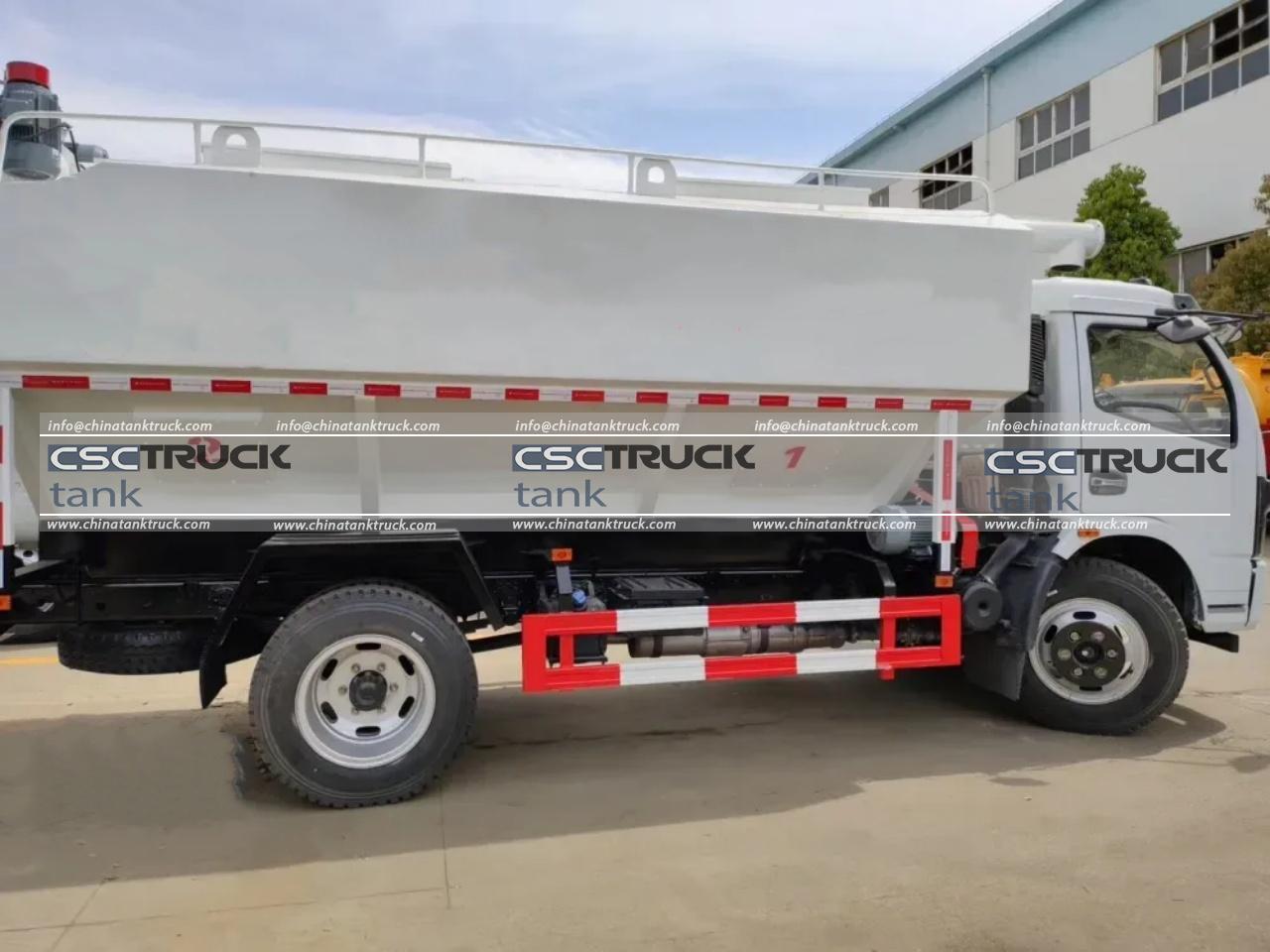
Consider road conditions, terrain, climate, average transport distance, and expected operating loads when selecting the chassis. A 4×2 configuration may be sufficient for normal paved-road transportation, while 6×4, 8×4, or other heavy-duty configurations may be more suitable for demanding applications.
You should also consider engine power, transmission, wheelbase, suspension, braking system, fuel economy, and availability of spare parts in your market.
For export buyers, choosing a chassis brand with an established service network in the destination country can significantly simplify future maintenance.
5. Pay Close Attention to the Air Compressor
The pneumatic system is the heart of a dry bulk transport truck.
During unloading, compressed air is used to fluidize the material and push it through the discharge pipeline. Compressor performance therefore has a direct influence on unloading speed, pressure stability, energy consumption, and overall productivity.
When comparing trucks, ask about:
- Compressor type
- Air delivery capacity
- Working pressure
- Compressor drive system
- Expected unloading time
- Maintenance requirements
Do not choose a compressor simply because it has a high specification. The compressor should be correctly matched to tank volume, cargo characteristics, pipeline design, and the receiving facility.
6. Check the Discharge System and Pipe Configuration
A good pneumatic truck needs more than a strong compressor.
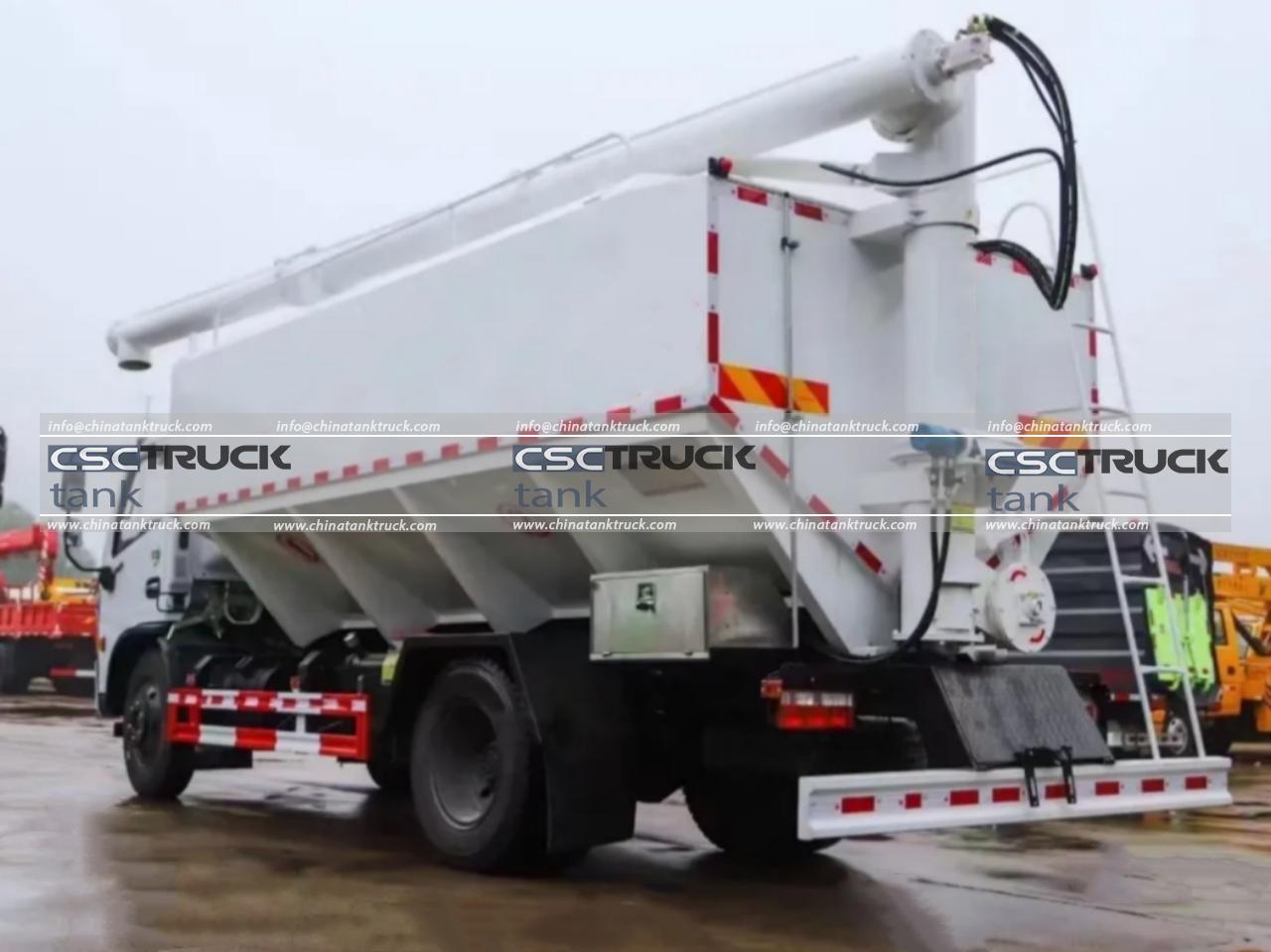
The discharge pipe, valves, aeration system, pressure-control components, and outlets all influence unloading efficiency. Pipe diameter affects material flow, pressure loss, and compatibility with the customer’s receiving system.
Before ordering, determine where the truck will unload and what connection specifications are required at the receiving facility.
If customers use different silos or receiving systems, consider whether multiple outlets, flexible discharge hoses, or customized pipe connections would improve versatility.
7. Consider Tank Material and Construction Quality
Tank construction directly affects service life, weight, corrosion resistance, and operating safety.
For many general dry bulk applications, high-strength carbon steel is commonly used. Other materials or specialized construction may be appropriate depending on the cargo and operating environment.
Pay particular attention to welding quality, tank design, pressure rating, internal surfaces, manholes, valves, and protective coatings.
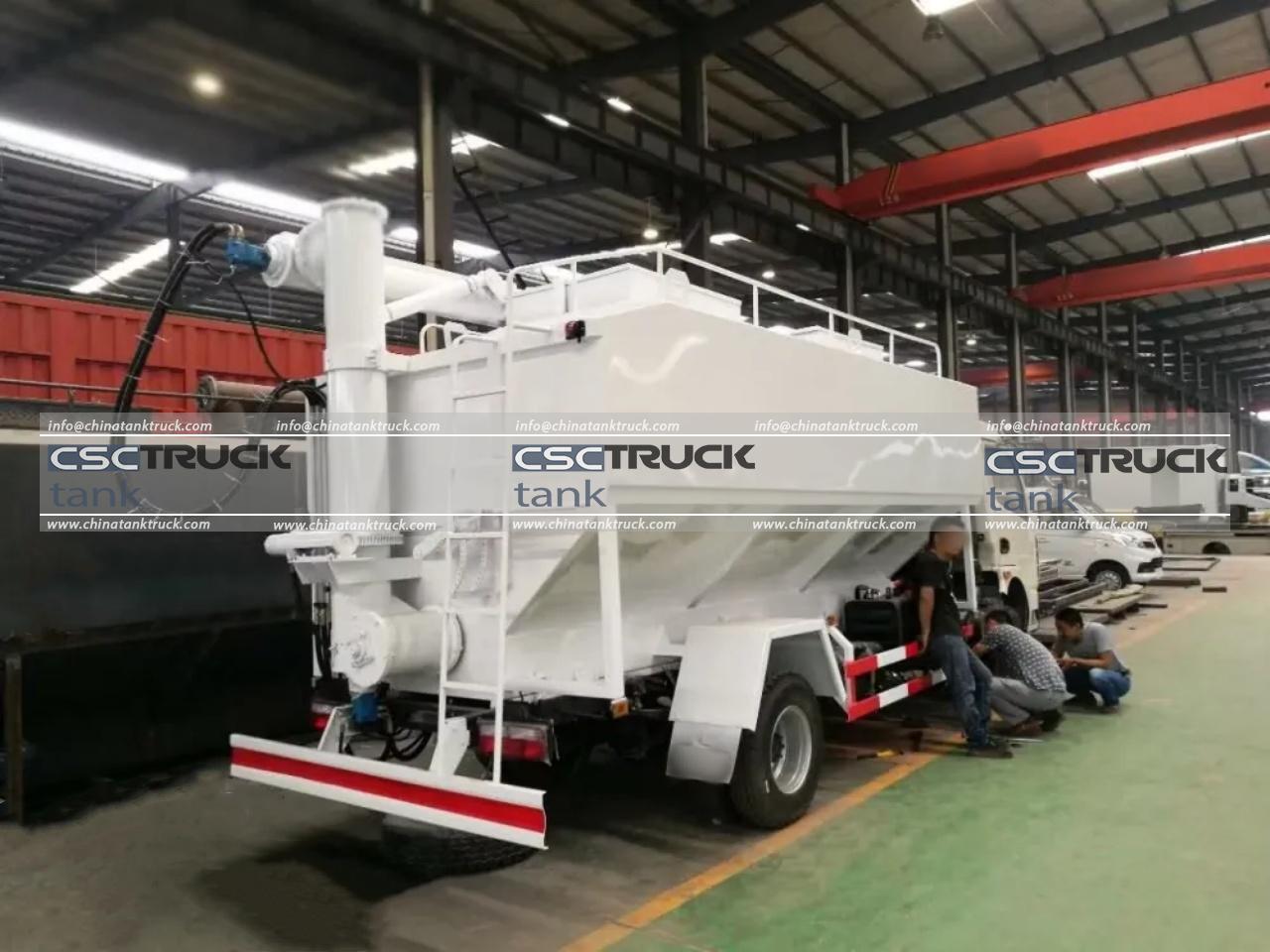
Because pneumatic tanks operate with pressurized air, the tank and associated pressure components must be designed and manufactured according to applicable standards and regulations. Quality inspection and pressure testing are particularly important before delivery. CSCTRUCK China Tank Truck states that its tank trucks undergo inspections including pressure tests, welding checks, leak tests, and surface treatment.
8. Make Sure the Truck Fits Your Loading and Unloading Facilities
A truck can have excellent specifications and still be unsuitable if it does not work with your existing infrastructure.
Before purchasing, measure:
- Loading height
- Silo inlet height
- Discharge connection size
- Required discharge pressure
- Hose length
- Available working space
- Loading equipment
- Unloading equipment
The receiving facility should be considered as part of the transportation system. Pneumatic bulk trucks are particularly effective because they can transfer dry materials directly into silos and storage systems, reducing manual handling and exposure to the environment.
9. Consider Safety, Reliability, and Maintenance
Purchase price is only one part of the total cost of ownership.
A reliable pneumatic bulk truck should have suitable pressure-control equipment, dependable valves, durable piping, effective braking components, and easy access to frequently serviced parts.
Ask the supplier about recommended maintenance intervals, compressor servicing, valve replacement, pressure-system inspection, spare-parts availability, and technical support.
For international buyers, after-sales service is especially important. A supplier capable of providing spare parts, operating instructions, technical documentation, and remote support can reduce downtime and simplify fleet management.
10. Choose a Manufacturer That Can Customize the Truck
Finally, avoid buying a standard configuration simply because it is readily available.
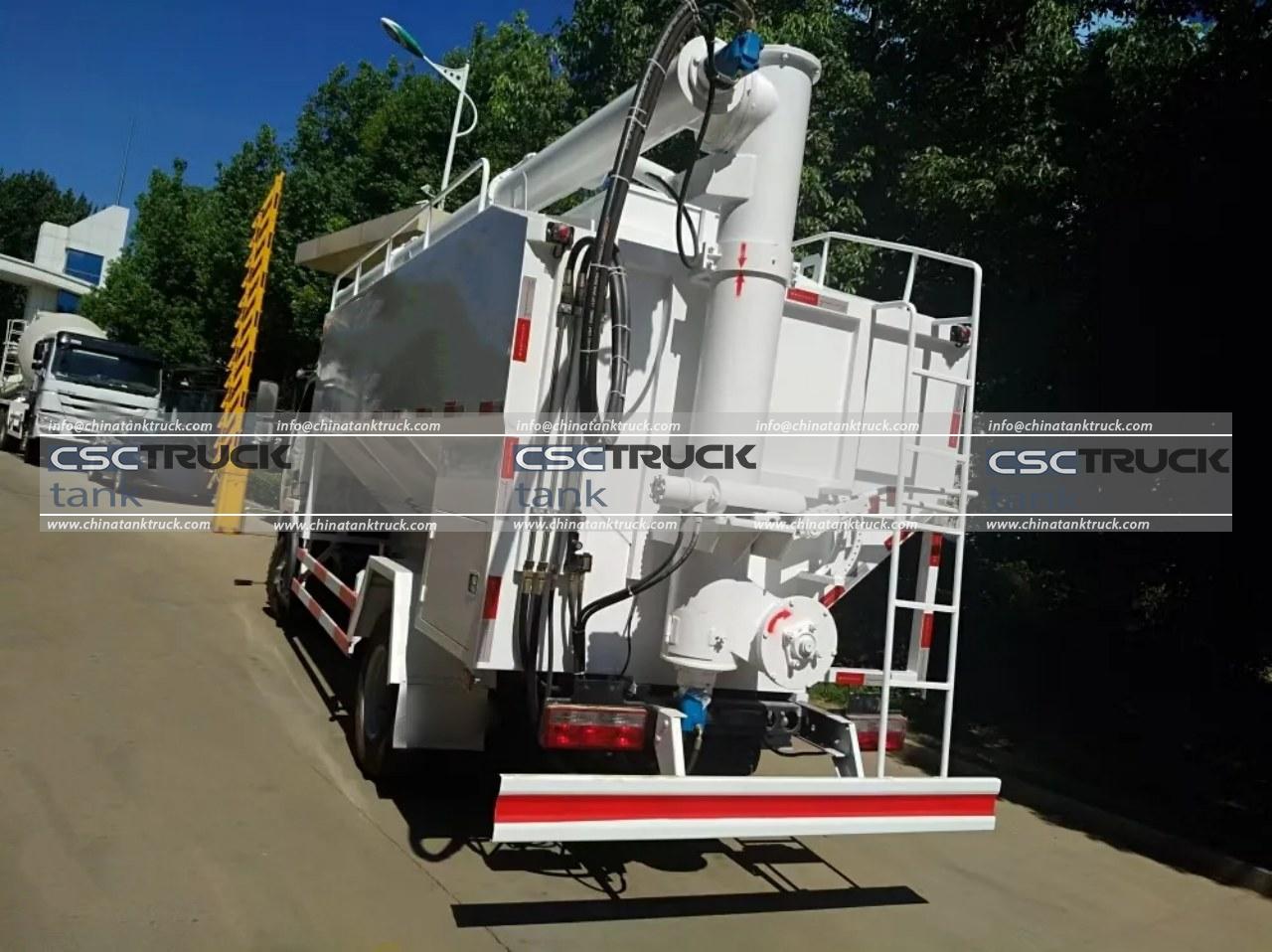
The best pneumatic bulk transport truck is the one configured around your actual application. Customization may include tank volume, chassis brand, axle configuration, material, compressor, discharge piping, valves, suspension, accessories, and other components.
CSCTRUCK China Tank Truck offers customized tank truck solutions and lists options involving different tank capacities, materials, chassis brands, and specialized configurations. The company also provides international export assistance and documentation support.
When requesting a quotation, provide as much information as possible, including the material being transported, required capacity, target payload, destination country, road conditions, discharge requirements, preferred chassis, and applicable standards. A detailed specification allows the manufacturer to recommend a more suitable configuration instead of simply offering the cheapest available model.
Conclusion
Choosing a pneumatic bulk transport truck is ultimately about matching the vehicle to the entire transportation operation. The right solution should provide sufficient payload and tank capacity while delivering reliable pneumatic unloading, safe operation, manageable maintenance costs, and compatibility with local roads and receiving facilities.
Before purchasing, carefully evaluate the cargo, tank capacity, payload, chassis, compressor, discharge system, tank construction, facility compatibility, safety, maintenance, and manufacturer support.
With the right specifications and a reliable supplier such as CSCTRUCK China Tank Truck, businesses can select a pneumatic bulk transport truck that improves delivery efficiency, reduces unnecessary operating costs, and provides dependable performance over the long term.