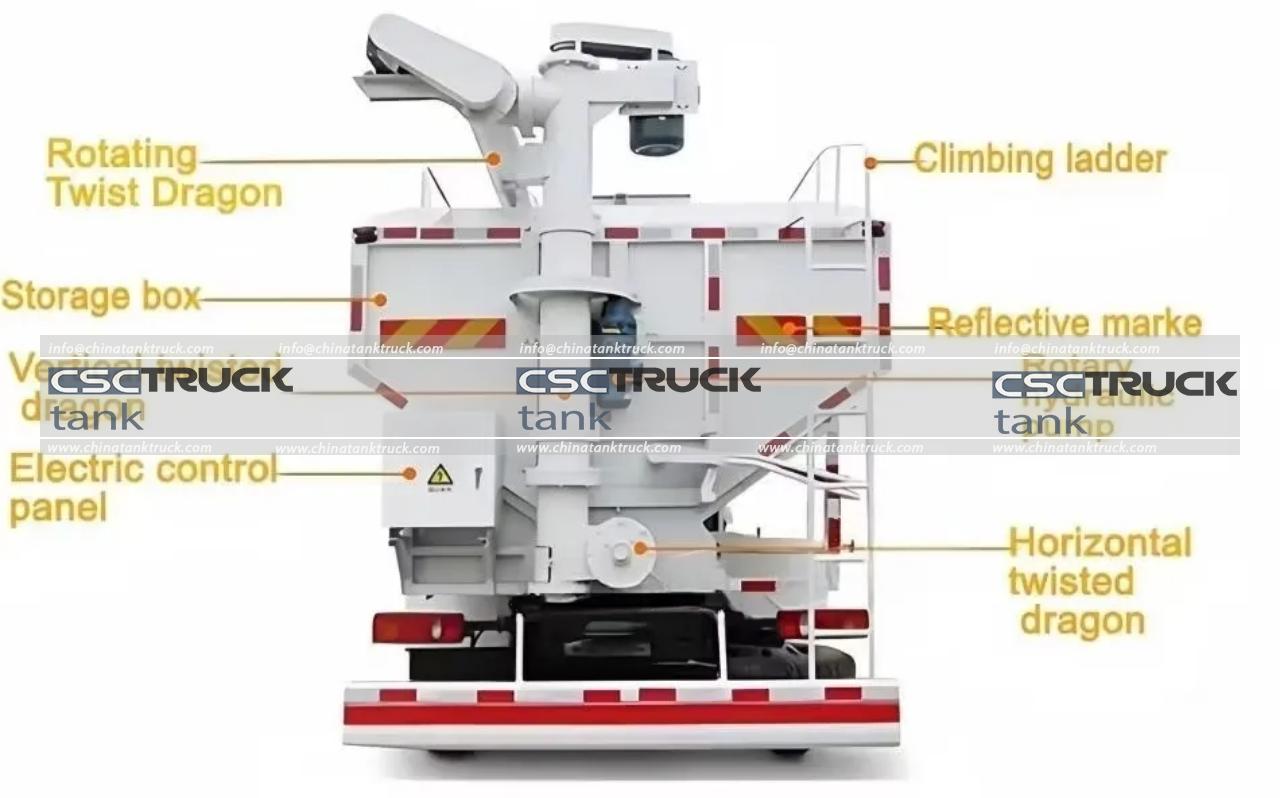

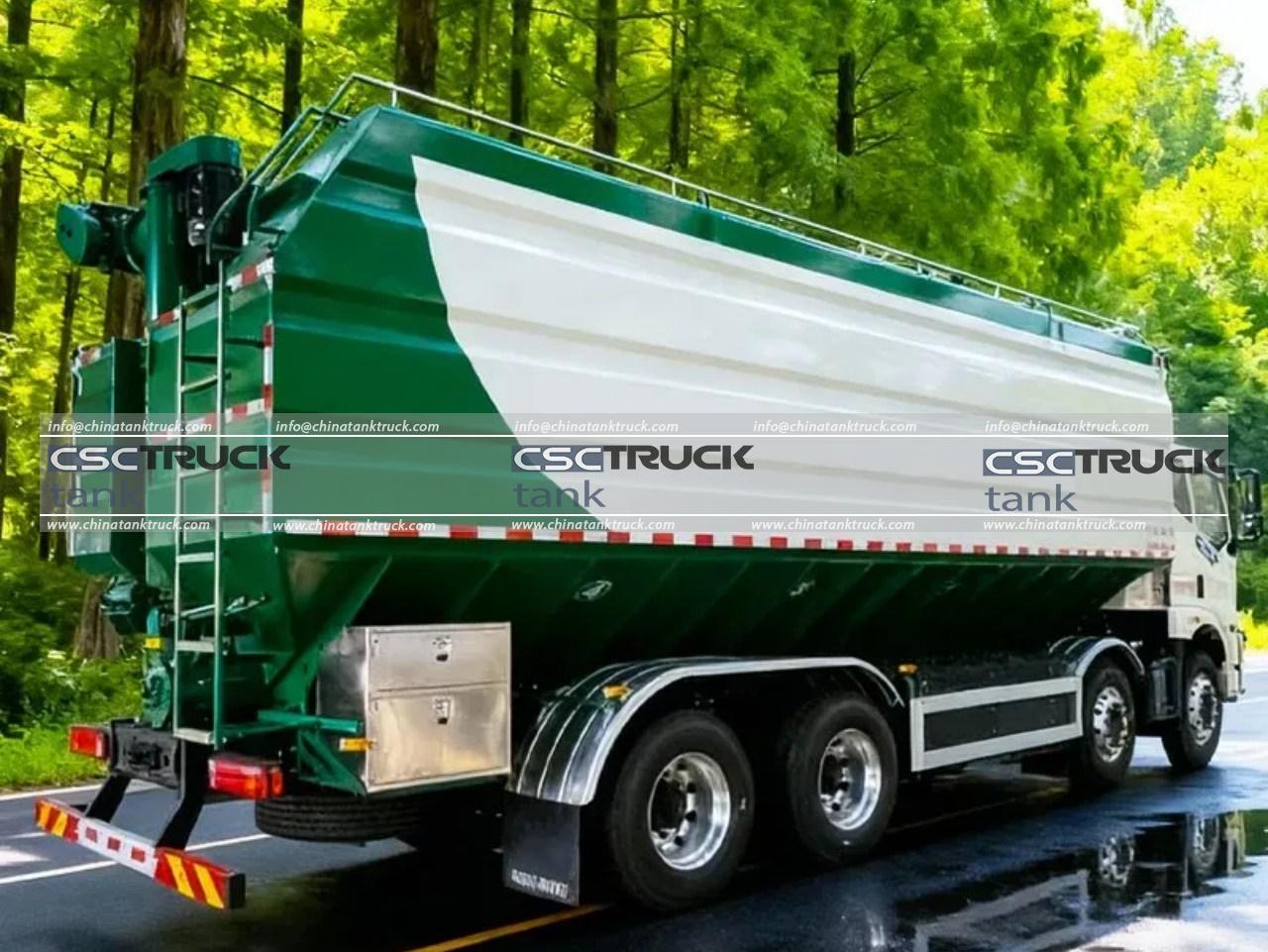
Pneumatic tank trucks are a cornerstone of modern dry bulk logistics, moving materials like cement, flour, plastic pellets, fly ash, lime, and industrial powders in a sealed, pressurized system. These vehicles are designed not just for transportation efficiency, but for controlled, contamination-free unloading. One of their most distinctive structural features is the cone-shaped hopper at the bottom of the tank.
To understand why this shape is so important, it helps to first recognize the role of manufacturers like CSCTRUCK China Tank Truck. As a specialized producer of bulk transport equipment, CSCTRUCK China Tank Truck designs pneumatic tank trucks and trailers that integrate advanced aeration systems, pressure-resistant tank bodies, and optimized hopper geometries to improve discharge efficiency and safety.
The cone-shaped hopper is not an aesthetic choice—it is a carefully engineered solution to the physics of granular flow, unloading efficiency, and structural safety.
1. Gravity and Natural Flow Optimization
Dry bulk materials behave very differently from liquids. Instead of flowing smoothly, powders and granules tend to compact, bridge, or stick to surfaces. A flat-bottom tank would trap large amounts of residue.
The cone shape solves this by using gravity to its advantage:
- Material naturally slides downward toward the lowest point
- The narrowing geometry concentrates material at the discharge outlet
- Reduces “dead zones” where product would otherwise remain stuck
In short, the cone shape ensures that every particle is guided toward the outlet rather than settling in corners.
2. Preventing Material Bridging and Clogging
One of the biggest challenges in pneumatic bulk transport is bridging, where particles form stable arches above the outlet and block flow.
Cone-shaped hoppers reduce this risk by:
- Eliminating flat surfaces where arches can form
- Increasing downward shear forces on the material
- Encouraging the continuous collapse of internal particle structures
This is especially important for materials like cement or fly ash, which can compact tightly under vibration during transport.
Without a cone design, clogging would be frequent, requiring manual intervention and reducing delivery efficiency.
3. Improving Fluidization Efficiency
Pneumatic tank trucks rely on compressed air to “fluidize” dry materials—making powders behave like liquids so they can be pumped out.
Inside the hopper:
- Aeration pads inject air into the material
- Particles loosen and separate
- The material flows toward the discharge outlet like a fluid
The cone shape supports this process by:
- Reducing the distance material must travel to reach aeration zones
- Ensuring even air distribution toward the outlet
- Allowing gravity and airflow to work together
In essence, the hopper geometry enhances the effectiveness of the entire pneumatic system.
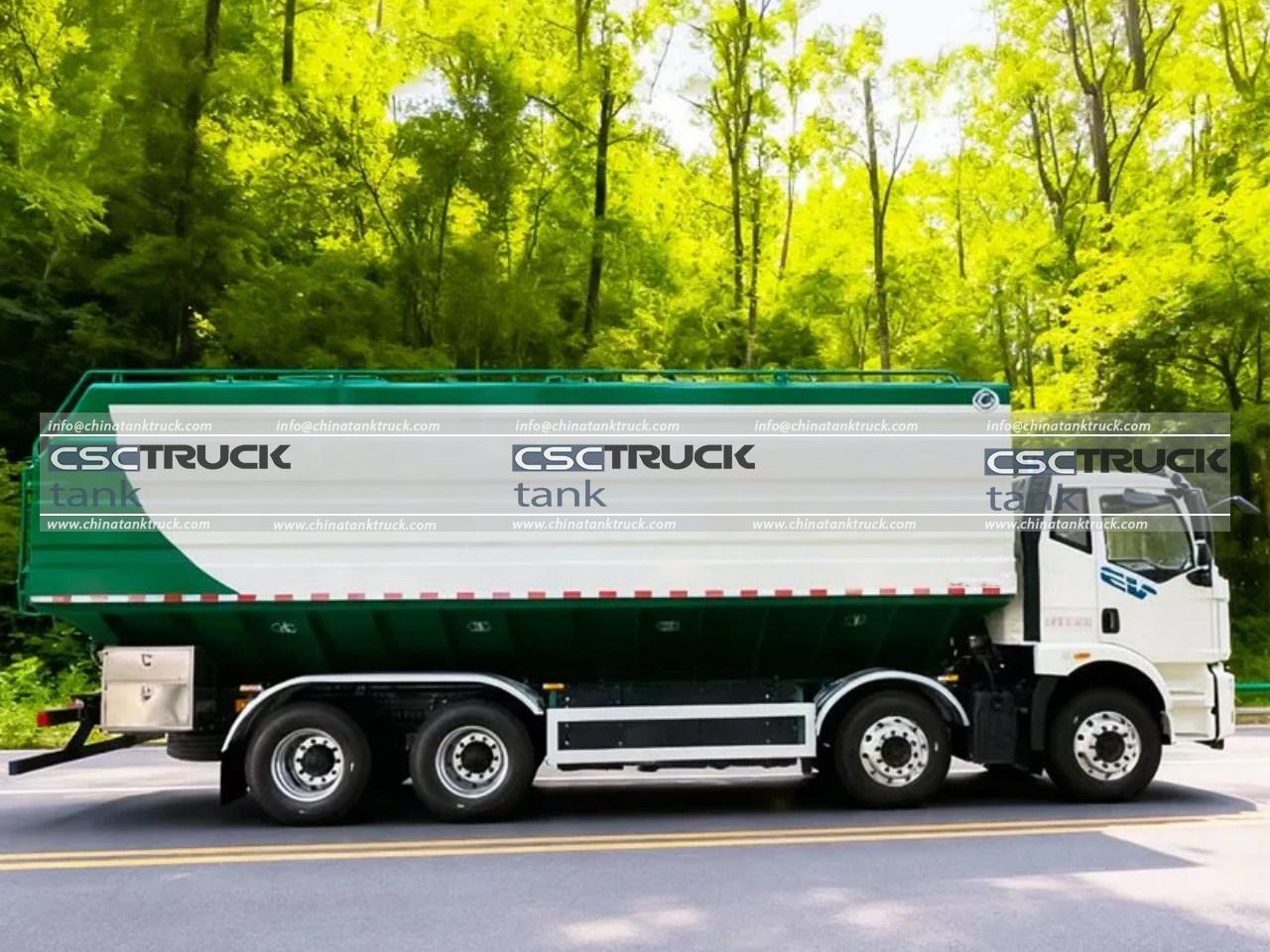
4. Faster and More Complete Unloading
Efficiency is critical in logistics. Every minute saved during unloading increases fleet productivity.
Cone-shaped hoppers help achieve:
- Faster discharge rates due to concentrated flow
- Reduced residual material after unloading
- Shorter cleaning cycles between loads
Because the material naturally funnels downward, the air system does not need to work as hard to evacuate the tank. This reduces unloading time and energy consumption.
5. Structural Strength Under Pressure
Pneumatic tank trucks operate under internal air pressure during unloading. This means the tank must withstand:
- Positive pressure from compressed air
- Dynamic loads from shifting bulk material
- Stress concentration at discharge points
The cone shape contributes to structural integrity by:
- Distributing stress more evenly across the lower tank section
- Avoiding sharp internal corners that weaken under pressure
- Acting as a natural reinforcement zone between the cylindrical tank and the outlet valve
This makes the design both functional and safer under repeated pressurization cycles.
6. Reduced Residual Material and Easier Cleaning
Residual buildup is a major operational issue in bulk transport. The remaining powder can:
- Contaminate future loads
- Harden inside the tank
- Increase maintenance costs
Cone-shaped hoppers reduce residue because:
- Material continuously slides toward the outlet
- Fewer horizontal surfaces exist for accumulation
- Aeration reaches nearly all remaining product at the bottom
As a result, cleaning becomes quicker and more efficient, especially for food-grade applications like sugar or flour transport.
7. Compatibility with Multi-Hopper Designs
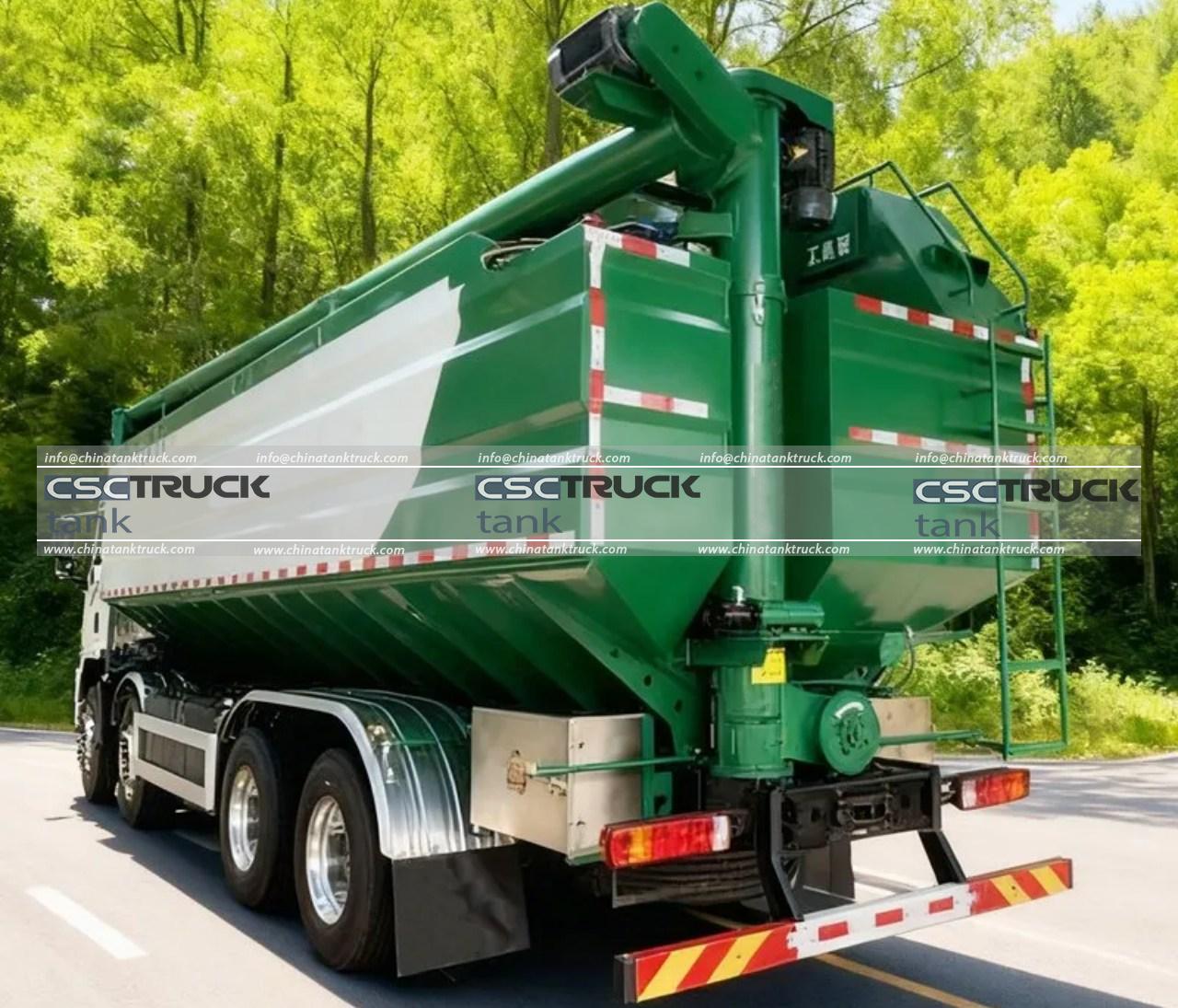
Many pneumatic tank trucks use multiple cone hoppers along the bottom of the tank.
This modular approach allows:
- Independent unloading zones
- Better weight distribution during transport
- Controlled discharge sequencing
Each cone acts as a funnel feeding into a shared or separate discharge system, improving flexibility depending on the cargo type.
8. Better Performance with Different Material Types
Not all dry bulk materials behave the same. Some are:
- Fine powders (cement, lime)
- Granular solids (plastic pellets)
- Cohesive or sticky powders (flour, starch)
Cone-shaped hoppers help accommodate all of them by:
- Increasing gravitational pull on difficult materials
- Supporting aeration-assisted flow for fine powders
- Reducing stagnation zones for cohesive substances
This versatility is one reason pneumatic tank trucks are widely used across industries.
9. Energy Efficiency in Pneumatic Systems
Because the hopper already guides material downward, the pneumatic system does not need to generate excessive pressure.
Benefits include:
- Lower compressor workload
- Reduced fuel consumption
- Less wear on pneumatic components
- Improved overall system efficiency
This makes cone hoppers not just mechanically effective but also economically beneficial over time.

10. Industry Standard Design Evolution
The cone-shaped hopper did not appear randomly—it is the result of decades of refinement in bulk transport engineering. Through operational experience in industries like construction, agriculture, and chemical manufacturing, manufacturers such as CSCTRUCK China Tank Truck have optimized these designs to balance:
- Flow physics
- Structural safety
- Maintenance practicality
- Cost efficiency
Today, it is the industry standard for pneumatic tank trucks worldwide.
Conclusion
Cone-shaped hoppers are a fundamental engineering feature of pneumatic tank trucks because they directly solve the biggest challenges of dry bulk transport: Clogging, inefficient flow, incomplete unloading, and structural stress.
By using gravity-assisted flow, improving fluidization, enhancing structural strength, and ensuring near-complete discharge, the cone design dramatically improves performance and reliability.
Combined with advanced manufacturing from companies like CSCTRUCK China Tank Truck, modern pneumatic tank trucks are highly efficient systems capable of transporting and unloading bulk materials safely, cleanly, and economically.
In short, the cone-shaped hopper is the hidden geometry that makes pneumatic bulk transport possible at an industrial scale.