

Liquefied Petroleum Gas (LPG), commonly composed of propane and butane, plays a critical role in modern energy supply systems. It is widely used in residential cooking and heating, industrial manufacturing processes, agricultural applications, and even as an alternative vehicle fuel. To ensure safe and efficient delivery of this highly flammable energy source, specialized vehicles known as propane tank trucks are essential. These trucks are engineered with high-pressure containment systems, advanced safety mechanisms, and efficient pumping equipment to guarantee reliable LPG distribution across cities, towns, and industrial zones.
Among global manufacturers in this field, CSCTRUCK China Tank Truck has established itself as a professional and experienced producer of LPG transport solutions. With over 2 decades of expertise in special-purpose vehicle manufacturing, CSCTRUCK China Tank Truck designs and produces a wide range of tank trucks, including LPG tank trucks, fuel tankers, water trucks, and pressure vessels. The company integrates research, engineering, and production under 1 system, supplying vehicles that meet international safety and performance standards.
1. Role of Propane Tank Trucks in LPG Logistics
Propane tank trucks are designed to bridge the gap between LPG storage terminals and end-users. They ensure a continuous energy supply by transporting gas in liquid form under controlled pressure conditions. These vehicles are essential for:
- Industrial LPG supply for factories and processing plants
- Residential distribution for household cooking and heating
- Refueling of small storage tanks and cylinder filling stations
- Emergency fuel supply in remote or disaster-affected areas
By using mobile tank trucks instead of fixed pipeline systems, LPG distribution becomes more flexible, scalable, and cost-effective.
2. Engineering Structure and Tank Design
The core of a propane tank truck is its pressure vessel, which is typically made from high-strength steel such as Q345R or Q370R. This material is specially chosen for its excellent resistance to pressure and temperature fluctuations. The tank is cylindrical in shape and equipped with dished ends to evenly distribute stress.
Key structural features include:
- Design pressure is typically around 1.6–1.77 MPa
- Hydraulic test pressure up to 2.1–2.3 MPa
- Anti-corrosion internal coating for long-term durability
- Multi-layer safety valves and emergency shut-off systems
For example, CSCTRUCK China Tank Truck’s LPG tank systems are engineered with reinforced steel thickness and pressure-resistant welding technology to ensure safe transport under varying environmental conditions.
3. Safety Systems and Operational Control
Safety is the most critical aspect of propane transportation. Modern LPG tank trucks are equipped with multiple protection systems to prevent leakage, explosion, or uncontrolled release.
Typical safety components include:
- Pressure relief valves
- Emergency shut-off valves
- Flow meters and level gauges
- Temperature and pressure monitoring instruments
- Anti-static grounding systems
These systems allow operators to continuously monitor tank conditions during loading, transport, and unloading operations. Even in high-temperature environments, the system maintains stable internal pressure, ensuring safe LPG handling.
4. Pumping and Dispensing Technology
Beyond transportation, many propane tank trucks also function as mobile gas stations. This is achieved through integrated LPG pumping systems, which allow direct fuel delivery to storage tanks or cylinders.
Key dispensing features include:
- LPG pumps with flow rates around 15 m³/h
- Hose reels with long reach for flexible operation
- Accurate volumetric flow meters
- Gas guns for controlled filling operations
This dual functionality—transport plus dispensing—makes LPG tank trucks highly efficient for modern energy logistics, reducing the need for separate refueling infrastructure.
5. Vehicle Chassis and Performance
Propane tank trucks are typically built on reliable commercial chassis brands such as Dongfeng, ISUZU, SHACMAN, HOWO, and JAC. These chassis are selected based on load capacity and operational requirements.
Common configurations include:
- 4×2 medium-duty trucks for 5–10 CBM capacity
- 6×4 heavy-duty trucks for 15–25 CBM capacity
- High-power diesel engines ranging from 95 HP to over 375 HP
- Manual or semi-automatic transmission systems
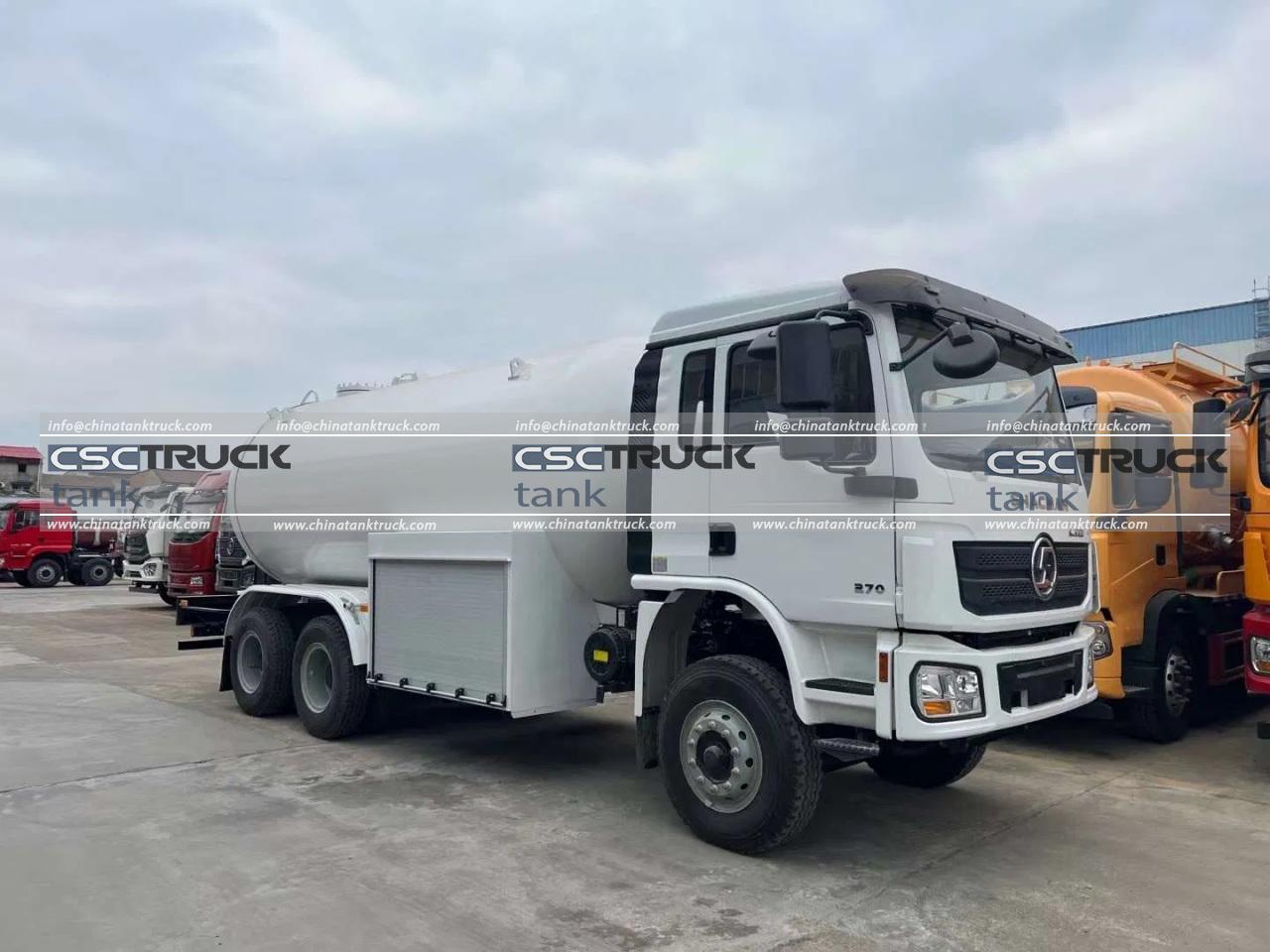
For instance, CSCTRUCK China Tank Truck’s LPG bobtail trucks using SHACMAN chassis can reach capacities up to 24 CBM, making them suitable for large-scale industrial distribution networks.

6. Applications Across Industrial and Residential Networks
Propane tank trucks serve a wide range of industries and communities. Their versatility allows them to adapt to different distribution scenarios:
Industrial Use
Factories rely on LPG for heating furnaces, metal processing, chemical production, and power generation.
Residential Supply
Urban and rural households depend on LPG for cooking and heating, especially in regions without pipeline gas infrastructure.
Commercial Distribution
Gas stations, hotels, and catering businesses use LPG for daily operations, requiring consistent and reliable delivery systems.
Remote and Rural Supply
In isolated regions, propane tank trucks act as the primary source of clean energy delivery.
7. Environmental and Economic Advantages
Compared to coal and diesel-based energy systems, LPG offers a cleaner combustion profile with lower carbon emissions. Propane tank trucks contribute to environmental sustainability by enabling wider adoption of LPG as a transitional fuel.
Economic benefits include:
- Reduced infrastructure investment compared to pipelines
- Lower transportation cost per energy unit
- Flexible routing and delivery scheduling
- Scalable supply for growing demand areas
8. CSCTRUCK’s Contribution to Global LPG Logistics
CSCTRUCK China Tank Truck plays a significant role in global LPG logistics by providing customized propane tank trucks for different markets. The company offers:
- Multiple tank capacities (5 CBM to 36 CBM and beyond)
- Custom chassis selection based on regional requirements
- International safety compliance design
- Mobile gas station integration options
With strong manufacturing capability and export experience, CSCTRUCK China Tank Truck supports LPG infrastructure development in Africa, Asia, and other emerging markets, helping countries improve energy accessibility and industrial productivity.

Conclusion
Propane tank trucks are a vital component of modern energy distribution systems, ensuring safe, efficient, and flexible delivery of LPG across industrial and residential networks. With advanced engineering, strict safety systems, and multifunctional capabilities, these vehicles have become indispensable in global energy logistics.
Manufacturers like CSCTRUCK China Tank Truck continue to drive innovation in this sector by delivering high-performance LPG transport solutions that meet international standards. As demand for cleaner energy grows worldwide, propane tank trucks will remain a cornerstone of sustainable fuel distribution infrastructure.
