

In the late 1940s, World War II had come to an end. Europe, long shrouded in the gloom of war, welcomed a new dawn, with all industries entering a period of rapid development. In France, large-scale infrastructure projects created a growing demand for heavy-duty vehicles. The leading French commercial vehicle manufacturer at the time—Bernard—did not miss this opportunity. Based on their CA6 model, they developed a wide range of vehicles, including dump trucks, box trucks, and more.

During this same period, the French oil transport company Becquet Transport also entered a phase of business expansion. To support this, the company ordered 9 large fuel tanker trucks based on the Bernard CA6 model. However, the CA6 had structural design limitations typical of its era: it featured a long hood, with a small, narrow cab mounted behind it, creating massive blind spots. For a fuel tanker, this was absolutely unacceptable.

Instead of settling for the status quo, Becquet Transport sought innovation. To minimize the blind spots, they turned to truck body specialist Carrosserie Desoil, a company known for cab modifications. On the CA6 tanker, Carrosserie Desoil removed the original cab entirely and installed a new semi-circular cab, resulting in the quirky-looking design shown above.
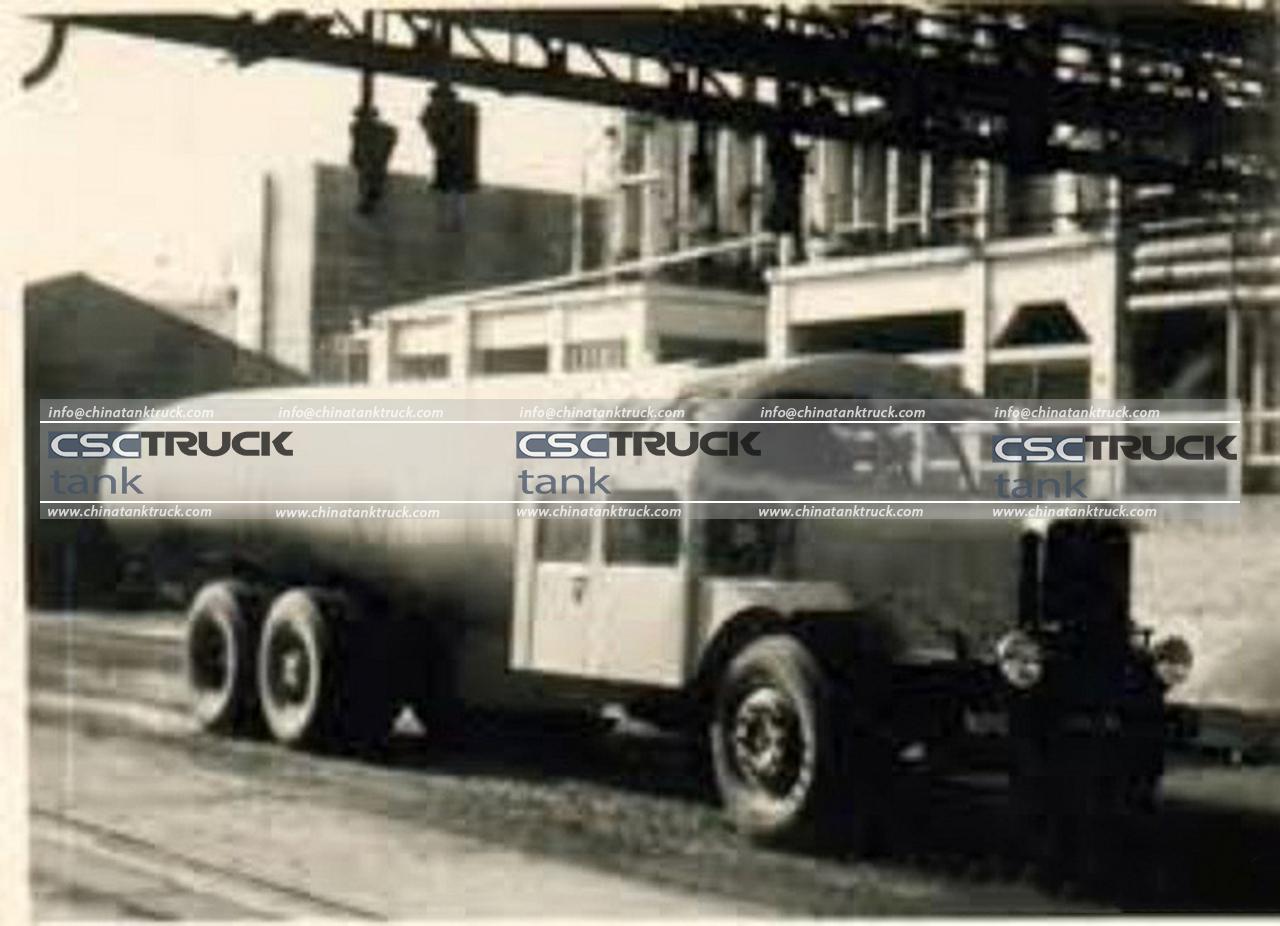
The new cab had a total of 15 windows: 4 at the front, 6 on the left side, and 5 on the right side—possibly making it one of the trucks with the most windows in the world. This abundance of glass practically eliminated front blind spots, especially the 2 small windows placed just above the wheel arches, which gave the driver a clear view of the road immediately ahead.

Designers said the inspiration for this cab came from bomber aircraft bombardier stations, where bomb-aimers needed clear visibility of ground targets to release bombs. For the same reason, many bombers featured glass-nosed cockpits. Even the navigator’s compartment on the modern Ilyushin Il-76 transport aircraft follows a similar design philosophy. Interesting? Absolutely.
As a side note, Bernard was founded in 1923 and went bankrupt in 1967. At its peak, it was one of France’s largest truck manufacturers, producing classics such as the TDA series.
Rear Engine, Front Door — The Unconventional Thompson-BP Autotanker

After looking at the heavily modified Bernard CA6, let’s move on to something even more unusual: the Thompson-BP Autotanker.
In the late 1950s, oil giant BP was expanding and upgrading its trucking fleet. After research, BP concluded that traditional fuel tankers were far too heavy, structurally cumbersome, and had poor payload capacity. Blind spot problems also made them unsafe. BP, therefore, turned to Thompson Bros, asking them to design a tailor-made tanker.

The new tanker truck adopted a rear-engine layout, using a Leyland O.680 engine—a 200 hp, 11-liter diesel unit with radiator and auxiliaries mounted at the rear. The engine was paired with a 4-speed gearbox driving a tandem rear axle setup, giving it an 8×4 configuration. Doesn’t that sound like an airport fire truck?
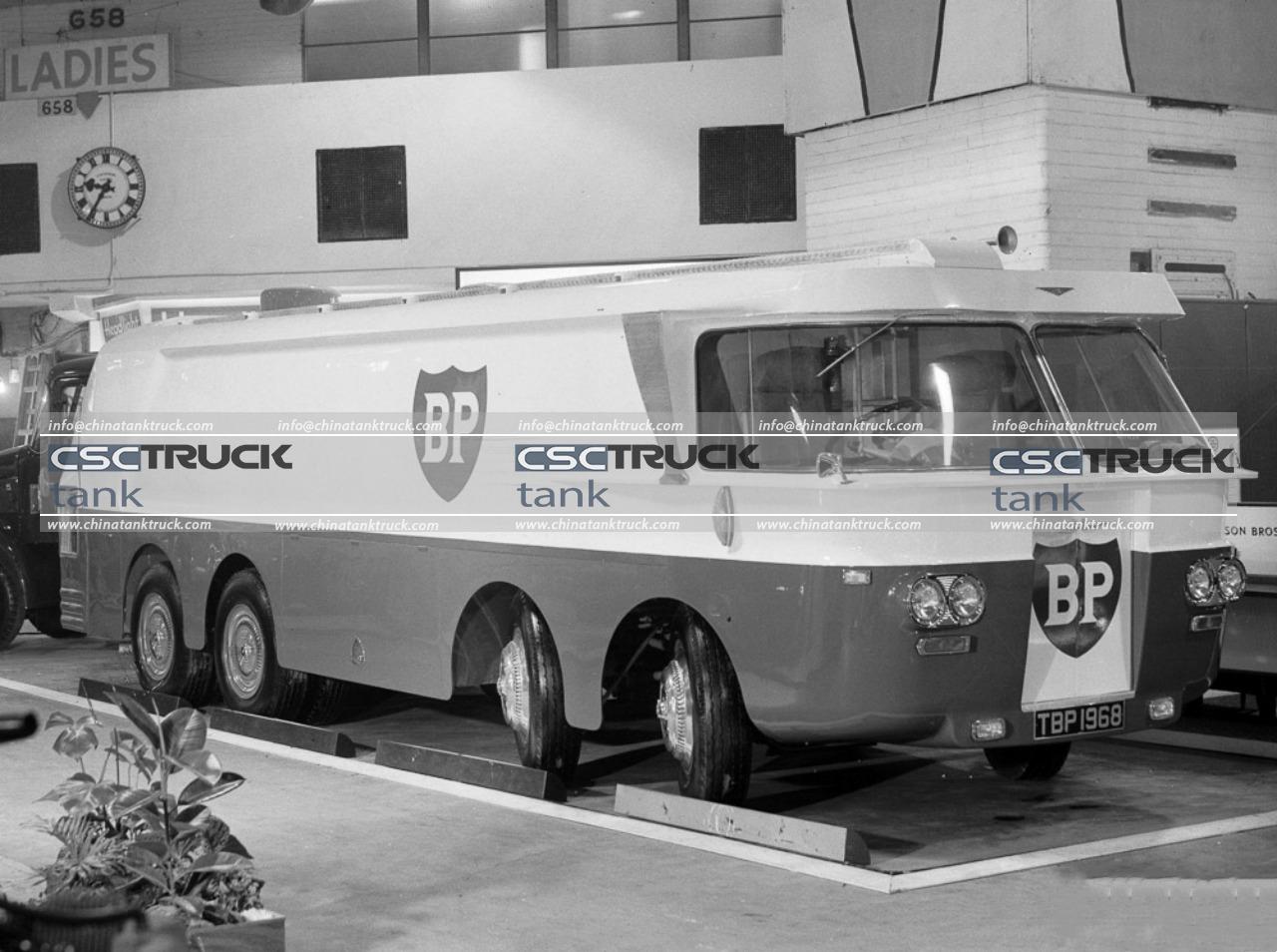
For the superstructure, Thompson Bros pulled off another clever idea: they integrated the tanker and cab into a single all-aluminum structure. This drastically reduced the curb weight to just about 7 tons. With a GVW of 24 tons and a tank capacity of 4,000 gallons, payload capacity was greatly improved over earlier designs, perfectly meeting BP’s requirements.
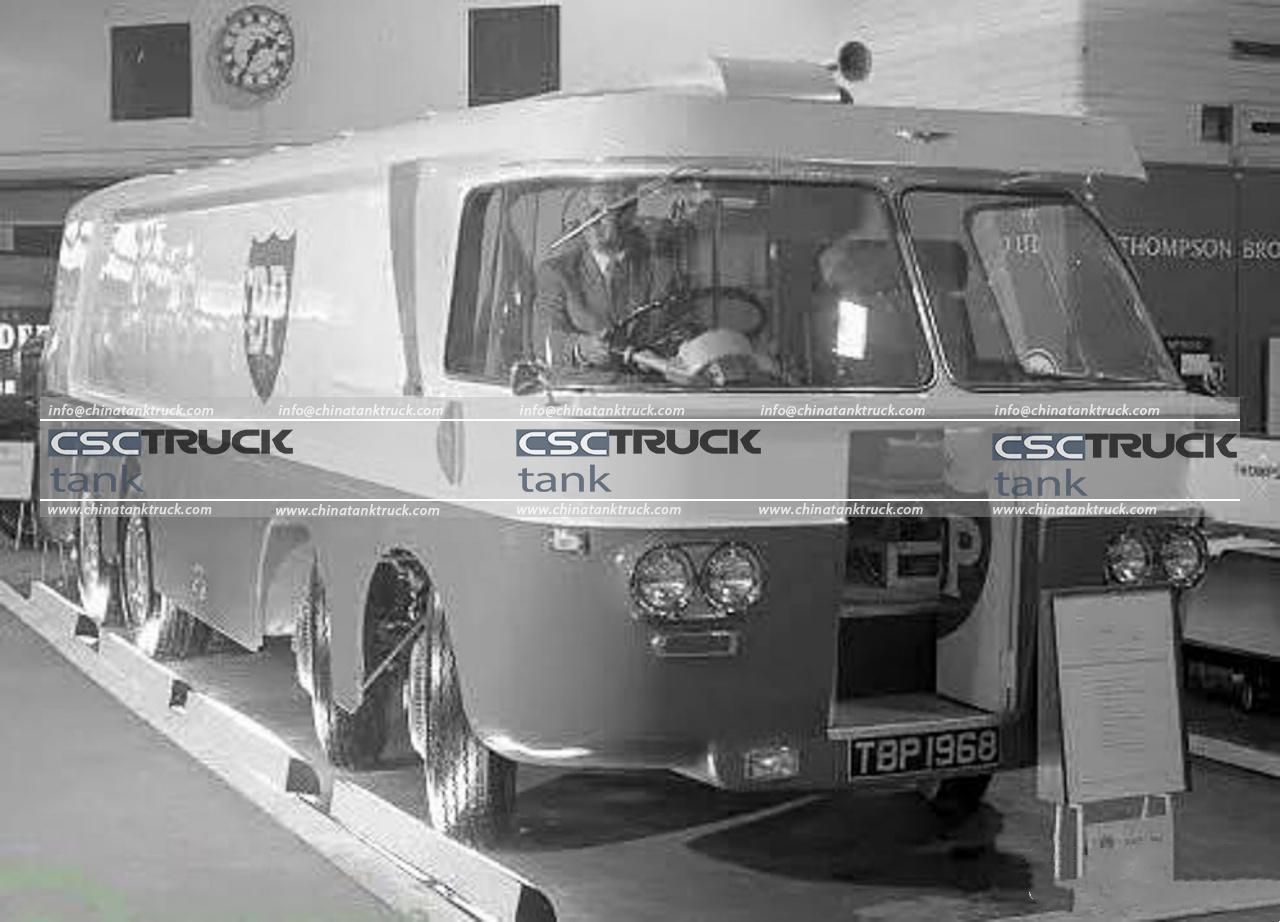
The windshield featured a large curved panoramic design for excellent visibility. The British engineers also designed a system of reflective mirrors that projected outside views into the cab through multiple angled surfaces. To preserve the integrity of the all-aluminum body, the vehicle’s doors were uniquely placed beneath the windshield in a forward-facing, double-door configuration—a very striking touch.
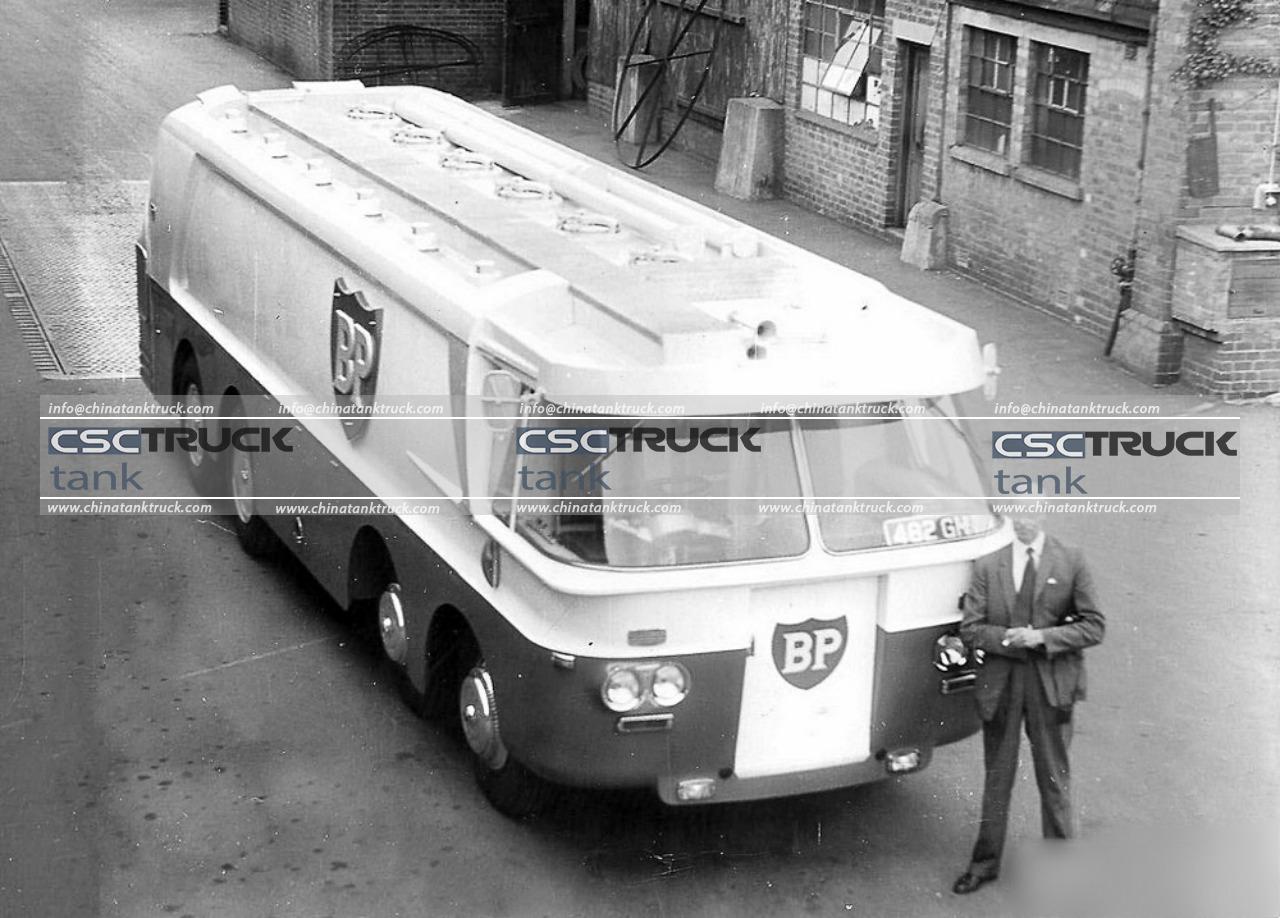
When the Thompson-BP Autotanker debuted, it caused a sensation. Its revolutionary design and impressive payload left a strong impression, winning significant public attention. It wasn’t just popular in the UK; it even toured countries like Denmark, drawing cheers wherever it went. Unfortunately, the vehicle never entered mass production. Only a single prototype was built, and its whereabouts remain unknown.