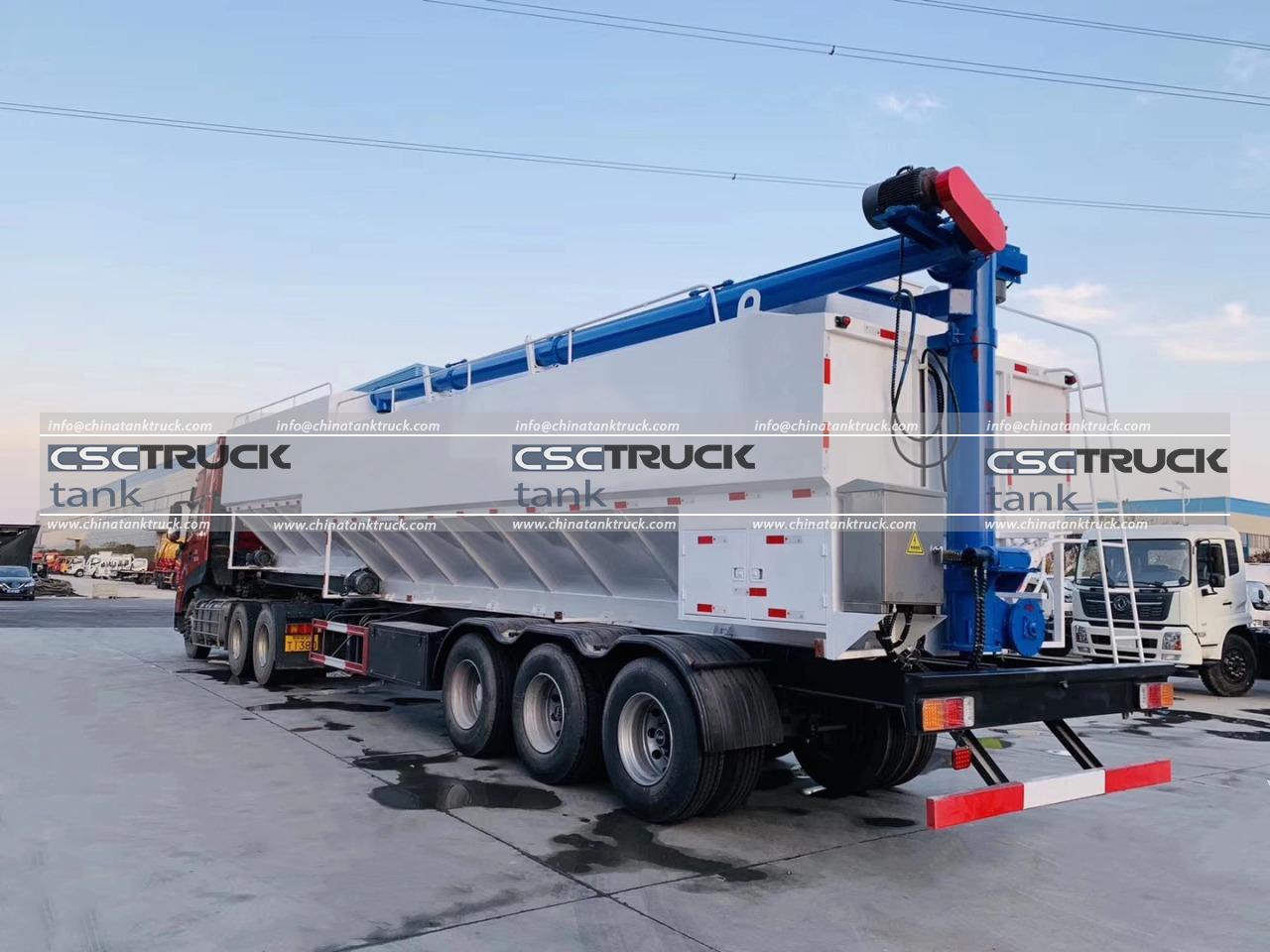

Pneumatic tank trucks are the workhorses of bulk dry-material logistics: Moving cement, fly ash, lime, grain, plastic pellets, and countless powders from point A to point B with speed and minimal manual handling. Users — from plant operators and haulers to contractors and maintenance teams — have a lot to say about how these rigs perform in the real world. This article gathers common feedback, highlights strengths and pain points, and translates those insights into practical recommendations for buyers, fleet managers, and manufacturers.
What users like: speed, cleanliness, and reduced labor
One of the most consistent positives in user feedback is the pneumatic truck’s ability to unload quickly and cleanly. Compared with bagged or manual transfers, pneumatic discharge often reduces unloading time dramatically and eliminates much of the dust and spillage that create downtime and cleanup costs. Operators praise the sealed transfer systems and controlled airflows that keep material contained during transfer — especially important on urban job sites and food-grade material hauls where contamination or cleanup fines are a concern.
Labor savings are another big win. Many users report that a single operator can handle loading and unloading tasks that used to require multiple workers. This not only reduces direct labor costs but also simplifies scheduling and reduces safety risk from manual handling.

Performance in different materials
Performance varies with material properties. Free-flowing powders like cement and talc generally move easily, producing fast cycle times and near-empty tanks after discharge. Finer or cohesive materials (e.g., some types of lime, hydrated cement, or sulfated ash) present more challenges. Users note that these materials can pack, bridge, or cling to tank walls, increasing cleaning time and requiring mechanical aids or higher-pressure blasts to fully discharge.
Grain and food products bring different priorities: Hygiene and gentle handling. Users hauling food-grade powders emphasize smooth interior linings, minimal turbulence, and corrosion-resistant materials. Plastic pellets and heavier granules require strong piping and robust blowers to maintain sufficient air velocity without damaging the product.
Reliability and downtime: what’s breaking and why
Common failure points reported by fleet mechanics include air compressors, seals and gaskets, discharge valves, and wear from abrasive materials. Air system failures (compressor clutches, belts, or control valves) are singled out because a pneumatic truck without air is effectively useless. Many users have experienced costly delays when compressors overheat or control systems fail during peak demand.
Wear in piping and valves is another frequent complaint. Abrasive materials erode internal surfaces, leading to leaks, reduced airflow efficiency, and safety hazards. Users recommend hard-facing critical wear areas or installing replaceable wear-liners to save maintenance time and cost.
Electrical and sensor reliability is an emerging area of concern. Modern trucks often include pressure sensors, load indicators, and telematics; when these sensors fail or provide false readings, operators can misjudge load status and damage equipment. Robust sensor selection, good wiring protection, and redundancy where possible help reduce these issues.

Ergonomics and operator experience
Operators consistently highlight the importance of intuitive controls and easy access for routine tasks. Problems crop up when control panels are poorly labeled, hoses are hard to reach, or connection points require awkward positions to link to plant hookups. Small design choices — fold-out platforms, well-lit control boxes, and quick-release couplings — make a major difference in daily efficiency and operator satisfaction.
Users also praise trucks with well-designed housing storage solutions. Tangled hoses or improperly stored fittings add significant time to each job and increase wear.
Environmental and safety considerations
Dust control and emissions are top-of-mind. Users report that well-sealed loading and discharge systems, coupled with dust collectors and secondary containment, greatly reduce complaints and regulatory risk. Additionally, many companies now expect particulate capture systems as standard equipment, especially when operating in populated areas.
Safety-wise, failures in pressure relief systems, improper grounding (important for combustible dusts), and inadequate operator training are common causes of incidents. Users recommend clear labeling of hazard zones, regular checks of pressure relief valves, and enforced grounding protocols for non-conductive materials.

Technology and telematics: What helps
Telematics and process monitoring are increasingly appreciated. Fleet managers value GPS tracking combined with real-time diagnostics to prevent breakdowns and optimize routes. Pressure and flow sensors that feed into mobile dashboards allow supervisors to detect partial blockages before they become full-scale problems. Users also like load weighing systems that give accurate payload data — useful for billing and regulatory compliance.
However, users caution that complex electronic systems must be simple to interpret and rugged enough for the jobsite. Overly complicated interfaces or cloud-only diagnostics that fail when cellular service is poor are common frustrations.
Maintenance and cost of ownership
Total cost of ownership concerns dominate when users evaluate pneumatic trucks. Key factors include compressor maintenance, wear-part replacement, and fuel usage for auxiliary systems. Owners appreciate designs that facilitate fast, tool-free access to service points and incorporate modular components that can be swapped in the field.
Preventive maintenance schedules that include frequent inspections of seals, wear liners, and compressor performance are commonly cited as the best way to reduce unscheduled downtime. Users also recommend stocking commonly replaced items — gaskets, small valves, and hose couplings — at each depot.

User-driven improvement ideas
From the user community, several practical improvement ideas stand out:
- Redundant critical systems: Dual compressors or backup power for blowers minimize single-point failures.
- Replaceable wear liners and hard-facing: Make abrasive-wear parts modular and inexpensive to replace.
- Improved dust capture: Integrate on-board dust collectors or secondary capture points for high-dust jobs.
- Simpler, rugged controls: Use large, weather-resistant buttons and clear LED indicators; Avoid deep menu trees.
- Standardized couplings and hoses: Reduce time lost to incompatible fittings; Use universal quick-disconnects when possible.
- Better sensor redundancy and diagnostics: Pair sensors with cross-checks to reduce false positives/negatives.
- Training modules: Offer operator certification for safe loading/unloading and emergency procedures.
Conclusion: balancing performance, uptime, and total cost
Pneumatic tank trucks deliver major advantages in speed, cleanliness, and labor efficiency for bulk material handling — but the user experience is shaped by a handful of recurring issues: Air system reliability, wear from abrasive materials, dust control, and ergonomics. Manufacturers and fleet operators who prioritize robust, service-friendly designs, integrate sensible telematics, and listen to operator feedback are the ones who get the best uptime and lowest lifecycle costs.
For buyers, the practical takeaway is to prioritize trucks that offer easy maintenance access, proven compressor systems, replaceable wear parts, and good documentation. For operators, focusing on preventive maintenance, proper training, and smart loading/unloading workflows will yield immediate gains in safety and productivity. When manufacturers and users collaborate — sharing field feedback and incremental design improvements — pneumatic tank trucks become not just transport equipment, but a finely tuned part of a lean, safe, and efficient bulk-material supply chain.