
Pneumatic tank trailers play a crucial role in modern bulk logistics, especially for transporting dry powders and granulated materials such as cement, flour, fly ash, and plastic pellets. Their sealed structure and compressed-air unloading system make them highly efficient, clean, and cost-effective compared to traditional bagged transport.
Among global manufacturers, CSCTRUCK China Tank Truck has established itself as a reliable supplier of pneumatic tank trailers, offering a wide range of configurations from compact units to high-capacity semi-trailers. Understanding the capacity range of these trailers is essential for fleet operators, logistics planners, and buyers aiming to optimize payload efficiency and comply with transportation regulations.
1. Understanding Pneumatic Tank Trailer Capacity
Capacity in pneumatic tank trailers is typically measured in two ways:
- Volume (cubic meters or cubic feet) – indicates how much space is available inside the tank.
- Payload (tons) – indicates the maximum weight the trailer can legally carry.
These 2 metrics are closely related but not identical. The actual payload depends heavily on the density of the material being transported. For example, cement is much denser than flour, meaning a trailer may reach its weight limit before its volume is fully utilized.
Most pneumatic tank trailers fall within a well-defined industry range, which we will explore in detail.
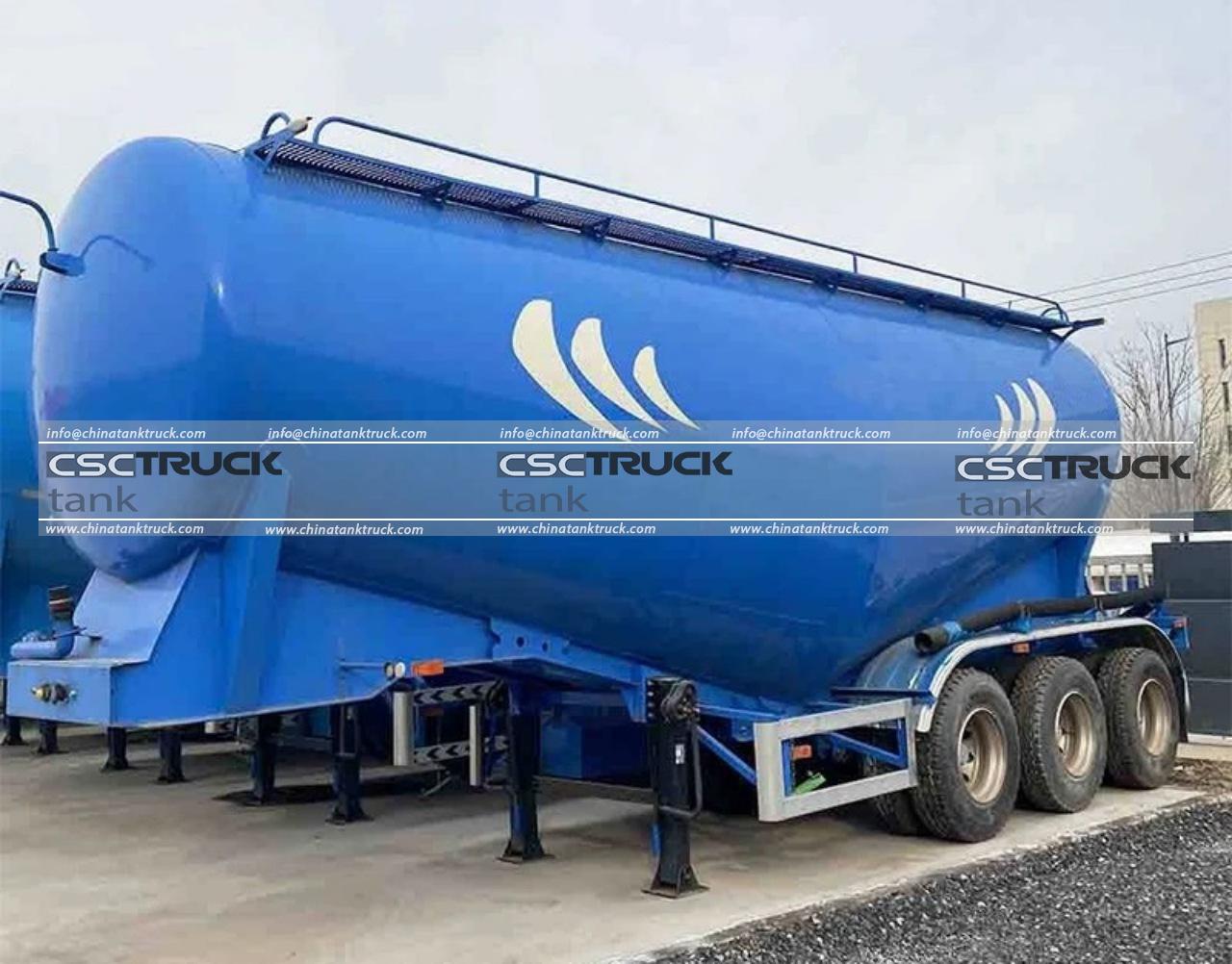
2. Typical Capacity Range by Trailer Size
Small Capacity Pneumatic Trailers
Small pneumatic tank trailers are generally designed for lighter loads or specialized applications.
- Volume: 1,000–1,500 cubic feet (≈28–42 m³)
- Payload: 18–20 tons
These trailers are commonly used in:
- Food-grade transport (flour, sugar, starch)
- Urban delivery routes with weight restrictions
- Smaller construction projects
Their compact size offers better maneuverability, making them suitable for confined job sites or city environments.
Medium Capacity Pneumatic Trailers
Medium-sized trailers are the most widely used across industries due to their balance between capacity and flexibility.
- Volume: 1,500–2,500 cubic feet (≈42–70 m³)
- Payload: 22–25 tons
Typical applications include:
- Cement and fly ash transport
- Plastic pellet logistics
- Agricultural bulk materials
These trailers often come in tandem or tridem axle configurations, allowing for better weight distribution and compliance with road regulations.
Large Capacity Pneumatic Trailers
Large pneumatic tank trailers are designed for high-volume, long-distance transport.
- Volume: 2,500+ cubic feet (≈70+ m³)
- Payload: 25–30 tons
However, it’s important to note that:
- Legal road weight limits often restrict payload before full volumetric capacity is reached.
- These trailers are best suited for low-density materials like plastic granules or feed.
3. Industry Standard Capacity Specifications
Modern pneumatic tank trailers typically follow standardized design ranges. According to industry specifications:
- Payload range: 20–40 tons
- Volume range: 28–47 m³ for common configurations
For example:
| Payload (tons) | Volume (m³) | Typical Length |
|---|---|---|
| 20 tons | 28–32 m³ | 35–40 ft |
| 30 tons | 36–42 m³ | 38–44 ft |
| 40 tons | 42–47 m³ | 40–45 ft |
These specifications highlight how trailer size increases with payload requirements, while still staying within road safety and regulatory limits.

4. Real-World Examples from CSCTRUCK China Tank Truck
CSCTRUCK China Tank Truck offers a wide range of pneumatic tank trailers that illustrate the practical capacity spectrum.
40 CBM Pneumatic Tank Trailer
- Volume: ~40 m³
- Suitable for cement, lime powder, and fly ash
- Compact design for regional transport
45 CBM Pneumatic Tank Trailer
- Volume: 45 m³
- Enhanced capacity for industrial bulk logistics
- Heavy-duty carbon steel construction
60 CBM High-Capacity Trailer
- Volume: 60 m³
- Payload: ~28.6 tons
- Multi-compartment design for diversified loads
These examples demonstrate how capacity can scale depending on operational needs, from mid-range to high-volume transport solutions.
5. Key Factors Affecting Capacity
While nominal capacity provides a guideline, actual performance depends on several critical factors:
1. Material Density
Different materials have varying densities:
- Cement: high density → lower volume utilization
- Flour: low density → full tank usage possible
This directly impacts how much weight can be loaded.
2. Trailer Construction Material
- Aluminum trailers: lighter, higher payload capacity
- Carbon steel trailers: stronger but heavier
A lighter trailer allows more of the legal weight limit to be used for cargo.
3. Axle Configuration
- Tandem, tridem, or quad axles affect load distribution
- More axles allow higher legal payloads
4. Legal Road Weight Limits
Government regulations often cap total vehicle weight, which may restrict payload regardless of tank size. Operators must always balance:
- Volume capacity
- Legal payload limits
5. Moisture Content
Moisture can significantly increase material weight. For example:
- Wet cement or sand becomes heavier
- This reduces the allowable load before reaching weight limits
6. Choosing the Right Capacity
Selecting the right pneumatic tank trailer depends on operational requirements:
For the Construction Industry
- Medium to large capacity (30–60 m³)
- Suitable for cement, fly ash, lime
For the Food Industry
- Smaller to medium capacity
- Emphasis on sanitary design and contamination control
For Plastics and Chemicals
- Large volume trailers
- Ideal for low-density materials like pellets
7. Advantages of Optimized Capacity
Choosing the correct capacity range offers several benefits:
- Improved efficiency: Fewer trips required
- Lower transportation cost: Higher payload per trip
- Reduced environmental impact: Fewer emissions
- Better compliance: Avoids overloading penalties
CSCTRUCK China Tank Truck’s engineering approach focuses on maximizing usable payload while maintaining safety and durability, making their trailers suitable for diverse global markets.

Conclusion
The capacity range of pneumatic tank trailers typically spans:
- Volume: 28 m³ to 70+ m³
- Payload: 20 to 40 tons
This range accommodates a wide variety of industries, from construction and agriculture to food processing and chemical transport.
However, capacity is not just about size—it is influenced by material density, trailer design, axle configuration, and legal constraints. By understanding these variables, operators can select the most efficient trailer for their needs.
With manufacturers like CSCTRUCK China Tank Truck offering versatile and high-performance models, businesses can confidently invest in pneumatic tank trailers that deliver optimal capacity, reliability, and long-term value.