
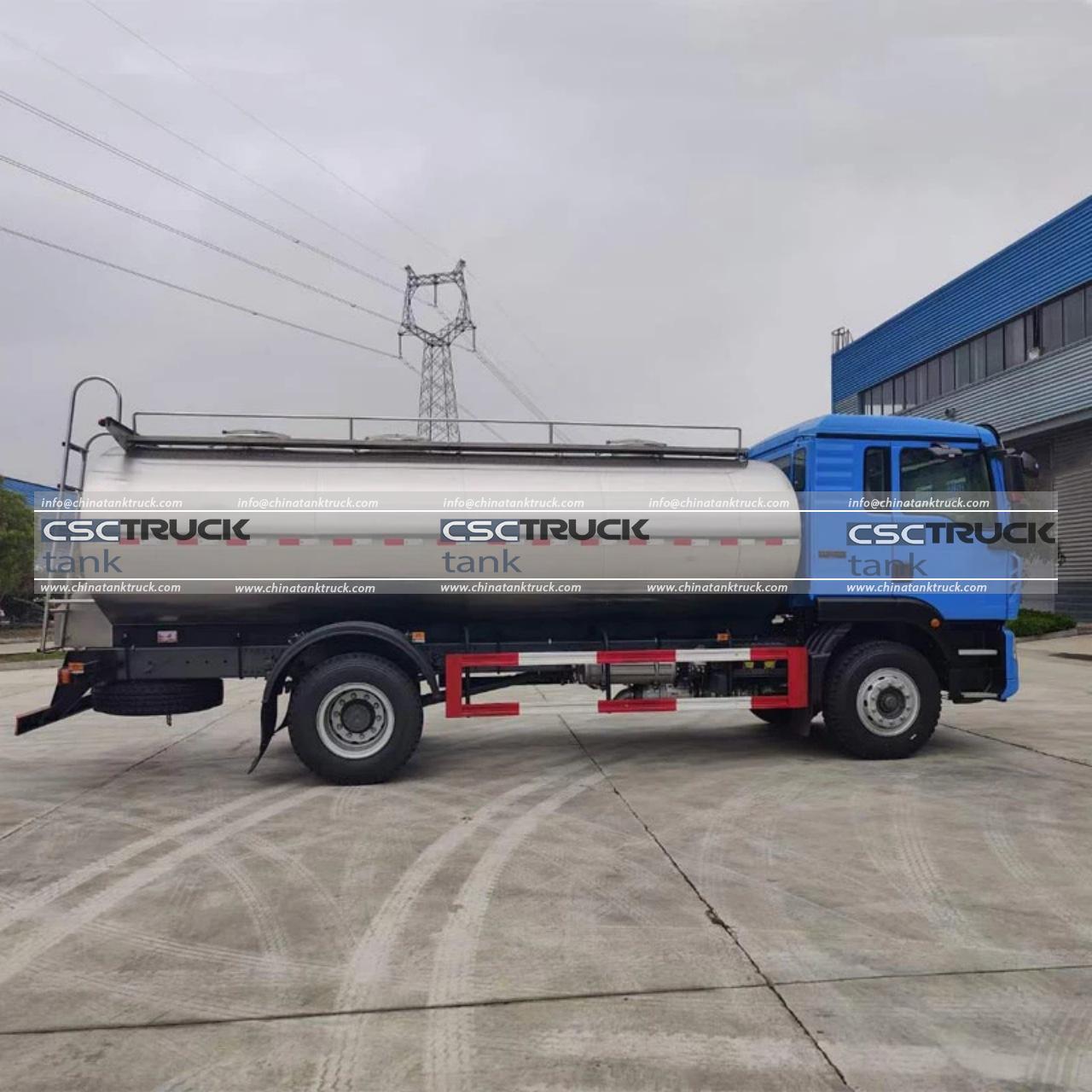
When purchasing a milk tank truck, one of the most important decisions is selecting the right stainless steel grade for the tank body. Among the most commonly used options are 304 stainless steel and 316 stainless steel. Both materials are widely recognized for food-contact applications, excellent hygiene, and corrosion resistance, but they are not identical in performance or cost.
For dairy transportation companies, choosing between 304 and 316 stainless steel depends on milk type, cleaning procedures, operating environment, service life expectations, and budget. This article explains the key differences and helps buyers determine which material is more suitable for their milk tank truck.
Introduction to CSCTRUCK China Tank Truck
CSCTRUCK China Tank Truck is a professional Chinese manufacturer specializing in various tank trucks and special-purpose commercial vehicles. Through CSCTRUCK China Tank Truck, customers can explore milk tank trucks, water tankers, fuel tank trucks, chemical tankers, LPG tank trucks, pneumatic tankers, and other customized transportation solutions.
CSCTRUCK China Tank Truck focuses on practical vehicle configurations, reliable tank materials, customized capacities, international export requirements, and factory-direct pricing. For dairy businesses, selecting the appropriate stainless steel grade is an essential part of designing a safe, durable, and cost-effective milk vehicle.

What Is the Difference Between 304 and 316 Stainless Steel?
Both 304 and 316 are austenitic stainless steels commonly used in food and beverage equipment. Their surfaces are non-porous, easy to clean, and resistant to many forms of corrosion.
The primary difference is chemical composition:
- 304 stainless steel: Mainly chromium and nickel, commonly known as the standard food-grade stainless steel.
- 316 stainless steel: Contains chromium, nickel, and approximately 2–3% molybdenum.
- Molybdenum: Improves resistance to pitting and crevice corrosion, especially when exposed to chlorides, salt, and aggressive cleaning chemicals.
In simple terms, 304 is the economical standard, while 316 provides enhanced corrosion resistance for more demanding environments.
304 Stainless Steel for Milk Tank Trucks
304 stainless steel is the most common choice for milk storage tanks and milk transportation equipment. It offers a strong balance of corrosion resistance, mechanical strength, weldability, availability, and affordability.
Fresh milk is generally not highly corrosive to food-grade stainless steel under normal transportation and cleaning conditions. Therefore, a properly manufactured 304 stainless steel tank is usually sufficient for transporting:
- Raw fresh milk
- Pasteurized milk
- Standard dairy products
- Milk collected from farms
- General food-grade liquid products
The major advantage of 304 is its cost-effectiveness. It allows buyers to obtain a hygienic and durable tank without paying the premium associated with 316 stainless steel. Industry references also identify AISI 304 as widely used in dairy equipment, including milk tankers.
For most ordinary milk collection and transportation operations, 304 stainless steel is a practical and reliable solution.

316 Stainless Steel for Milk Tank Trucks
316 stainless steel is designed for environments where greater corrosion resistance is required. Its molybdenum content makes it more resistant to chloride-induced pitting, crevice corrosion, and certain aggressive chemical conditions.
A 316 stainless steel milk tank truck may be preferable when the vehicle operates under demanding conditions, such as:
- Coastal or high-salt environments
- Frequent exposure to chloride-containing water
- Aggressive cleaning and sanitation chemicals
- High-frequency cleaning-in-place procedures
- Transportation of acidic or processed dairy products
- Long-term use where maximum corrosion resistance is important
Although fresh milk itself generally does not require 316, the cleaning environment and operating conditions may justify upgrading to this material. The difference between 304 and 316 is often more noticeable around welds, fittings, crevices, and areas exposed to chemical residues than during ordinary milk transportation.
304 vs. 316: Key Comparison
| Comparison Factor | 304 Stainless Steel | 316 Stainless Steel |
|---|---|---|
| Food-contact suitability | Excellent | Excellent |
| General corrosion resistance | Very good | Excellent |
| Chloride resistance | Moderate | Superior |
| Resistance to aggressive cleaners | Good under controlled conditions | Better |
| Surface hygiene | Excellent | Excellent |
| Weldability | Excellent | Excellent |
| Material availability | Very high | High |
| Initial purchase cost | Lower | Higher |
| Best application | Standard milk transportation | Harsh or highly demanding environments |
Both grades can provide hygienic food-contact surfaces when properly fabricated, polished, cleaned, and maintained. The material grade alone does not determine sanitary performance; surface finish, weld quality, tank design, and cleaning procedures are equally important.

Which Material Is More Corrosion-Resistant?
316 stainless steel is clearly superior in environments containing chlorides and aggressive chemicals. Chlorides can cause localized pitting corrosion, particularly when deposits remain on the tank surface or when cleaning water contains high salt concentrations.
For example, a milk tank truck operating near the sea may experience salt-laden air, while a vehicle cleaned frequently with unsuitable chemical solutions may face increased corrosion risk. In these conditions, 316 provides an additional layer of protection.
However, this does not mean 304 will quickly corrode during normal milk transportation. In a controlled dairy environment with proper cleaning and maintenance, 304 performs very well and remains the standard material for many milk tankers.
Which One Is Easier to Clean?
From a hygiene perspective, both 304 and 316 stainless steel are excellent choices. Both have smooth, non-porous surfaces that can be polished to reduce product residue and simplify sanitation.
The more important factors include:
- Internal surface roughness
- Weld finishing quality
- Tank drainage design
- Avoidance of dead corners
- Food-grade valves and fittings
- Proper cleaning temperature and chemicals
- Regular removal of milk residues
A poorly designed 316 tank may be less hygienic than a well-designed 304 tank. Therefore, buyers should evaluate the complete sanitary design rather than focusing only on the steel grade.

Cost Difference Between 304 and 316
The biggest disadvantage of 316 stainless steel is its higher purchase price. Its additional nickel and molybdenum content increases raw material costs, and the final tank price can be noticeably higher than an equivalent 304 model.
For businesses transporting ordinary fresh milk, selecting 316 may provide limited practical benefits compared with the additional investment. On the other hand, if corrosion-related repairs, downtime, or premature replacement would be expensive, the higher initial cost of 316 may be justified.
The decision should therefore consider total lifecycle cost, not just the initial purchase price.
When Should You Choose 304 Stainless Steel?
304 stainless steel is generally the better choice when:
- You transport fresh milk under normal conditions.
- The operating environment is inland and not highly saline.
- Cleaning chemicals are properly controlled.
- The tank is cleaned regularly and thoroughly.
- Your business prioritizes cost efficiency.
- You need a standard food-grade milk tanker for daily collection and delivery.
For most conventional milk tank trucks, 304 offers the best combination of hygiene, durability, availability, and price.
When Should You Choose 316 Stainless Steel?
316 stainless steel may be the better option when:
- The truck operates in coastal or humid areas.
- The cleaning process involves aggressive chemicals.
- Chloride exposure is frequent.
- The tank transports more corrosive dairy-related products.
- The customer requires premium material specifications.
- Long-term corrosion resistance is more important than initial cost.
It is especially useful for specialized dairy operations where the vehicle must withstand demanding sanitation or environmental conditions.
Final Verdict: Is 304 or 316 Better for Milk Tank Trucks?
There is no universal winner between 304 and 316 stainless steel. 304 is usually the best choice for standard milk transportation, while 316 is better for harsh environments and demanding cleaning conditions.
For ordinary fresh milk collection, a well-designed 304 stainless steel milk tank truck provides excellent food safety, corrosion resistance, and cost performance. For coastal operations, aggressive sanitation environments, or customers seeking maximum corrosion protection, 316 stainless steel offers greater long-term security.
When ordering a milk tank truck from CSCTRUCK China Tank Truck, buyers should discuss the milk type, operating climate, cleaning chemicals, tank capacity, internal finish, and material certification with the manufacturer. Selecting the correct stainless steel grade ensures reliable dairy transportation, lower maintenance costs, and a longer vehicle service life.