
Pneumatic powder tankers, also known as pneumatic bulk tankers, dry bulk tank trucks, or powder tanker trailers, are specialized vehicles designed to transport and discharge dry, free-flowing materials such as cement, fly ash, lime, flour, plastic pellets, minerals, and industrial powders. Unlike conventional cargo trucks, they use compressed air to fluidize and convey bulk materials through pipelines into silos or storage systems.
Choosing the right pneumatic powder tanker is an important investment decision. Tank capacity alone should not determine your purchase. The tank material, compressor, discharge system, chassis, payload, safety equipment, and compatibility with your operating environment can all affect long-term performance and operating costs.
CSCTRUCK China Tank Truck is a China-based manufacturer specializing in tank trucks, pneumatic bulk transport vehicles, and other specialized transportation equipment. Its pneumatic tank truck solutions are designed for applications involving construction materials, agriculture, food processing, chemicals, minerals, and other dry bulk products. Depending on the application, configurations can include high-strength carbon steel or aluminum tanks, pneumatic unloading systems, aeration components, and different compressor arrangements.
Before placing an order, consider these 10 essential tips.
1. Identify the Powder You Need to Transport
The first step is to clearly define your cargo. Different powders have different densities, flow characteristics, moisture sensitivity, abrasiveness, and cleanliness requirements.
Common pneumatic tanker cargoes include cement, fly ash, lime, silica, flour, plastic pellets, soda ash, minerals, and other powdered or granular materials.
For example, cement transportation emphasizes moisture protection and efficient discharge, while food-grade powders may require stricter hygiene and contamination controls. Abrasive minerals may require more wear-resistant components.
Before buying, provide the manufacturer with information about the material density, particle size, moisture sensitivity, temperature, abrasiveness, and required discharge method.

2. Choose the Right Tank Capacity and Payload
A larger tank does not automatically mean a better tanker. You need to balance volume, material density, legal axle loads, road conditions, and the truck’s gross vehicle weight.
Pneumatic bulk tankers can have significantly different payload capacities depending on their tank volume, chassis configuration, and the density of the cargo. Typical pneumatic bulk transport vehicles may carry roughly 18–40 tons, while specialized configurations can vary outside this range.
Think about your actual transportation routes and loading facilities. A tanker that is too large may exceed local weight restrictions or operate inefficiently when partially loaded, while a tanker that is too small may require unnecessary trips.
Choose capacity according to actual payload requirements rather than tank volume alone.
3. Pay Close Attention to Tank Material
The tank body is one of the most important components of a pneumatic powder tanker.
Common materials include carbon steel, aluminum alloy, and stainless steel. Carbon steel offers strength and cost efficiency, while aluminum can reduce vehicle weight and increase available payload. Stainless steel can be advantageous for applications where corrosion resistance and cleanliness are especially important.
You should also consider the internal structure, welding quality, surface treatment, corrosion protection, and tank design.
For heavy-duty cement or mineral transport, a robust carbon-steel construction may be appropriate. For food-grade or corrosive applications, a different material or internal finish may be necessary.

4. Select the Compressor Based on Unloading Requirements
The compressor is effectively the heart of a pneumatic powder tanker. It generates the compressed air needed to fluidize and transport the material from the tank to the receiving silo.
When comparing compressors, examine:
- Air delivery capacity
- Working pressure
- Compressor type
- Operating speed
- Power requirement
- Cooling system
- Maintenance requirements
- Compatibility with the truck chassis
PTO-driven compressors are widely used because they can obtain power from the truck engine through the power take-off system. Independent compressor systems may also be suitable for particular applications.
Do not select a compressor simply because it has a higher rated output. The compressor should be properly matched to tank capacity, material characteristics, discharge distance, and required unloading speed.
5. Check the Pneumatic Discharge System
A good pneumatic tanker should provide smooth and reliable material discharge. The system generally includes air pipes, aeration or fluidization devices, valves, pressure gauges, and discharge pipelines.
The discharge pipe is particularly important because its diameter influences pressure loss, conveying efficiency, unloading speed, and compatibility with the customer’s receiving system.
Before ordering, confirm:
- Discharge pipe diameter
- Number and location of outlets
- Hose specifications
- Valve types
- Connection standards
- Required unloading distance
- Compatibility with the receiving silo
If the tanker cannot connect easily to your existing silo or conveying system, even a high-quality vehicle may not deliver the expected productivity.
6. Consider Unloading Speed and Total Cycle Time
Unloading efficiency directly affects fleet productivity. A tanker that spends excessive time at each delivery point can increase labor costs, fuel consumption, and transportation expenses.
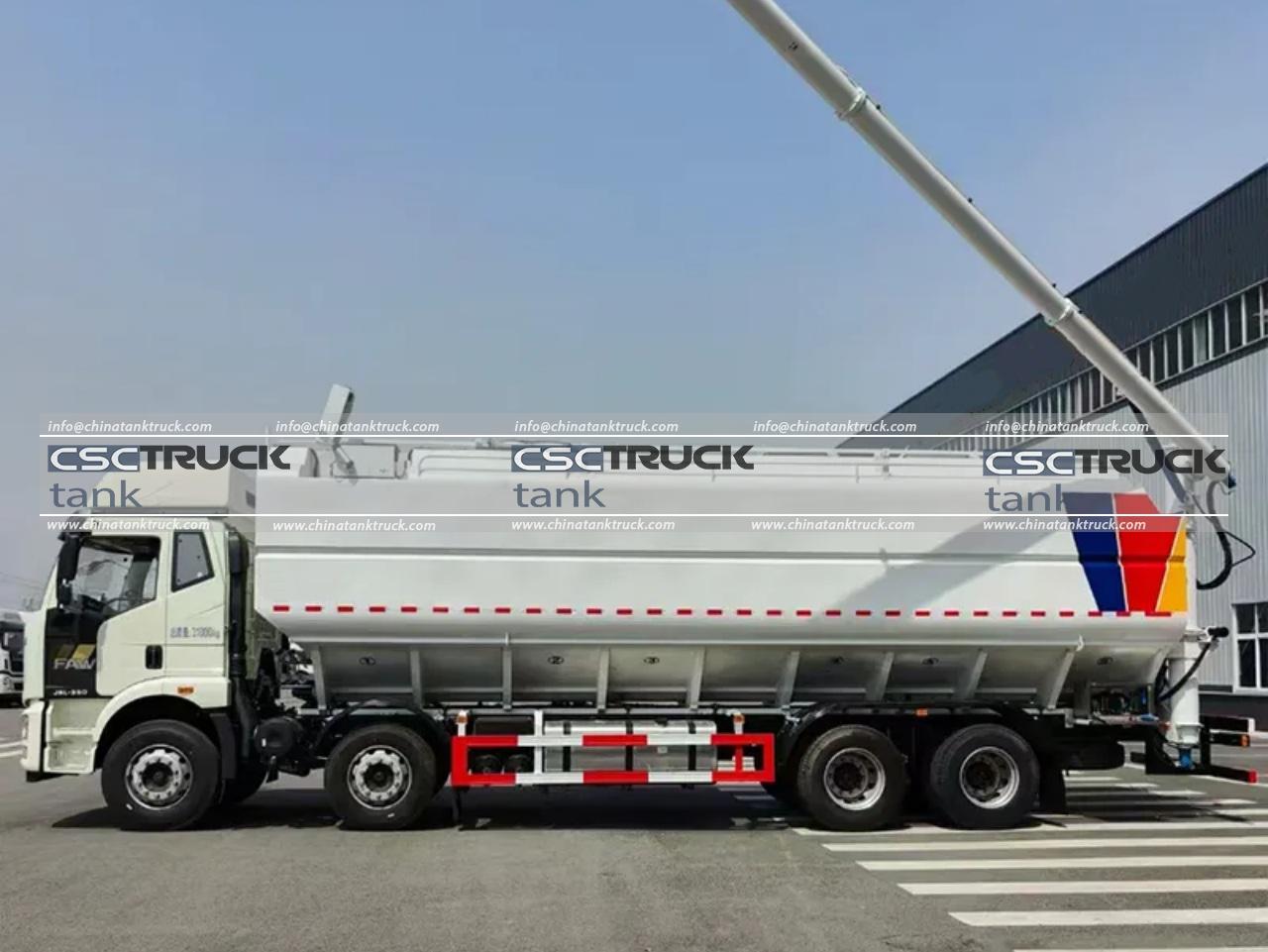
Some pneumatic cement tanker configurations can achieve unloading rates around 1.0–2.0 tons per minute, although actual performance depends on material properties, compressor configuration, pipeline layout, and operating conditions.
Instead of asking only, “How fast can it unload?” consider the entire delivery cycle:
Loading + transportation + positioning + unloading + cleaning + return trip.
A slightly more expensive tanker that significantly reduces unloading time may provide a better return on investment over its service life.
7. Check Safety Equipment and Pressure Protection
Because pneumatic powder tankers operate with pressurized air, safety must be a priority.
Important safety components can include pressure relief valves, pressure gauges, safety valves, properly rated pipelines, secure manhole covers, and reliable seals. Pressure protection is especially important because excessive internal pressure can damage equipment and create serious safety risks.
Ask the manufacturer about:
- Tank design and working pressure
- Pressure relief protection
- Safety valve specifications
- Pressure testing
- Welding inspection
- Emergency shutdown procedures
- Applicable local regulations and certifications
Never purchase a pressurized tanker based solely on appearance or price.

8. Match the Chassis to Your Operating Environment
For a complete pneumatic tank truck, the chassis is just as important as the tank.
Consider the road conditions, terrain, climate, maximum legal weight, service network, fuel availability, and spare-parts supply in your country.
For example, customers operating in developing regions may prioritize simple mechanical structures and easily available parts, while fleet operators in highly regulated markets may place greater emphasis on emissions compliance, safety certification, and advanced electronic systems.
If purchasing a semi-trailer, also evaluate the tractor compatibility, axle configuration, suspension, kingpin specifications, braking system, and overall dimensions.
9. Evaluate Maintenance and Spare Parts Availability
A pneumatic tanker is a working machine, not simply a storage container. The compressor, valves, hoses, seals, aeration components, and discharge equipment require regular inspection and maintenance.
The air compressor deserves particular attention because a compressor failure can stop the unloading operation completely. Regular servicing, filter replacement, lubrication, belt inspection, and contamination checks can help maintain reliable performance.
Before purchasing, ask the supplier whether commonly replaced parts are readily available. You should also request maintenance schedules, operating manuals, spare-parts lists, and technical support information.
A low purchase price is not necessarily economical if spare parts are expensive or difficult to obtain.

10. Compare the Manufacturer, Customization, and After-Sales Support
Finally, evaluate the manufacturer rather than comparing only vehicle prices.
A reliable supplier should be able to provide detailed specifications, engineering support, production information, quality documentation, and after-sales assistance. Customization can also be important because pneumatic tankers may need different capacities, materials, chassis brands, compressor systems, discharge configurations, and connections depending on the market and cargo.
CSCTRUCK China Tank Truck provides pneumatic tank trucks and dry bulk transport solutions for international customers, with configurations designed around different cargoes and operating requirements. Its product range covers specialized tank trucks and trailers for industries including construction, agriculture, chemicals, and food processing.
When requesting a quotation, compare the complete specification and lifecycle cost, including the truck or trailer, pneumatic system, safety equipment, spare parts, shipping, warranty, and technical support.
Conclusion
Purchasing a pneumatic powder tanker is a major investment, and the right choice depends on much more than tank capacity or initial price. Start by identifying your powder characteristics, then evaluate payload, tank material, compressor performance, discharge equipment, safety systems, chassis compatibility, maintenance requirements, and manufacturer support.
A well-matched pneumatic tanker can improve unloading efficiency, reduce product losses, protect bulk materials from contamination and moisture, and lower the cost of transporting dry powders.
Whether you need a pneumatic cement tanker, dry bulk tanker, powder tanker truck, or pneumatic tank trailer, careful evaluation before purchase will help ensure that your equipment performs reliably for years. By working with an experienced manufacturer such as CSCTRUCK China Tank Truck and specifying the vehicle around your actual operating requirements, you can make a more practical and cost-effective investment.