
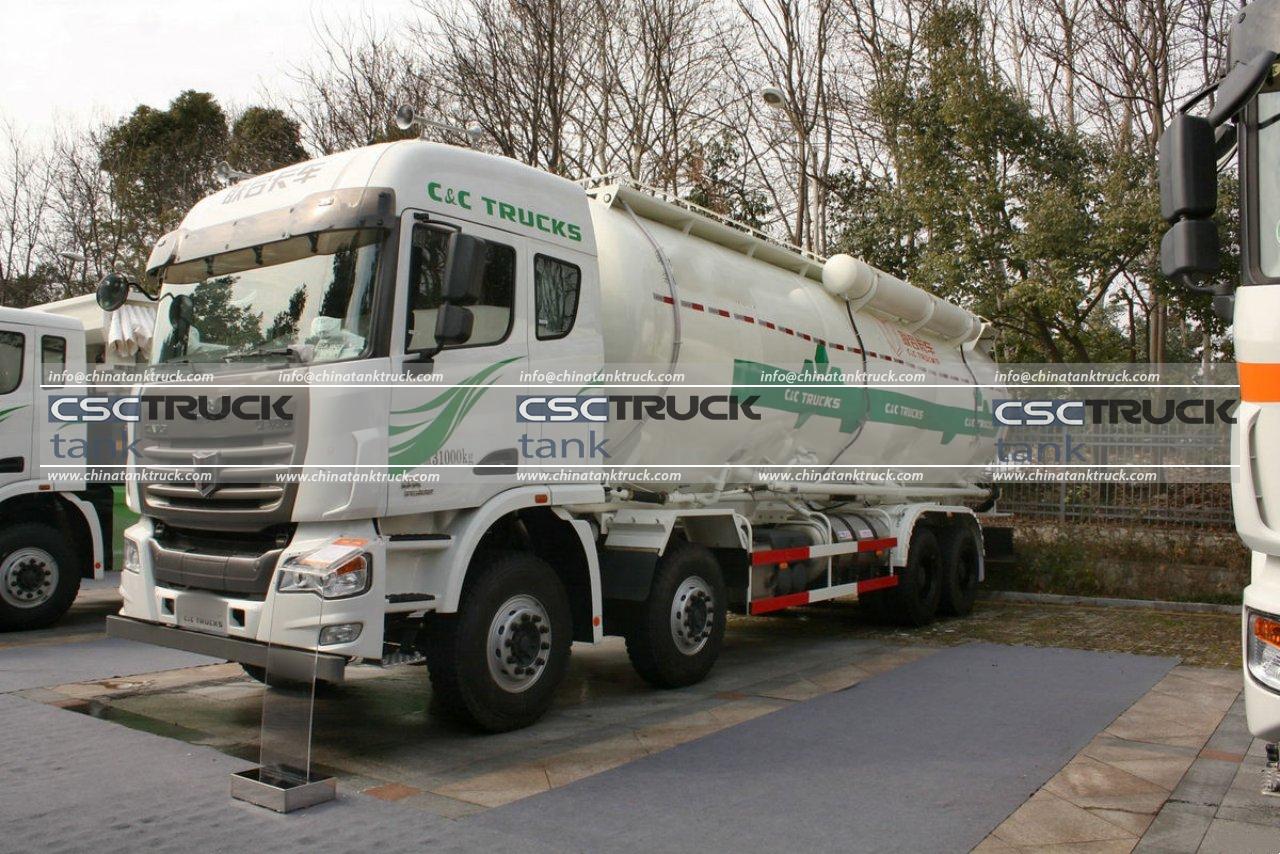
A cement bulker, also called a cement tanker, pneumatic dry bulk trailer, or bulk cement transport trailer, is a specialized vehicle designed for the safe and efficient transportation of powdered materials such as cement, fly ash, lime powder, and other dry bulk construction materials. These trailers play a crucial role in the modern construction and infrastructure sectors, enabling the delivery of large volumes of cement in a clean, sealed, and contamination-free manner. Compared to traditional bagged cement transport, cement bulkers offer superior efficiency, faster unloading times, and reduced product loss, making them the preferred choice for large-scale concrete and construction operations.
This article explains what a cement bulker is, explores its common transport uses, and provides essential preventive maintenance tips to ensure safety, reliability, and long service life.
What Is a Cement Bulker?
A cement bulker is a closed, pressurized tank trailer equipped with a pneumatic unloading system. It transports cement in bulk powder form and unloads it by using compressed air to fluidize the cement and push it out through pipelines into silos or storage tanks.
Key Components of a Cement Bulker
- Tank Body
Usually constructed from carbon steel or aluminum, the tank is designed with compartments and sloped cones to ensure smooth material flow during unloading. - Pneumatic System
Includes:- Air compressor
- Air pipes
- Pressure relief valves
- Flow channels
This system fluidizes the cement, turning it into a flowable mixture that moves toward the discharge outlets.
- Manholes and Access Ports
Allow loading of cement from top-loading facilities at plants. - Discharge System
Typically located at the bottom cone. It connects to the customer’s silo or storage tank. - Chassis and Running Gear
Includes axles, suspension, wheels, landing gears, and braking systems.
How a Cement Bulker Works
- Loading
Powder cement is loaded into the tank through manholes using plant equipment. - Transporting
The sealed tank prevents moisture intrusion and maintains product quality. - Unloading
- The onboard air compressor pressurizes the tank.
- The cement becomes fluidized and flows toward the discharge line.
- Cement is pushed into a receiving silo at a controlled rate.
This closed pneumatic unloading process ensures fast, clean, and contamination-free transfer of material.

Bulk Cement Transport Uses
Cement bulkers are essential wherever large volumes of cement need to be supplied consistently and efficiently. Their uses span various sectors of construction and industrial production.
1. Ready-Mix Concrete Plants
Ready-mix concrete plants require enormous daily quantities of cement. Cement bulkers deliver directly to the silos, ensuring a continuous supply for batching operations. Their large capacities—ranging from 25 CBM to 60 CBM—reduce transport frequency and lower operational costs.
2. Infrastructure Construction
Major infrastructure projects depend heavily on cement supply. Cement bulkers are widely used for:
- Highway and bridge construction
- Railway concrete sleeper manufacturing
- Tunnel and dam construction
- Airport runways
- Metro and high-speed rail projects
Their high-volume delivery capabilities align with the material demands of large-scale works.
3. Cement Distribution and Trading
Cement manufacturers distribute bulk cement to:
- Regional distributors
- Contractor batching yards
- Construction material suppliers
The use of cement bulkers ensures product consistency while reducing losses associated with bag packaging.
4. Precast Concrete Factories
Factories producing precast components such as beams, slabs, pipes, and piles rely on bulk cement delivery to keep production uninterrupted. Bulkers provide a stable material flow, enabling high output and efficient manufacturing operations.
5. Bulk Material Transport Beyond Cement
Though commonly associated with cement, cement bulkers can also transport other powdered bulk materials:
- Fly ash
- Lime powder
- Bentonite
- Calcium carbonate
- Mineral powders
- Chemical powders
Their sealed tank design ensures material quality and safety during transit.

Preventive Maintenance Tips for Cement Bulkers
Preventive maintenance is essential for keeping cement bulkers functioning safely, efficiently, and reliably. Proper care extends equipment lifespan, minimizes operational downtime, and ensures optimal unloading performance.
1. Inspect and Maintain the Air Compressor System
The air compressor is the heart of the cement bulker’s unloading system. To prevent failures:
- Check for air leaks regularly.
- Ensure compressor oil levels are adequate.
- Replace air filters as recommended.
- Inspect drive belts for wear or cracking.
- Test pressure levels to verify performance.
A malfunctioning air compressor results in slow or incomplete material discharge.
2. Clean the Tank Interior Periodically
Over time, residual cement particles can accumulate inside the tank, leading to:
- Blockages
- Reduced flow efficiency
- Increased unloading time
Regular tank cleaning prevents contamination and ensures smooth material flow.
3. Monitor Pressure Relief Valves and Safety Components
The pneumatic system must maintain precise pressure to operate safely. Ensure:
- Pressure relief valves open at the correct settings.
- Pressure gauges function properly.
- Safety valves are not clogged with dust.
Faulty valves can cause overpressure, posing a serious risk.
4. Examine the Discharge Lines and Butterfly Valves
Discharge lines are the pathway for cement flow. Regular maintenance should include:
- Checking for cracks or leaks
- Ensuring valves open and close smoothly
- Replacing worn gaskets and seals
Clean joints ensure faster unloading and prevent loss of material.
5. Maintain the Chassis, Axles, and Braking System
A cement bulker is a road vehicle, so its mobility components require consistent care:
- Inspect brakes and brake pads frequently.
- Check tire condition and maintain proper pressure.
- Lubricate axles and suspension parts.
- Inspect the kingpin, frame, and landing gear for structural integrity.
Safe transport depends on a reliable chassis system.
6. Prevent Moisture Intrusion
Moisture is a major enemy of cement. Preventive steps include:
- Inspecting manhole covers and seals
- Checking tank weld seams for leaks
- Ensuring discharge pipe caps are properly locked
Maintaining a moisture-proof tank preserves material quality.
7. Conduct Routine Pneumatic Line Checks
Dust buildup in pipelines can reduce airflow capacity. Regular inspections help maintain:
- Smooth airflow
- Optimal pressure levels
- Efficient unloading times
Line flushing and air-powered cleaning tools are often used for maintenance.
Conclusion
A cement bulker is an essential asset in the construction and bulk material handling industries, designed specifically for the safe, efficient, and contamination-free transport of powdered cement and related materials. Its pneumatic unloading system enables rapid discharge into silos, making it a critical tool for ready-mix plants, precast factories, and large-scale infrastructure projects.
By following preventive maintenance practices—particularly focusing on the air compressor, pneumatic lines, tank cleanliness, valves, and chassis systems—operators can ensure their cement bulkers deliver long-lasting performance and minimal downtime. As construction demands continue to grow, well-maintained cement bulkers remain indispensable for maintaining productivity and material quality across diverse applications.
