
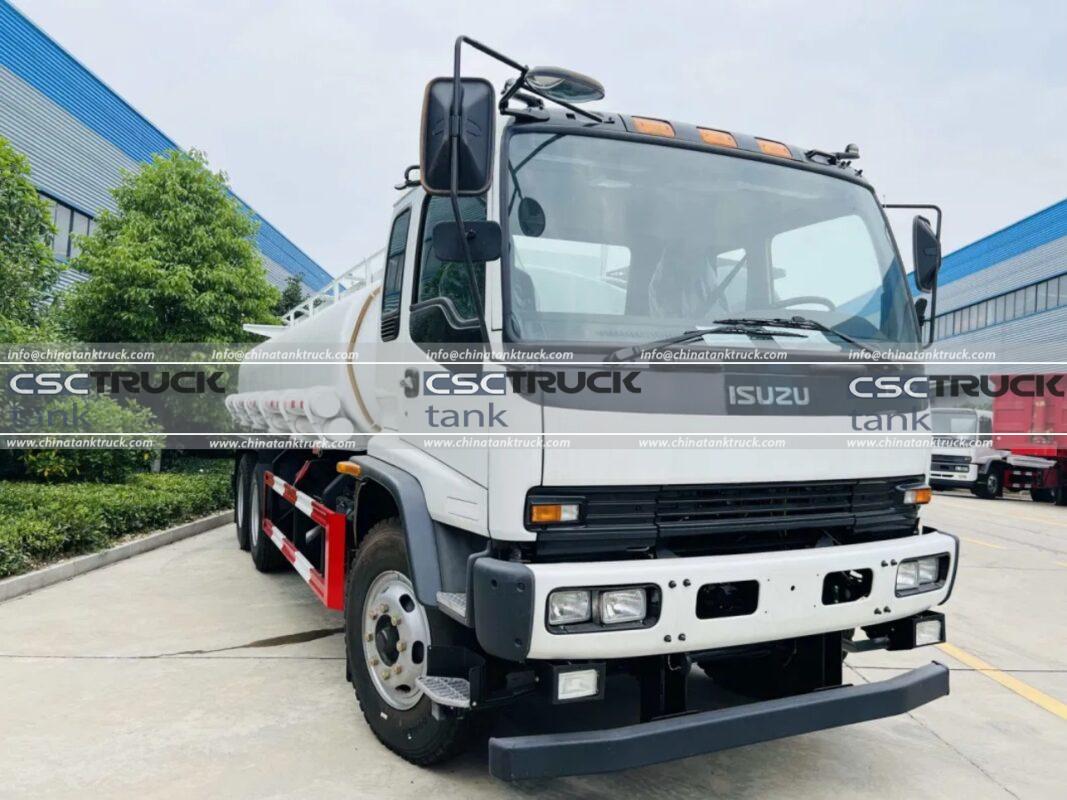
A milk tank truck is a specialized vehicle designed to collect, transport, and deliver fresh milk from dairy farms, milk collection centers, and processing facilities. Unlike ordinary liquid tankers, a milk tanker is engineered around food hygiene, temperature control, product protection, and sanitary cleaning. These requirements make milk transportation an important part of the modern dairy supply chain.
For dairy farms, processors, distributors, and fleet operators, choosing the right milk tank truck can directly affect milk quality, transportation efficiency, operating costs, and compliance with food-safety requirements.
What Is a Milk Tank Truck?
A milk tank truck is a road vehicle equipped with a food-grade stainless steel tank for transporting raw milk or other dairy liquids. The tank is normally insulated to help maintain the milk at an appropriate temperature during transportation.
Milk is highly perishable. Once it leaves the farm, it must be transported quickly and under controlled sanitary conditions. A properly designed milk transportation truck therefore provides much more than simple liquid storage. Its tank, valves, pipelines, pumps, manholes, fittings, and cleaning system must all be suitable for hygienic dairy applications.
Milk tank trucks can be configured in different capacities depending on the collection distance, road conditions, dairy operation, and local regulations. Small milk transport trucks are useful for farm collection and rural routes, while larger units are better suited to long-distance transportation between collection centers and processing plants.

How Does a Milk Tank Truck Work?
The typical milk transportation process begins at a dairy farm or milk collection point. Fresh milk is transferred into the truck’s sanitary tank through a dedicated inlet system.
After loading, the tank’s insulation helps reduce temperature changes during transportation. Depending on the operating system, a sanitary pump may be used to transfer milk into or out of the tank.
At the dairy processing facility, the milk is unloaded through sanitary pipelines and valves. After unloading, the tank must be thoroughly cleaned and sanitized before its next load.
This process can be summarized as:
Milk collection → Hygienic loading → Insulated transportation → Sanitary unloading → Cleaning and sanitation
The objective is to protect the milk from contamination and unnecessary temperature fluctuations throughout the transportation cycle.
Key Features of a Milk Tank Truck
1. Food-Grade Stainless Steel Tank
The tank is one of the most important components. Stainless steel, particularly food-grade stainless steel such as 304 stainless steel, is commonly selected because it offers good corrosion resistance, durability, cleanability, and compatibility with food products.
CSCTRUCK China Tank Truck offers milk tank truck configurations using stainless steel tanks, including a 25,000-liter 304 stainless steel milk tank truck, as well as smaller milk transportation models.
2. Thermal Insulation
Milk needs protection from external temperature changes during transportation. An insulated tank reduces heat transfer between the milk and the surrounding environment.
Good insulation is particularly important when milk must travel longer distances or when ambient temperatures are high.
It is important to understand that an insulated milk tanker is not necessarily the same as a refrigerated tanker. Insulation primarily slows temperature changes, while active refrigeration uses a cooling system to remove heat.
3. Sanitary Piping and Valves
Milk comes into direct contact with the internal piping and transfer equipment. Therefore, sanitary valves, fittings, pumps, and pipelines are essential.
These components should minimize dead zones and make cleaning easier. Smooth internal surfaces are also important because they reduce areas where milk residues can accumulate.
4. Hygienic Manhole
A sanitary manhole provides access to the tank for inspection, cleaning, and maintenance. Its design should help prevent external contamination while allowing operators to safely inspect the tank interior.
5. Milk Transfer Pump
A pump can make loading and unloading faster and more controlled. Depending on the application, the pumping system may be customized according to required flow rate, unloading distance, and dairy facility configuration.
6. Multiple Compartments
Some milk tank trucks can be designed with multiple compartments. This configuration can provide greater flexibility when transporting different batches or quantities of milk.
However, compartment design must be carefully considered because every additional compartment introduces more internal surfaces, valves, and cleaning requirements.

Why Is Stainless Steel Important for Dairy Transportation?
The material of the tank has a direct influence on hygiene, durability, and maintenance.
Carbon steel is commonly used for many industrial tank trucks, but it is generally unsuitable for direct contact with food products unless specifically designed and protected for that purpose. Stainless steel is preferred for milk transportation because it is resistant to corrosion and relatively easy to clean.
A high-quality dairy tanker should also have smooth, hygienic internal surfaces and properly designed welds. Poor welding or rough internal areas can make sanitation more difficult and create locations where milk residues can remain.
For this reason, buyers should evaluate not only the nominal tank material but also welding quality, internal finish, sanitary fittings, cleaning accessibility, and overall fabrication quality.
Milk Tank Truck vs. Ordinary Tank Truck
Although both vehicles transport liquids, their designs are significantly different.
An ordinary water or industrial liquid tanker may prioritize capacity, durability, pumping performance, or chemical compatibility. A milk tanker must additionally prioritize food hygiene and sanitary handling.
Key differences include:
| Feature | Milk Tank Truck | Ordinary Tank Truck |
|---|---|---|
| Main cargo | Raw milk/dairy liquids | Water, chemicals, fuel, etc. |
| Tank material | Food-grade stainless steel | Depends on cargo |
| Hygiene requirements | Very high | Application-dependent |
| Internal design | Sanitary and easy to clean | Application-dependent |
| Insulation | Common | Depends on cargo |
| Pumping system | Sanitary transfer | Cargo-specific |
| Cleaning | Frequent sanitation required | Depends on material |
Using the wrong type of tanker can create contamination risks and may make compliance with dairy-processing requirements more difficult.

How to Choose the Right Milk Tank Truck
Before purchasing a milk tanker, buyers should consider several factors.
First, determine the required capacity. Common configurations range from relatively small milk transport trucks for local collection to large-capacity vehicles for industrial dairy logistics.
Second, consider the chassis. The chassis should match the expected payload, road conditions, driving distance, and local service availability. Brands and configurations can be customized according to the target market.
Third, evaluate the tank material. Food-grade stainless steel should be considered for the product-contact surfaces.
Fourth, check the insulation and thermal-performance requirements. The appropriate design depends on transportation distance, ambient temperature, milk temperature at loading, and applicable regulations.
Fifth, examine the sanitary system. Valves, pumps, manholes, pipelines, outlets, and cleaning arrangements should all be evaluated as a complete system rather than individually.
Finally, consider after-sales service and spare-parts availability. A dairy tanker is a working asset, so minimizing downtime is important for fleet operators.
CSCTRUCK China Tank Truck Milk Tank Trucks
CSCTRUCK China Tank Truck is a Chinese manufacturer and exporter of tank trucks and specialized vehicles. Its product range includes fuel tank trucks, water tankers, chemical tank trucks, LPG tankers, milk tank trucks, and other liquid and gas transportation equipment.
The company currently lists multiple milk tanker configurations, including 25,000-liter 304 SS milk tank trucks, 5,000-liter FOTON milk transportation trucks, 6,000-liter 4WD milk transport trucks, and 10,000-liter ISUZU FVZ milk tank transport trucks.
CSCTRUCK China Tank Truck states that its factory integrates R&D, manufacturing, quality control, and after-sales service, with tank trucks exported to more than 50 countries. It also provides customization for tank capacity, materials, compartments, pumps, and chassis configurations.
For international dairy transportation projects, this customization can be particularly useful because milk collection conditions vary considerably between countries. Road infrastructure, climate, transportation distances, local regulations, and available dairy-processing equipment can all influence the ideal tanker configuration.

Conclusion
A milk tank truck is much more than a tanker with a stainless steel body. It is a specialized dairy logistics vehicle designed to protect milk quality from collection through delivery.
The most important considerations include food-grade stainless steel, sanitary construction, thermal insulation, reliable pumping equipment, hygienic valves and fittings, appropriate capacity, and easy cleaning.
For dairy farms, milk collection companies, food processors, and distributors, selecting the right milk transportation truck can improve logistics efficiency while helping maintain product quality.
With multiple capacities and chassis configurations available, CSCTRUCK China Tank Truck provides customizable milk tank truck solutions for different dairy transportation requirements. Its broader range of tank trucks and international export experience also allows customers to source specialized transportation equipment from a single manufacturer.
