
Milk tank trucks are a critical link between dairy farms, milk collection points, processing plants, and distribution facilities. Because milk is highly perishable and can be easily affected by microorganisms, chemicals, foreign materials, and temperature changes, the tank truck used for transportation must meet strict hygiene and food-safety requirements.
The exact requirements vary by country and application. In the United States, for example, bulk milk transportation is closely associated with the FDA’s Grade “A” Pasteurized Milk Ordinance (PMO), while 3-A Sanitary Standards provide important criteria for hygienic equipment design. Other markets may apply national food-contact regulations, dairy regulations, HACCP-based systems, or standards such as ISO requirements.
For buyers, understanding these requirements is essential when selecting a milk tanker manufacturer.
1. FDA Grade “A” Pasteurized Milk Ordinance
In the United States, one of the most important regulatory frameworks for milk transportation is the FDA Grade “A” Pasteurized Milk Ordinance (PMO). The FDA describes the PMO as a comprehensive framework covering milk safety from production through processing, transportation, and distribution.
For milk tank trucks, the PMO addresses areas such as:
- Sanitary construction and condition of the tank
- Milk-contact surfaces
- Cleaning and sanitizing
- Protection against contamination
- Temperature control
- Inspection and permitting
- Milk hauling and transportation practices
The current FDA NCIMS model-document page lists the 2025 PMO, published in June 2026, as the latest edition available from FDA.
Milk tank trucks operating under the Grade “A” program must also be permitted and inspected. The PMO specifies evaluation of milk tank trucks every 24 months, in addition to permitting requirements established by the applicable regulatory authority.
Therefore, a truck intended for the U.S. market should be designed and documented according to the requirements applicable in the destination jurisdiction rather than simply being described as a generic “food-grade tanker.”
2. 3-A Sanitary Standards for Milk Transportation Tanks
Another important reference for dairy equipment is 3-A Sanitary Standards.
3-A Sanitary Standards, Inc. develops criteria covering sanitary design, materials, fabrication, installation, and cleanability of dairy and food-processing equipment.
Of particular relevance to milk tank trucks is 3-A Sanitary Standard 05, which covers stainless-steel automotive transportation tanks for bulk milk delivery and farm pick-up service. The 3-A catalogue currently lists 05-16 as the applicable edition for this equipment category.
The purpose is to make the milk-contact system hygienic and readily cleanable. This means a compliant design needs to consider much more than simply using stainless steel. Tank geometry, welds, fittings, outlets, valves, connections, and other milk-contact components can all influence sanitation.
For buyers, it is therefore useful to ask a manufacturer specifically about the sanitary design standard used for the tank rather than relying on terms such as “food grade” alone.
3. Food-Grade Stainless Steel and Hygienic Materials
The tank’s internal surface is one of the most important food-safety components.
Milk tank trucks commonly use corrosion-resistant stainless steel for the product-contact surfaces. The material must be suitable for contact with milk and capable of maintaining a sanitary surface during repeated cleaning cycles.
A hygienic milk tanker should generally have:
- Food-contact-compatible stainless steel
- Smooth internal surfaces
- Properly finished welds
- Corrosion resistance
- Minimal areas where milk can accumulate
- Hygienic valves and fittings
- Appropriate gaskets and seals
The objective is to prevent milk residue from becoming a source of bacterial growth or contamination.
The specific stainless-steel grade should be selected according to the applicable regulations, customer requirements, milk characteristics, cleaning chemicals, and manufacturing specifications. Buyers should request material specifications and certificates when documentation is important for regulatory approval or quality assurance.

4. Tank Design Must Support Effective Cleaning
Food safety does not end with selecting the right material. A milk tanker must also be designed so that it can be thoroughly cleaned and sanitized.
3-A‘s standards emphasize hygienic design and cleanability as fundamental principles for dairy equipment.
Milk tank trucks therefore commonly incorporate design features such as smooth internal surfaces, hygienic product outlets, suitable piping, sanitary valves, and cleaning systems.
Some modern milk tankers are equipped with CIP (Clean-in-Place) systems. CIP allows internal tank and product-contact components to be cleaned using controlled circulation of cleaning and rinsing solutions without completely dismantling the system.
However, the exact cleaning procedure depends on the tank design, operating environment, milk product, chemicals, temperature, and applicable local requirements.
FDA inspection guidance states that raw-milk transport tanks should be constructed and operated to protect their contents from contamination and temperature extremes, and indicates that tank trucks should be washed and sanitized after use.
5. Temperature Control Is a Food-Safety Requirement
Milk is highly temperature-sensitive. Even when the tank itself is hygienically constructed, inadequate temperature control can increase the risk of microbial growth and deterioration.
For this reason, milk tank trucks normally use insulated tanks to minimize temperature changes during transportation.
The insulation system can include:
- Double-wall tank construction
- Thermal insulation material
- Insulated manholes and piping
- Temperature monitoring equipment
- Optional refrigeration or cooling arrangements, depending on the application
Temperature requirements are not identical in every country or for every type of milk. Consequently, buyers should confirm the required loading, transportation, and receiving temperatures with the relevant dairy authority or processor.
The FDA notes that the PMO addresses times and temperatures associated with heating, cooling, transporting, and storing milk.

6. Protection Against Cross-Contamination
A milk tanker must protect the product from physical, chemical, and microbiological contamination.
Important practices include:
- Keeping manholes and outlets protected
- Using sanitary hoses and connections
- Preventing unauthorized access to the tank
- Cleaning equipment between appropriate loads
- Separating milk-contact equipment from contaminated areas
- Inspecting the tank before loading
- Preventing contamination during loading and unloading
The FDA‘s sanitary transportation rule emphasizes practices designed to prevent contamination during food transportation, including appropriate refrigeration, cleaning between loads where applicable, and protection of food during transport.
For Grade “A” milk transportation, certain operations may also fall under specific milk-program requirements or waivers rather than the general sanitary-transportation rule.
7. HACCP and Food-Safety Management
HACCP—Hazard Analysis and Critical Control Points—is another important concept in dairy transportation.
Rather than being a truck-construction standard, HACCP is a preventive food-safety management approach. A dairy operator can use HACCP principles to identify hazards associated with milk transportation and establish controls.
Potential hazards can include:
- Microbiological contamination
- Excessive temperature
- Chemical contamination from cleaning agents
- Foreign material
- Poor sanitation
- Improper loading or unloading
- Contamination caused by equipment failure
The truck is therefore one component of a broader food-safety system involving farms, collection centers, transporters, laboratories, processing plants, and distribution operations.

8. Documentation, Inspection, and Traceability
Food safety also depends on operational controls and records.
Depending on the country and customer requirements, milk transport operators may need documentation covering:
- Tank inspection
- Cleaning and sanitation
- Temperature records
- Loading and unloading
- Maintenance
- Product traceability
- Driver or operator training
- Permits and regulatory approvals
In the U.S. Grade “A” program, milk tank trucks require permitting and inspection, and proof of current inspection may be required during transportation between jurisdictions.
Therefore, a milk tanker purchase should consider documentation and regulatory support as well as the physical vehicle.
9. How CSCTRUCK China Tank Truck Supports Milk Transportation
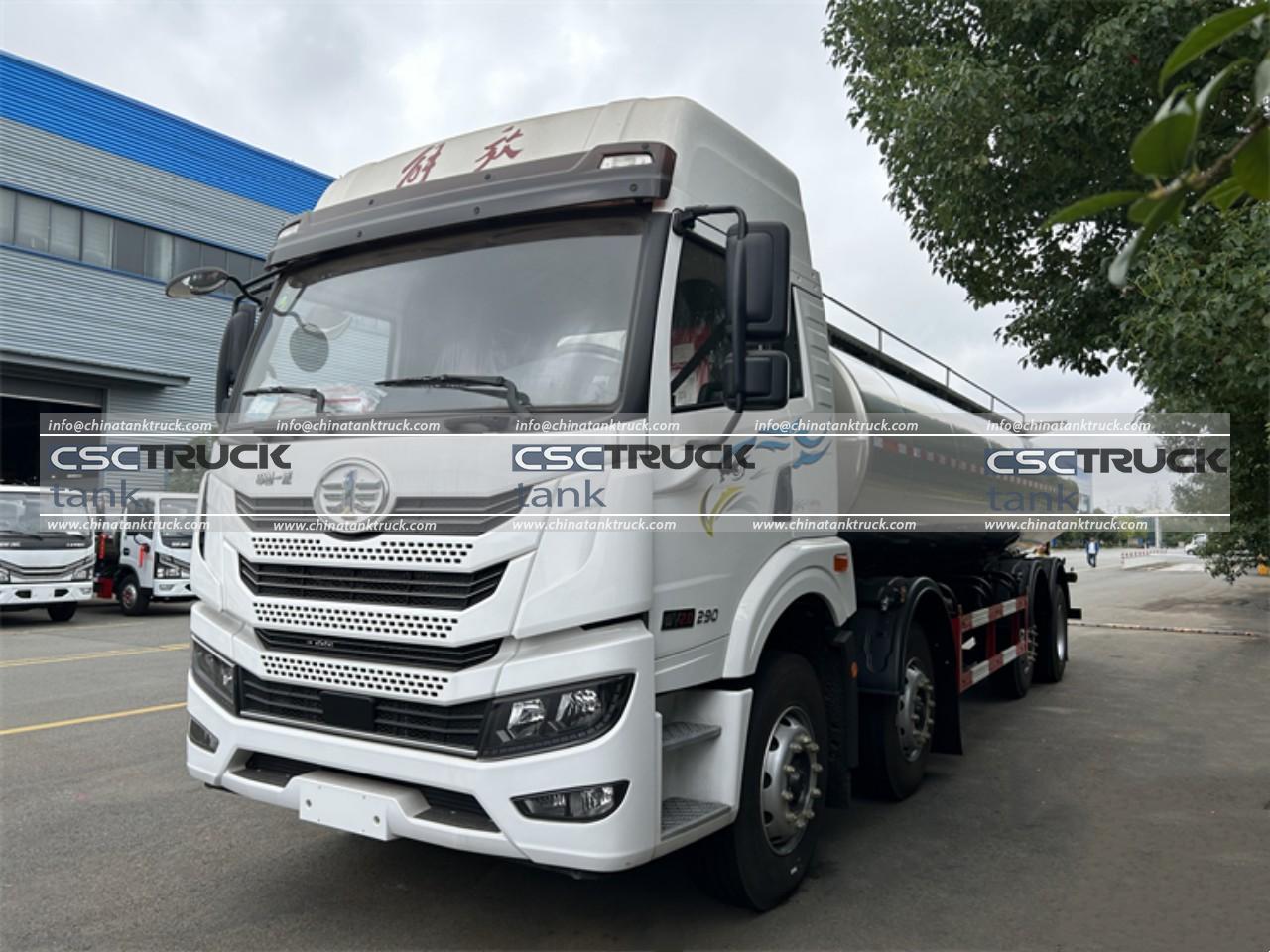
CSCTRUCK China Tank Truck is a Chinese manufacturer and supplier of specialized tank trucks, including milk tank trucks designed for dairy transportation applications.
A typical CSCTRUCK China Tank Truck milk tanker can be configured around requirements such as an insulated stainless-steel tank, hygienic milk-contact components, sanitary piping and valves, temperature-control equipment, and different tank capacities.
CSCTRUCK China Tank Truck can also provide customized configurations based on the customer’s chassis, capacity, driving conditions, local regulations, and intended application. This is particularly important for international buyers because food-contact and vehicle requirements can differ substantially between markets.
For an export project, buyers should provide the manufacturer with the destination country, required tank capacity, milk type, applicable food-safety standards, cleaning method, temperature requirements, chassis specifications, and any required certification or inspection documentation before production.

Conclusion
Milk tank trucks are subject to food-safety requirements that cover far more than the tank’s appearance or material. Key considerations include sanitary design, food-contact materials, cleanability, temperature control, contamination prevention, cleaning and sanitation, inspection, documentation, and operational controls.
In the United States, the FDA Grade “A” PMO and relevant 3-A Sanitary Standards are important references for bulk milk transportation. Other countries may apply their own dairy regulations, food-contact rules, HACCP systems, or equivalent hygienic-design standards.
For buyers, the safest approach is to identify the destination-market requirements first and then select a milk tank truck whose materials, design, cleaning system, temperature-control configuration, and documentation can be matched to those requirements. A manufacturer such as CSCTRUCK China Tank Truck can then configure the tanker around the specific regulatory and operational needs of the dairy business.