
When examining the upper structure of this FAW J6M 8×4 27000 liter aluminum fuel tanker truck, the first element that immediately draws attention is the tank itself. Constructed from high-quality aluminum alloy, the tank is designed not only for strength but also for efficiency. Aluminum alloy has become the material of choice for modern tanker manufacturing because it offers several key advantages over traditional steel. Its lighter weight allows it to match perfectly with a lightweight chassis, reducing the vehicle’s overall curb weight while increasing payload capacity. Additionally, aluminum alloy exhibits stable chemical properties and inherent resistance to corrosion, ensuring the tank remains unaffected by rust even after prolonged use in demanding environments. This provides both durability and longevity, which are essential qualities for a vehicle tasked with transporting hazardous materials such as fuel.

Because the transport of flammable liquids carries significant risks, safety features play a central role in the tanker’s design. One such feature is the static grounding strap, which is standard equipment on hazardous materials vehicles. Static electricity, generated naturally during vehicle operation, can accumulate on the tanker’s surface. Left unchecked, it poses a severe hazard since static discharges can create sparks—an extremely dangerous scenario when transporting oil or fuel. The grounding strap solves this problem by continuously discharging static buildup into the ground as the vehicle moves, thereby reducing the risk of accidental ignition.

Complementing the grounding strap is a static grounding reel, another standard feature on an oil tanker lorry. Located inside the discharge box on the right side of the vehicle, the reel serves a similar purpose by eliminating static electricity. However, while the rubber strap functions primarily during driving, the reel is mainly used during loading and unloading operations. By ensuring that the tanker remains properly grounded in every phase of operation, this dual system greatly enhances safety.

The tanker is also designed with practical operational efficiency in mind. Its compartmentalized tank layout allows it to carry different fuel types simultaneously. In this configuration, the vehicle features 2 bottom-loading ports. Each loading port is equipped with a green indicator device, clearly identifying which type of fuel is stored in its corresponding compartment. This thoughtful design reduces the chance of human error during loading, prevents cross-contamination of fuels, and streamlines fueling logistics.

Since the tank is divided into 2 compartments, the vehicle is also fitted with 2 overfill prevention probe sockets. These safety devices are critical during the refueling process. As a compartment approaches capacity, the system automatically sends a signal to the operator to halt fueling. This prevents overfilling, fuel spillage, and potential hazards associated with excessive tank pressure.
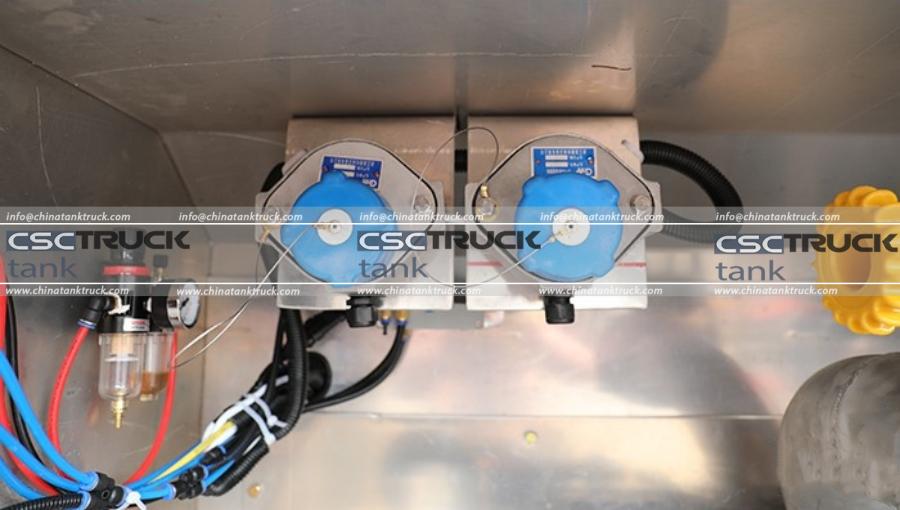
Inside the discharge box, operators will also find an emergency shut-off system. In the unlikely event of a malfunction or emergency, this mechanism is designed to quickly and automatically close the valve, preventing fuel from leaking out of the tank. Alongside this, a vapor recovery valve has been installed as standard. The valve plays an important dual role: it prevents harmful vapors from escaping into the environment and recovers valuable fuel vapors during both loading and unloading operations. This not only contributes to safety and environmental protection but also adds an element of economy by reducing fuel loss.

At the rear of the tanker, a robust safety ladder provides easy access to the top of the tank. Operators often need to inspect the tank from above, and the ladder ensures they can do so quickly and safely.
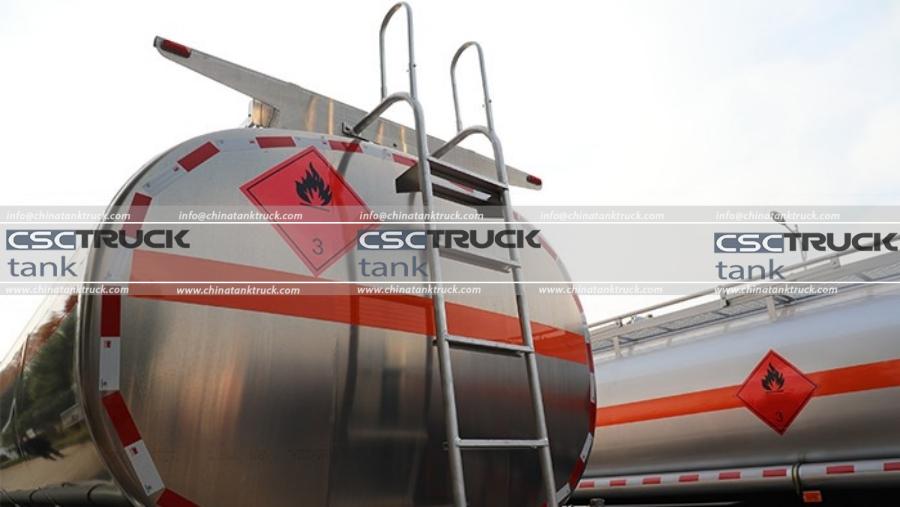
On top of the tank, an anti-slip mesh surface has been applied, which greatly improves traction and minimizes the risk of slipping. To further enhance operator safety, sturdy protective railings are installed on both sides of the tank top, offering reliable protection while working at height.

Altogether, this fuel tanker truck demonstrates a thoughtful balance between functionality, efficiency, and safety. From its corrosion-resistant aluminum alloy tank to its comprehensive grounding systems, overfill protection, vapor recovery, and operator-friendly access features, every detail has been engineered with precision. These design choices not only enhance the vehicle’s reliability and performance but also underscore its commitment to the highest standards of hazardous material transport.