
Pneumatic tank trucks rely heavily on compressed air systems to unload bulk materials such as cement, fly ash, grain, and powder chemicals. At the heart of this system is the air compressor, which is traditionally driven by the truck’s engine via a Power Take-Off (PTO) system. However, with the rise of electrification in commercial vehicles, a growing question emerges: Can an electric compressor replace a PTO-driven compressor in pneumatic tank trucks?
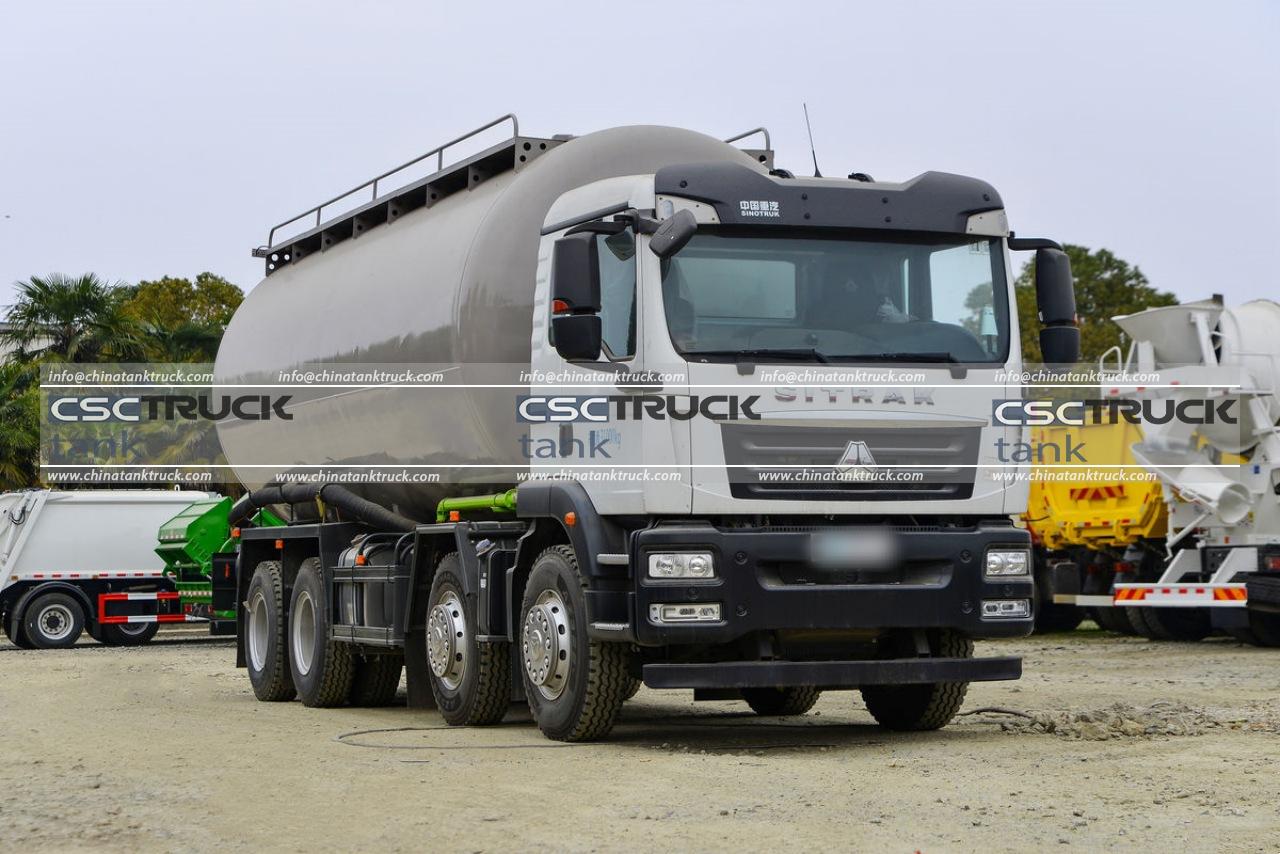
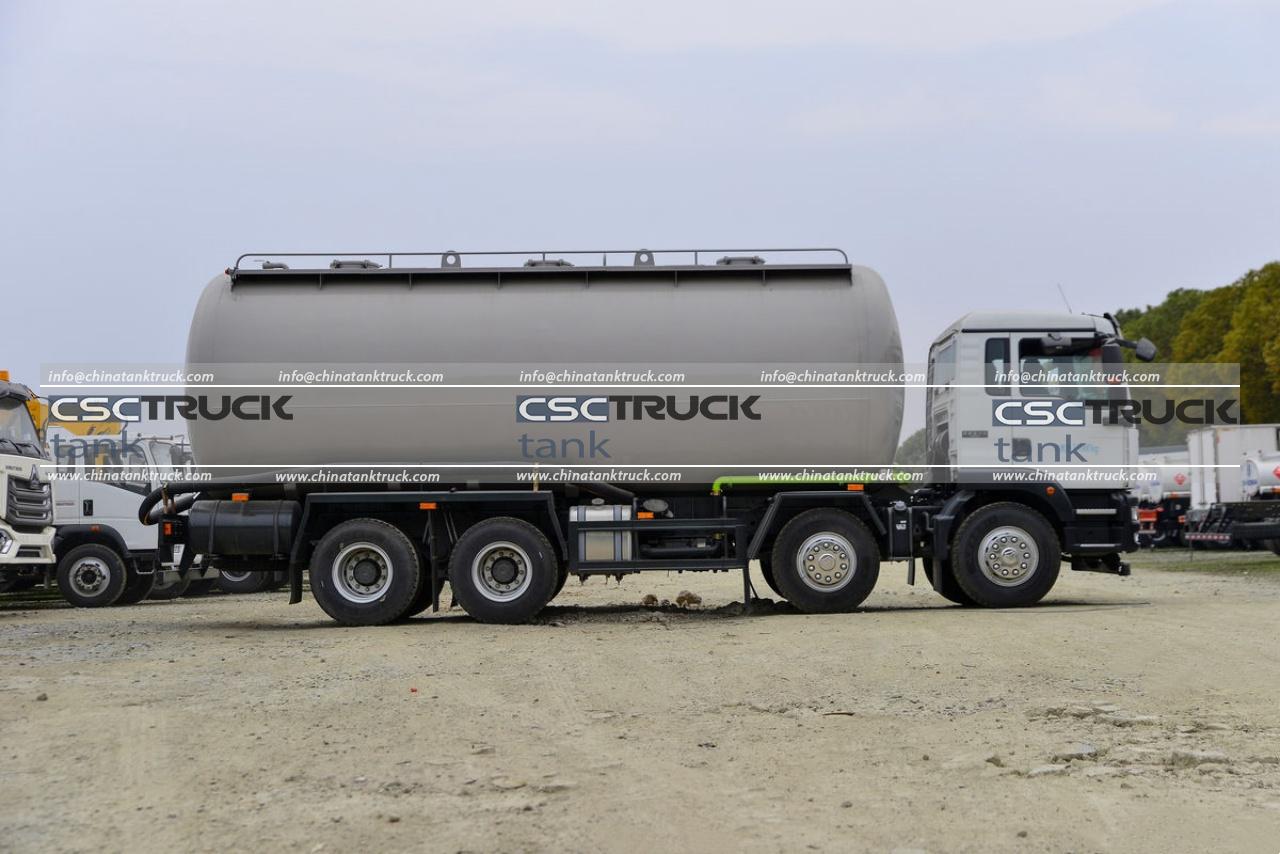
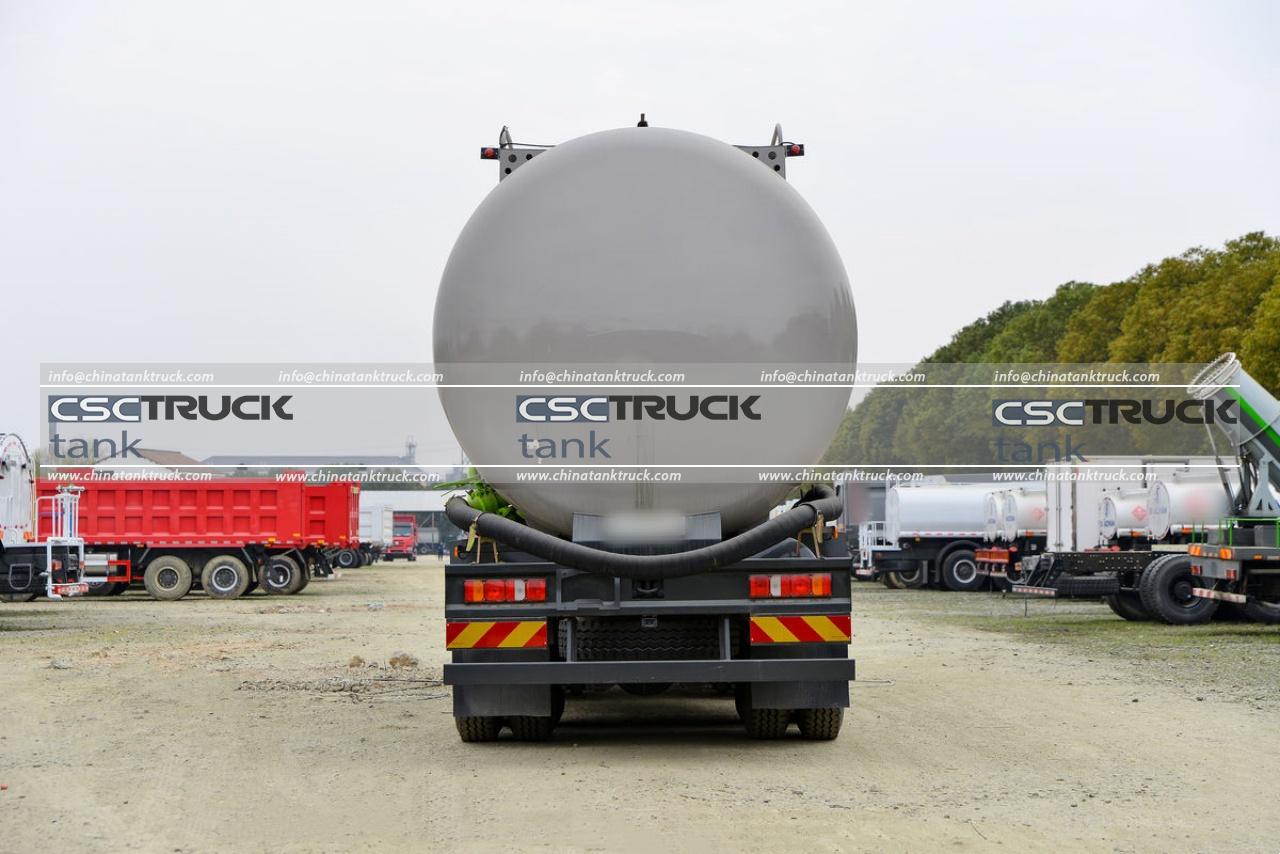
Before answering, it is important to understand the context of modern tank truck manufacturing and the engineering background provided by companies like CSCTRUCK China Tank Truck. CSCTRUCK China Tank Truck is a professional manufacturer of special-purpose vehicles, including pneumatic tank trucks, fuel tankers, fire trucks, and other industrial transport equipment. Their pneumatic tankers are designed for high-efficiency bulk material discharge, where stable air supply and high airflow are critical for performance, safety, and unloading speed.
1. Role of the Compressor in a Pneumatic Tank Truck
In a pneumatic tank truck, the compressor is responsible for generating high-pressure air that fluidizes bulk materials inside the tank. This allows powders and granular materials to behave like a fluid and be discharged through pipelines.
Typically, the system requires:
- High airflow (CFM)
- Stable pressure (commonly 0.2–0.3 MPa for unloading, sometimes higher for long-distance discharge)
- Continuous operation for 30–90 minutes or more
As a result, the compressor must be reliable, heat-resistant, and capable of sustained output.

2. PTO-Driven Compressors: The Industry Standard
Most pneumatic tank trucks today use PTO-driven rotary screw compressors, powered directly by the truck engine.
According to industry configurations, PTO systems offer:
- High airflow output (often 300–1000+ CFM depending on design)
- Full-duty cycle operation (100% continuous capability)
- Strong torque from the truck engine
- Stable performance even in harsh environments
Advantages of PTO Systems
PTO-driven compressors remain dominant for several reasons:
1. High Power Availability
The truck engine provides abundant mechanical power, making it ideal for high-demand air systems.
2. Continuous Operation
Rotary screw PTO compressors can run continuously without overheating, which is essential for unloading bulk powders.
3. System Integration
No need for separate fuel systems or battery banks.
4. Proven Reliability
Decades of field use in cement tankers, dry bulk trailers, and silo trucks.
3. Electric Compressors: Rapidly Improving Technology
Electric compressors use electric motors powered by:
- Truck alternator
- Dedicated battery packs
- Hybrid/EV power systems
- External charging systems
They are increasingly used in light-duty trucks and electric commercial vehicles.
Advantages of Electric Compressors
Electric systems bring several modern benefits:
1. Zero direct engine load
No mechanical connection to the drivetrain is required.
2. Lower emissions (especially on EV trucks)
Ideal for urban logistics and low-emission zones.
3. Simpler mechanical structure
Fewer moving parts than PTO systems.
4. Quieter operation
Important for city deliveries or nighttime unloading.
4. The Key Limitation: Power Density
The biggest challenge is simple physics: Air compression requires significant continuous power.
Pneumatic tank trucks often need:
- Very high CFM output (industrial-scale airflow)
- Continuous duty cycles
- Stable pressure under load
Electric compressors, however, are constrained by:
(1) Electrical power limits
A high-output rotary screw compressor may require tens of kilowatts of power continuously—far beyond what most vehicle electrical systems can supply.
(2) Battery capacity limits
Even large lithium battery packs struggle to sustain:
- 30–90 minutes of high-CFM unloading
- Without rapid depletion or overheating
(3) Thermal management challenges
Electric motors and inverters generate heat under continuous load, requiring complex cooling systems.
5. Comparison: Electric vs PTO Compressor in Pneumatic Tank Trucks
| Feature | PTO-Driven Compressor | Electric Compressor |
|---|---|---|
| Power source | Diesel engine | Battery / electric motor |
| Air output | Very high (industrial CFM) | Limited (medium to low CFM) |
| Duty cycle | 100% continuous | Limited by battery/thermal load |
| Reliability | Proven industrial standard | Still evolving |
| Maintenance | Mechanical + engine-based | Electrical system maintenance |
| Noise level | Medium-high | Low |
| Emissions | Diesel-dependent | Zero (EV advantage) |

6. Can Electric Compressors Fully Replace PTO Systems?
Short answer: Not yet—for full-size pneumatic tank trucks.
For heavy-duty bulk discharge applications, electric compressors currently cannot fully match PTO-driven systems in:
- Continuous airflow capacity
- Long-duration unloading
- High-pressure stability
- Remote field reliability
This is especially true for:
- Cement tankers
- Fly ash trucks
- Industrial powder transport vehicles
- Long-distance unloading systems
7. Where Electric Compressors Do Work Today
Electric systems are already viable in certain scenarios:
1. Small or medium pneumatic trucks
For lighter materials or short unloading cycles.
2. Urban delivery tankers
Where emission restrictions apply.
3. Hybrid systems
Electric assist + PTO backup systems.
4. Stationary unloading support units
Where mobility demands are lower.
8. The Future: Hybrid Pneumatic Compressor Systems
The most realistic evolution is not full replacement, but hybridization:
Hybrid system architecture:
- PTO compressor for high-demand unloading
- Electric compressor for standby or low-load operation
- Smart control system to optimize energy use
This approach offers:
- Reduced fuel consumption
- Lower emissions during partial operations
- Backup redundancy
- Improved flexibility for multi-condition environments
Manufacturers like CSCTRUCK China Tank Truck are well-positioned to adopt such hybrid designs as electrification progresses in heavy-duty transport.
9. Engineering Perspective: Why PTO Still Dominates
From a mechanical engineering standpoint, PTO systems remain dominant because they:
- Convert engine torque directly into compressed air with minimal conversion loss
- Avoid energy storage bottlenecks (batteries)
- Provide unmatched peak power delivery
- Are compatible with existing truck architectures worldwide
Electric systems, while efficient in energy conversion, still face a storage and sustained output limitation problem, which is critical in pneumatic bulk discharge operations.
Conclusion
So, can an electric compressor replace a PTO-driven compressor in pneumatic tank trucks?
At present, the answer is:
Not completely for heavy-duty pneumatic tank trucks—but partially in smaller or hybrid applications.
PTO-driven compressors remain the backbone of modern pneumatic bulk transport due to their unmatched power, durability, and continuous-duty capability. Electric compressors, on the other hand, represent the future direction of cleaner, quieter, and more efficient systems—but they still require advances in energy storage and power density before they can fully replace traditional PTO setups.
As technology evolves, the most practical solution in the near term will likely be hybrid systems combining PTO reliability with electric efficiency, gradually reshaping the pneumatic tank truck industry.
