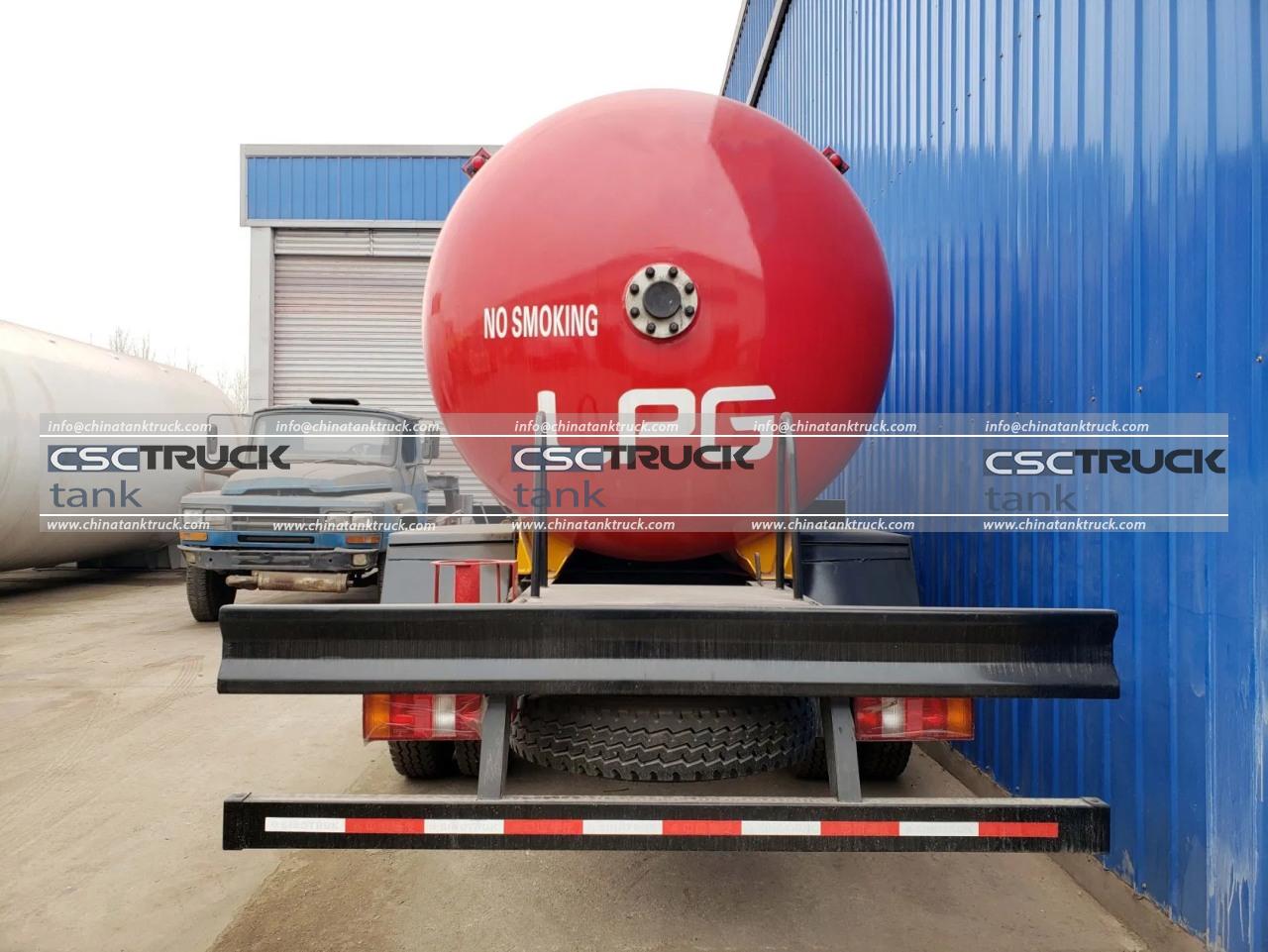
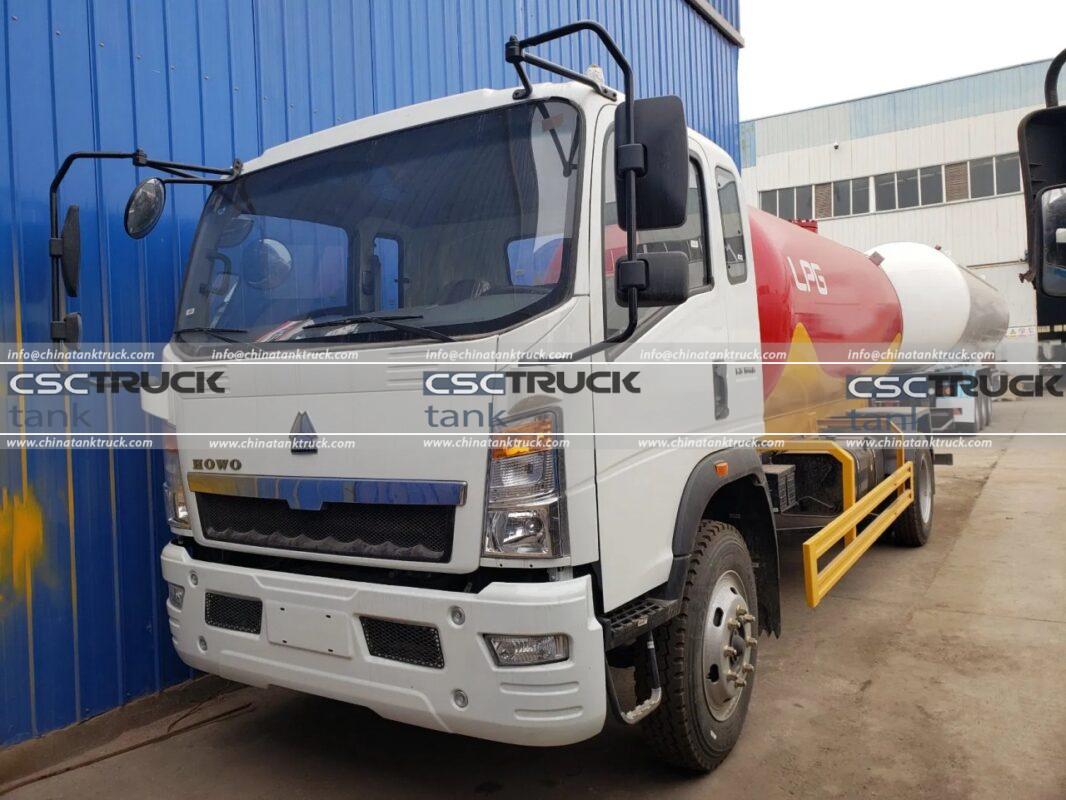
In modern energy logistics, liquefied petroleum gas (LPG)—mainly propane and butane—has become a critical fuel source for residential heating, industrial production, agriculture, and distributed energy systems. As demand grows, the need for safe, high-capacity, and technologically advanced transport solutions has increased significantly. The advanced propane tank truck represents the core of this supply chain, ensuring that high-pressure LPG is transported and delivered efficiently and securely across regions.
Among global manufacturers, CSCTRUCK China Tank Truck, operated by Hubei Chusheng Vehicle Co., Ltd., stands out as a professional producer of specialized pressure vessels and LPG transport vehicles. With decades of experience in tank truck engineering, the company designs LPG tank trucks that meet strict international safety and performance standards, combining robust materials, precision welding, and integrated safety systems for reliable gas logistics solutions.
1. Introduction to CSCTRUCK China Tank Truck
CSCTRUCK China Tank Truck is a well-established Chinese manufacturer specializing in LPG tank trucks, fuel tankers, chemical transport vehicles, and other special-purpose trucks. Based in Suizhou, Hubei Province, the company has developed a comprehensive production system covering design, fabrication, testing, and global export.
Its LPG product line includes vehicles ranging from small 5–6 CBM propane delivery trucks to large 30–35 CBM heavy-duty bobtail tankers. These vehicles are widely used for gas distribution stations, industrial LPG supply, and cylinder filling operations.
Typical CSCTRUCK China Tank Truck propane tank trucks are built with:
- High-strength pressure vessel steel (commonly Q345R carbon steel)
- Design pressures around 1.6–1.8 MPa
- Hydraulic test pressures exceeding 2.1 MPa
- Integrated safety systems such as emergency shut-off valves, pressure gauges, and safety relief valves
2. High-Pressure Tank Structure and Engineering Design
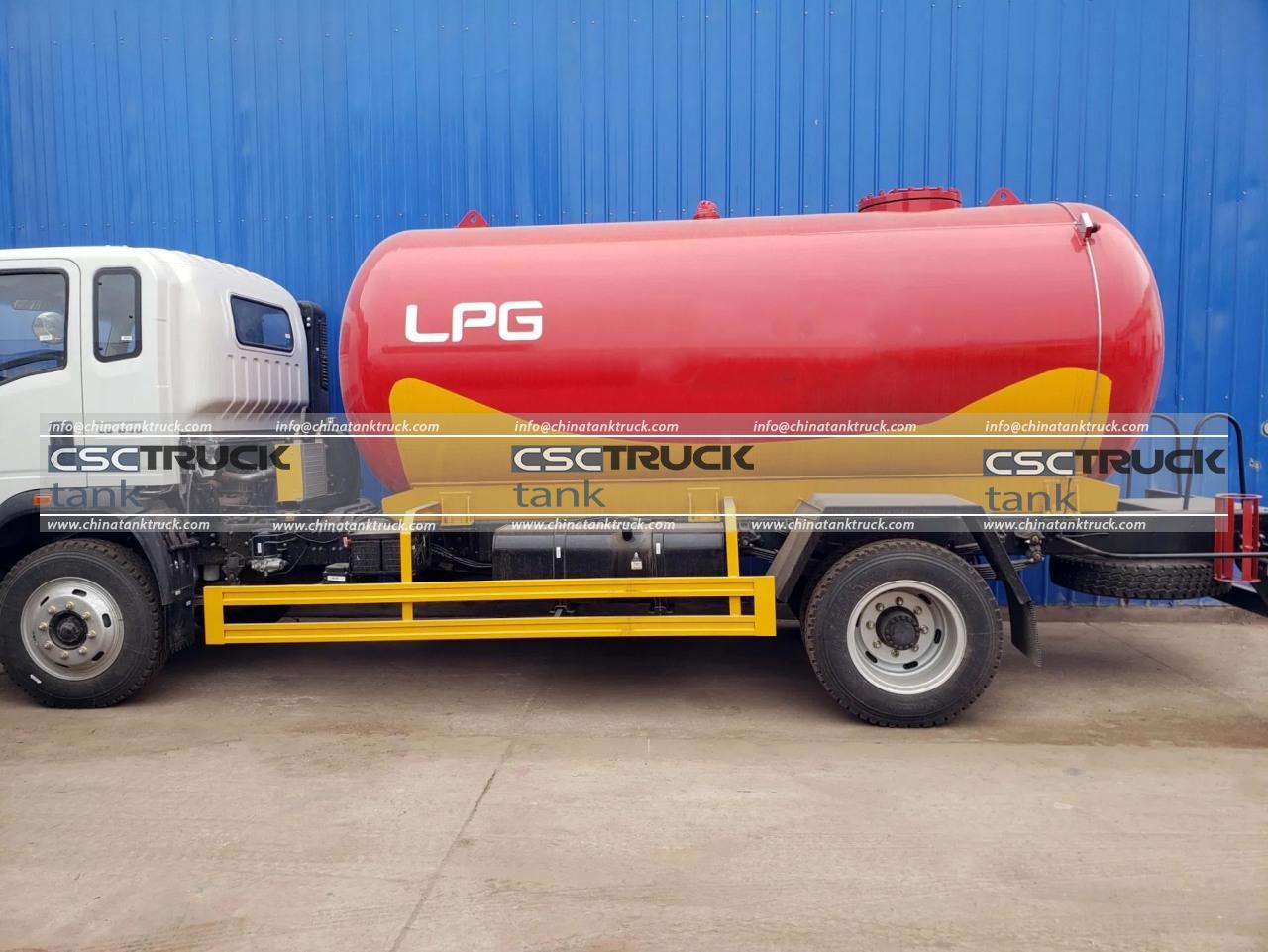
The core of an advanced propane tank truck is its pressure vessel tank, which is designed to safely contain LPG under both static and dynamic transport conditions.
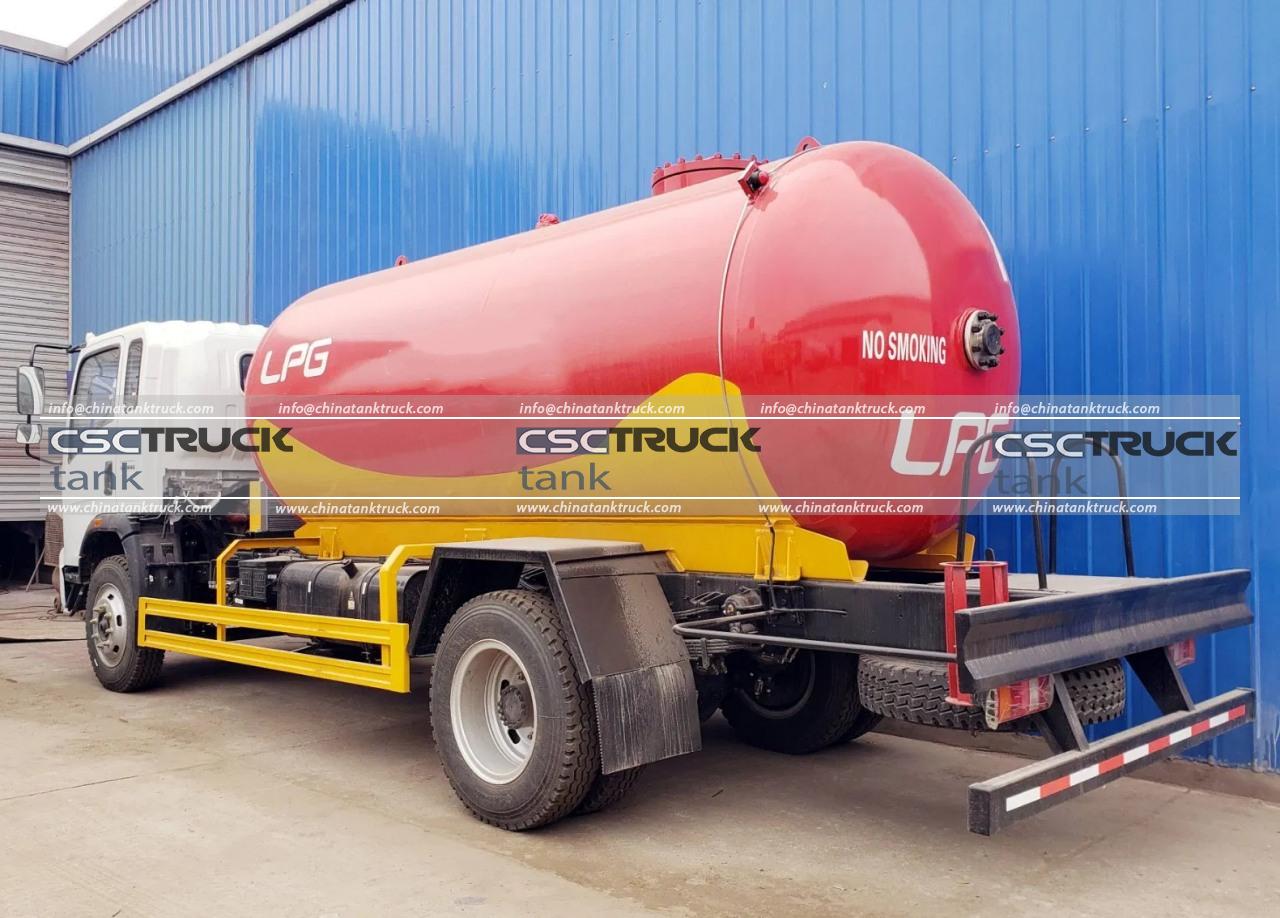
CSCTRUCK China Tank Truck tanks are typically horizontal cylindrical vessels mounted on a truck chassis. These tanks are engineered with:
- Thick steel plates (often 10–14 mm Q345R steel)
- Dished end caps for pressure resistance
- Internal anti-corrosion treatment
- Full-length welded seams with X-ray inspection
- Stress-tested structure for vibration and road impact resistance
For example, a standard LPG tank may be designed for:
- Working pressure: ~1.6 MPa
- Test pressure: Up to 2.2 MPa
- Operating temperature: Up to 50°C
These parameters ensure that propane remains stable even under extreme transport conditions, preventing leaks or structural deformation.
3. Safety Systems for LPG Transport Security
Because propane is highly flammable and stored under pressure, safety is the most critical aspect of tank truck engineering.
Advanced CSCTRUCK China Tank Truck propane tank trucks are equipped with multiple redundant safety systems:
3.1 Emergency Protection Systems
- Emergency shut-off valves for instant flow interruption
- Automatic pressure relief valves
- Anti-overflow protection systems
3.2 Monitoring Instruments
- Pressure gauges for real-time tank monitoring
- Temperature sensors for thermal stability control
- Liquid level meters to prevent overfilling
3.3 Operational Safety Features
- Anti-static grounding cables
- Fire extinguishers installed on the vehicle body
- Protective valve boxes
- Reinforced pipeline systems
These features work together to ensure safe LPG transport from storage depots to distribution points and end users.
4. Vehicle Chassis and Powertrain Configuration
The propane tank is only one part of the system; the truck chassis provides mobility and stability.
CSCTRUCK China Tank Truck integrates tanks with reliable commercial chassis brands such as:
- Dongfeng
- FAW
- SHACMAN
- SINOTRUK
Depending on capacity, trucks are typically configured with:
- 4×2 or 6×4 drive systems
- Diesel engines ranging from 95 hp to 375+ hp
- Manual or automated transmission systems
- Heavy-duty suspension for load stability
For example, a 15 CBM LPG bobtail truck may use a 160 hp engine and 4X2 drivetrain, ensuring strong performance even under full load conditions.
5. LPG Dispensing and Mobile Refueling Capability
Modern propane tank trucks are not only transport vehicles—they are also mobile gas stations.
Equipped with:
- LPG pumps
- Flow meters
- Hose reels and dispensing guns
- Cylinder filling connectors
These trucks can directly supply LPG to:
- Household gas cylinders
- Industrial storage tanks
- Vehicle fueling systems
This mobile functionality significantly improves distribution efficiency in remote or developing regions where fixed infrastructure is limited.

6. Operational Efficiency and Logistics Role
The propane tank truck plays a key role in the global energy supply chain by bridging the gap between refineries, storage terminals, and end users.
Its advantages include:
- High-volume transport capacity (5–35 CBM typical range)
- Reduced transportation cycles
- Faster regional gas distribution
- Lower infrastructure dependency
By using optimized tank shapes and lightweight but strong steel materials, CSCTRUCK China Tank Truck improves payload efficiency while maintaining strict safety margins.
7. Durability, Maintenance, and Lifecycle Design
Durability is a major focus in LPG tanker engineering. CSCTRUCK China Tank Truck designs its trucks for long service life under continuous heavy-duty use.
Key durability features include:
- Corrosion-resistant coatings inside and outside the tank
- Reinforced welding structures
- Modular valve systems for easier maintenance
- Standardized components for global servicing
Routine maintenance typically includes:
- Pressure testing
- Valve inspection
- Pipeline leakage checks
- Safety system calibration
With proper maintenance, these trucks can operate reliably for many years in demanding logistics environments.
8. Global Applications of Propane Tank Trucks
Advanced propane tank trucks are widely used in:
- Urban LPG distribution networks
- Industrial fuel supply chains
- Agricultural heating systems
- Remote area energy supply
- Emergency fuel logistics
Countries with developing infrastructure particularly benefit from mobile LPG delivery systems, as they eliminate the need for extensive pipeline networks.
9. Conclusion
The advanced propane tank truck engineered for secure high-pressure LPG transport and delivery represents a vital innovation in modern energy logistics. With high-strength pressure vessels, advanced safety systems, and mobile dispensing capability, it ensures reliable and efficient LPG distribution across diverse industries and regions.
Manufacturers like CSCTRUCK China Tank Truck continue to play a major role in this sector by producing robust, standardized, and globally adaptable LPG transport solutions. Through continuous improvement in materials, engineering design, and safety integration, these vehicles are helping shape a safer and more efficient global propane supply chain.
As energy demand continues to grow, propane tank trucks will remain indispensable assets in bridging production hubs and consumption markets—ensuring that clean and efficient fuel reaches where it is needed most.