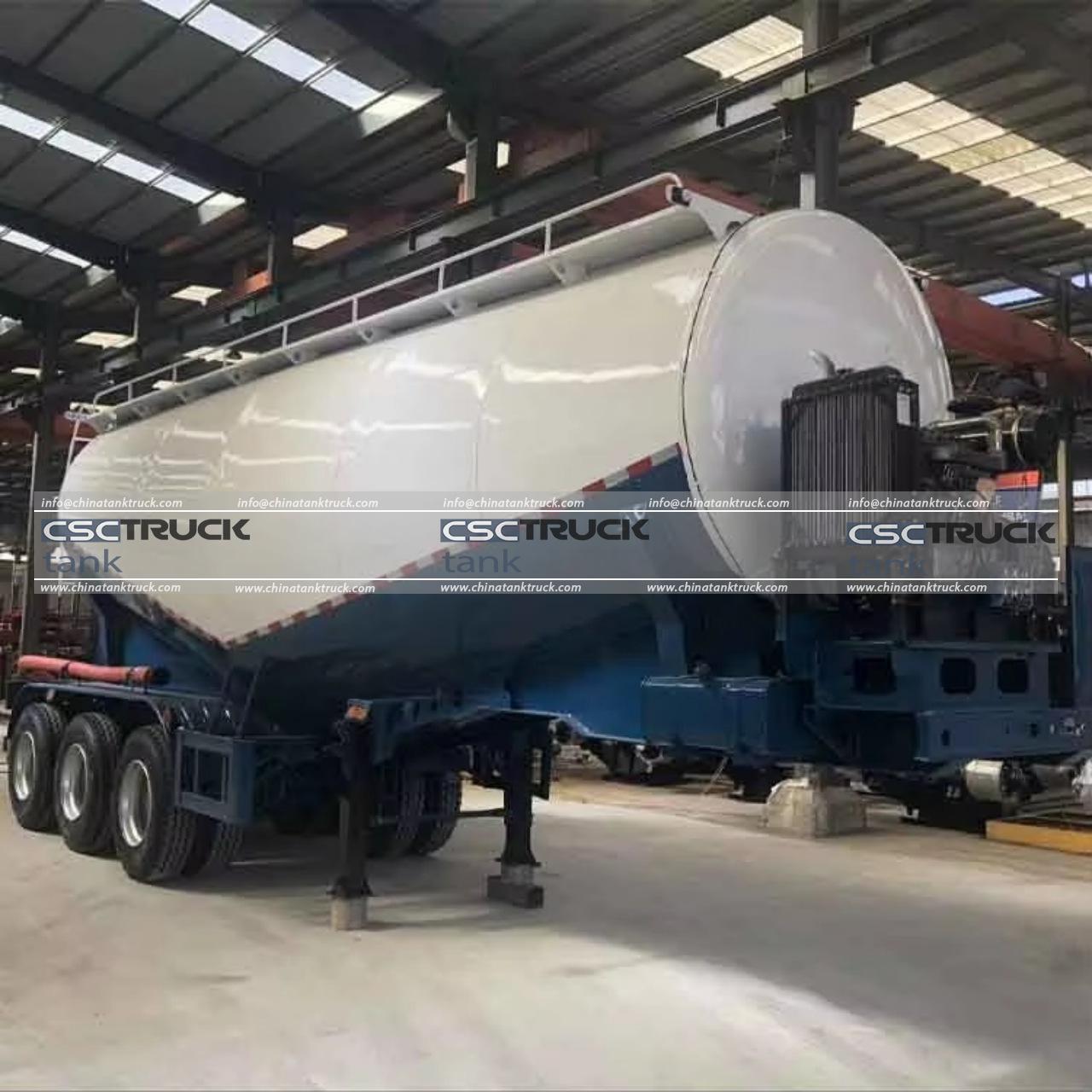

Pneumatic tank trailers—also known as dry bulk tankers—are essential vehicles in industries such as construction, food processing, and chemical manufacturing. These specialized trailers are designed to transport powders and granular materials like cement, fly ash, lime, flour, and plastic pellets using compressed air systems. One of the most frequently asked questions by fleet operators and buyers is: What is the typical capacity of a pneumatic tank trailer?
This article provides a detailed, practical answer, while also highlighting the role of CSCTRUCK China Tank Truck, a leading manufacturer in this field.
Introduction to CSCTRUCK China Tank Truck
CSCTRUCK China Tank Truck is a well-known manufacturer of specialized trucks and semi-trailers, including pneumatic bulk tank trailers. The company offers a wide range of configurations, from standard 30 CBM units to high-capacity 60+ CBM trailers, designed to meet global transport requirements.
Their pneumatic tank trailers are engineered with:
- High-strength steel or aluminum alloy tanks
- Efficient air compressor systems
- Optimized fluidization structures for fast unloading
- Customizable compartments and axle configurations
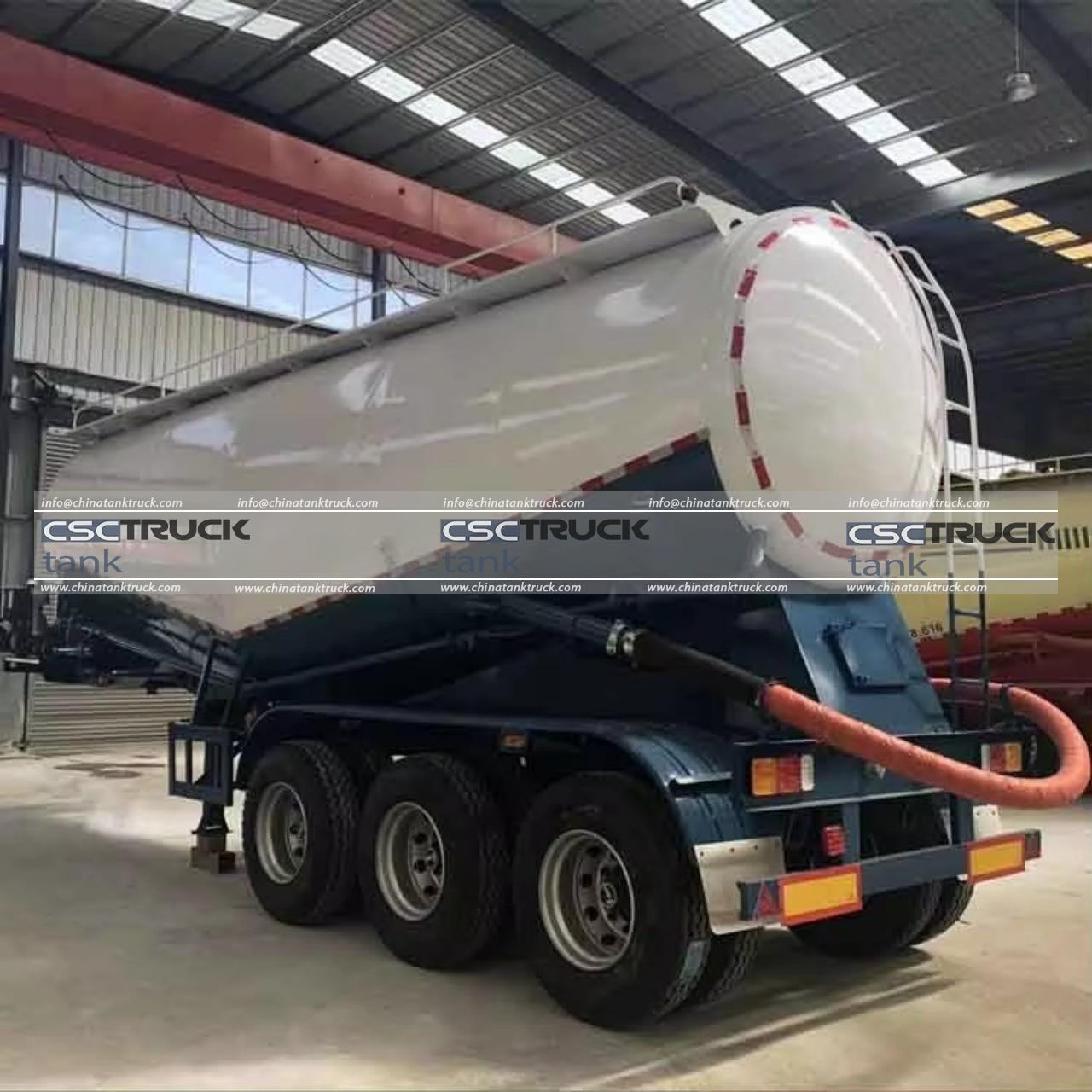
For example, CSCTRUCK China Tank Truck produces models such as 40 CBM, 45 CBM, and 58 CBM pneumatic tank trailers, each tailored for specific payload and operational needs.
Typical Capacity Range of Pneumatic Tank Trailers
The capacity of a pneumatic tank trailer is usually measured in cubic meters (CBM), representing the volume of material it can hold.
1. Standard Capacity Range
Most pneumatic tank trailers fall within the following range:
- 30–35 CBM → Small capacity (short-distance or urban delivery)
- 40–45 CBM → Most common size for cement and fly ash
- 50–55 CBM → High-capacity industrial transport
- 60–65 CBM → Maximum capacity for long-haul bulk logistics
This means the typical capacity for a standard pneumatic tank trailer is around 40–45 CBM, which is widely used across industries.
2. Regional Variations (Example: Malaysia)
Capacity also varies depending on regional regulations and road conditions. In markets like Malaysia:
- Typical range: 20–50 CBM
- Common highway trailers: 40–50 CBM
- Smaller units (urban or rough terrain): 25–35 CBM
These variations are influenced by road weight limits, terrain, and infrastructure.
3. Specialized High-Capacity Models
Advanced designs, especially aluminum alloy trailers, can exceed standard ranges:
- 55 CBM pneumatic bulk trailers for large-scale operations
- 58 CBM multi-compartment trailers for mixed materials
These are typically used in long-distance transport between production plants, ports, and distribution centers.
Volume vs Payload: Why Capacity Isn’t Everything
While volume (CBM) defines how much space the tank has, payload (weight) depends on the density of the material being transported.
Typical Material Densities:
- Cement: 1.2–1.4 t/m³
- Fly ash: 0.8–1.0 t/m³
- Plastic pellets: 0.55–0.65 t/m³
Example:
A 45 CBM pneumatic tank trailer can carry:
- ~45–60 tons of cement
- Less weight when carrying lighter materials like plastic pellets
Additionally, legal weight limits (often around 36 tons payload in many regions) can restrict how much material is loaded, even if volume allows more.

Key Factors That Influence Capacity
Several engineering and operational factors determine the final capacity of a pneumatic tank trailer:
1. Tank Material
- Carbon steel tanks: Heavier, slightly lower effective payload
- Aluminum alloy tanks: Lighter, allowing higher payload
2. Trailer Design
- V-shaped tanks improve unloading efficiency
- Multi-compartment tanks allow different materials on one trip
- Cylindrical or oval tanks balance strength and capacity
3. Axle Configuration
- 3-axle trailers: Standard for 40–60 CBM
- 4-axle trailers: Higher payload but stricter regulations
4. Transportation Distance
- Short-distance delivery: Smaller capacity (30–35 CBM)
- Long-distance haulage: Larger capacity (50–60 CBM)
5. Industry Application
Different industries prefer different capacities:
| Industry | Typical Capacity |
|---|---|
| Construction | 40–50 CBM |
| Food (flour, sugar) | 30–45 CBM |
| Chemicals | 35–55 CBM |
| Plastics | 50–65 CBM |
Real-World Examples from CSCTRUCK China Tank Truck
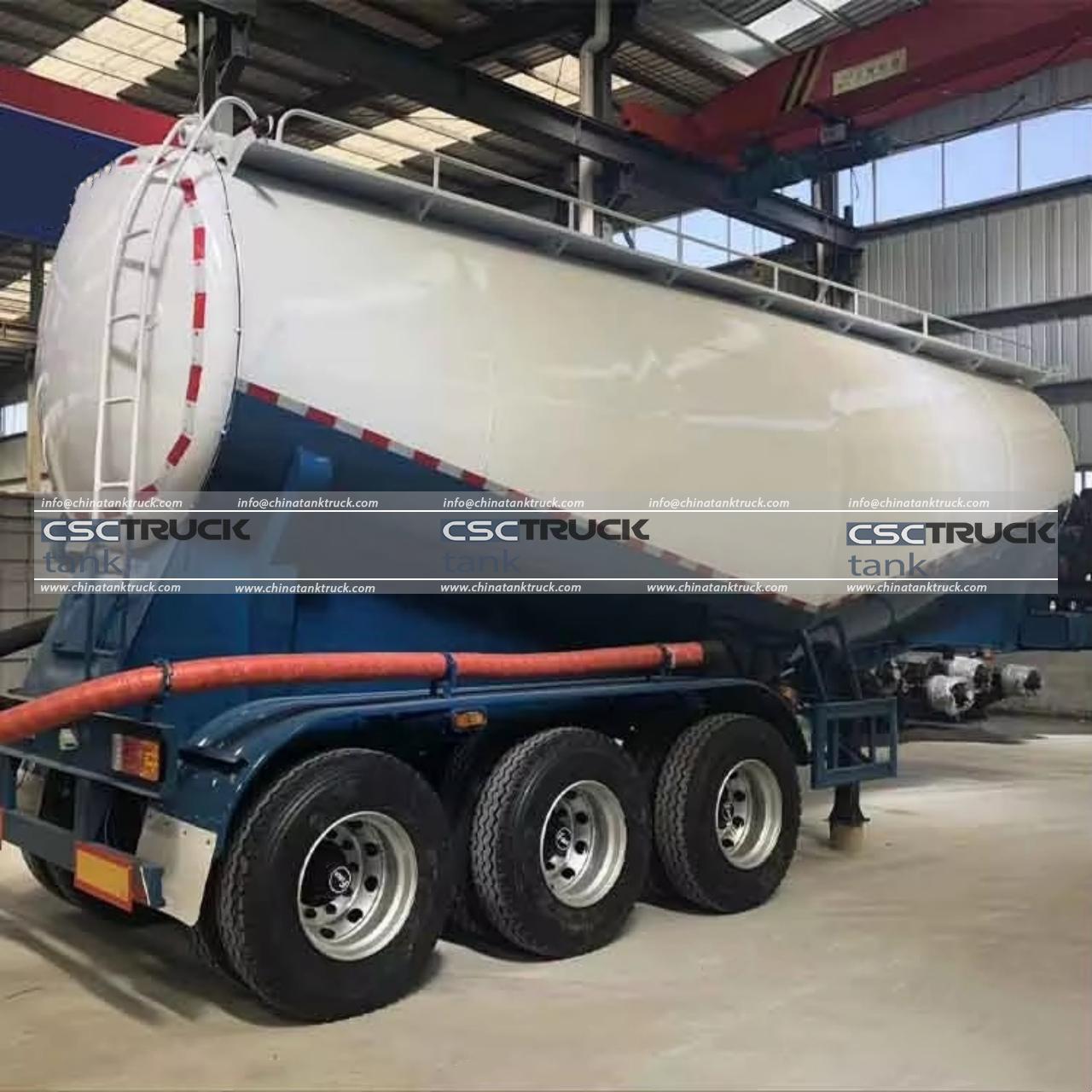
To better understand typical capacities, here are examples from CSCTRUCK China Tank Truck’s product lineup:
- 40 CBM Pneumatic Tank Trailer
- Ideal for cement and fly ash
- Balanced between maneuverability and payload
- 45 CBM Pneumatic Tank Trailer
- Industry standard size
- Widely used in construction logistics
- 58 CBM Pneumatic Tank Trailer
- High-capacity aluminum design
- Suitable for long-distance bulk transport
These examples clearly show how manufacturers like CSCTRUCK China Tank Truck tailor capacity to different operational needs.
Choosing the Right Capacity
Selecting the correct pneumatic tank trailer capacity depends on several practical considerations:
1. Type of Material
Heavier materials (cement) require smaller volumes to stay within weight limits, while lighter materials (plastic pellets) benefit from larger tanks.
2. Transport Distance
- Short routes → smaller tanks, faster turnaround
- Long routes → larger tanks, fewer trips
3. Road Regulations
Each country sets limits on:
- Gross vehicle weight
- Axle load
- Dimensions
These directly affect usable capacity.
4. Operating Environment
- Urban areas → smaller, more maneuverable trailers
- Highways → larger, high-volume trailers
Future Trends in Tank Trailer Capacity
The industry is evolving toward:
- Lightweight aluminum tanks for higher payload efficiency
- Larger-capacity designs (60+ CBM) for long-haul logistics
- Multi-compartment trailers for flexible transport
- Improved aerodynamics to reduce fuel consumption
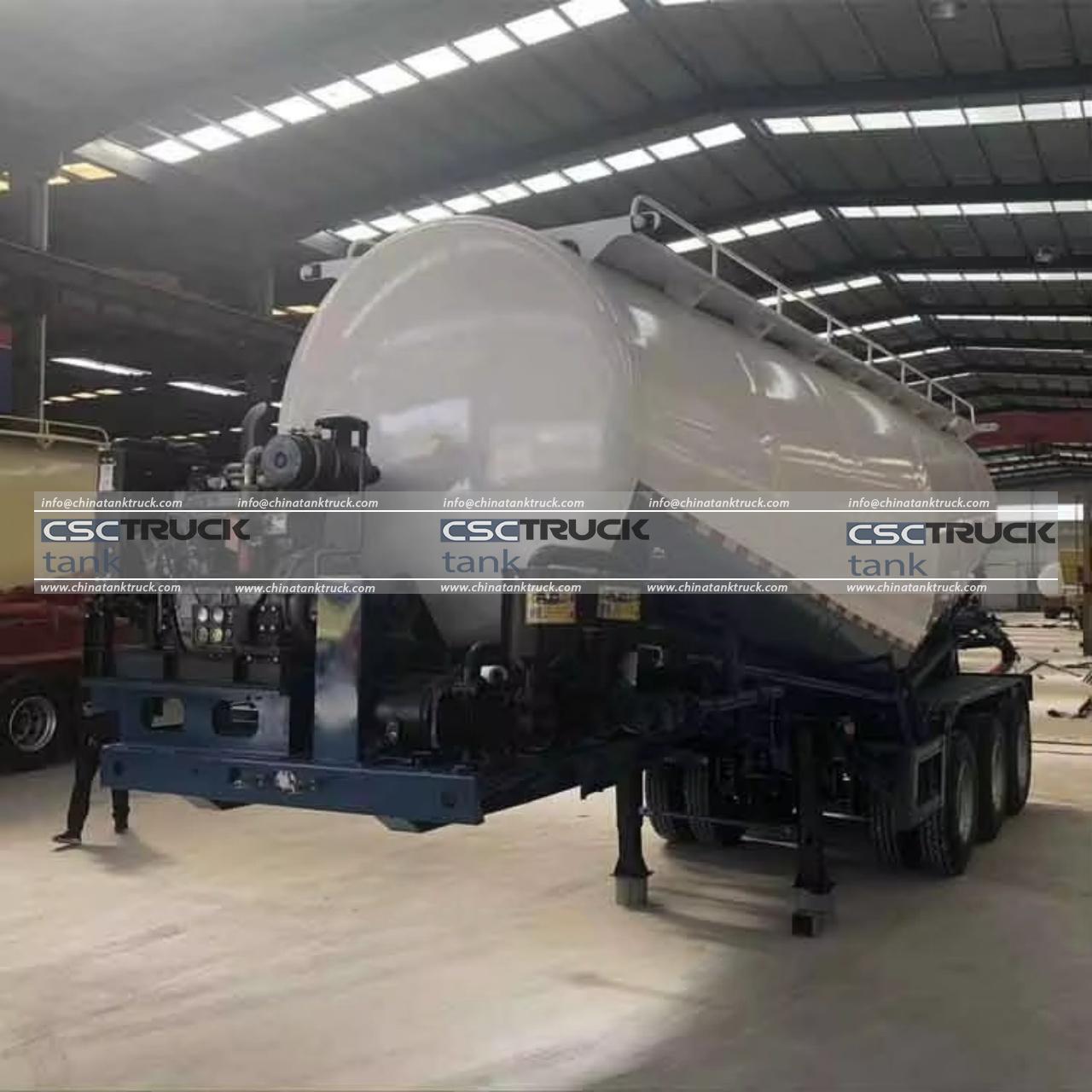
Manufacturers like CSCTRUCK China Tank Truck are at the forefront of these innovations, continuously optimizing tank capacity while maintaining safety and efficiency.
Conclusion
So, what is the typical capacity of a pneumatic tank trailer?
- Most common range: 40–45 CBM
- Overall industry range: 30–65 CBM
- Regional variations: 20–50 CBM (depending on regulations)
Ultimately, the “typical” capacity depends on the application, material density, and transport conditions. For most construction and industrial uses, a 40–50 CBM pneumatic tank trailer represents the ideal balance between volume, payload, and efficiency.
With manufacturers like CSCTRUCK China Tank Truck offering a wide range of customizable solutions, businesses can select the exact capacity needed to optimize logistics, reduce costs, and improve operational performance.